
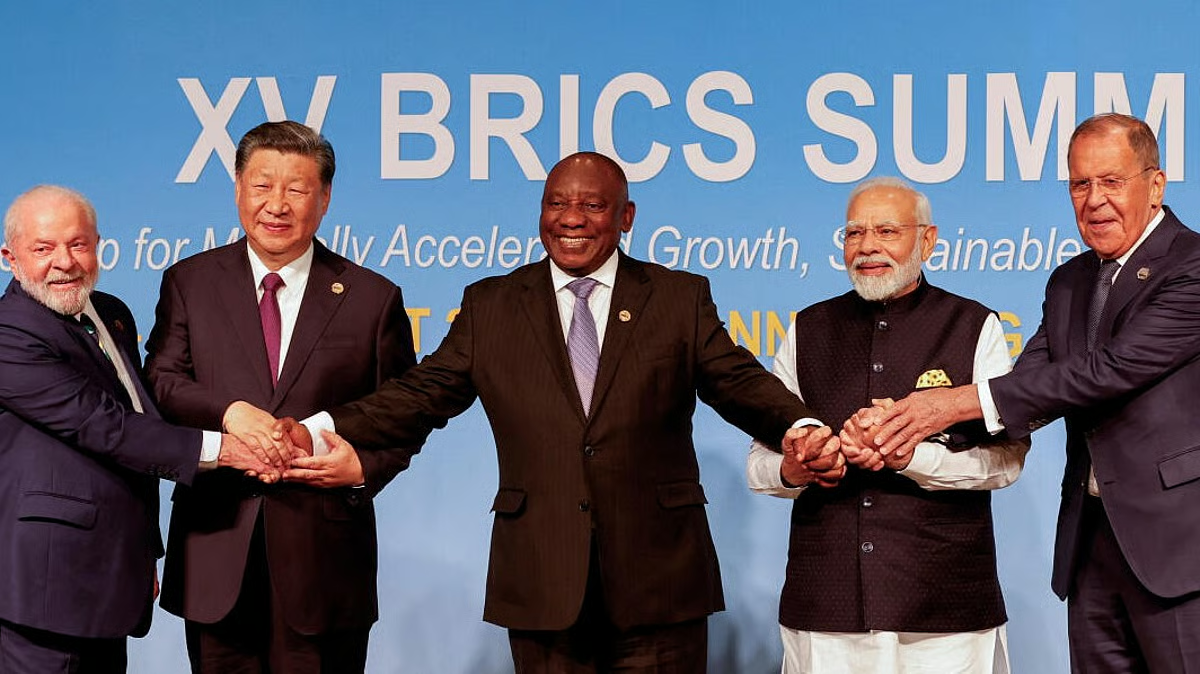
How Powerful Are SCO and BRICS? A Deep Dive into Global Influence, Economic Strength, and Political Future
Introduction
In the evolving landscape of international politics, two groupings have gained significant attention: the Shanghai Cooperation Organization (SCO) and Brazil, Russia, India, China, South Africa, and now expanded. Both organizations represent a shift away from Western-dominated global institutions and are increasingly being seen as alternative centers of power.
As global order witnesses turbulence—wars, sanctions, economic crises, and shifting alliances—the question arises: How powerful are SCO and Brazil, Russia, India, China, South Africa Are they mere symbolic forums, or do they have the capacity to reshape the world order?
This blog takes a comprehensive look at SCO and BRICS, their economic weight, political unity, achievements, limitations, and global influence, to assess their actual power in 2025.
Understanding the SCO
The Shanghai Cooperation Organization (SCO) was established in 2001, initially as a security bloc focused on regional cooperation in Central Asia. Its founding members were China, Russia, Kazakhstan, Kyrgyzstan, Tajikistan, and Uzbekistan. Over the years, it has expanded to include India, Pakistan, and Iran, making it one of the largest regional organizations in the world.
Objectives of SCO
- Counterterrorism and regional security cooperation.
- Economic collaboration, including energy and trade.
- Cultural and people-to-people exchanges.
- Stabilizing Afghanistan and Central Asia.
Strength of SCO
- Geographic Size → SCO countries together cover 60% of Eurasia’s landmass.
- Population → Over 3.3 billion people (more than 40% of the global population).
- Energy Resources → SCO states control some of the world’s largest reserves of oil, natural gas, and coal.
- Military Power → Presence of nuclear-armed powers like China, Russia, India, and Pakistan.
Understanding BRICS
BRICS was initially coined as “BRIC” in 2006, with South Africa joining later in 2010. In 2024, it expanded further to include Saudi Arabia, Iran, Egypt, Ethiopia, and the UAE, making it an even more powerful group.
Objectives of BRICS
- Reform of global financial institutions like IMF and World Bank.
- Promotion of multipolar world order.
- Economic cooperation and development.
- Political coordination on international issues.
Strength of BRICS
- Economic Weight → BRICS accounts for nearly 32% of global GDP (PPP), surpassing the G7 in purchasing power terms.
- Trade Powerhouse → Together, BRICS nations control around 25% of global exports.
- Financial Institutions → Establishment of the New Development Bank (NDB) and Contingent Reserve Arrangement as alternatives to Western-dominated IMF and World Bank.
- Demographic Advantage → Over 40% of the world’s population.
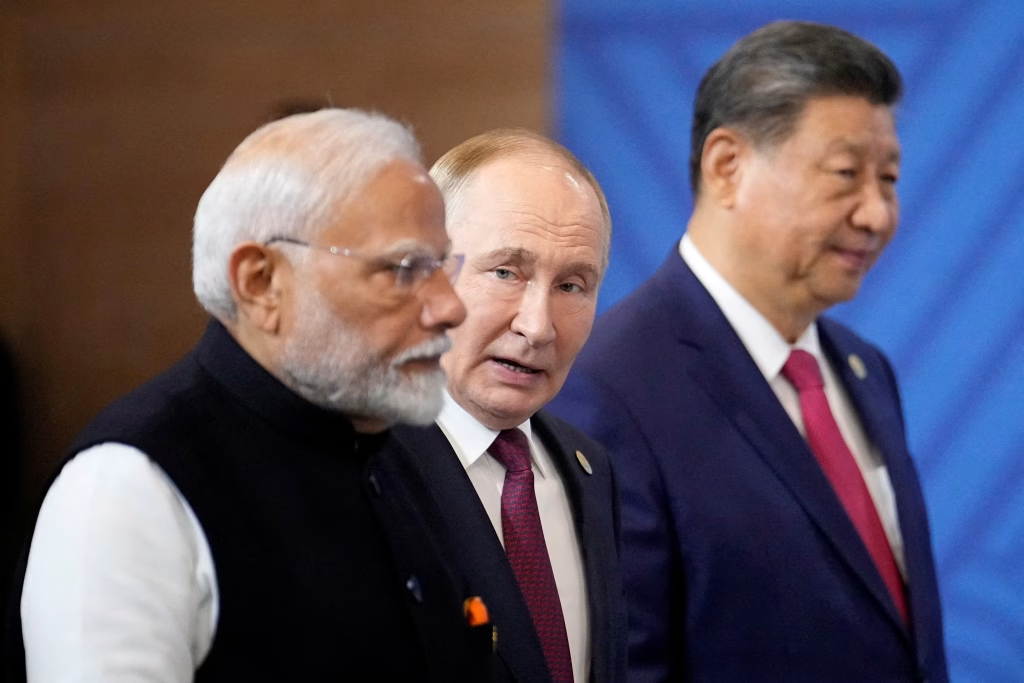
Comparing SCO and BRICS
| Factor | SCO | BRICS |
|---|---|---|
| Focus | Security, regional cooperation, counterterrorism | Economic reform, global governance, multipolarity |
| Membership | China, Russia, India, Pakistan, Central Asian states, Iran | Brazil, Russia, India, China, South Africa + new members |
| Strengths | Geography, energy, military power | Economy, trade, finance |
| Challenges | India-Pakistan tensions, China-Russia dominance | Internal divisions, economic inequality among members |
In essence, SCO is a security-political bloc, while BRICS is an economic-political bloc, and together they represent a challenge to Western-led institutions like NATO, EU, G7, and IMF.
How Powerful Are They in Economics?
BRICS Economic Power
- Combined GDP (PPP): Over $65 trillion.
- Combined Foreign Exchange Reserves: Around $5 trillion.
- BRICS New Development Bank has financed billions in infrastructure projects.
- Expansion with oil-rich states like Saudi Arabia and UAE gives BRICS a strong grip on energy pricing.
SCO Economic Power
- SCO states are critical for energy transit routes (Central Asia pipelines).
- China’s Belt and Road Initiative (BRI) runs through SCO regions.
- India’s growing market adds demographic and consumption power.
- Yet, intra-SCO trade remains limited compared to BRICS.
How Powerful Are They in Security and Military?
- SCO conducts joint military exercises (Peace Mission) focusing on counterterrorism and security threats.
- Russia, China, India, and Pakistan are nuclear powers—giving SCO immense military credibility.
- SCO acts as a stabilizing platform in Afghanistan and Central Asia.
- BRICS has no formal military cooperation mechanism, but its members influence global security through their UN Security Council roles (China and Russia are permanent members).
Political Influence Globally
- Challenging Western Dominance
- BRICS nations openly demand reforms in UN, IMF, and WTO.
- SCO acts as a counterweight to NATO in Eurasia.
- Voice for the Global South
- Both SCO and BRICS project themselves as platforms for developing countries against Western economic dominance.
- They promote multipolarity instead of U.S.-led unipolarity.
- Strategic Partnerships
- BRICS expansion into the Middle East and Africa strengthens its global outreach.
- SCO’s inclusion of Iran signals a shift in Eurasian geopolitics away from U.S. dominance.
Achievements of SCO and BRICS
SCO Achievements
- Expanded membership, now one of the world’s largest regional blocs.
- Enhanced cooperation on counterterrorism through the Regional Anti-Terrorist Structure (RATS).
- Facilitated dialogue between rival states like India and Pakistan.
- Strong role in Afghanistan talks.
BRICS Achievements
- Created the New Development Bank and BRICS Contingent Reserve.
- Gave Global South a platform to challenge IMF/World Bank.
- Expanded into Middle East and Africa, gaining credibility as a true global bloc.
- Pushed the debate on de-dollarization, with some members trading in local currencies.
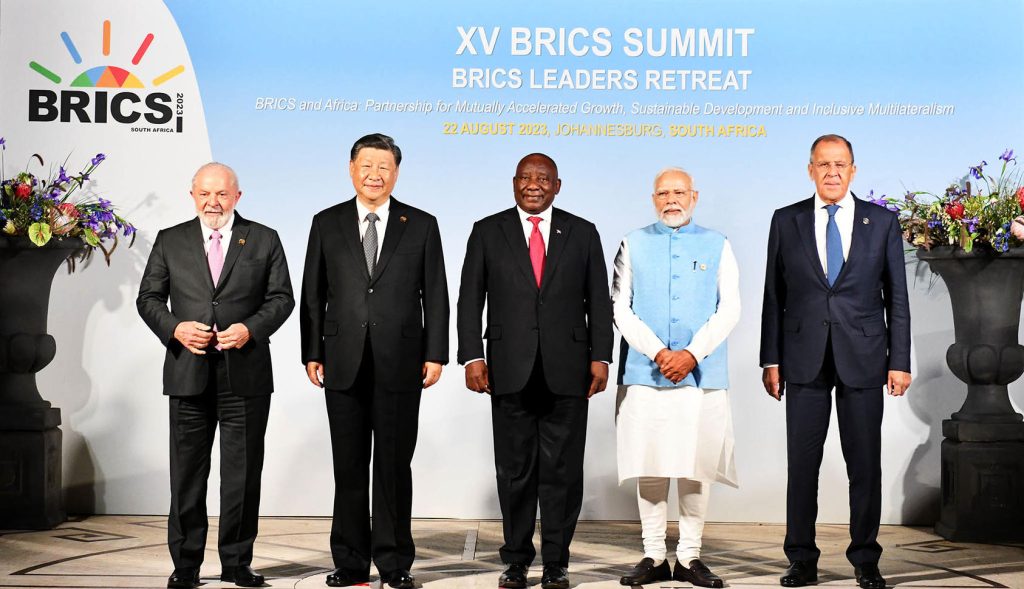
Challenges Faced
For SCO
- India-China border tensions often spill into the forum.
- India-Pakistan rivalry makes consensus difficult.
- Seen as dominated by China and Russia, leaving smaller states with less influence.
For BRICS
- Internal economic disparity—China’s GDP dwarfs others.
- Different political systems and ideologies make unity fragile.
- Expansion risks dilution of focus.
- Lack of binding enforcement mechanisms.
Are They Really Powerful?
Yes, but with caveats.
- Economically → BRICS is emerging as a powerhouse rivaling the G7. Its expansion into energy-rich regions makes it even stronger.
- Militarily → SCO has strong defense potential but lacks the tight unity of NATO.
- Politically → Both forums provide a platform for multipolarity but struggle with internal contradictions.
Their true power lies not in acting as a unified bloc but in serving as a counterbalance to Western institutions, thereby shaping a more multipolar world order.
Future Outlook
- BRICS as Economic Alternative
- Push for a common currency or wider de-dollarization.
- Greater investments in infrastructure in Africa and Asia.
- SCO as Security Stabilizer
- Could become central to Afghanistan’s future.
- Might develop more institutionalized military cooperation.
- Global South Leadership
- Both forums are becoming the voice of the Global South, drawing more countries toward them.
- Challenges to Watch
- Internal divisions (India vs. China, Brazil’s Western tilt).
- Pressure from Western sanctions on Russia and Iran.
- The need for stronger institutions and legal frameworks.
Conclusion
So, how powerful are SCO and BRICS?
- SCO wields power through geography, population, military capacity, and security cooperation, making it a central force in Eurasia.
- BRICS, on the other hand, commands enormous economic clout, growing political influence, and now, with expansion, a strong hold on global energy markets.
Individually, they have limitations. But together, they represent the biggest challenge to Western-led global order in decades. Their combined strength lies in representing half of humanity, a third of global GDP, massive energy reserves, and military might.
While internal contradictions remain, the rise of SCO and BRICS signals that the 21st century will not be dominated by a single power, but shaped by multiple centers of influence.
In that sense, SCO and BRICS are not just powerful—they are redefining the very architecture of global power.
read more latest news

