

AAP’s National Media In-Charge Anurag Dhanda Attacks BJP: “Fake Cases Filed Against Arvind Kejriwal, Conspiracy to Topple Delhi Government”
Introduction
AAp National Media, Indian politics has always been a complex battlefield where power struggles, ideological clashes, and legal disputes often intertwine. In the latest political development, the Aam Aadmi Party’s (AAP) national media in-charge Anurag Dhanda launched a strong attack on the Bharatiya Janata Party (BJP), making serious allegations against Union Home Minister Amit Shah and the ruling party at the Centre.
Dhanda claimed that the BJP orchestrated a conspiracy to topple the elected AAP government in Delhi by framing Chief Minister Arvind Kejriwal in “fake cases.” According to him, the statements made by BJP leaders themselves make it clear that the legal battles Kejriwal is facing are politically motivated.
What makes this statement more striking is the timing. Despite being in jail, Arvind Kejriwal continues to remain a central figure in Delhi’s political discourse. Dhanda’s remarks highlight how Kejriwal’s governance model is being remembered fondly by people, even when he is absent from active politics due to legal hurdles.
In this blog, we will explore:
- The background of cases against Arvind Kejriwal
- Anurag Dhanda’s explosive allegations against BJP and Amit Shah
- The larger context of Centre–State political rivalry
- How Kejriwal’s governance is remembered by Delhi’s citizens
- Reactions from political parties and the public
- What this means for Indian democracy going forward
Background: Cases Against Arvind Kejriwal
To understand Dhanda’s allegations, it’s important to revisit the legal troubles surrounding Delhi Chief Minister Arvind Kejriwal. Over the years, Kejriwal and AAP leaders have faced a series of investigations, arrests, and summons in various cases. The most prominent among them is the Delhi Excise Policy case, in which Kejriwal was arrested by the Enforcement Directorate (ED).
BJP leaders and central agencies allege that irregularities in the Delhi Liquor Policy led to massive corruption, while AAP insists that the entire case is fabricated to tarnish Kejriwal’s image and weaken his government.
AAP has repeatedly claimed that over 200 cases have been filed against Kejriwal and AAP leaders since the party came to power, yet most of them have failed to result in convictions. This, AAP argues, proves that the legal actions are more about politics than justice.
Anurag Dhanda’s Attack on BJP
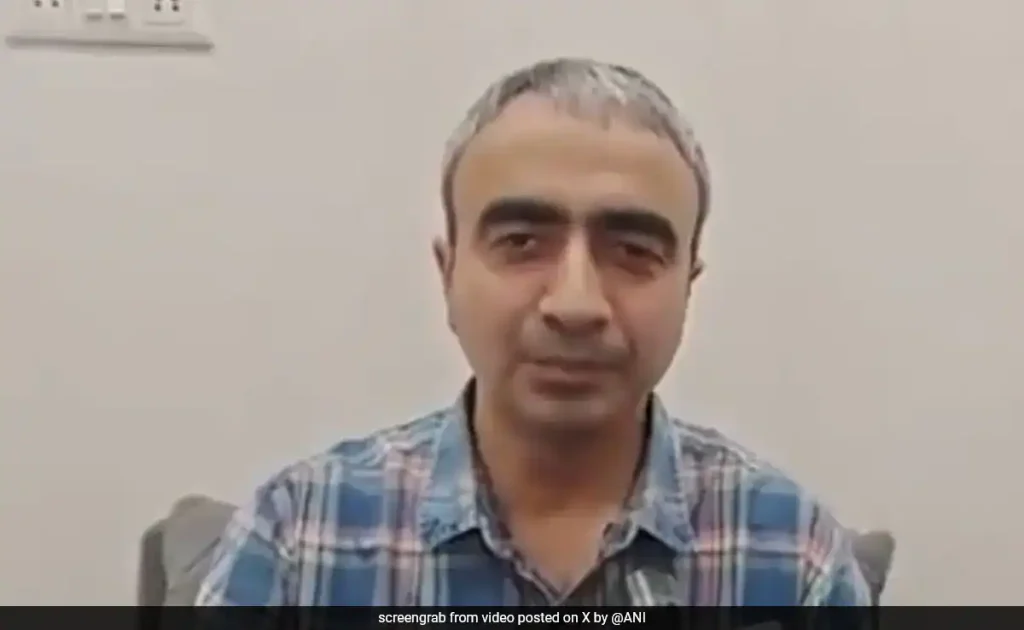
At a press conference, Anurag Dhanda came down heavily on BJP and Home Minister Amit Shah. He said:
“It is clear from the statements of BJP and Amit Shah that many fake cases were filed against Arvind Kejriwal to topple his government. There was a conspiracy by the BJP to topple the AAP government in Delhi. Today people are remembering Arvind Kejriwal’s rule from jail.”
This statement carries three major charges:
- Fake Cases: According to Dhanda, the legal challenges against Kejriwal are politically motivated and lack solid evidence.
- Conspiracy to Topple: He directly accused BJP of plotting to remove the AAP government in Delhi through undemocratic means.
- Public Support for Kejriwal: Dhanda suggested that Kejriwal’s governance model has earned him enduring public respect, which remains intact even while he is behind bars.
Political Conspiracy Allegations: A Recurring Theme
The idea of “political conspiracy” is not new in Indian politics. Opposition parties have often accused ruling governments of misusing central agencies like CBI, ED, and Income Tax Department to settle political scores.
- Congress Party has repeatedly accused BJP of targeting its leaders through agencies.
- Trinamool Congress (TMC) in West Bengal has also alleged a similar pattern, especially after arrests of its ministers.
- AAP has now joined this chorus, alleging that the Centre is trying to paralyze its functioning in Delhi.
Dhanda’s allegations are significant because they directly target Amit Shah, who is often considered BJP’s chief strategist. By naming him, Dhanda has escalated the political confrontation to the highest level.
The BJP’s Counterargument
The BJP, on the other hand, insists that the law is taking its course. They argue:
- If Kejriwal and his colleagues are innocent, why are they resisting investigations?
- Why are multiple agencies and courts finding grounds to summon or arrest them?
- AAP should fight the cases legally instead of crying “political conspiracy.”
BJP leaders have also pointed out that corruption cannot be justified under the garb of governance achievements. For them, Dhanda’s statements are an attempt to play the “victim card.”
Arvind Kejriwal’s Governance Model – Remembered Even in Absence
One of the most striking parts of Dhanda’s statement was that “people are remembering Arvind Kejriwal’s rule from jail.”
This indicates that despite his imprisonment, Kejriwal’s populist governance model—focusing on free electricity, water subsidies, healthcare reforms like Mohalla Clinics, and improvements in education—still resonates strongly with Delhi residents.
Key Governance Achievements People Recall
- Electricity Subsidy: Free electricity up to 200 units and subsidies up to 400 units for households.
- Water Supply: Free water supply up to 20,000 liters per month.
- Mohalla Clinics: Localized healthcare centers providing free consultations, medicines, and diagnostics.
- School Reforms: Government schools transformed with better infrastructure, trained teachers, and improved results.
- Women’s Safety Initiatives: CCTV installation and free bus rides for women.
These welfare policies have ensured that AAP’s support base remains intact, even when its top leader is incarcerated.
The Public Perception
Delhi residents appear divided on the issue:
- AAP Supporters: They firmly believe Kejriwal is a victim of a BJP-led political vendetta. For them, his arrest is a badge of sacrifice in the fight against authoritarian politics.
- BJP Supporters: They see Kejriwal’s arrest as proof of corruption in AAP’s governance. They argue that freebies cannot cover up scams.
- Neutral Citizens: Many ordinary people admire Kejriwal’s welfare schemes but are also concerned about allegations of corruption. For them, the truth lies somewhere in between.
The Larger Context: Centre vs. State Power Struggle
Delhi has always been unique in Indian politics because it is a Union Territory with a Legislative Assembly, meaning its governance structure is often at odds with the central government.
- The Delhi government controls education, health, and some local matters.
- The Centre controls police, land, and law & order through the Lieutenant Governor (LG).
This power tussle often leads to frequent clashes. AAP has repeatedly accused the Centre of interfering in Delhi’s governance through the LG’s office, while the BJP says it is necessary to maintain constitutional balance.
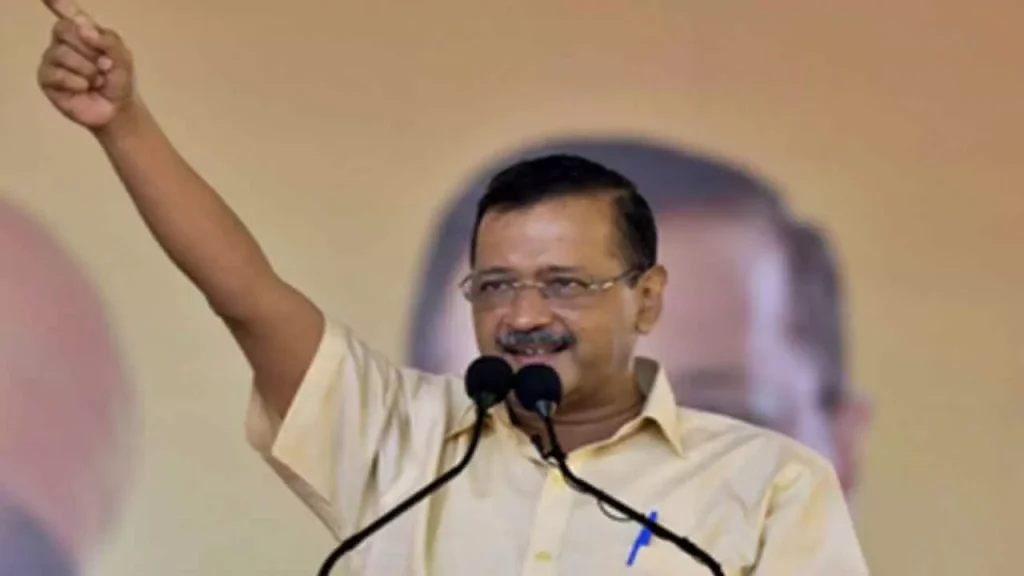
Dhanda’s latest attack should be seen in this context—it is not just about Kejriwal’s arrest but about a larger battle over who controls Delhi.
Political Reactions
AAP’s Stand
AAP leaders have united behind Dhanda’s statement. They have called for public movements, protests, and social media campaigns to highlight Kejriwal’s “unjust” treatment.
Congress’s Dilemma
The Congress Party, part of the INDIA alliance, faces a tricky situation. While it does not want to defend AAP fully (since both are rivals in Delhi), it also does not want to appear aligned with BJP. Hence, Congress leaders have cautiously spoken about “misuse of agencies” without directly supporting Kejriwal.
BJP’s Aggressive Counter
BJP leaders dismissed Dhanda’s remarks as “baseless.” They argue that AAP is trying to gain sympathy ahead of elections by portraying Kejriwal as a victim.
Media Narratives
The media landscape is equally polarized:
- Pro-AAP media highlights Kejriwal’s achievements and portrays his arrest as political oppression.
- Pro-BJP media focuses on the corruption angle, presenting Kejriwal as a failed experiment in Indian politics.
- Independent media voices often point out that while legal accountability is essential, the sheer number of cases against opposition leaders raises questions about selective targeting.
What This Means for Indian Democracy
Dhanda’s remarks raise a bigger question: Is India’s democracy strong enough to allow opposition leaders to function without constant legal harassment?
Key Concerns
- Misuse of Agencies: If agencies are indeed being used to target opposition, it sets a dangerous precedent.
- Public Trust: Constant arrests without convictions erode people’s faith in justice.
- Opposition Unity: Such incidents often strengthen opposition alliances, as leaders see a common threat.
- Democratic Balance: In a federal structure, Centre–State confrontations should not undermine governance.
Looking Ahead: The Road to Elections
With upcoming elections in various states and eventually the 2029 Lok Sabha polls, Kejriwal’s situation will play a significant role in shaping narratives.
- If courts find him innocent, it will bolster his image as a victim of political conspiracy, giving AAP a strong emotional advantage.
- If corruption is proven, it will permanently damage AAP’s credibility and strengthen BJP’s narrative.
Either way, Anurag Dhanda’s sharp attack ensures that the issue remains at the center of India’s political debate.
Conclusion
The war of words between AAP and BJP has once again highlighted the fragile balance of power in Indian democracy. Anurag Dhanda’s statement that “fake cases were filed against Arvind Kejriwal as part of a BJP conspiracy” is not just an attack on the ruling party—it is a reflection of the deep mistrust between opposition parties and the central government.
While Kejriwal sits in jail, his governance legacy—education reforms, Mohalla Clinics, and subsidies—continues to keep his image alive in the minds of Delhi’s citizens. Whether this memory translates into political gains for AAP or further decline depends on the outcome of the legal battles and the narrative each party successfully builds.
For now, one thing is clear: Arvind Kejriwal remains at the heart of India’s political storm, and Anurag Dhanda’s allegations have ensured that the debate over democracy, governance, and political vendetta is far from over.
Read more latest news

