
From Duty to Display: When Policemen Turned a Funeral into ‘Content’ in Amroha
Introduction
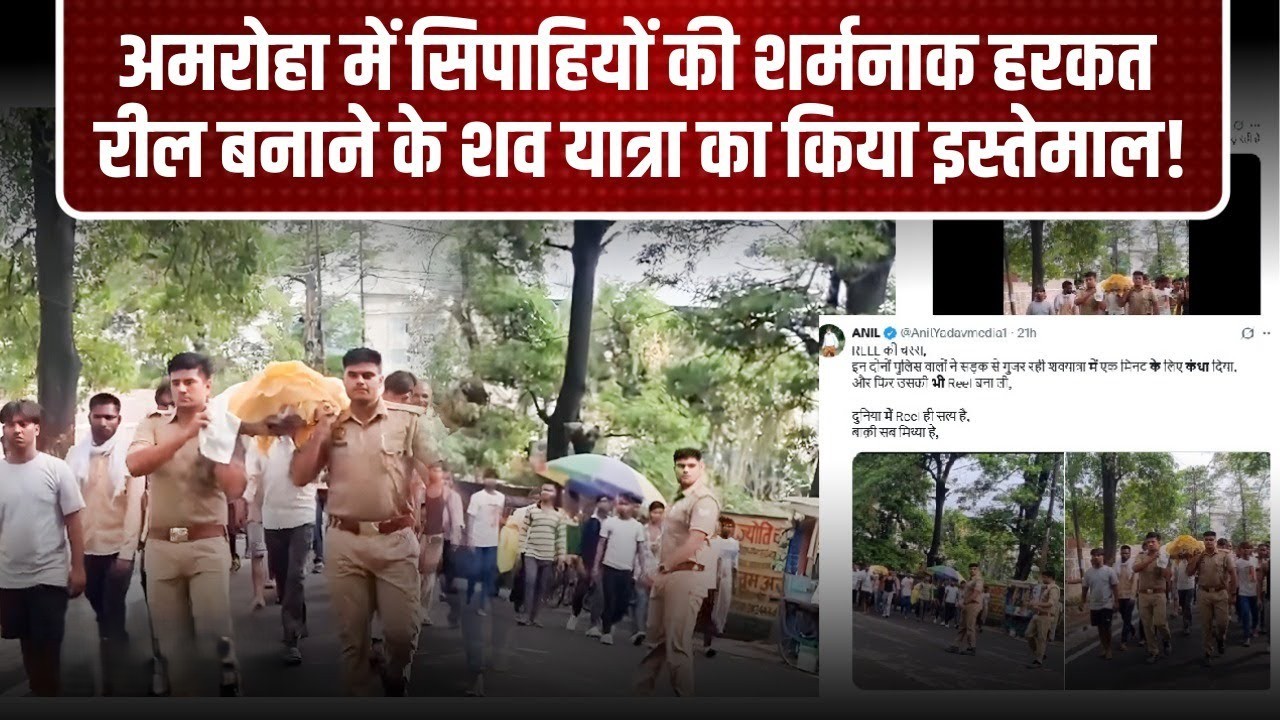
policemen In an age where social media governs perceptions and creates instant celebrities, a concerning trend has emerged—one where solemnity, ethics, and empathy are often sidelined in the rush for views, likes, and digital validation. The recent incident in Amroha, Uttar Pradesh, serves as a glaring example of this shift. In a moment that was supposed to reflect dignity, respect, and public service, a few policemen turned a funeral procession into a stage for shooting a reel, carrying the deceased’s bier on their shoulders while recording a video for social media.
The act has sparked a massive public outrage and debate, raising urgent questions about professionalism in law enforcement, digital addiction, and the fading boundaries between personal gratification and public duty.
This blog takes a deep dive into the Amroha incident—what happened, how the public reacted, the official response, and what it tells us about the evolving role of social media in governance and ethics.
What Happened in Amroha?
policemen On what should have been a quiet, respectful day in Amroha district of Uttar Pradesh, a group of policemen were tasked with performing the last rites of an unclaimed body. This is not unusual—law enforcement often steps in to ensure that deceased individuals without families receive a dignified farewell.
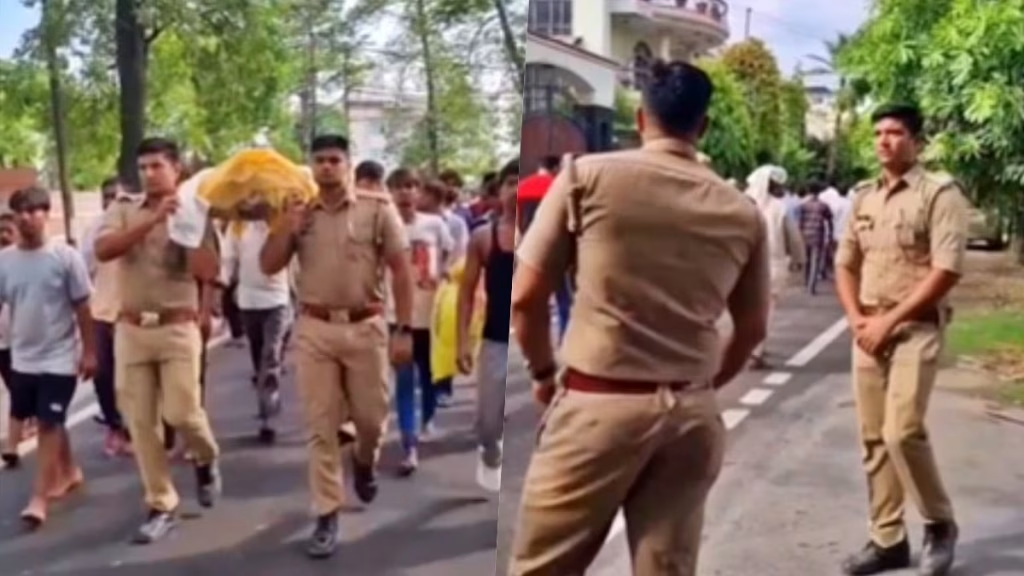
However, this particular group of policemen decided to record a social media reel while carrying the bier (arthi) of the deceased. The video shows them lifting the body, walking in procession, and acting in an overly dramatic and stylized manner. It appeared choreographed, almost as if they were recreating a scene from a movie or reality show. The video was later posted on Instagram and other platforms by one of the policemen involved.
As expected, the clip went viral—not for the right reasons. Within hours, the video was being shared across platforms with strong condemnation from citizens, media, and senior officials alike.
The Public Reaction: Outrage and Disbelief
The public outcry was instant and intense. Citizens from all walks of life expressed their anger and disappointment on social media and news platforms.
Common Reactions:
- “Have we lost all sense of humanity?”
- “A funeral is not a stage. This is beyond disgusting.”
- “Shame on the uniform being used for reels.”
What made the incident more disturbing was the total disregard for the dignity of the deceased. People questioned how public servants, sworn to uphold law and decency, could so casually violate the sanctity of a funeral—especially when the individual had no one else to perform their last rites.
The Official Response
policemen The Uttar Pradesh Police took swift action after the video surfaced. According to official statements:
- The policemen involved have been suspended pending inquiry.
- A departmental investigation has been initiated to determine the extent of misconduct.
- Senior officials publicly condemned the act and assured the public that such behavior would not be tolerated.
Statement from UP Police Spokesperson:
“We deeply regret the actions of a few individuals which do not reflect the values of the police force. Appropriate disciplinary measures are being taken.”
policemen The incident also prompted the District Magistrate and Superintendent of Police (SP) to issue internal advisories reinforcing the code of conduct for officers, especially during sensitive duties like funerals, custodial transfers, and interactions with the public.
The Ethics of Public Duty vs. Personal Fame
This incident opens a much larger debate about the role of social media in public service, particularly among those in uniform.
Key Ethical Concerns:
- Violation of Dignity: Filming a funeral and using it for social media clout is a blatant disregard for human dignity.
- Conflict of Interest: When public officials use their position for personal content creation, it undermines the trust placed in them.
- Lack of Sensitivity Training: The act reveals a possible gap in ethical training and understanding of decorum.
- Erosion of Public Trust: Each such incident chips away at the credibility of the police force.
Should policemen be allowed to film their duties? If yes, where do we draw the line?
Social Media and the ‘Content Culture’ in Uniformed Services
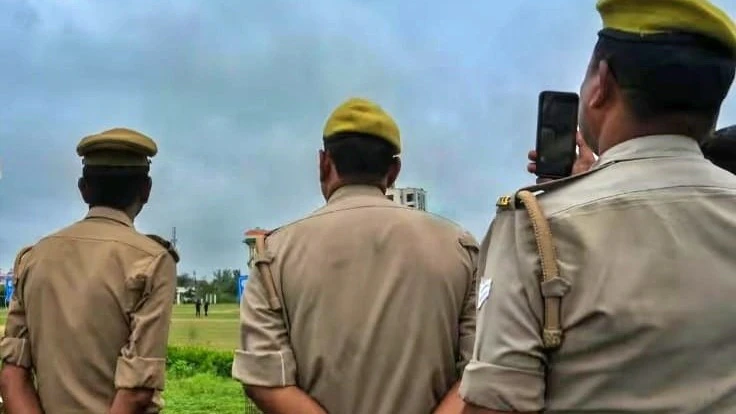
The rise of Instagram reels, TikToks, and YouTube shorts has led to an explosion of content creation, even among professionals in serious roles such as the police, armed forces, and healthcare.
In some cases, these videos are motivational, informative, or meant to build public relations. However, when the line between engagement and insensitivity is crossed, the consequences can be severe.
Examples of ‘Reel Culture’ Gone Wrong:
- A constable in Madhya Pradesh dancing in uniform with a gun.
- A traffic policeman from Delhi filming bike stunts during duty hours.
- A nurse in Rajasthan filming dancing videos inside a COVID ICU.
These trends suggest that social media fame is becoming a parallel currency, sometimes even more valued than official appreciation.
Legal Dimensions and Disciplinary Protocols
Under Indian law and police service rules, filming official duties for personal use—especially when it involves sensitive situations like deaths, investigations, or victim interactions—is prohibited.
The Police Conduct Rules mandate officers to act with dignity, discipline, and discretion, especially in public view. While there is no specific law against filming a funeral, such acts may fall under misconduct or violation of ethical protocols.
Furthermore, the Indian Penal Code (IPC) has provisions under Section 297 (trespassing on burial places, etc.), which could be invoked depending on the circumstances.
Psychological Insight: Why Do Officers Do It?
A few psychologists and sociologists studying digital behavior suggest that dopamine-driven feedback loops of likes, comments, and views are altering human behavior—even among disciplined professionals.
Why Policemen Make Reels:
- Peer pressure and trend-following.
- Lack of awareness about digital boundaries.
- Desire for identity beyond uniform.
- Limited oversight or digital literacy training.
The solution, therefore, must include not just punishment but also education and re-orientation.
Voices from the Force: Mixed Reactions
Interestingly, reactions within the police force itself have been divided. While most senior officers have condemned the incident, some young constables argue that not all reels are made with ill intention.
“There are cops who make reels about road safety or public awareness. Not every video should be labeled bad,” said a young officer in Lucknow.
This calls for a clear policy framework—what’s acceptable, what’s not, and what are the consequences.
Reforming Police Culture in the Digital Age
To prevent such incidents in the future, law enforcement agencies need to adopt proactive strategies:
Recommendations:
- Digital Conduct Training in police academies.
- Social Media Ethics Workshops for all officers.
- Strict Policy Guidelines on use of mobile phones during sensitive duties.
- Monitoring Systems for misuse of official resources for personal gain.
- Encouragement of Positive Storytelling—within ethical limits.
Public Expectations vs. Human Imperfection
While the public rightly expects policemen to act with discipline and dignity, it’s important to remember that they too are human. The issue arises when this humanity is overshadowed by poor judgment and insensitivity.
Policing is already a challenging job—long hours, high stress, low rewards. What’s needed is a balance between empathy, accountability, and support, both from within the system and from society.
Conclusion: A Moment of Reflection for the System
The Amroha reel incident is not just an isolated act of poor taste—it’s a symptom of a larger problem where public service is being commodified for digital popularity. The boundary between personal expression and professional responsibility must be reestablished before more such incidents erode the sanctity of public institutions.
India’s police force is one of the largest in the world and plays a vital role in maintaining law and order. But with power comes responsibility—and that includes respecting the dead, honoring the uniform, and remembering that not every moment is content.
read more latest news

