
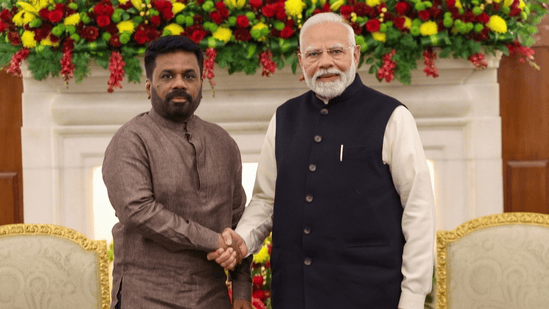
On a momentous three-day visit to Lanka, Indian Prime Minister Narendra Modi’s arrival on Friday marked a significant milestone in India- Lanka relations. The visit was anticipated to deepen the already multifaceted relationship between the two nations and explore new avenues of cooperation in key sectors such as defense, energy, digital infrastructure, health, and trade. Modi’s visit comes at a time when both countries are looking to bolster their ties across various dimensions, from regional security to economic collaboration.
In this blog, we will explore the significance of Prime Minister Modi’s visit, the historical and strategic context of India-Lanka relations, the key agreements expected to be signed during the visit, and the broader implications for regional and global politics. This visit is seen as an opportunity to reinforce the ties between the two neighboring nations, both of whom share cultural, historical, and geographical commonalities, while also navigating a complex geopolitical landscape in the Indian Ocean region.
Historical and Strategic Context of India-Lanka Relations
India and Lanka have shared a rich history, built on centuries of cultural exchanges, religious ties, and maritime trade. Both countries are part of the broader South Asian region and have had long-standing historical, cultural, and economic interactions. Despite some challenges and tensions, India-Lanka relations have remained robust, and the visit of Prime Minister Modi to Lanka presents a renewed focus on strengthening ties, particularly in areas of mutual interest.
Shared Cultural Heritage
One of the strongest pillars of India-Lanka relations is their shared cultural and religious heritage. Sri Lanka has deep connections to India, particularly through the spread of Buddhism. Many Lankans trace their roots to India, and cultural exchanges between the two countries have been happening for millennia. The close religious ties between India and Lanka are evident in the significant Buddhist population in Sri Lanka, and the historic city of Anuradhapura is home to the Sri Maha Bodhi, a sacred fig tree said to have been grown from the original tree under which the Buddha attained enlightenment in India.
Additionally, both countries share a common colonial past under the British Empire, which has had a lasting impact on their political, legal, and educational systems. Post-independence, India and Lanka continued to maintain a diplomatic relationship, though there have been occasional tensions, particularly regarding issues related to Lanka’s Tamil minority, regional security concerns, and balancing relations with other major powers like China.
Geopolitical Importance
The Indian Ocean has emerged as a strategic geopolitical theater in recent decades. Lanka’s position along key maritime trade routes makes it a crucial player in regional security, economic stability, and energy transportation. India and Sri Lanka are natural partners in securing the stability of this region. In recent years, Sri Lanka has sought to balance its relations with India and China, particularly in the context of China’s Belt and Road Initiative (BRI), which has led to Chinese investments in key infrastructure projects in Sri Lanka.
India has closely monitored these developments, given Sri Lanka’s proximity and its strategic importance to India’s national security. Thus, the Modi administration has placed great emphasis on ensuring that India maintains strong ties with Sri Lanka to counterbalance China’s growing influence in the Indian Ocean region. Prime Minister Modi’s visit comes as an effort to strengthen this partnership and assert India’s role as Sri Lanka’s key regional ally.
Prime Minister Modi’s Visit: A Broadening of Bilateral Cooperation
Prime Minister Modi’s three-day visit to Sri Lanka aims to deepen cooperation between the two nations in several critical areas. This trip underscores India’s commitment to enhancing its engagement with Sri Lanka and showcases the potential for collaboration across a wide range of sectors. Here are the key areas of cooperation and the expected agreements during this visit:
1. Defense Cooperation
One of the most critical aspects of Prime Minister Modi’s visit is the strengthening of defense cooperation between India and Sri Lanka. As both countries face security challenges in the Indian Ocean region—ranging from maritime security issues to potential threats from non-state actors—closer defense ties are essential for regional stability.
India has been Sri Lanka’s key partner in defense and security matters, providing assistance in counterinsurgency and anti-terrorism operations, as well as training programs for Sri Lankan military personnel. The two nations have also worked together on joint maritime security operations in the Indian Ocean, where ensuring free and secure sea lanes is of paramount importance.
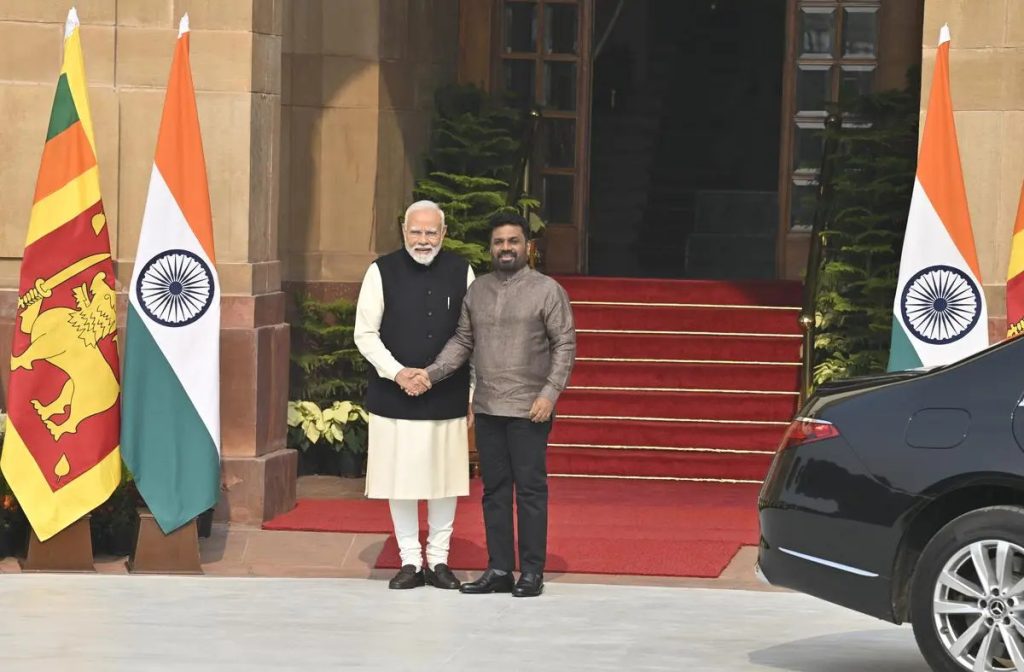
During Prime Minister Modi’s visit, it is expected that India and Sri Lanka will sign new defense cooperation agreements. These agreements will likely focus on enhancing maritime security, conducting joint military exercises, and increasing cooperation on counter-terrorism efforts. Additionally, India is expected to provide Sri Lanka with advanced military training and capacity-building programs. The strengthening of defense ties comes at a time when both nations are keen on ensuring a peaceful and stable regional environment.
2. Energy and Power Sector Collaboration
Energy cooperation is another area that is expected to see major strides during the visit. Sri Lanka, as an island nation, depends heavily on imports for its energy needs. India, on the other hand, has significant expertise in renewable energy and energy infrastructure development, offering an ideal partnership for Sri Lanka in this area.
During the visit, India is likely to propose collaboration in renewable energy, particularly in solar and wind power, which have great potential in Sri Lanka’s vast coastal areas. In addition to renewable energy, discussions are expected to focus on cooperation in natural gas and electricity transmission. India has already provided Sri Lanka with some assistance in the form of energy infrastructure projects, and this visit is expected to further cement these partnerships, allowing for greater energy security in Sri Lanka.
A major expected outcome of this cooperation could be the enhancement of regional power grids, which will allow India and Sri Lanka to trade electricity more efficiently. Furthermore, India may offer support in upgrading Sri Lanka’s energy infrastructure, making it more resilient and less dependent on fossil fuel imports.
3. Digital Infrastructure and Technology
India has emerged as a global leader in information technology and digital innovation, and during his visit, Prime Minister Modi is expected to focus on enhancing cooperation in the digital infrastructure space. India has been at the forefront of initiatives like the Digital India campaign, which seeks to improve technology access and digital literacy across the country.
Sri Lanka, as a rapidly developing nation, has expressed interest in leveraging India’s expertise to build and upgrade its digital infrastructure. Both countries will likely sign agreements in the fields of e-governance, cyber security, and digital literacy. These agreements could include training programs, knowledge sharing, and the establishment of digital platforms to foster innovation in Sri Lanka. India’s collaboration in building Sri Lanka’s digital infrastructure would also help enhance bilateral trade and people-to-people connectivity.
Moreover, the agreement could also focus on the expansion of broadband internet access to rural areas in Sri Lanka, bringing digital solutions to the country’s most underserved populations. India has a long track record of successfully executing large-scale digital infrastructure projects, and the Sri Lankan government is expected to tap into this experience to boost its digital economy.
4. Health Cooperation
The healthcare sector is another crucial area where India and Sri Lanka have already forged strong ties. India has provided medical assistance to Sri Lanka in the past, including the supply of essential medicines and medical equipment, especially during the COVID-19 pandemic.
During Prime Minister Modi’s visit, discussions are expected to center on increasing cooperation in healthcare services, medical research, and the pharmaceutical sector. India’s expertise in affordable healthcare and medicine will be a key focal point, with both sides likely to sign agreements on medical research, sharing best practices in public health, and expanding access to affordable medical treatments.
India and Sri Lanka will also discuss the possibility of strengthening collaboration in medical tourism, a growing industry where India is already a global leader. Sri Lanka, with its proximity to India, could become a regional hub for medical tourism, benefiting from India’s world-class medical expertise and cost-effective healthcare services.
5. Trade and Economic Relations
Trade between India and Sri Lanka has grown significantly over the years, but there remains untapped potential in this sector. As both countries look to recover from the economic impact of the COVID-19 pandemic, the need for stronger economic cooperation has never been greater.

Prime Minister Modi’s visit is expected to include discussions on expanding bilateral trade and investments, particularly in sectors such as agriculture, manufacturing, and services. Sri Lanka is a key trading partner for India in South Asia, and there is much potential for both countries to diversify trade, particularly in areas such as food processing, textiles, and electronics.
Additionally, there could be agreements to further facilitate trade through the Free Trade Agreement (FTA) between India and Sri Lanka. The visit may focus on improving the implementation of existing trade agreements and exploring new avenues to reduce trade barriers and enhance economic cooperation.
Geopolitical Context: India-Sri Lanka and Regional Dynamics
While the bilateral agreements and cooperation discussed above are crucial, Prime Minister Modi’s visit must also be viewed through the lens of broader regional geopolitics. Sri Lanka’s location in the Indian Ocean makes it a key player in the region’s security and economic dynamics. As China’s influence in the Indian Ocean grows, Sri Lanka has sought to maintain a delicate balance between its relations with China and India.
India has expressed concerns over China’s growing presence in Sri Lanka, particularly through infrastructure projects such as the Hambantota Port, which is leased to China for 99 years. Prime Minister Modi’s visit is, in part, a diplomatic effort to reassure Sri Lanka of India’s commitment to its security and to counterbalance China’s increasing influence in the region.
The India-Sri Lanka partnership, particularly in the context of maritime security, counterterrorism, and energy trade, plays an important role in securing the Indian Ocean region and ensuring the free flow of trade through this vital maritime corridor.
Conclusion: A Promising Future for India-Sri Lanka Relations
Prime Minister Narendra Modi’s visit to Sri Lanka marks a significant step forward in strengthening the bilateral relationship between the two nations. The visit is expected to lead to the signing of key agreements in areas such as defense, energy, digital infrastructure, healthcare, and trade—areas that will foster deeper cooperation and mutual benefit for both India and Sri Lanka.
As the two nations work together to enhance regional security, economic growth, and cultural exchange, this visit reaffirms India’s commitment to its Neighborhood First policy and its desire to build lasting partnerships with its neighbors. The growing relationship between India and Sri Lanka, particularly in strategic sectors, is likely to have a significant impact on the stability and prosperity of the Indian Ocean region.
In a rapidly changing geopolitical landscape, Prime Minister Modi’s visit not only strengthens India-Sri Lanka ties but also positions both countries to better navigate future challenges, ensuring peace, stability, and prosperity for their peoples and the broader region.
read more latest news

