

Title: Asaduddin Owaisi’s Protest Against the Waqf Bill: A Deep Dive into the Controversy
On March 28, 2025, amidst the weekly observance of Alvida Juma (the last Friday of Ramadan), a significant event occurred in Indian politics when Asaduddin Owaisi, the prominent Lok Sabha Member of Parliament (MP) from Hyderabad, joined the ongoing protests against the Waqf Bill. Known for his staunch advocacy of minority rights and his position as the leader of the All India Majlis-e-Ittehad-ul-Muslimeen (AIMIM), Owaisi’s participation in this protest added considerable weight to an already contentious issue.
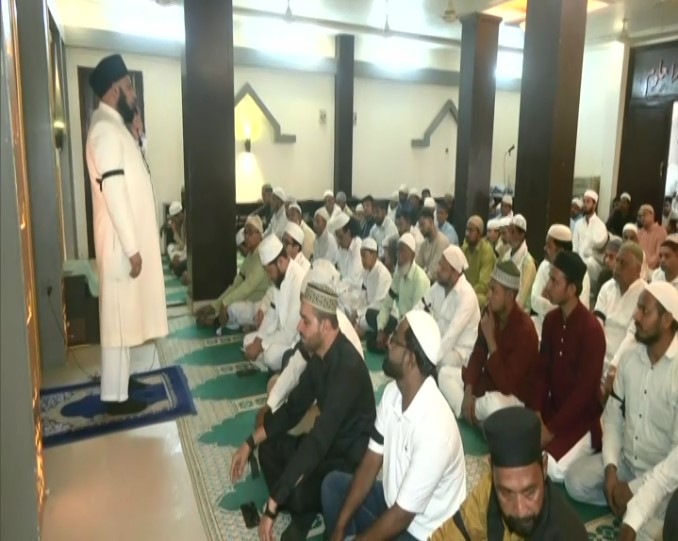
Wearing a black band, a symbolic gesture of protest, Owaisi took a bold stand against what he perceives as an infringement on the rights of the Muslim community in India. The Waqf Bill, a piece of legislation intended to reform and regulate Waqf properties in India, has stirred considerable controversy. Supporters of the bill argue that it is a necessary reform to ensure proper management and accountability of Waqf assets, while critics, including Owaisi, contend that it will strip the community of its rightful control over religious endowments.
In this blog, we will delve into the intricacies of the Waqf Bill, Owaisi’s reasons for protesting it, the broader implications of this legislation on the Muslim community in India, and the significance of his protest on Alvida Juma, a day of spiritual importance to millions of Muslims across the country.
Understanding the Waqf Bill
Before exploring the reasons behind Owaisi’s protest, it is essential to understand the key provisions of the Waqf Bill that have sparked such controversy.
A Waqf, in Islamic law, is a property or asset donated for religious, educational, or charitable purposes, the income from which is meant to support such causes. The Waqf Act of 1995 governs the management of these properties in India, but there have been numerous concerns over the years regarding the mismanagement of Waqf assets, particularly in terms of encroachments, financial misappropriation, and the lack of transparency in how these properties are being used.
The Waqf Bill 2025 seeks to amend the 1995 Waqf Act and introduce reforms that would allow for better regulation and oversight of Waqf properties. Some of the key provisions of the Bill include:
- Central Waqf Council (CWC): The bill seeks to strengthen the powers of the Central Waqf Council to monitor Waqf properties, particularly by creating a more centralized system of control.
- State Waqf Boards (SWBs): While the bill allows for state-level Waqf boards to manage Waqf assets, it places restrictions on their autonomy and shifts certain powers to the central government.
- Transparency and Accountability: The bill introduces measures for greater transparency and accountability in the management of Waqf properties, including the requirement for annual audits and public reporting of assets.
- Dispute Resolution Mechanism: The Bill proposes a framework for resolving disputes related to Waqf properties, which is expected to streamline legal processes and reduce delays.

The stated intent behind the Waqf Bill is to ensure that Waqf properties are managed efficiently, with the income generated being used for charitable purposes such as education, healthcare, and community welfare. However, the bill’s critics, including Owaisi, have raised concerns over several aspects of the legislation that they believe will disproportionately affect the Muslim community and their control over religious endowments.
Owaisi’s Concerns with the Waqf Bill
Asaduddin Owaisi’s protest against the Waqf Bill is rooted in his belief that the legislation undermines the autonomy of Waqf institutions, particularly those that serve the Muslim community. Owaisi has long been a vocal critic of policies and laws that he perceives as discriminatory toward Muslims, and his stand on the Waqf Bill is no different. Below, we explore his main concerns with the Bill:
1. Centralization of Control
One of Owaisi’s primary objections to the Waqf Bill is its centralization of control over Waqf properties. The bill proposes giving the Central Waqf Council greater powers to oversee Waqf institutions, shifting authority from state-level Waqf boards to a more centralized authority. Owaisi and other critics argue that this centralization would effectively strip state-level boards of their autonomy, thereby reducing the power of local communities to manage their own religious and charitable assets.
In Owaisi’s view, the bill is part of a broader pattern of centralization in the Indian government’s approach to governance, where local Muslim institutions, which have historically been managed by the community, will be placed under the control of a government apparatus that may not understand or respect the nuances of these institutions.
2. Potential for Government Intervention in Religious Affairs
Owaisi has repeatedly voiced his concerns about the increasing government intervention in the religious affairs of the Muslim community. The Waqf Bill, in his view, will give the government undue influence over religious institutions that were intended to operate independently, free from political interference. Waqf properties are often closely linked to religious and cultural practices, and Owaisi fears that the new regulations could open the door for the government to intervene in religious matters, which would violate the fundamental principle of the separation of religion and state.
3. Lack of Consultation with Muslim Organizations
Another significant issue for Owaisi and his allies is the perceived lack of consultation with Muslim organizations and religious leaders before the bill was introduced. Owaisi has emphasized that the Waqf Bill was drafted without the involvement of key stakeholders, such as the All India Muslim Personal Law Board (AIMPLB), local Waqf boards, and other Muslim bodies that manage religious endowments. This, Owaisi believes, reflects a broader disregard for the voices and concerns of the Muslim community.
4. Disempowerment of Local Communities
Many Waqf properties are held and managed by local committees, and these properties are often used for community welfare, such as running madrasas, hospitals, and orphanages. Owaisi has argued that by centralizing control and imposing additional bureaucratic hurdles, the bill would effectively disempower these local communities, leading to a situation where the management of their own religious endowments would be dictated by external authorities.
5. Potential for Misuse and Mismanagement
Owaisi has expressed concerns that the government could misuse its enhanced powers under the bill to take control of Waqf properties for political purposes. He fears that the bill could lead to the mismanagement of assets, with officials using the new system to manipulate religious institutions for their own benefit. Given the political climate in India, Owaisi believes that such a scenario is not only possible but likely.
The Significance of Alvida Juma for Owaisi’s Protest
The decision to protest against the Waqf Bill on Alvida Juma, the last Friday of Ramadan, is a calculated one. Alvida Juma holds special significance for Muslims worldwide. It is a day of deep prayer and reflection as Muslims prepare for the end of Ramadan and the arrival of Eid. On this day, millions of Muslims gather at mosques for the final congregational Friday prayer of the holy month.
By choosing this particular day for his protest, Owaisi not only highlighted the importance of the issue but also drew attention to the perceived threat that the Waqf Bill poses to the Muslim community. For Owaisi, this protest was an opportunity to remind Muslims that the battle for the protection of their religious and cultural institutions is not only a political issue but also a matter of spiritual and social importance.
Wearing a black band, a universal symbol of protest, Owaisi stood in solidarity with those who oppose the Waqf Bill, making a powerful statement about his commitment to defending the rights of the Muslim community. His presence at the protest also brought greater visibility to the issue, especially as the media extensively covered the protests across the country. Owaisi’s actions on Alvida Juma were both symbolic and substantive—he used a moment of religious significance to convey a political message, urging the government to reconsider the bill and engage with the Muslim community before moving forward.
The Response to Owaisi’s Protest
Owaisi’s protest against the Waqf Bill has not been without its critics. Supporters of the bill argue that the proposed reforms are necessary to ensure that Waqf properties are properly managed and that the income generated from these properties is used for the benefit of the community. They contend that the bill’s provisions for transparency and accountability will help eliminate corruption and ensure that Waqf assets are used for their intended purposes.
However, critics, particularly those within the Muslim community, view the bill as a means for the government to control religious assets and undermine the autonomy of Muslim institutions. They argue that instead of improving the management of Waqf properties, the bill will lead to greater government interference and further marginalize the Muslim community.
The protests led by Owaisi have sparked widespread debate across India. While many of his supporters believe that the bill is a direct assault on Muslim rights, others believe that Owaisi is using the issue to further his political agenda. The protests have also prompted a broader conversation about the treatment of minorities in India, particularly in relation to religious freedoms and the autonomy of community institutions.
The Road Ahead: The Future of the Waqf Bill
As the protests against the Waqf Bill continue to grow, the Indian government faces mounting pressure to address the concerns raised by Owaisi and other critics. The fate of the bill will depend on how the government responds to these protests and whether it is willing to engage in meaningful dialogue with the Muslim community.
Owaisi’s protest on Alvida Juma serves as a reminder that religious and political issues are often intertwined, and that the protection of community rights should be a priority for any government. As India moves forward with its legislative agenda, it is crucial that the voices of marginalized communities, such as the Muslim population, are heard and respected.
In the end, the controversy surrounding the Waqf Bill is a reflection of the larger struggle for justice, equality, and autonomy that minorities in India continue to face. Owaisi’s protest is not just about a single piece of legislation—it is about safeguarding the rights and dignity of a community that has long felt marginalized in the political landscape of India. The outcome of this protest may set an important precedent for future political engagements and the protection of minority rights in the country.
read more latest news

