
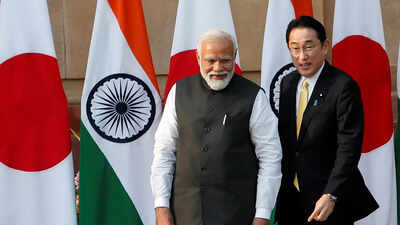
India Makes History, Surpassing Japan
Introduction: The Rise of a New Global Power
India created history by leaving Japan, once considered a developing nation with limited global influence, has now emerged as a rising powerhouse on the world stage. In a landmark moment, India has officially surpassed Japan in terms of economic size, a historic milestone that signals not only rapid growth but a major shift in global geopolitics and economics. This is not merely a story of GDP figures—it’s about a nation’s transformation through innovation, resilience, and strategic planning.
From its booming tech sector to its growing influence in global diplomacy and its vast infrastructure development, India’s ascent has captured the attention of the world. Let’s delve into how India achieved this feat, why it matters, and what it means for the future of global power dynamics.
1. Economic Milestone: India Surpasses Japan in GDP
According to the latest data from global financial institutions like the IMF and World Bank, India has overtaken Japan to become the world’s third-largest economy in terms of GDP at purchasing power parity (PPP). Even in nominal terms, India is closing the gap fast, driven by strong domestic demand, a large and young population, and robust policy reforms.
Key Stats:
- India’s GDP (Nominal): Approx. $4.2 trillion
- Japan’s GDP (Nominal): Approx. $4.1 trillion
- GDP Growth Rate (2024–25): India ~6.8%, Japan ~1.2%
This transition reflects not only economic growth but also India’s emergence as a major player in global trade, manufacturing, and services.
2. The Growth Drivers Behind India’s Rise
India’s journey from being the 10th largest economy in 2014 to 3rd in 2025 wasn’t an accident. It was the result of carefully implemented structural reforms and consistent growth across key sectors.
a) Digital Revolution
India has experienced a massive digital transformation, with projects like Digital India, UPI (Unified Payments Interface), and Jan Dhan Yojana revolutionizing banking, transactions, and financial inclusion.
b) Manufacturing Push – ‘Make in India’
Launched in 2014, Make in India aimed to boost manufacturing and reduce dependency on imports. Sectors like electronics, automobiles, and defense manufacturing have seen exponential growth, drawing global investments from companies like Apple, Tesla, and Boeing.
c) Startup Ecosystem
India now boasts the third-largest startup ecosystem in the world, with over 100 unicorns. Innovation in fintech, edtech, agritech, and healthtech is fueling entrepreneurship and creating millions of jobs.
d) Infrastructure Development
Massive investment in roads, railways, airports, ports, and smart cities has not only improved connectivity but also boosted logistics and trade competitiveness.
3. Strategic Global Diplomacy
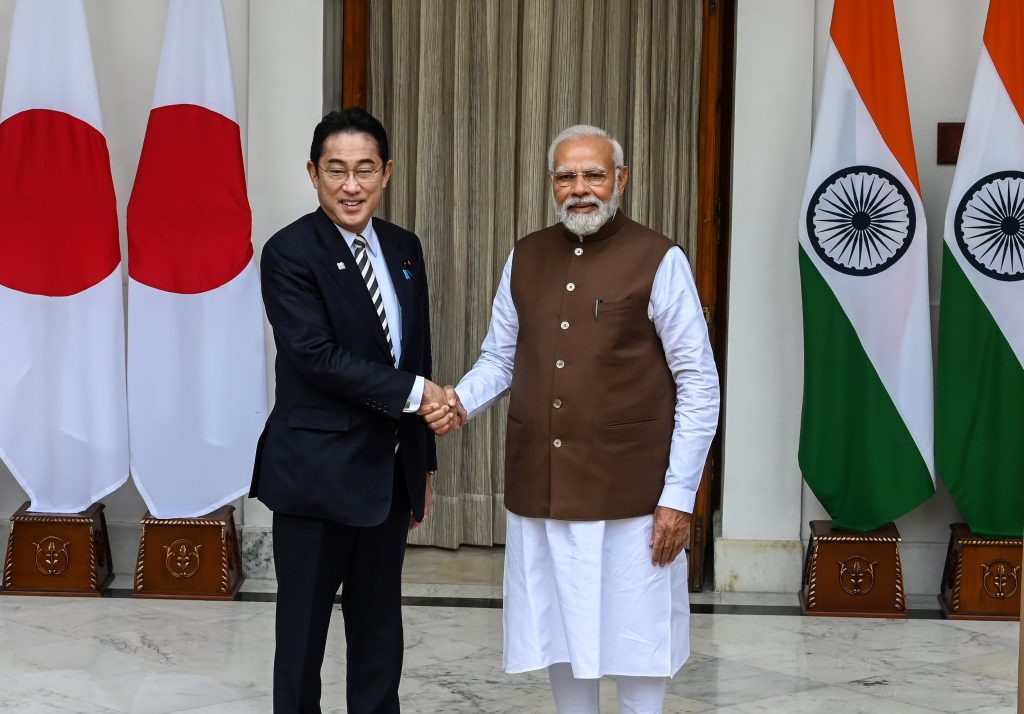
India’s global diplomacy under Prime Minister Narendra Modi has been proactive and visionary. The country has elevated its presence in global forums like the G20, BRICS, SCO, and QUAD. Hosting the G20 Summit in 2023 positioned India as a voice of the Global South.
India’s neutral but principled stance on international conflicts, especially the Russia-Ukraine war, has earned it respect as a responsible and balanced power.
4. Japan vs India: Key Comparisons
| Parameter | India (2025) | Japan (2025) |
|---|---|---|
| Population | ~1.43 billion | ~123 million |
| Median Age | ~28 years | ~48 years |
| GDP (Nominal) | ~$4.2 trillion | ~$4.1 trillion |
| GDP Growth Rate | ~6.8% | ~1.2% |
| Tech & Startup Ranking | 3rd globally | 5th globally |
| Defense Budget Ranking | 3rd globally | 6th globally |
Japan has long been a symbol of technological excellence and economic stability, but its aging population and stagnant growth have slowed its progress. In contrast, India’s young demography and expanding middle class have become its biggest assets.
5. Defense and Space: India’s Strategic Edge
India is now the third-largest defense spender in the world, after the US and China. Initiatives like Aatmanirbhar Bharat in defense manufacturing have reduced dependency on imports, with indigenous weapons systems like Tejas, BrahMos, and Arjun tanks being exported.
In space, ISRO has become a global leader in cost-effective missions. From Chandrayaan-3’s successful moon landing to the Gaganyaan human spaceflight program, India is making headlines as a space superpower.
6. Education, Healthcare, and Social Transformation
India’s investments in education and healthcare are beginning to pay dividends.
- NEP 2020 (New Education Policy) promotes critical thinking, vocational skills, and digital literacy.
- The Ayushman Bharat Scheme, the world’s largest health assurance program, has provided medical coverage to over 50 crore Indians.
- Women empowerment, through programs like Beti Bachao Beti Padhao and increased female workforce participation, is reshaping the social fabric.
7. Challenges India Overcame
India’s journey hasn’t been without obstacles. The country had to navigate:
- The economic shock of COVID-19
- Border tensions with China
- Internal issues like unemployment and rural poverty
Yet, the resilience shown by its institutions, private sector, and citizens has helped India bounce back stronger each time.
8. What the Future Holds for India
a) Target: $5 Trillion Economy
India aims to become a $5 trillion economy by 2027, and a developed nation by 2047 (India@100 vision).
b) Green Energy Leadership
India is leading the way in solar and wind energy, and is a founding member of the International Solar Alliance (ISA). The government is targeting net-zero carbon emissions by 2070.
c) Global Manufacturing Hub
With China facing global scrutiny and Japan’s capacity plateauing, India is poised to become the next global factory, especially in semiconductors, electronics, and EVs.
9. The Global Impact of India’s Rise
India’s economic rise is not just a national triumph—it changes the balance of global power.
- Asia’s Center of Gravity Shifts: Earlier, Japan and China dominated. Now, India joins the elite league.
- New Investment Magnet: Foreign companies are increasingly preferring India over China due to favorable demographics and policy stability.
- Soft Power Growth: Indian culture, cinema, cuisine, yoga, and technology are gaining popularity worldwide.
10. Reactions from Around the World
a) International Media
Outlets like The Economist, Bloomberg, and Financial Times have highlighted India’s rise as “inevitable” and “long overdue.”
b) Global Investors
Warren Buffett’s Berkshire Hathaway, Elon Musk’s Tesla, and Google CEO Sundar Pichai have expressed confidence in India’s long-term potential.
c) Diplomatic Circles
World leaders including Joe Biden, Emmanuel Macron, and Vladimir Putin have praised India’s balancing act and economic reforms.
Conclusion: India’s Tryst With Destiny—Realized
India’s journey from a post-colonial, struggling economy to a global economic superpower is nothing short of historic. Surpassing Japan is not just a symbolic victory, but a testament to the power of vision, strategy, and perseverance.
As India charts its path ahead, it carries with it the hopes of 1.4 billion people and the aspirations of a new global order. The world is watching, and India is ready to lead.
India has not just surpassed Japan—it has announced to the world: the future is here, and the future is Indian.


https://shorturl.fm/FIJkD
https://shorturl.fm/9fnIC
https://shorturl.fm/XIZGD
https://shorturl.fm/bODKa
https://shorturl.fm/TbTre