
Controversy in Madhya Pradesh Politics: Remarks That Sparked a Nationwide Debate
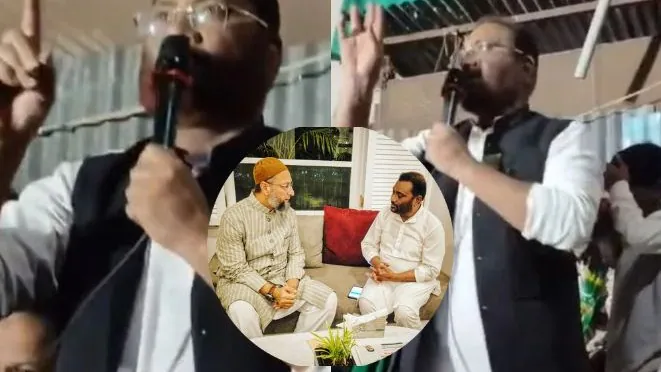
Madhya Pradesh politics witnessed a fresh storm after AIMIM leader Tauqeer Nizami made a controversial and sharply worded statement that quickly went viral across social media and news platforms. His remarks, delivered during a public interaction, categorized Muslims into three provocative groups and immediately drew reactions from political parties, civil society, and ordinary citizens alike.
What Exactly Was Said?
During the statement that triggered the controversy, AIMIM leader Tauqeer Nizami described Muslims as being divided into three categories: “Shoe-lickers are found in the Congress, shoe-eaters are found in the BJP, and shoe-throwers are found in the Majlis.” The language, tone, and symbolism of the comment were seen by many as offensive, divisive, and politically inflammatory.
Background of the Leader and His Political Role
Before this controversy, AIMIM leader Tauqeer Nizami was known largely within regional political circles in Madhya Pradesh. As a representative of the All India Majlis-e-Ittehadul Muslimeen, he has often spoken about minority rights, political representation, and issues concerning Muslims in central India.
Understanding the Political Symbolism Behind the Statement
Supporters of AIMIM leader Tauqeer-Nizami argue that the statement was metaphorical and intended to criticize what he perceives as submissive or opportunistic politics by Muslim leaders in other parties. Critics, however, say the metaphor crossed the line into crude insult rather than constructive criticism.

Immediate Political Reactions
Soon after the clip circulated, reactions poured in. Opposition parties condemned the statement, while some within AIMIM attempted damage control. The controversy involving AIMIM leader Tauqeer-Nizami quickly became a talking point in television debates and digital news platforms.
BJP’s Response to the Remarks
Leaders from the Bharatiya Janata Party strongly criticized the language used by AIMIM leader Tauqeer Nizami, calling it disrespectful and reflective of what they described as “politics of provocation.” BJP spokespersons demanded an apology and accused AIMIM of deliberately inflaming communal sentiments.
Congress Reacts Strongly
The Congress party also reacted sharply. Senior leaders said the comments made by AIMIM leader Tauqeer Nizami were an insult not just to political workers but to democratic discourse itself. They accused AIMIM of undermining unity among minorities for political gain.

AIMIM Internal Clarification Efforts
Following the backlash, party insiders suggested that AIMIM leader Tauqeer-Nizami did not intend to offend religious sentiments but was attempting to make a political point about representation and resistance. However, no formal apology was immediately issued, further fueling the debate.
Madhya Pradesh’s Sensitive Political Landscape
Madhya Pradesh has witnessed several politically sensitive moments in recent years. The statement by AIMIM leader Tauqeer Nizami came at a time when communal harmony and electoral strategies are already under scrutiny, making the controversy even more significant.
Impact on Communal Harmony
Social activists expressed concern that remarks like those made by AIMIM leader Tauqeer Nizami could deepen divisions within communities. They warned that provocative language from political leaders often has consequences beyond immediate political headlines.
Legal and Ethical Dimensions
Legal experts weighed in, noting that while AIMIM leader Tauqeer Nizami may be protected under freedom of speech, political leaders also carry ethical responsibility. They emphasized that the law allows speech, but public morality demands restraint.
Possible Impact on Upcoming Elections
Analysts believe the controversy involving AIMIM leader Tauqeer Nizami could influence voting patterns, especially among undecided voters. Some argue that polarizing remarks may consolidate a small base but alienate broader sections of society.
Debate on Muslim Political Representation
The remarks reopened a larger debate on Muslim political representation in India. Supporters claim AIMIM leader Tauqeer Nizami voiced frustration felt by many, while critics argue that such expressions weaken collective political strength.
Social Media Storm and Public Opinion
Hashtags, memes, and opinion threads flooded social media after the statement by AIMIM leader Tauqeer Nizami surfaced. While some users defended his bluntness, many criticized the language as degrading and unnecessary.
Historical Use of Provocative Rhetoric in Politics
Indian politics has a long history of sharp rhetoric. Commentators pointed out that AIMIM leader Tauqeer Nizami is not the first politician to use provocative metaphors, but the current media environment amplifies every word instantly.
Responsibility of Political Leaders
Political observers stressed that leaders like AIMIM leader Tauqeer Nizami must recognize their influence. Words spoken at rallies or interviews can shape public behavior, sometimes with unintended consequences.
Silence or Distance From National Leadership
So far, national-level leadership has maintained distance from the remarks made by AIMIM leader Tauqeer Nizami. This silence has led to speculation about whether the party endorses, tolerates, or privately disagrees with the statement.
What This Means for Political Discourse
The controversy highlights how fragile political discourse has become. Statements like those by AIMIM leader Tauqeer Nizami raise questions about where criticism ends and insult begins in democratic debate.
Calls for Apology and Accountability
Several civil society groups have demanded that AIMIM leader Tauqeer Nizami issue a public apology. They argue accountability is essential to maintain respectful political dialogue in a diverse society like India.
A Turning Point or Just Another Controversy?
Whether this episode becomes a turning point or fades as another political controversy remains to be seen. For now, AIMIM leader Tauqeer Nizami continues to be at the center of intense discussion.
Conclusion: Beyond the Statement
In conclusion, the controversy surrounding AIMIM leader Tauqeer Nizami is not just about one statement but about the tone of politics today. It reflects growing polarization, the struggle for representation, and the urgent need for responsible leadership.
Final Thoughts on the Political Fallout
As debates continue, the episode involving AIMIM leader Tauqeer Nizami serves as a reminder that words matter deeply in public life. How leaders choose to express dissent and criticism will shape not only elections but also social harmony in the years ahead.
Read More latest news

