
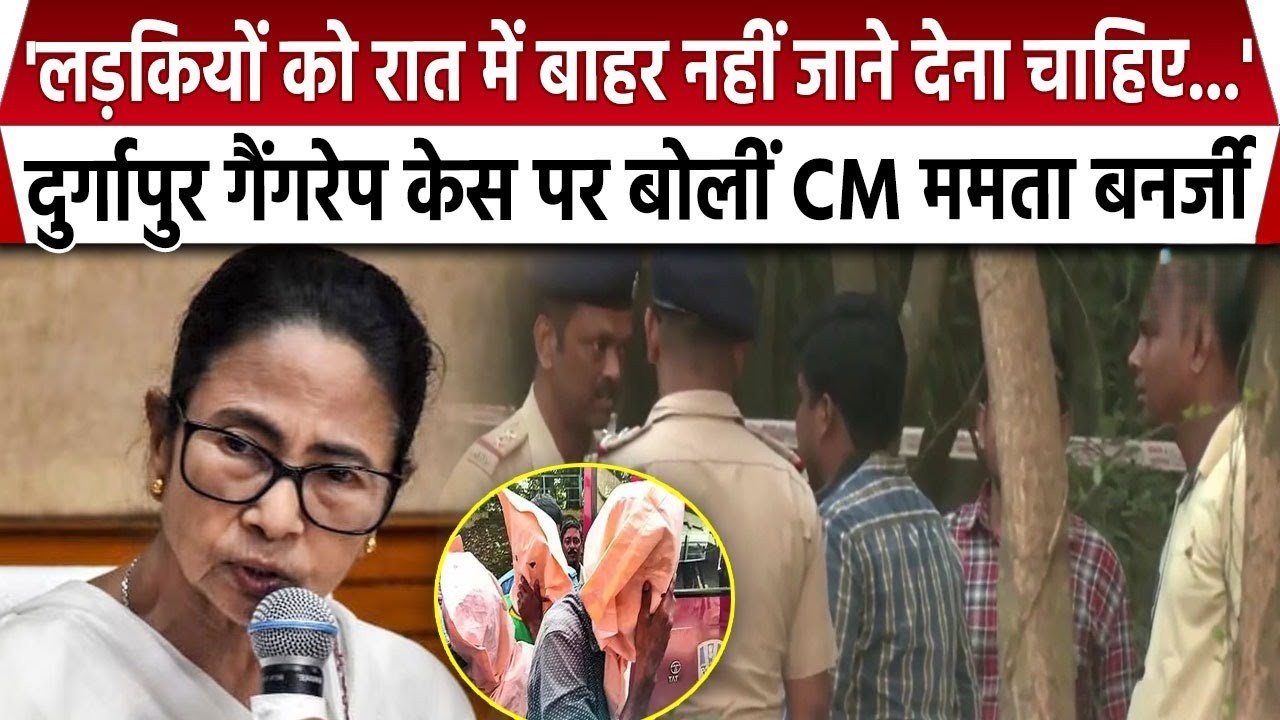
“Girls Should Not Be Allowed to Go Out at Night…” — Mamata Banerjee’s Statement on Durgapur Gang Rape Sparks Outrage Across India
Introduction: A Statement That Shook the Nation
A single statement by West Bengal Chief Minister Mamata Banerjee has ignited a storm of outrage, debate, and political backlash across the country. In reference to the Durgapur gang rape case, Mamata Banerjee remarked,
“Girls should not be allowed to go out at night.”
The comment, made during a press interaction following the horrific incident, has drawn intense criticism from across the political spectrum and from women’s rights groups, activists, and citizens alike. Many argue that the Chief Minister’s words reflect a regressive mindset, one that shifts the burden of safety from perpetrators to victims — especially shocking coming from a woman leader who has long championed women’s empowerment in Bengal.
As the state reels under the brutality of the Durgapur case, this statement has not only raised questions about law and order but also about the perception of women’s freedom and autonomy in modern India.
The Durgapur Gang Rape Case: What Happened Mamata Banerjee
The Durgapur gang rape case has left Bengal in shock. According to police reports, a 21-year-old college student was allegedly abducted and gang-raped by a group of men near a deserted stretch on the outskirts of Durgapur late at night.
The victim, a student at a private college, was returning from a friend’s birthday celebration when her car broke down. As she waited for help, a group of men reportedly offered assistance but instead forced her into a vehicle and assaulted her.
She was later found injured and unconscious near the city’s industrial area. The incident has once again exposed the vulnerabilities women face, even in supposedly urban and developed zones.
Police have arrested five accused so far, and investigations are ongoing. However, the case took a new turn when Mamata Banerjee made her controversial statement, which quickly overshadowed the investigation itself.
Mamata Banerjee’s Controversial Remark: The Spark That Lit the Fire
Speaking to reporters at Nabanna (the state secretariat), Mamata Banerjee was addressing questions about women’s safety and the late-night nature of the Durgapur incident. In an attempt to explain, she said:
“Girls should not be allowed to go out at night. Parents should also be responsible. Such incidents happen when girls roam around late.”
The remark, intended perhaps as a cautionary statement, immediately went viral. Within minutes, social media was flooded with criticism, hashtags, and angry reactions under tags like #ShameMamata, #VictimBlaming, and #WomenHaveTheRightToMove.
Many questioned how a Chief Minister — especially a woman leader known for breaking political and social barriers — could endorse a view that indirectly blames victims rather than focusing on perpetrators and systemic failure.
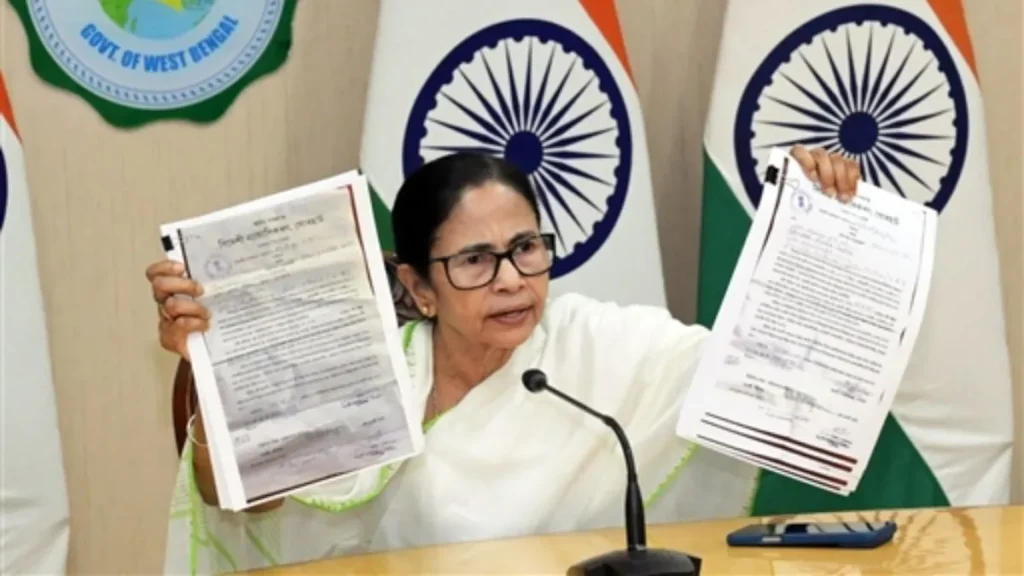
National Outrage: Voices Rise Against Victim-Blaming
Women’s Rights Activists Speak Out
Prominent women’s rights activists condemned the remark, calling it “deeply insensitive” and “dangerous.”
Activist Kavita Krishnan said,
“This statement is not just irresponsible; it legitimizes the very culture that enables rape. Safety cannot come by restricting women’s freedom.”
Annie Raja, general secretary of the National Federation of Indian Women (NFIW), remarked,
“It is shocking that a woman Chief Minister would say something that aligns with patriarchal victim-blaming. The government should strengthen law enforcement, not social control over women.”
Political Reactions: Opposition Turns Up the Heat
The opposition parties in Bengal seized the opportunity to target Mamata Banerjee.
BJP spokesperson Shamik Bhattacharya said,
“This shows the mindset of the Trinamool Congress government. Instead of ensuring safety for women, they are telling women to stay indoors. Is this the kind of governance Bengal deserves?”
Congress leader Adhir Ranjan Chowdhury accused the Chief Minister of “failing to protect women in her own state” and “justifying crime through irresponsible comments.”
Even Left leaders, long-time rivals of both TMC and BJP, criticized Mamata Banerjee remark. CPI(M) leader Sujan Chakraborty said,
“Mamata Banerjee’s statement is disgraceful. It reflects a feudal attitude where women’s movement is seen as a problem instead of male violence.”
Social Media Erupts: Netizens Demand Accountability
Within hours of her statement, hashtags like #MamataBanerjee, #VictimBlaming, and #GirlsAtNight began trending on X (formerly Twitter), Instagram, and Facebook.
From ordinary citizens to celebrities, thousands of voices expressed disappointment and anger.
A widely shared tweet read:
“When the Chief Minister says girls should not go out at night, she empowers rapists, not women.”
Another user posted:
“If women can vote at night, work at night, and study late, why can’t they move freely at night? Shameful from a woman CM.”
Several women shared pictures of themselves walking at night with captions like “#IWillGoOutTonight”, turning social media into a powerful space of protest.
Understanding the Deeper Issue: Freedom vs. Protection
The outrage over Mamata Banerjee’s remark touches a deeper nerve — the persistent societal belief that women’s safety can only be ensured through restriction, not reform.
India, despite its economic and technological progress, still struggles with deeply ingrained patriarchal attitudes. The notion that women should avoid certain spaces or times of day is both discriminatory and counterproductive.
Experts point out that such statements normalize violence, because they shift the responsibility from offenders to victims. As feminist scholar Nivedita Menon puts it,
“When leaders say women should not go out at night, what they are really saying is: the streets belong to men.”
Mamata Banerjee: The Paradox of a Woman Leader and a Patriarchal Remark
Mamata Banerjee’s journey is one of grit, determination, and defiance. From being called “Didi” (elder sister) by millions to toppling a 34-year-old Left government, she has often been seen as a symbol of women’s strength in Indian politics.
Which is why her remark stings even more.
For years, Mamata Banerjee projected herself as a champion of women’s empowerment, launching schemes like Kanyashree and Rupashree, which have benefitted lakhs of girls in Bengal. These programs earned her praise from global organizations, including the United Nations.
However, this latest statement appears to contradict her own political identity. Critics say it undermines decades of progress that her own policies aimed to achieve.

Political Damage Control: TMC’s Clarification
Facing mounting criticism, leaders from the Trinamool Congress (TMC) scrambled to clarify the Chief Minister’s remarks.
Party spokesperson Kunal Ghosh stated,
“The Chief Minister’s statement has been misinterpreted. She only meant that parents should be careful about their children’s safety, especially in unsafe areas. It was not about restricting women’s freedom.”
Another TMC leader argued that Mamata Banerjee words were “taken out of context,” emphasizing her government’s strong record on women’s welfare.
However, the damage had already been done. For many, the problem was not misinterpretation, but the very framing of the idea that “going out at night” is somehow wrong or unsafe for women by default.
The Reality of Women’s Safety in Bengal
Bengal has seen a troubling rise in crimes against women over the past few years. According to NCRB data, cases of rape, molestation, and domestic violence have increased, even in urban centers like Kolkata, Asansol, and Durgapur.
Women’s groups argue that instead of making statements about “curfews for girls,” the government should focus on:
- Improving street lighting and surveillance in urban and semi-urban areas.
- Increasing female police presence and patrol units.
- Establishing fast-track courts for sexual assault cases.
- Ensuring accountability among law enforcement officers who mishandle sensitive cases.
Activists also note that moral policing does not stop crime; it merely hides it behind a façade of cultural control.
The Larger Cultural Context: Why Victim-Blaming Persists
Victim-blaming is not new to India’s social and political discourse. Time and again, leaders across parties have made statements implying that women’s behavior, clothing, or timing somehow provoke violence.
From “she should not have gone out at night” to “her clothes were inappropriate,” such remarks feed into a culture of control that excuses perpetrators.
Sociologist Dr. Arpita Sen explains:
“Statements like these are dangerous because they create a social consensus that women’s freedom is the problem. It allows men and institutions to escape accountability.”
She adds that true empowerment means the right to safety and dignity irrespective of time, dress, or place.
Comparative Cases: When Politicians Crossed the Line
Mamata Banerjee is not the first Indian leader to make controversial remarks on women’s safety.
In the past, politicians like Mulayam Singh Yadav (“boys will be boys”), Abu Azmi (“women should not be out at night”), and even bureaucrats have faced public fury for similar comments.
What makes Mamata’s statement particularly striking is her own identity as a woman leader who rose to power through resilience and public support among women.
Her words therefore feel like a betrayal of the very principles she once stood for — independence, equality, and justice for women.
Public Movements and Feminist Voices Respond
In Kolkata, women’s organizations and student groups held candle marches and protest gatherings under banners reading:
“Don’t Cage Women, Cage the Rapists” and “Our Nights, Our Rights.”
A group of female students from Presidency University issued a joint statement saying:
“We will not surrender our freedom because criminals exist. The state must protect, not police us.”
Meanwhile, rights groups like Swayam, Aparajita, and Bharatiya Nari Jagran Manch demanded an apology from the Chief Minister and clear policy action on women’s safety in the state.
The Psychology of Power and Words
Political analysts point out that leaders’ words carry immense weight — particularly in moments of crisis.
When Mamata Banerjee, a sitting Chief Minister, says “girls should not go out at night,” it does more than reflect a personal opinion. It influences social norms, legitimizes cultural bias, and signals institutional priorities.
Words from power can heal — or harm.
In this case, they have deepened the wounds of a society already grappling with gender-based violence.
The Way Forward: What Leaders Should Focus On
Instead of restricting women, experts and citizens alike demand that governments — both state and central — focus on:
- Ensuring Safe Infrastructure: Better lighting, transport, and emergency services.
- Strict Policing: Zero tolerance for sexual harassment, especially in public transport and nightlife areas.
- Gender Sensitization: Regular training for police, public servants, and educators.
- Fast-Track Justice: Preventing cases from dragging on for years.
- Education and Awareness: Encouraging boys and men to respect boundaries, not blame victims.
As one activist aptly put it,
“Freedom is the best form of protection. A society that respects women’s freedom automatically becomes safer.”
Mamata’s Dilemma: Leadership and Legacy
Mamata Banerjee stands at a critical juncture. On one hand, she is a political titan — the only woman Chief Minister to have consistently retained power for over a decade in a politically volatile state like Bengal. On the other, her latest remark risks alienating a crucial section of her support base — educated, urban, and young women.
Her political opponents are already weaponizing the statement in upcoming election campaigns, projecting it as proof of disconnect and arrogance. The BJP has begun portraying itself as the “protector of women’s dignity,” while Left student groups are using the issue to mobilize campuses and protests.
If Mamata fails to address this controversy with empathy and corrective action, the incident could become a turning point in Bengal’s gender discourse — and in her own political narrative.
The Broader Debate: Freedom or Fear?
The Durgapur case and Mamata Banerjee’s statement reignite a timeless debate — should women modify their behavior for safety, or should society transform to ensure their freedom?
India’s Constitution guarantees equality, liberty, and dignity to every citizen. No clause exempts women after sunset. When leaders urge restrictions on women’s movement, they inadvertently endorse a half-right to life — one that ends at dusk.
As social commentator Shashi Deshpande once wrote,
“The moment you tell a woman to stay home for safety, you’ve already surrendered the world to danger.”
Conclusion: A Moment of Reflection for India’s Leadership
The Durgapur gang rape is a tragedy. Mamata Banerjee’s words have turned that tragedy into a mirror — reflecting how even powerful women in leadership can sometimes echo the very biases they once fought against.
The real question India must ask today is:
Why should a woman’s right to safety depend on the hour of the day?
Women don’t need permission to exist — they need protection to live freely. The state’s responsibility is not to restrict their movement but to guarantee their security wherever they go, whenever they go.
Mamata Banerjee’s legacy will ultimately be judged not by this one statement, but by whether she chooses to learn from it, correct it, and act decisively to make Bengal safer for all women — day and night alike.
Read more latest news

