
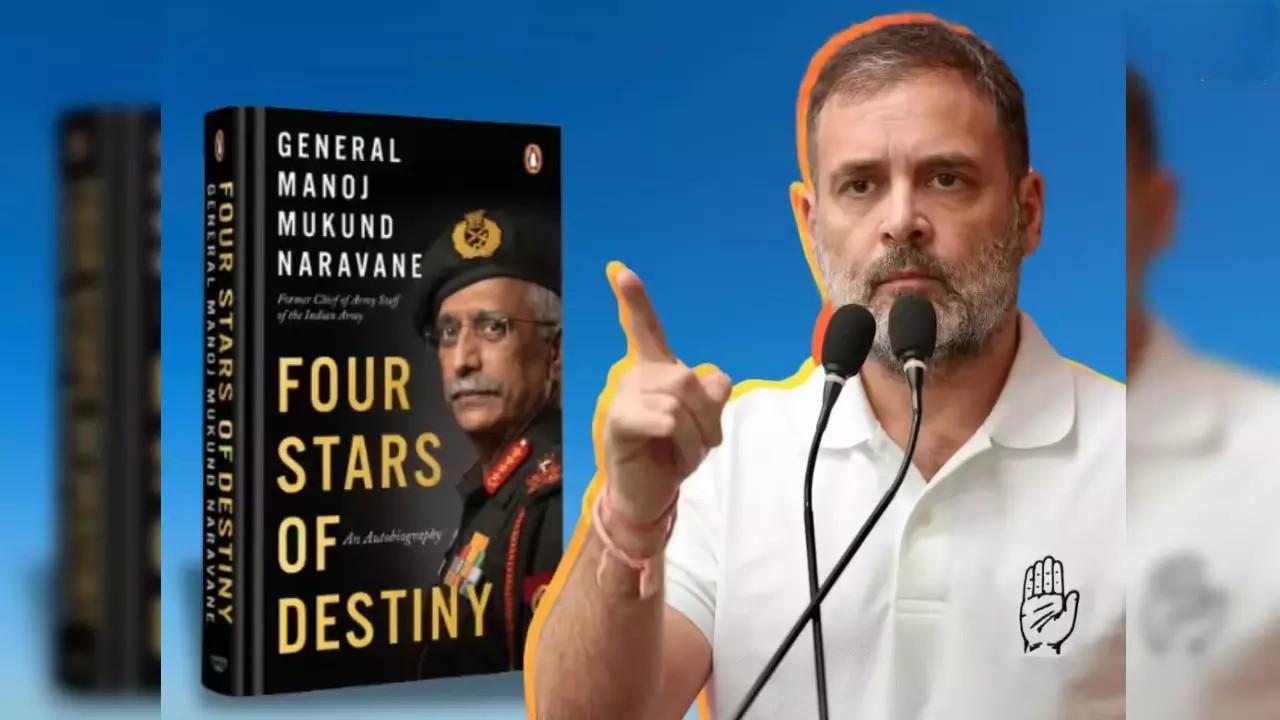
FIR Over Naravane’s Unpublished Book: Why Rahul Gandhi Raised Serious Questions
The political landscape witnessed renewed tension after Rahul questioned Delhi Police over the filing of an FIR linked to the alleged leak of former Army Chief General M.M. Naravane’s unpublished book. The controversy has sparked an intense debate on freedom of expression, accountability of institutions, and whether state power is being misused to silence narratives uncomfortable for the government.
At the heart of the issue lies a fundamental question: is the FIR a legitimate step to protect national interest, or is it an attempt to control public discourse? This is precisely why Rahul questioned Delhi Police, placing the matter squarely within the framework of constitutional values and democratic transparency.
Understanding the Controversy Around the Book
General Naravane, who served as the Chief of Army Staff, is widely respected for his professionalism and integrity. His unpublished book reportedly contains reflections on critical moments in India’s recent military and political history. When reports emerged that parts of the book were available online, the Delhi Police registered an FIR, citing concerns over sensitive material.
However, Rahul questioned Delhi Police on the logic behind this move. He argued that if the content is already circulating publicly, then the issue is not secrecy but truth. According to him, the government must clarify whether the former Army Chief is making truthful claims or whether the publisher, Penguin, is responsible for misleading information.
Either Naravane Is Telling the Truth or Penguin Is
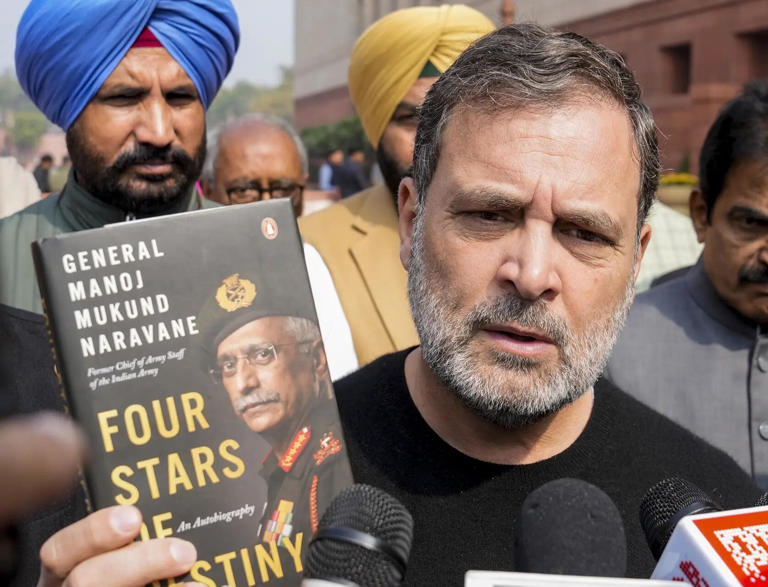
In a sharp political statement, Rahul Gandhi said, “Either Naravane is telling the truth or Penguin is.” With this remark, Rahul questioned Delhi Police on why investigative agencies were moving swiftly against an alleged leak instead of addressing the substance of what the book claims.
He further emphasized that the book allegedly contains material uncomfortable for the government, raising suspicions that the FIR may be more about political embarrassment than national security.

The Role of the Delhi Police Under Scrutiny
Law enforcement agencies are expected to function independently and without political pressure. Yet, Rahul questioned Delhi Police on whether this independence was being compromised. He pointed out that the timing and urgency of the FIR raise doubts about selective action.
According to opposition leaders, if the law is applied only when narratives challenge those in power, it undermines public trust. This concern became central when Rahul questioned Delhi Police about why similar urgency is not shown in cases involving public interest or citizens’ rights.
The December 15, 2023 Tweet by General Naravane
Adding weight to his argument, Rahul Gandhi highlighted a tweet posted by General Naravane on December 15, 2023. In the tweet, the former Army Chief reportedly addressed issues related to his book and its publication.
By showing this tweet publicly, Rahul questioned Delhi Police on whether the former Army Chief himself acknowledged the existence of the book and its contents. If the author has spoken openly, Rahul asked, what exactly is being investigated through an FIR?
Freedom of Expression and Democratic Values
India’s democracy rests on the pillars of free speech and accountability. Rahul questioned Delhi Police by invoking these very principles. He argued that books, memoirs, and personal accounts—especially by former constitutional or military authorities—are essential for historical understanding.
Suppressing such voices, he warned, could create a chilling effect. This is why Rahul questioned Delhi Police, asking whether the FIR aligns with democratic norms or contradicts them.

National Security vs Political Sensitivity
The government has maintained that any publication involving military matters must be handled carefully. However, Rahul questioned Delhi Police on where the line is drawn between genuine national security concerns and political sensitivity.
He argued that invoking national security without transparent reasoning risks diluting its seriousness. Repeatedly, Rahul questioned Delhi Police on whether the FIR clearly specifies which portions of the book threaten security.
Publisher Penguin and the Question of Accountability
Another dimension of the controversy involves Penguin, the publisher reportedly associated with the book. Rahul Gandhi stated that if the book is available online, responsibility must be fixed clearly.
Once again, Rahul questioned Delhi Police on whether the investigation is targeting the right stakeholders or merely creating pressure on individuals whose narratives may not align with the government’s version of events.
Opposition Unity on the Issue
Several opposition leaders echoed Rahul Gandhi’s concerns. They argued that Rahul questioned Delhi Police not as a political tactic but as a constitutional duty. According to them, institutions must remain neutral, especially in politically sensitive matters.
The opposition collectively demanded transparency, stressing that Rahul questioned Delhi Police because the public deserves clarity, not ambiguity.
Legal Experts Weigh In
Legal experts have also entered the debate. Many believe that filing an FIR over an unpublished book raises complex legal questions. Rahul questioned Delhi Police on whether existing laws justify such action without a detailed public explanation.
Experts note that prior restraint on publication is generally discouraged in democratic societies, reinforcing why Rahul questioned Delhi Police so strongly.
Media and Public Reaction
The controversy has dominated news cycles and social media discussions. Many citizens have asked the same questions raised when Rahul questioned Delhi Police—is this about law, or about control?
Public discourse reflects growing concern about shrinking spaces for dissent, making it clear why Rahul questioned Delhi Police resonated widely.
Historical Precedents of Book Controversies
India has seen multiple instances where books by former officials sparked controversy. From memoirs of diplomats to autobiographies of politicians, uncomfortable truths have often led to backlash.
Drawing from this history, Rahul questioned Delhi Police on whether the state has learned anything from past mistakes.
Civil-Military Relations at Stake
The involvement of a former Army Chief makes the issue even more sensitive. Rahul questioned Delhi Police on whether dragging a retired military leader into a legal controversy could impact civil-military trust.
Such actions, he warned, may discourage future transparency from those who have served the nation.
The Larger Political Message
Politically, Rahul questioned Delhi Police to underline what he describes as a pattern of silencing dissent. According to him, institutions must serve the Constitution, not any particular government.
This message has become central to the opposition’s narrative ahead of crucial political battles.
Government’s Silence and Its Implications
So far, the government has largely avoided detailed public clarification. This silence has only amplified concerns, reinforcing why Rahul questioned Delhi Police repeatedly and publicly.
Without clear answers, speculation continues to grow.
Is the FIR Legally Sustainable?
Another key issue is whether the FIR can withstand judicial scrutiny. Rahul questioned Delhi Police on whether due legal process was followed before registering the case.
Courts may ultimately decide the fate of the FIR, but the political damage may already be done.
Impact on Publishing Freedom
Publishers across the country are closely watching this case. Rahul questioned Delhi Police on whether such actions could discourage publishers from taking on serious, research-based political or military works.
The fear of legal trouble, critics say, could stifle intellectual freedom.
The Constitutional Angle
From a constitutional perspective, Rahul questioned Delhi Police by invoking Article 19, which guarantees freedom of speech and expression. Any restriction, he argued, must be reasonable and justified.
This constitutional framing has strengthened his argument.
What Lies Ahead?
As investigations continue, the controversy shows no signs of fading. Rahul questioned Delhi Police not just about one FIR, but about a broader pattern of governance.
The coming weeks may bring legal challenges, parliamentary debates, and further political confrontation.
Conclusion: A Question That Goes Beyond One FIR
In conclusion, Rahul questioned Delhi Police to spark a national conversation about truth, power, and accountability. The Naravane book controversy is no longer just about an alleged leak—it is about the right to speak, write, and question authority.
Whether the FIR stands or falls, the questions raised will continue to echo in India’s democratic discourse, reminding institutions that transparency and courage are the foundations of a healthy republic.
Read More latest news

