
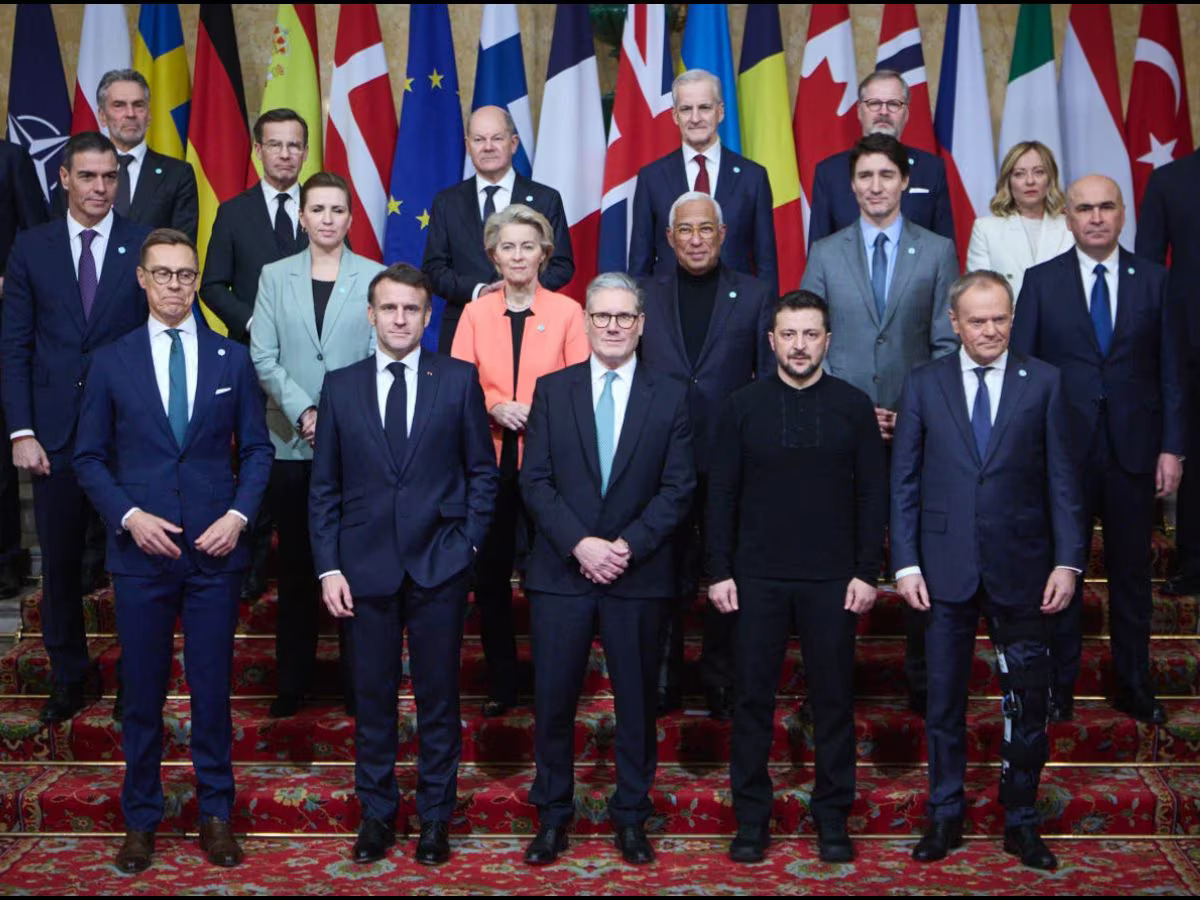
Ukraine’s President Volodymyr Zelenskyy, who has become the face of resistance to Russia’s invasion of Ukraine, has often praised the international support his country has received, particularly from the United States. The U.S. has been one of Ukraine’s most crucial allies throughout this ongoing war, providing financial, military, and diplomatic support. However, a recent spat between Zelenskyy and the White House has raised concerns about the state of relations between the two countries. In an attempt to salvage ties and reaffirm his gratitude towards American support, President Zelenskyy has made several statements expressing his appreciation for the U.S.’s help.
In this blog, we’ll explore the tensions that have emerged between Ukraine and the U.S., the circumstances surrounding the White House disagreement, Zelenskyy’s diplomatic efforts to repair the relationship, and what this means for Ukraine’s future in the war with Russia.
The Background of Ukraine’s Struggle and U.S. Support
The war in Ukraine, which began in February 2022 with Russia’s full-scale invasion, has dramatically reshaped geopolitics in Europe. Ukraine, under the leadership of President Volodymyr Zelenskyy, has managed to fend off much of the Russian onslaught with substantial help from Western nations, particularly the U.S.
Since the early days of the war, the U.S. has been one of Ukraine’s most vocal and robust supporters, providing billions of dollars in military aid, including advanced weaponry like Javelin missiles, artillery, and more recently, air-defense systems. Additionally, the U.S. has provided Ukraine with significant financial support, sanctions against Russia, and diplomatic backing at international forums such as the United Nations. This support has been critical in helping Ukraine maintain its sovereignty and continue its resistance against Russia’s aggression.
However, as the war has continued for over a year, some cracks have begun to appear in the relationship between the U.S. and Ukraine. While the U.S. has remained publicly committed to supporting Ukraine, internal U.S. political dynamics and concerns about the prolonged nature of the conflict have begun to strain the relationship.
The White House Spat: A Tense Moment in U.S.-Ukraine Relations
The tension between Zelenskyy and the White House came to a head in late 2023, following a series of public comments and actions that appeared to suggest a rift between the two. The crux of the issue seemed to be over the pace and scope of U.S. military aid to Ukraine. President Joe Biden and his administration had been vocal about their support for Ukraine, but there were increasing calls within the U.S., particularly from Republicans, to reassess the level of aid being provided.
Zelenskyy, in his tireless push to secure further assistance, made several statements in the media, urging the U.S. to provide more advanced weaponry and increase financial assistance. These public remarks, while understandable given the urgent situation in Ukraine, seemed to clash with the more cautious approach advocated by some members of the U.S. government. There were concerns that such demands might escalate the situation and deepen U.S. involvement in a conflict that was becoming increasingly unpopular with some segments of the American public.
In particular, a key moment of discord came when Zelenskyy made a public comment that seemed to criticize the U.S. for not doing enough, questioning the Biden administration’s commitment to Ukraine’s long-term security. This led to a sharp response from certain U.S. officials, including some within the White House, who felt that Ukraine was not sufficiently appreciating the scale of U.S. support.
The public spat between the two sides became a talking point for the media, with critics in the U.S. arguing that Zelenskyy’s comments were overstepping, while supporters of Ukraine believed that Zelenskyy was simply pushing for what his country needed in a time of existential crisis.
Zelenskyy’s Effort to Repair Relations
Realizing the potential damage caused by these tensions, President Zelenskyy quickly moved to repair his relationship with the U.S. government. In several public addresses and interviews, he made it clear that Ukraine was deeply grateful for the support the U.S. had provided and that he did not take it for granted. His message was one of humility and acknowledgment of the sacrifices the U.S. had made in supporting Ukraine.
In a statement released soon after the spat, Zelenskyy said, “We are grateful for U.S. support. Without it, the situation in Ukraine would be much worse. We understand the complexities of the U.S. domestic political situation, and we are committed to continuing our partnership in the fight for freedom.” These remarks were designed to placate both American lawmakers and the general public, acknowledging their concerns while reaffirming the importance of continued support for Ukraine.
In addition to his public comments, Zelenskyy worked behind the scenes to communicate directly with U.S. officials. According to sources, Zelenskyy personally reached out to key members of the Biden administration, including National Security Advisor Jake Sullivan and Secretary of State Antony Blinken, to reassure them of Ukraine’s gratitude and to emphasize that his comments were meant to highlight the urgency of the situation rather than to criticize the U.S. support.
The Diplomatic Outreach: A Strategic Move
Zelenskyy’s diplomatic efforts to repair ties with the U.S. were not limited to just public statements. The Ukrainian president also made several high-profile visits to the U.S., meeting with both Republican and Democratic leaders in Congress to reassert Ukraine’s position and ensure that the U.S. remained a staunch ally. These visits were a crucial component of Zelenskyy’s strategy to maintain strong diplomatic ties and garner continued support from both sides of the aisle in Washington, D.C.
In these meetings, Zelenskyy was careful to focus on the larger goal of defeating Russia, framing the war as not only Ukraine’s fight but a fight for global democratic values. He reiterated that Ukraine’s victory would send a powerful message to authoritarian regimes around the world that aggression and expansionism would not be tolerated. This framing played well with the U.S. political establishment, where many viewed the war in Ukraine as part of a broader ideological struggle between democracy and autocracy.
Zelenskyy’s efforts were aimed at ensuring that the U.S. continued its military and financial support for Ukraine, particularly in the form of high-tech weaponry like fighter jets and advanced air-defense systems. He also sought to secure further financial aid to ensure Ukraine’s economy could withstand the strain of the war.
The Importance of U.S. Support for Ukraine
U.S. support is indispensable for Ukraine in its fight against Russia. The U.S. has provided Ukraine with critical military resources that have enabled it to hold off Russian advances in several key regions. From the provision of weapons like anti-tank missiles to the training of Ukrainian soldiers and intelligence-sharing, the U.S. has been pivotal in enhancing Ukraine’s military capabilities.
However, the U.S. support goes beyond just military aid. Financial assistance from the U.S. has helped stabilize Ukraine’s economy during the war, with billions in financial aid going toward rebuilding infrastructure, supporting displaced populations, and ensuring the functioning of essential government services. This aid has allowed Ukraine to maintain its resilience and continue its fight, despite the overwhelming challenges posed by Russia’s invasion.
Diplomatically, the U.S. has been instrumental in rallying international support for Ukraine, particularly within NATO and the European Union. The U.S. has led efforts to impose heavy sanctions on Russia, targeting key sectors of the Russian economy and oligarchs close to President Vladimir Putin. These sanctions have played a significant role in weakening Russia’s ability to sustain its military campaign.
The Current State of Relations
As of early 2024, the tension between Ukraine and the U.S. seems to have dissipated somewhat, thanks to Zelenskyy’s diplomatic outreach. While there are still some political debates within the U.S. about the scale and scope of the support to Ukraine, the Biden administration has continued to back Ukraine, pledging further assistance and committing to the long-term goal of ensuring Ukraine’s sovereignty.
Both sides have made it clear that their partnership remains strong, despite the disagreements. The Biden administration has emphasized that U.S. support for Ukraine is not contingent on political dynamics within the U.S. but is based on broader geopolitical interests and values. Meanwhile, Zelenskyy has reiterated that Ukraine will never take U.S. support for granted and is committed to using every resource at its disposal to defeat Russia and ensure that Ukraine remains an independent, democratic nation.
The Road Ahead: A Long-Term Partnership
The road ahead for Ukraine remains uncertain, but the support of the U.S. will continue to play a critical role in the country’s survival and success in this war. While there may be occasional diplomatic disagreements, the broader strategic objectives of both Ukraine and the U.S. are aligned. The fight for Ukraine’s sovereignty is, in many ways, a fight for a rules-based international order, and both countries understand the stakes.
Zelenskyy’s efforts to repair ties with the U.S. are a testament to his diplomatic skill and his understanding of the importance of international alliances in times of war. By reaffirming Ukraine’s gratitude for U.S. support, Zelenskyy has not only secured continued aid but also reinforced the broader geopolitical narrative that Russia’s aggression must be countered.
Conclusion
In the wake of the White House spat, President Zelenskyy’s swift actions to mend ties with the U.S. underscore the critical nature of the relationship between the two countries. While the war in Ukraine continues to unfold, Zelenskyy’s acknowledgment of U.S. support and his diplomatic efforts to smooth over tensions are indicative of the importance Ukraine places on its alliance with the United States.
As the war drags on, the partnership between Ukraine and the U.S. will undoubtedly face challenges, but for now, both countries seem committed to the goal of defeating Russian aggression and preserving the international order. Zelenskyy’s repeated statements of gratitude serve as a reminder of the vital role the U.S. has played in Ukraine’s struggle for sovereignty and independence.
In the end, the relationship between Zelenskyy and the U.S. remains as crucial as ever, and both parties seem determined to overcome their differences and continue their fight for a free and democratic Ukraine. The world will be watching closely to see how this dynamic unfolds in the coming months.
read more latest news

