

Yogi Adityanath Inaugurates Swadeshi Mela in Gorakhpur: A Call for Self-Reliance Before Diwali
Introduction
In a vibrant and spirited atmosphere at Gorakhpur’s Champa Devi Park, Chief Minister Yogi Adityanath inaugurated the much-awaited Swadeshi Mela on Friday. The annual event, known for promoting indigenous craftsmanship and local entrepreneurship, took on a deeper significance this year as Diwali approached. With the festive season on the horizon, Yogi Adityanath’s message was clear and emphatic: “Buy indigenous, gift indigenous, and support the self-reliant India vision.”
The Swadeshi Mela, a celebration of India’s cultural heritage and local industry, has always symbolized the power of Indian craftsmanship. However, Yogi’s address this year infused it with renewed purpose — transforming a regional fair into a powerful movement of economic nationalism and cultural pride. His speech touched upon self-reliance (Aatmanirbhar Bharat), the importance of supporting local artisans, and the cultural responsibility of citizens to strengthen India’s economy by prioritizing homegrown products.
A Grand Inauguration at Champa Devi Park
Champa Devi Park in Gorakhpur, known for hosting major public gatherings, was decked with colorful lights, handicraft stalls, and traditional décor representing the soul of India’s villages. Thousands of visitors flocked to witness the inauguration, where Chief Minister Yogi Adityanath formally opened the Swadeshi Mela by lighting the ceremonial lamp and offering prayers for prosperity.
As Yogi stepped onto the stage, chants of “Har Har Mahadev” and “Bharat Mata Ki Jai” echoed through the Champa Devi Park. The Chief Minister, dressed in his signature saffron robes, addressed artisans, traders, women entrepreneurs, and students with a powerful message that combined spirituality, nationalism, and economic pragmatism.
He said,
“This Diwali, let us take a pledge that we will purchase only Swadeshi products. Every rupee spent on indigenous goods strengthens the hands of our local artisans, farmers, and small entrepreneurs.”
Swadeshi Spirit and Cultural Nationalism
The term Swadeshi carries profound historical significance. It was the foundation of India’s freedom movement under Mahatma Gandhi, who believed that true independence comes only when citizens are self-reliant and economically independent. Yogi Adityanath, echoing this Gandhian spirit, emphasized that Swadeshi is not merely about economics—it’s a cultural and moral duty.
He said,
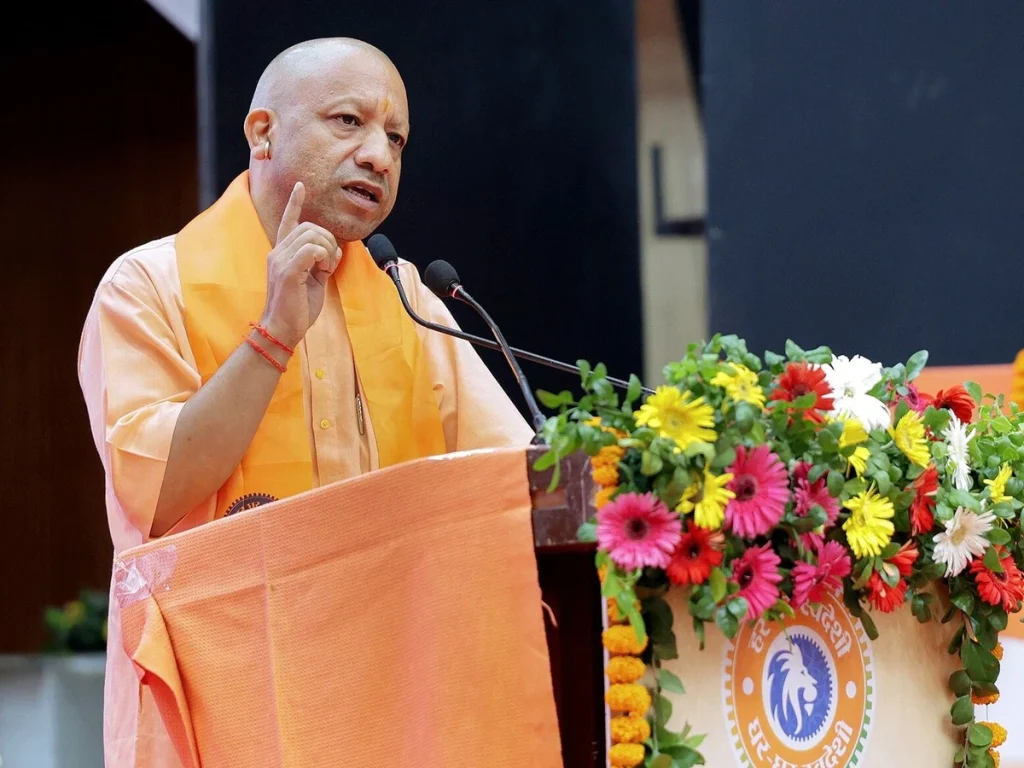
“Our ancestors fought for Swadeshi during the freedom struggle. Today, we must fight economic slavery by empowering our local industries. The true celebration of Diwali lies not in imported lights, but in the lamps made by our potters.”
His words resonated deeply with the audience, especially with local artisans who saw in them a recognition of their struggles and talents. The Chief Minister’s emphasis on reviving traditional industries aligns with the broader national vision of Aatmanirbhar Bharat, championed by Prime Minister Narendra Modi.
Diwali and the Economic Message of Swadeshi Champa Devi Park
Yogi Adityanath’s timing could not have been more symbolic. Diwali, the festival of lights, marks a season of massive consumer spending in India — from decorations and sweets to electronics and clothes. However, a significant portion of these products has, in recent years, come from imported sources, particularly China.
Addressing this trend, Yogi urged people to think beyond short-term convenience and price, highlighting how every Swadeshi purchase is an act of patriotism.
“If every family decides to buy only indigenous products this Diwali, we can generate thousands of crores for our local economy. Let our festivals become a medium of nation-building.”
He also mentioned that the government has taken several steps to promote small and medium-scale industries across Uttar Pradesh. Initiatives like One District One Product (ODOP) have not only revived traditional crafts but also created new avenues for employment, export, and economic stability.
Highlighting Uttar Pradesh’s Indigenous Strength Champa Devi Park
During his address, Yogi Adityanath proudly presented the success stories emerging from different districts of Uttar Pradesh under the ODOP scheme. He cited examples of industries such as:
- Gorakhpur’s Terracotta Craft – Revived through government support, now being exported globally.
- Varanasi’s Banarasi Sarees – A symbol of India’s textile heritage that continues to thrive.
- Kannauj’s Perfume Industry (Attar) – A centuries-old art form gaining new markets through modernization.
- Meerut’s Sports Goods – Competing internationally with their quality and craftsmanship.
- Moradabad’s Brass Work – Now reaching international buyers through e-commerce integration.
The Chief Minister noted that every purchase of an indigenous product directly supports these small-scale entrepreneurs. “When you buy a terracotta lamp or a Banarasi saree, you are not just buying an item—you are supporting a family, preserving an art, and strengthening the nation’s soul,” he said.
From ‘Vocal for Local’ to ‘Global for Local’ Champa Devi Park
Yogi Adityanath reiterated Prime Minister Modi’s call to go “Vocal for Local,” urging citizens not only to purchase Indian goods but also to promote them globally.
“We must not only buy local but also tell the world that Indian products are the best. Our entrepreneurs are skilled, our resources are abundant, and our heritage is unmatched.”
He expressed confidence that Uttar Pradesh, with its rapidly growing industrial base and expanding infrastructure, will soon emerge as India’s manufacturing hub. The state government’s focus on ease of doing business, skill development, and industrial clusters has already attracted significant investment in recent years.
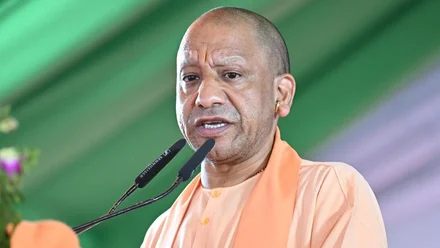
Yogi remarked,
“From the land of Gorakhpur, I appeal to all—be proud of our products, our culture, and our people. The future belongs to those who are self-reliant.”
Women Entrepreneurs Take the Lead
One of the major highlights of this year’s Swadeshi Mela was the visible participation of women entrepreneurs. From handmade candles and organic foods to handloom sarees and decorative items, women-led stalls showcased creativity and innovation.
Yogi Adityanath acknowledged their contribution, saying:
“Women’s self-help groups have become the backbone of rural development in Uttar Pradesh. Through the Swadeshi Mela, they are not just earning livelihoods but also carrying forward our cultural legacy.”
He mentioned government initiatives like the Mission Shakti and Women Empowerment Schemes that have enabled thousands of women to become financially independent. The Chief Minister also announced that more such Swadeshi Melas would be organized across districts to provide a marketing platform for women-led businesses.
A Celebration of Indian Art and Culture
Beyond economics, the Swadeshi Mela was a cultural extravaganza. Folk music, traditional dance performances, and exhibitions of village crafts brought to life the diversity and vibrancy of Indian culture. Local artists performed Bhojpuri and Awadhi songs, celebrating rural life and self-reliance.
Children participated in painting competitions based on the theme “My Swadeshi India.” Cultural troupes performed Ramayana-themed plays, reminding everyone of the deeper connection between faith, culture, and community.
Yogi Adityanath highlighted the cultural roots of Swadeshi, saying:
“Swadeshi is not just an economic policy—it is our cultural identity. It connects us to our soil, our traditions, and our artisans. When we celebrate our culture, we strengthen our nation.”
Government’s Commitment to Local Industries Champa Devi Park
During his speech, Yogi also listed several initiatives taken by the Uttar Pradesh government to support micro, small, and medium enterprises (MSMEs):
- Simplified Licensing and Registration Processes for small businesses.
- Low-interest loans and subsidies under government schemes like PMEGP and ODOP.
- Infrastructure Development such as industrial corridors and rural clusters.
- Digital Marketing Training for artisans to promote their products online.
- Financial assistance for start-ups and rural entrepreneurs.
He assured the audience that the government is committed to ensuring that no artisan or small producer is left behind. “The strength of India lies in its villages. We are ensuring that every village becomes an economic unit of growth,” Yogi said.
The Larger Vision: Aatmanirbhar Bharat Champa Devi Park
Yogi Adityanath’s Swadeshi appeal perfectly aligns with the national mission of Aatmanirbhar Bharat (Self-Reliant India) launched by Prime Minister Modi. This initiative aims to make India a global manufacturing powerhouse while reducing dependence on imports.
The Chief Minister stated that Uttar Pradesh, under his leadership, has taken rapid strides toward achieving this vision. With world-class infrastructure projects like Gorakhpur Link Expressway, Defence Corridor, and Purvanchal Expressway, the state is positioning itself as a major industrial hub.
He said,
“Aatmanirbhar Bharat is not just a slogan—it is a movement. Every Swadeshi Mela, every indigenous product, and every local entrepreneur is a pillar of that movement.”
Connecting Swadeshi with Environmental Responsibility
Yogi Adityanath also linked the Swadeshi movement with environmental consciousness. He urged citizens to prefer eco-friendly and handmade products instead of mass-produced synthetic goods that harm the environment.
“When we buy clay lamps made by our potters, we also protect the environment. When we use natural dyes and fabrics, we support sustainable living.”
The Chief Minister’s emphasis on green living resonated strongly with the youth and environmental groups present at the event. The Mela (Champa Devi Park) featured stalls showcasing bamboo products, organic foods, biodegradable packaging, and traditional attire—all promoting the concept of sustainable Swadeshi living.
A Festival with a Message
The Swadeshi Mela was more than a trade fair—it was a social awakening. Yogi’s message of buying indigenous before Diwali carried a sense of moral responsibility. It was an appeal to conscience, urging people to think about where their money goes and whom it benefits.
Every product at the fair told a story — of rural artisans reviving traditional skills, of women stepping into entrepreneurship, of youth turning ideas into innovation, and of a state determined to lead India’s self-reliance journey.
Local Artisans Speak: Hope and Gratitude Champa Devi Park
The presence of the Chief Minister gave immense encouragement to local artisans. Many expressed gratitude for the government’s support and the increased visibility their products received.
Ramesh Tiwari, a potter from Basti district, said,
“Earlier, we used to sell diyas only in local markets. Now, because of Swadeshi Melas and online training, our products are reaching cities. The Chief Minister’s words have inspired us to dream bigger.”
Similarly, a women’s self-help group from Kushinagar shared how they started making eco-friendly candles and decorative items after receiving financial support through state schemes. Their stall saw brisk sales, symbolizing the growing public support for local craftsmanship.
A Message to the Nation
While addressing the people of Gorakhpur (Champa Devi Park), Yogi Adityanath’s words carried a national tone. His call for “Swadeshi before Diwali” is not confined to Uttar Pradesh alone—it’s a message for every Indian. It reflects a collective vision where cultural pride and economic policy walk hand in hand.
He said,
“When 140 crore Indians stand together to buy Indian products, the entire global economy takes notice. Let’s make this Diwali a turning point for the Indian economy.”
Conclusion: Lighting the Lamp of Self-Reliance Champa Devi Park
As the evening concluded, Yogi Adityanath lit an earthen lamp at the entrance of the Mela—a symbolic gesture of self-reliance and hope. The message was simple but powerful: Every lamp you light this Diwali can illuminate the home of an Indian artisan.
The Swadeshi Mela at Champa Devi Park wasn’t just an event—it was a reminder that India’s strength lies in its villages, its crafts, and its people. Through his speech, Yogi Adityanath reignited the Swadeshi spirit that once united India during the freedom struggle, now guiding the nation towards economic freedom.
Read more latest News

