
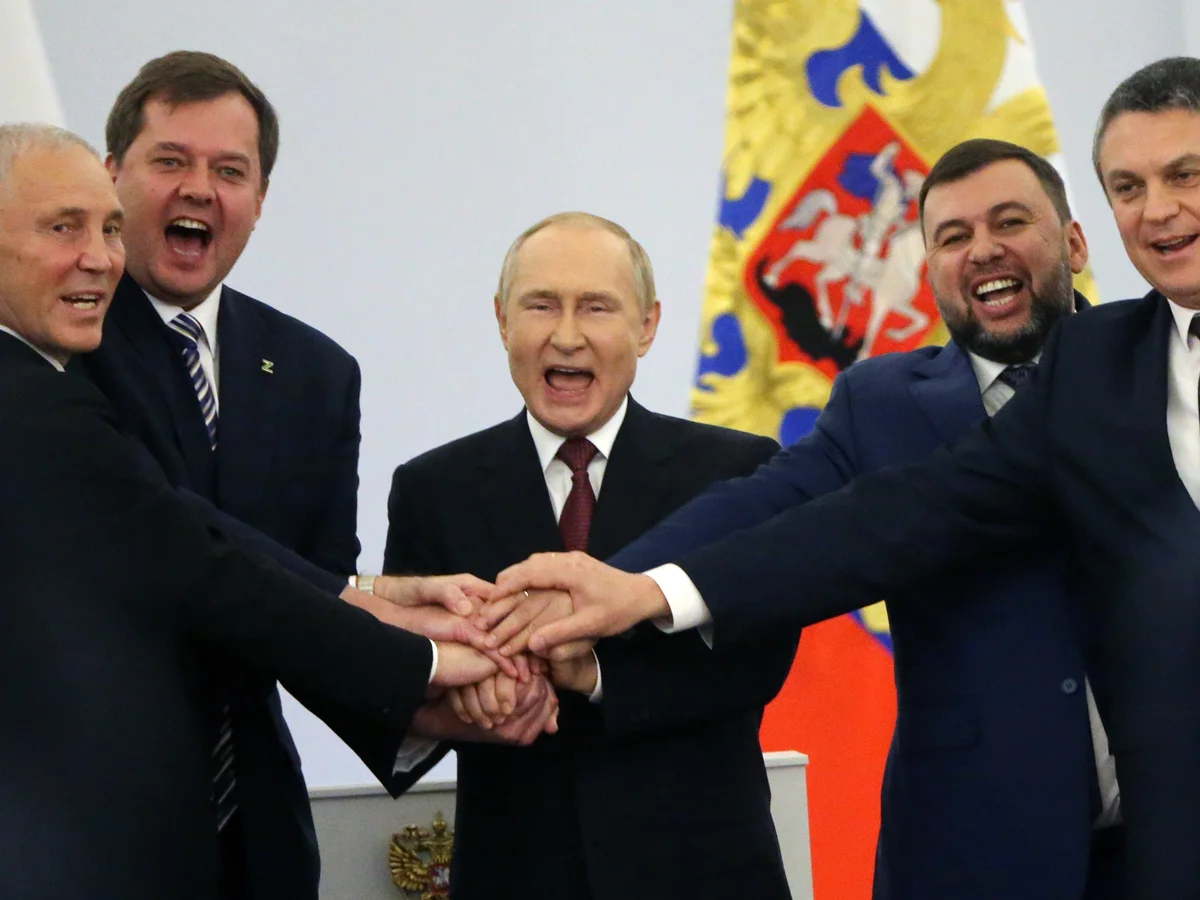
Why is Putin Eyeing Eastern Ukraine? What is There in This Part of Ukraine That Putin Wants to Put His Official Stamp On It?
Introduction
Why Putin Is Eyeing Eastern Ukraine Russia’s war in Ukraine, which began with the annexation of Crimea in 2014 and escalated into a full-scale invasion in February 2022, has become one of the most significant geopolitical crises of the 21st century. At the center of this conflict lies a specific focus: Eastern Ukraine. Unlike western Ukraine, which leans toward Europe both culturally and politically, the eastern territories of Donetsk, Luhansk, Zaporizhzhia, and Kherson remain crucial to Moscow’s ambitions.
But why does Russian President Vladimir Putin want to put his official stamp on Eastern Ukraine? What exactly is in this region that makes it such a prize for Russia? To understand this, one must examine a mix of history, culture, economics, geography, natural resources, and military strategy.
This blog will explore these questions in depth, breaking down the multifaceted importance of Eastern Ukraine and analyzing why it has become the epicenter of Putin’s geopolitical playbook.
1. Historical Context: Russia’s Roots in Eastern Ukraine
Eastern Ukraine, often referred to as the Donbas region (Donetsk and Luhansk), has historically been closer to Russia than to the western part of the country.
- Tsarist & Soviet Legacy: During the Russian Empire and later the Soviet Union, the Donbas became an industrial hub. Cities like Donetsk were built and developed largely by Russian settlers.
- Russification: For centuries, Moscow pursued policies of Russification in this region—promoting the Russian language, culture, and identity. Today, many in Eastern Ukraine speak Russian as their first language.
- Soviet Memory: The region still holds Soviet nostalgia, with monuments, war memorials, and cultural ties reminding locals of a shared past with Russia.
Putin uses this history as a political justification, framing Eastern Ukraine as a land that “naturally belongs” to Russia. In his speeches, he has called Ukrainians and Russians “one people,” blurring the line between sovereignty and cultural identity.
2. Demographics and Language: A Pro-Russian Identity
The population of Eastern Ukraine is heavily Russian-speaking, with a significant proportion identifying themselves as ethnically Russian.
- Language Politics: While Ukrainian is the official language of the state, Russian dominates in Donetsk and Luhansk. This gives Putin the narrative that Russia is “protecting” Russian-speaking citizens from alleged discrimination.
- Identity Divide: Surveys before the 2022 war showed a higher percentage of pro-Russian sentiments in the east compared to Kyiv or Lviv.
By leveraging language and identity, Putin portrays Eastern Ukraine as part of the “Russian World” (Russkiy Mir), a concept of cultural and civilizational unity.
3. Natural Resources: Donbas – The Coal and Steel Powerhouse
One of the biggest reasons Eastern Ukraine is so valuable is its vast natural resources.
- Coal Reserves: Donbas is home to some of Europe’s largest coal deposits. Control over coal mines strengthens Russia’s grip on energy.
- Metallurgy & Steel: The region is rich in iron and steel industries. Cities like Mariupol were major steel production centers before the war.
- Energy Leverage: By controlling these resources, Russia can deny Ukraine access to key energy supplies while boosting its own.
In simple terms, Eastern Ukraine is the industrial heartland of Ukraine. Losing it weakens Kyiv’s economic backbone while empowering Moscow’s resource-driven strategy.
4. Agricultural and Land Value
Ukraine is known as the “Breadbasket of Europe,” and Eastern Ukraine plays a big role in that reputation.
- Fertile Lands: The black soil (Chernozem) in these regions is among the most fertile in the world.
- Food Security: Grains, sunflower oil, and other crops grown here supply not only Ukraine but also global markets.
- Strategic Advantage: By taking over agricultural land, Russia gains leverage over global food chains, which we already saw when grain exports through the Black Sea became a bargaining chip.
For Putin, agriculture is not just about food—it’s a weapon of influence in international relations.
5. Industrial and Economic Infrastructure
Eastern Ukraine is dotted with factories, power plants, railways, and ports.
- Donetsk & Luhansk: Centers of mining, metallurgy, and heavy machinery.
- Mariupol: Once a vital steel and shipping hub on the Sea of Azov.
- Zaporizhzhia: Home to Europe’s largest nuclear power plant.
By capturing these assets, Russia can both cripple Ukraine’s economy and redirect production to its own benefit.
6. Military and Strategic Geography
From a military perspective, Eastern Ukraine is critical.
- Buffer Zone: Holding this region creates a physical buffer between NATO/EU-aligned Ukraine and Russia’s heartland.
- Crimea Link: Control of Eastern Ukraine connects Russia to Crimea, which it annexed in 2014. Without the east, Crimea remains isolated.
- Black Sea Access: Capturing coastal areas of Zaporizhzhia and Kherson strengthens Russia’s dominance in the Black Sea.
- Defensive Depth: Eastern Ukraine provides depth for Russian military operations, making it harder for Ukrainian forces to strike into Russia.
For Putin, this isn’t just about land—it’s about geopolitical security against NATO.
7. Political and Psychological Symbolism
Beyond material gains, Eastern Ukraine has symbolic importance.
- Victory Narrative: Domination of Donbas allows Putin to claim victory, even if the wider war drags on.
- Historical Correction: He presents it as reclaiming lost Russian lands unjustly given to Ukraine in the Soviet era.
- Nationalism Tool: Domestically, controlling Eastern Ukraine strengthens Putin’s nationalist narrative that Russia is restoring its imperial glory.
8. International Leverage: Playing the Global Chessboard
By holding Eastern Ukraine, Russia gains a bargaining chip in negotiations with the West.
- Energy Blackmail: With control over coal and gas routes, Russia influences European energy markets.
- Food Weaponization: Occupation of fertile lands and ports means Russia can disrupt or control global grain supplies.
- Peace Talks Leverage: Russia can push for recognition of its territorial claims as a precondition for peace.
Essentially, Eastern Ukraine is not just a battleground—it’s a tool for global power projection.
9. Resistance and Reality Check
Despite Russia’s ambitions, the story isn’t one-sided.
- Ukrainian Resistance: The people of Eastern Ukraine, even those who were once pro-Russia, have resisted occupation fiercely.
- Western Support: Billions in military aid from the U.S. and EU keep Ukrainian forces in the fight.
- Global Isolation: Putin’s invasion has brought unprecedented sanctions, weakening Russia’s economy.
The reality is that holding Eastern Ukraine comes at a massive cost—in blood, money, and reputation.
10. The Future of Eastern Ukraine: Scenarios Ahead
So what’s next for Eastern Ukraine? Three possible scenarios stand out:
- Full Russian Control: If Russia consolidates the region, it could formalize annexation like Crimea.
- Frozen Conflict: Eastern Ukraine may become a “grey zone,” similar to Georgia’s breakaway regions.
- Ukrainian Counteroffensive Success: With continued Western aid, Ukraine could liberate parts of its territory.
Conclusion
Eastern Ukraine is far more than a patch of land. It is the industrial engine, agricultural hub, resource goldmine, and geopolitical buffer zone that defines Ukraine’s survival and Russia’s ambitions. For Putin, capturing and keeping this territory means securing resources, rewriting history, and projecting Russia as a global superpower.
Yet, the war has also shown the resilience of Ukraine and the limits of Russia’s might. While Eastern Ukraine remains the prize in this brutal war, it is also the graveyard of illusions—for both Moscow and Kyiv.
The world watches as this struggle continues, knowing that the future of Eastern Ukraine could decide not only the destiny of Ukraine but also the balance of power in the 21st-century world order.
Read more latest news

