
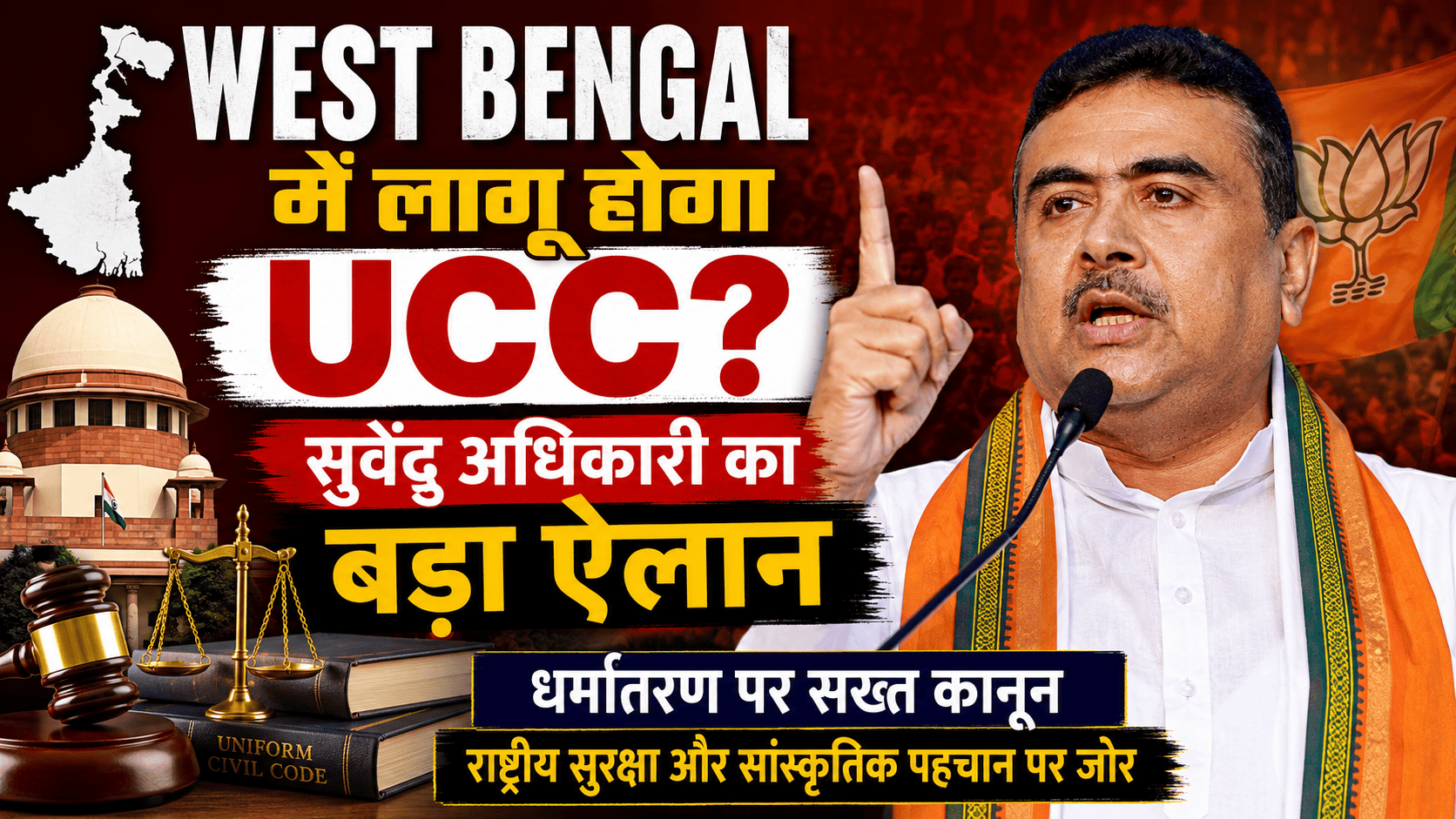
West Bengal Strict Law in UGC: Suvendu Adhikari Announces Tough Measures on Religious Conversion and Uniform Civil Code
Introduction
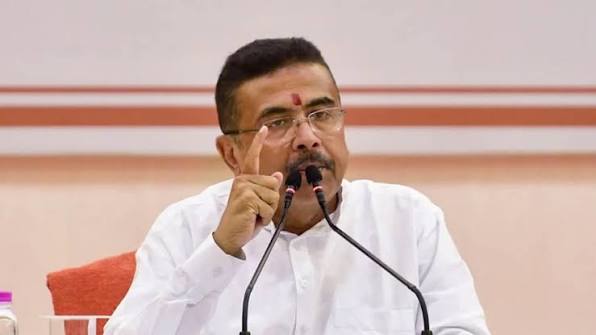
The political landscape of West Bengal has once again witnessed a major development after senior BJP leader and Leader of Opposition Suvendu Adhikari announced that if his party forms the government in the state, it will introduce a strict law against religious conversion and implement the Uniform Civil Code (UCC). The announcement has sparked intense political debate across the country, with supporters calling it a necessary step for national security and critics questioning its constitutional and social implications.
The announcement has generated widespread discussions because West Bengal has long remained at the center of political, religious, and cultural debates. According to Suvendu Adhikari, these measures are essential to preserve Bengal’s cultural identity, maintain law and order, and strengthen national security.
The issue surrounding West Bengal strict law in UGC has become one of the most discussed political topics in India. While supporters believe the move will ensure equal rights for all citizens, opposition parties argue that such policies could deepen social divisions.
In this blog, we examine what Suvendu Adhikari announced, why the proposal matters, what the Uniform Civil Code means, the debate around anti-conversion laws, political reactions, legal perspectives, and the possible impact on West Bengal.
What Did Suvendu Adhikari Announce?
Addressing party workers and supporters on Friday, Suvendu Adhikari stated that a future BJP government in West Bengal would introduce strict legislation against illegal religious conversions. He also reiterated the party’s commitment to implementing the Uniform Civil Code in the state.
According to him, these steps are necessary to:
- Strengthen national security.
- Preserve Bengal’s cultural heritage.
- Ensure equal treatment before the law.
- Prevent alleged forced or fraudulent religious conversions.
The announcement regarding West Bengal strict law in UGC immediately became a major political talking point.
Understanding the Uniform Civil Code (UCC)
The Uniform Civil Code refers to a common set of personal laws applicable to all citizens irrespective of religion.
Currently, different religious communities in India follow separate personal laws governing:
- Marriage
- Divorce
- Adoption
- Inheritance
- Succession
- Maintenance
A Uniform Civil Code proposes replacing these separate laws with one common legal framework.
Supporters argue that UCC promotes:
- Equality before law
- Gender justice
- National integration
- Simplification of legal procedures
Opponents believe personal laws reflect religious freedom and cultural diversity protected under the Constitution.
The debate surrounding West Bengal strict law in UGC therefore extends beyond state politics into constitutional discussions.
What Is an Anti-Conversion Law?
Anti-conversion laws generally prohibit religious conversion achieved through:
- Force
- Fraud
- Misrepresentation
- Coercion
- Allurement
Several Indian states have already enacted such legislation.
Supporters claim these laws prevent exploitation of vulnerable communities.
Critics argue they may affect individual freedom of religion guaranteed under Article 25 of the Constitution.
The proposal for West Bengal strict law in UGC seeks similar legislation if the BJP forms the government.
Why Is West Bengal Politically Significant?
West Bengal remains one of India’s most politically sensitive states.
Several factors contribute to this:
- Border with Bangladesh
- Religious diversity
- Historical migration
- Strong regional identity
- Competitive electoral politics
Issues related to identity, citizenship, border security, and communal harmony often dominate political discourse.
This explains why West Bengal strict law in UGC has attracted nationwide attention.
BJP’s Position
The BJP has consistently supported:
- Uniform Civil Code
- Strong anti-conversion laws
- National Register of Citizens (NRC)
- Border security
- Equal civil laws
According to BJP leaders, the proposed measures would:
- Protect constitutional equality.
- Strengthen national unity.
- Prevent illegal religious conversions.
- Improve internal security.
They argue that West Bengal strict law in UGC aligns with these broader national objectives.
Trinamool Congress Response
The ruling Trinamool Congress (TMC) has strongly criticized the announcement.
Party leaders argue:
- West Bengal already maintains communal harmony.
- Such proposals are politically motivated.
- Religious freedom must remain protected.
- Constitutional rights should not be undermined.
The TMC maintains that social unity is more important than introducing divisive legislation.
The debate over West Bengal strict law in UGC has therefore intensified political rivalry.
Constitutional Perspective
The Constitution of India guarantees:
- Equality before law.
- Freedom of religion.
- Freedom of conscience.
- Right to practice and propagate religion.
However, these freedoms are subject to:
- Public order
- Morality
- Health
- Other constitutional provisions
Legal experts suggest that any proposed West Bengal strict law in UGC would ultimately need judicial scrutiny if challenged.
National Security Argument
Suvendu Adhikari linked the proposed measures with national security.
Supporters believe:
- Illegal conversions may sometimes involve organized networks.
- Border states require stronger legal safeguards.
- Uniform laws reduce legal ambiguity.
Critics argue:
- Existing criminal laws already address illegal activities.
- Religious identity should not automatically be linked with security concerns.
- More evidence is needed before introducing stricter laws.
The national security aspect has become central to the discussion surrounding West Bengal strict law in UGC.

Cultural Identity Debate
Another important aspect highlighted by Adhikari is Bengal’s cultural identity.
According to supporters:
- Bengal possesses a rich civilizational heritage.
- Cultural traditions deserve legal protection.
- Demographic changes require careful policy responses.
Opposition parties argue:
- Bengal’s identity has always been pluralistic.
- Diversity strengthens society.
- Constitutional values should remain paramount.
Thus, West Bengal strict law in UGC has become both a legal and cultural debate.
Comparison with Other States
Several Indian states have already enacted anti-conversion legislation.
These states include:
- Uttar Pradesh
- Madhya Pradesh
- Gujarat
- Uttarakhand
- Himachal Pradesh
- Karnataka (with later legal and political changes)
Each law varies in scope and implementation.
Supporters of West Bengal strict law in UGC argue that Bengal should adopt similar safeguards.
Uniform Civil Code Across India
The UCC has remained a longstanding political issue.
Some states have explored implementation while national discussions continue.
Supporters cite:
- Equal rights
- Women’s empowerment
- Simplified legal system
Opponents raise concerns regarding:
- Religious autonomy
- Minority rights
- Federal structure
The proposal for West Bengal strict law in UGC adds another chapter to this national debate.
Legal Challenges Ahead
If implemented, any new legislation may face challenges before constitutional courts.
Possible issues include:
- Fundamental rights.
- Legislative competence.
- Religious freedom.
- Due process.
- Equality principles.
Therefore, West Bengal strict law in UGC would likely undergo extensive judicial examination.
Public Opinion
Public opinion remains divided.
Supporters believe:
- Uniform laws strengthen democracy.
- Illegal conversions should be prevented.
- National interest should take priority.
Critics believe:
- Individual freedoms deserve protection.
- Existing laws are sufficient.
- Political consensus is necessary.
The conversation surrounding West Bengal strict law in UGC reflects these differing viewpoints.
Electoral Impact
Political analysts believe the announcement could influence future elections.
Possible effects include:
- Consolidation of BJP’s core support base.
- Increased polarization.
- Greater focus on governance and identity issues.
- Renewed debate over constitutional reforms.
The electoral significance of West Bengal strict law in UGC cannot be ignored.
Challenges in Implementation
Even if a government decides to implement these measures, practical challenges may include:
- Drafting legally sustainable legislation.
- Balancing constitutional rights.
- Administrative enforcement.
- Public awareness.
- Judicial oversight.
Implementation of West Bengal strict law in UGC would require careful legal planning.
Experts’ Opinions
Legal scholars remain divided.
Some experts argue:
- Uniform Civil Code promotes equality.
- Anti-conversion laws protect vulnerable individuals.
Others contend:
- Constitutional safeguards must remain central.
- Poorly drafted laws may invite misuse.
- Greater public consultation is essential.
Hence, West Bengal strict law in UGC continues to generate academic and legal discussion.
The Road Ahead
The announcement represents a political commitment rather than an enacted law. Any implementation would depend on electoral outcomes, legislative approval, constitutional compliance, and possible judicial review.
As discussions continue, the issues of religious freedom, equality before the law, cultural identity, and national security are likely to remain central themes in West Bengal’s political discourse.
Conclusion
Suvendu Adhikari’s announcement regarding a strict anti-conversion law and the implementation of the Uniform Civil Code has added a new dimension to West Bengal politics. Supporters view the proposal as a step toward national integration, equal legal rights, and enhanced security, while critics caution that any such measures must carefully respect constitutional guarantees and India’s diverse social fabric.
The debate over West Bengal strict law in UGC reflects broader national conversations about governance, identity, religious freedom, and legal reform. Whether these proposals eventually become law will depend on future political developments, legislative processes, and constitutional scrutiny. Until then, the issue is expected to remain a prominent topic in both state and national politics.
Read more latest news

