
Vijayadashami 2025: President Droupadi Murmu’s Symbolic Arrow at Ravana Effigy Sends a Message of Good Triumphing Over Evil
Introduction
Vijayadashami 2025: India is a land of festivals, where traditions and stories passed down over centuries come alive every year in the form of vibrant celebrations. Among these, Vijayadashami—also known as Dussehra—is one of the most significant, symbolizing the eternal victory of good over evil. Rooted in the epic Ramayana, it marks the day Lord Rama defeated the demon king Ravana, restoring dharma (righteousness) and setting an example of truth, courage, and justice.
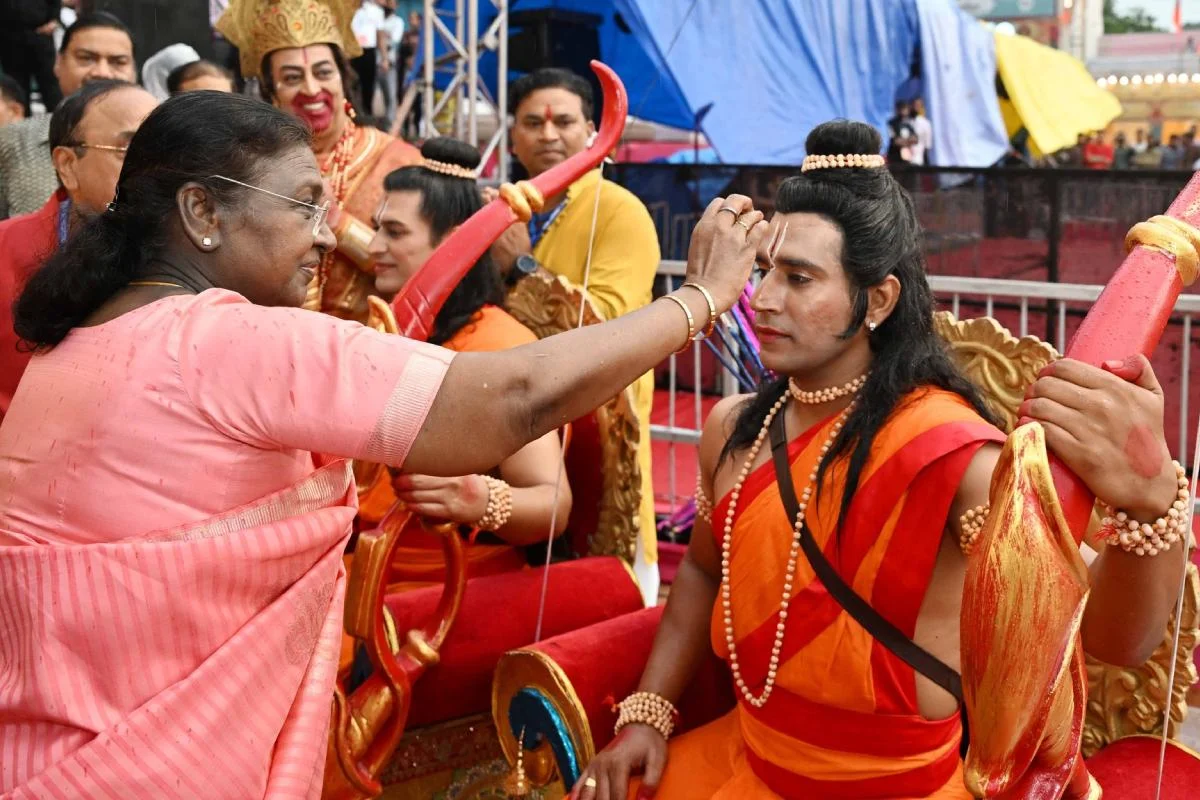
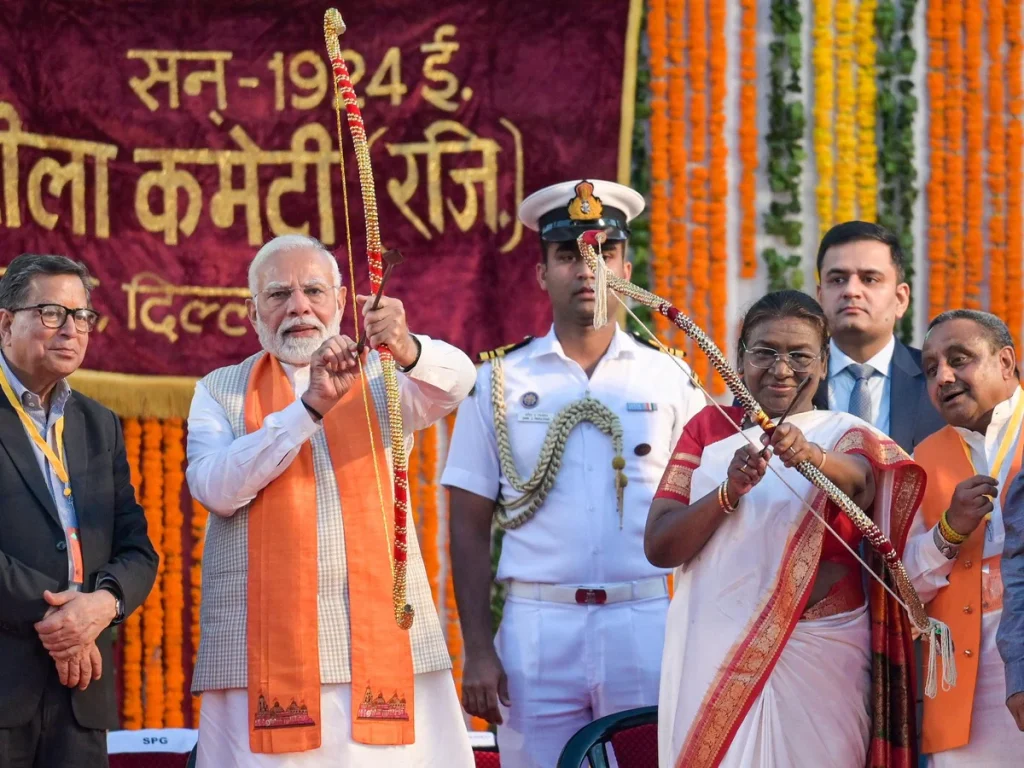
This year’s Vijayadashami celebration acquired special significance when President Droupadi Murmu graced the event organized by the Shri Dharmik Lila Samiti. The President, in her dignified yet symbolic gesture, shot an arrow at the effigy of Ravana, just as Lord Rama did in the ancient narrative. This act resonated deeply with the audience, serving not just as a ceremonial moment but also as a powerful message that good will always triumph over evil, no matter how strong or intimidating the forces of darkness may appear.
In this blog, we will explore the cultural, social, and symbolic importance of this event, understand its relevance in today’s times, and reflect on how President Murmu’s participation added gravitas to a tradition that continues to inspire millions across the country.
The Significance of Vijayadashami
Vijayadashami holds profound importance in Indian tradition for multiple reasons:
- The Ramayana Connection
- It marks the victory of Lord Rama over Ravana after a long and intense battle in Lanka.
- The festival symbolizes the triumph of truth, virtue, and dharma over lies, arrogance, and adharma.
- The Durga Puja Connection
- In many parts of India, especially Bengal, Vijayadashami also celebrates Goddess Durga’s victory over the demon Mahishasura.
- It is a reminder of feminine strength, divine energy (Shakti), and the balance between good and evil.
- Pan-Indian Tradition
- From Ramlilas in North India to Mysuru Dasara in Karnataka, Vijayadashami is celebrated in different ways but with a unifying message of righteousness.
By participating in this event, President Murmu not only honored the cultural traditions of India but also reminded the nation of the timeless message embedded in these festivals.
The Event by Shri Dharmik Lila Samiti
The Shri Dharmik Lila Samiti has been organizing Ramleela and Vijayadashami celebrations for decades, bringing together communities, artists, and audiences to relive the epic saga. Their events are known for grandeur, devotion, and attention to detail.
This year’s Vijayadashami celebrations became even more special with the President of India attending as the chief guest. The presence of the nation’s first tribal woman President elevated the occasion, making it historic.
Highlights of the event included:
- A vibrant Ramleela performance, depicting the final battle between Rama and Ravana.
- Cultural programs showcasing the traditions of different Indian states.
- The symbolic Ravana Dahan, where effigies of Ravana, Meghnath, and Kumbhkaran were set ablaze.
- The most awaited moment: President Droupadi Murmu shooting the ceremonial arrow at Ravana’s effigy, symbolizing Lord Rama’s final strike.
The audience erupted in cheers, and the atmosphere filled with chants of “Jai Shri Ram” and “Satyamev Jayate”, reaffirming the festival’s eternal message.
President Droupadi Murmu’s Role and Symbolism
President Murmu’s participation carried multiple layers of symbolism:
- Representation of Unity
- As the Head of State, she represents the unity of India’s diverse traditions. Her presence bridged governance with culture, politics with spirituality, and tradition with modernity.
- A Woman in the Role of Upholding Dharma
- In a society where women often face challenges, seeing the nation’s highest constitutional authority—who is also a woman—shooting the arrow symbolized empowerment. It echoed the strength of Goddess Durga herself.
- Message of Moral Responsibility
- By enacting Lord Rama’s victory, she reminded people that every citizen has the responsibility to uphold truth, justice, and ethics in daily life.
- Hope in Troubled Times
- In an era when corruption, crime, and injustice sometimes appear overwhelming, the symbolic Ravana Dahan served as a reminder that such evils are not permanent.
Her act, though ceremonial, had immense emotional and cultural impact.
The Message: Good Triumphs Over Evil
The President’s arrow at Ravana’s effigy was not just a performance; it was a message to the nation.
- In Governance: Truth, transparency, and integrity must defeat corruption, arrogance, and misuse of power.
- In Society: Justice, equality, and compassion must prevail over discrimination, violence, and hatred.
- In Personal Life: Patience, honesty, and moral courage must conquer greed, lies, and selfishness.
Ravana, despite his greatness as a scholar and ruler, was destroyed because of his arrogance and adharma. His downfall is a lesson that no matter how mighty someone becomes, without righteousness they cannot sustain.
The Relevance of Vijayadashami in Modern Times
Why does this age-old festival still hold so much power today? The answer lies in its universality. Every era has its “Ravanas”—injustice, inequality, exploitation, environmental destruction, terrorism, and corruption. And every era needs its “Ramas”—those who stand up with courage, integrity, and faith to defeat them.
In today’s context:
- Corruption is the Ravana of governance.
- Gender inequality is the Ravana of social justice.
- Climate change is the Ravana threatening the environment.
- Technology misuse is the Ravana of modern society.
By reviving these symbolic traditions, leaders like President Murmu remind us that the fight between good and evil is not just mythology—it is ongoing in our daily lives.
Cultural Unity Through Vijayadashami
Another important aspect of this event was how it highlighted the cultural unity of India. While the Ramayana may be performed in different languages, costumes, and styles across the country, the message remains the same.
- In the North, Ramleelas dominate the celebration.
- In Bengal and the East, Durga Puja immersion processions mark the day.
- In the South, Mysuru Dasara is world-famous for its royal grandeur.
- In tribal areas, local versions of the story are enacted, blending indigenous traditions with mainstream narratives.
President Murmu, herself coming from a tribal background, symbolized this unity by standing at the center of such a national celebration.
Public Reaction and Emotional Connect
The crowd’s reaction to the President’s participation was electric. For many, it was the first time they witnessed the President of India personally taking part in a festival at this level.
- Elders expressed pride that cultural values are respected at the highest constitutional level.
- Children were inspired to see their President as part of a mythological tradition.
- Women saw in her gesture a reflection of their own strength and participation in cultural life.
- Youths connected the act with modern struggles against social evils.
On social media, the videos and pictures of President Murmu shooting the arrow went viral, sparking discussions on how leaders can connect with citizens through cultural symbolism.
Lessons from Ravana’s Fall
The festival also allows us to reflect on Ravana’s story itself. Despite his brilliance, his flaws led to his destruction. The lessons include:
- Ego is Destructive: No matter how knowledgeable, arrogance blinds judgment.
- Adharma is Unsustainable: Unjust actions, however powerful, cannot last.
- Respect for Women: Ravana’s downfall began with his disrespect toward Sita—a timeless reminder of the need to honor women.
- Truth Always Wins: The universe itself supports those aligned with dharma.
By associating these lessons with governance, social life, and personal conduct, Vijayadashami remains eternally relevant.
President Murmu: A Symbol of Change
President Droupadi Murmu’s journey—from a tribal village in Odisha to the Rashtrapati Bhavan—is itself a story of triumph against odds. Her participation in such events adds authenticity to the symbolism:
- She represents inclusivity, showing how India’s democracy empowers even the most marginalized.
- She represents resilience, having faced personal tragedies yet emerging stronger.
- She represents hope, embodying the idea that good indeed triumphs over adversity.
Thus, her arrow against Ravana was more than ceremonial—it reflected her life’s journey as well.
Conclusion
The Vijayadashami event organized by the Shri Dharmik Lila Samiti became historic with President Droupadi Murmu’s participation. Her act of shooting an arrow at Ravana’s effigy symbolized India’s timeless belief that truth and goodness will always prevail over arrogance and evil.
In today’s world, where challenges often seem overwhelming, such symbolic gestures from national leaders revive faith, inspire collective responsibility, and strengthen cultural bonds.
As the flames of Ravana’s effigy rose into the sky, they carried with them a message for every Indian: Dharma is eternal, truth is invincible, and no force of evil—however mighty—can withstand the power of righteousness.

