
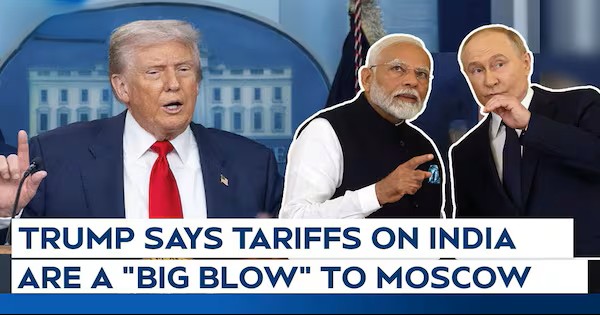
US Trade with Moscow Increased by 20%: What is Donald Trump Doing? Threatening India with Russian Oil, But US Itself Has Seen a 20% Increase in Trade with Moscow
Introduction
US trade with Moscow The global trade landscape has always been shaped by geopolitics, power struggles, and diplomatic maneuvers. The ongoing Russia-Ukraine war, sanctions imposed by the West, and global energy realignments have made the question of “who trades with Moscow” one of the most debated issues worldwide.
Former US President Donald Trump—known for his unpredictable political style and aggressive foreign policy—has once again sparked controversy by openly threatening India over its oil trade with Russia. While Trump accuses New Delhi of undermining Western sanctions by buying cheap Russian crude, official figures show that US trade with Moscow itself has actually increased by 20%.
This revelation raises a very important question: Why is Trump targeting India while the United States itself continues to engage in trade with Russia?
To understand this complex contradiction, let us explore the historical background of US-Russia trade, the role of sanctions, India’s energy security needs, and the larger geopolitical calculations behind Trump’s rhetoric.
US-Russia Trade Moscow: A Historical Overview
Trade between the United States and Russia has always been shaped by the geopolitical climate of the time.
- Cold War Era (1947–1991): Trade was extremely limited due to ideological rivalry.
- 1990s: With the collapse of the Soviet Union, US companies explored opportunities in Russia’s oil, gas, and mining sectors.
- 2000s: Despite political tensions, trade volumes grew, especially in energy and technology.
- 2014 (Crimea Crisis): The US imposed sanctions after Russia’s annexation of Crimea, which significantly reduced trade.
- Post-2022 (Ukraine War): Western nations imposed massive sanctions on Moscow, banning exports of advanced technology, military equipment, and luxury goods. However, loopholes remained in sectors like energy, fertilizers, and raw materials.
Thus, while Washington talks tough on sanctions, the reality is that American companies and consumers continue to engage—directly or indirectly—in trade with Russia.
The 20% Increase in US-Moscow Trade
Despite sanctions, recent trade data reveals that US imports of Russian goods such as fertilizers, raw materials, and certain minerals have increased. Fertilizers are a particularly sensitive sector because the US agricultural industry depends heavily on nitrogen-based fertilizers, many of which are supplied by Russian and Belarusian companies.
Similarly, American industries rely on palladium, titanium, and rare earth materials—much of which is sourced from Russia—for aerospace and automobile manufacturing.
This explains why US trade with Moscow went up by 20% in the past year, despite the loud political messaging of sanctions and isolation.
Donald Trump’s Threat to India and Moscow
Against this backdrop, Donald Trump has recently targeted India, threatening economic consequences if New Delhi continues to import discounted Russian crude oil.
Trump’s argument:
- By buying oil from Russia, India is “funding Putin’s war machine.”
- India should align with the US and NATO in isolating Moscow.
- If not, Washington may impose secondary sanctions or trade restrictions on Indian companies.
This statement comes despite the fact that India is a non-aligned democracy that prioritizes its own energy security. New Delhi has consistently argued that it will buy oil from wherever it gets the best deal to protect its citizens from inflation and high fuel costs.
The Hypocrisy in Trump’s Position
Trump’s remarks expose a clear double standard:
- US-Russia Trade Grows: While Washington continues importing Russian fertilizers, minerals, and metals, it criticizes India for importing oil.
- Energy Security vs. Food Security: The US justifies its imports on grounds of “food security” (fertilizers for farmers), but refuses to acknowledge that India too needs “energy security” (cheap oil for its economy).
- Selective Sanctions: Sanctions are applied unevenly. The US exempts goods it needs while pressuring allies like India to sacrifice their interests.
- Geopolitical Pressure: The US often uses trade threats not for economic reasons but to enforce geopolitical loyalty.
India’s Position: Energy Security First
India, the world’s third-largest importer of crude oil, depends on imports for over 85% of its energy needs. With rising global oil prices after the Ukraine war, discounted Russian oil became an attractive option.
- Before 2022, Russia accounted for only 1–2% of India’s oil imports.
- By 2024, Russia became India’s top supplier, accounting for more than 35% of its imports.
This not only helped India keep inflation under control but also allowed it to stabilize domestic fuel prices. For a developing country with a huge population, affordable energy is a non-negotiable priority.
As External Affairs Minister S. Jaishankar famously said:
“Europe buys more oil in one afternoon than we buy in a quarter. So please stop lecturing us.”
The Strategic Importance of Russian Oil for India
- Price Advantage: Russian oil is cheaper than Middle Eastern crude.
- Diversification: Reduces dependence on West Asian suppliers.
- Refining Capacity: Indian refiners can process Russian crude efficiently.
- Geopolitical Leverage: Strengthens India’s strategic autonomy.
In short, India’s decision is not about “supporting Russia” but about securing its own national interests.
US Double Standards in Global Trade
The United States has a long history of practicing double standards in international trade:
- With China: Even while calling China a “strategic rival,” the US continues to be China’s largest trading partner.
- With Saudi Arabia: Despite criticizing Saudi Arabia’s human rights record, Washington maintains deep oil and defense trade relations.
- With Russia: As we now see, despite sanctions, the US increased its imports of Russian goods.
This pattern shows that geopolitical rhetoric often diverges from economic reality.
Why is Trump Targeting India?
- Domestic Politics: Trump wants to appear tough on foreign policy ahead of the 2026 elections. Targeting India plays well with his conservative voter base.
- Pressure Tactic: By threatening sanctions, Trump seeks to force India closer to Washington’s strategic line on Russia and China.
- Energy Market Competition: The US itself is a major exporter of oil and gas. Discouraging India from buying Russian crude could open more space for US energy exports to India.
- China Factor: The US fears that India’s closeness to Russia could push New Delhi into a deeper partnership with Beijing.
India’s Likely Response
India is unlikely to bow to Trump’s threats. Past experience shows that India has often resisted external pressure when its national interest is at stake:
- 1998 Nuclear Tests: Despite US sanctions, India went ahead with its nuclear program.
- Chabahar Port in Iran: India continued engagement despite US objections.
- Russian Oil Purchases: Even during Biden’s presidency, India openly defended its right to buy from Russia.
Thus, it is safe to say that India will continue to prioritize its own energy needs over Trump’s threats.

Global Reactions
- Europe: European nations quietly continue buying Russian oil via third countries while publicly supporting sanctions.
- China: Benefits from discounted Russian crude, deepening its partnership with Moscow.
- Global South: Many developing countries see India as a leader in standing up to Western hypocrisy.
The Bigger Question: Who Really Benefits?
While Trump threatens India, the reality is that US companies themselves benefit from loopholes in sanctions. For example:
- Fertilizer imports keep American farms running.
- Titanium and palladium imports sustain the aerospace industry.
- Russian crude is even refined in third countries and sold back to Europe and the US.
Thus, ordinary Americans indirectly benefit from trade with Moscow, even as Trump lectures India.
Conclusion
The fact that US trade with Moscow increased by 20% exposes the double standards in Washington’s approach. While Donald Trump threatens India for buying Russian oil, his own country continues to import essential goods from Russia for its economy.
India has every right to secure affordable energy for its citizens, just as the US secures fertilizers and minerals for its industries. Instead of threatening India, the US should recognize New Delhi’s strategic autonomy and energy needs.
This controversy once again proves a universal truth in geopolitics: Nations ultimately act in their own interests. If the US can trade with Russia when it suits them, then India has equal right to do the same.
Read more latest news

