
UP Government Announces ₹20,000 Monthly Salary and Free Treatment for Sanitation Workers: A New Dawn for ‘Safai Mitras’
Introduction
In a landmark decision that could redefine the dignity and welfare of lakhs of sanitation workers in Uttar Pradesh, Chief Minister Yogi Adityanath’s government has announced a significant increase in their monthly salaries to ₹20,000, along with the provision of free medical treatment for them and their families.
The announcement, which comes ahead of the festive season and local body reforms, marks one of the biggest welfare initiatives in the state’s civic history. The move not only aims to improve the living standards of sanitation workers — known as Safai Mitras — but also symbolizes the government’s commitment to uplift the underprivileged sections who work tirelessly to keep cities and villages clean.
From a purely administrative measure, this policy now stands as a symbol of dignity, inclusivity, and recognition for those whose contribution has often been ignored or undervalued in India’s social fabric.
The Announcement: A Promise of Dignity and Security
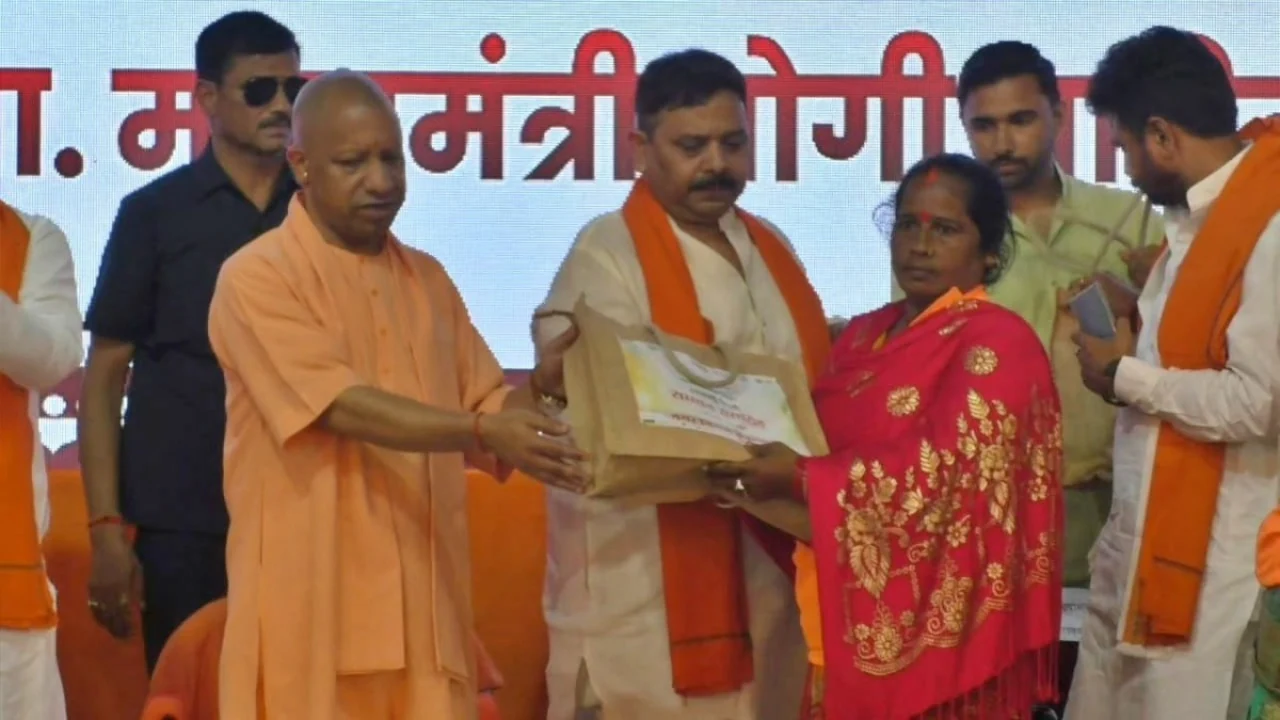
The announcement was made during a state-level function in Lucknow, where Chief Minister Yogi Adityanath addressed thousands of sanitation workers gathered under the Swachh Bharat Mission campaign. He declared that the state government would ensure:
- A minimum monthly salary of ₹20,000 for all sanitation workers employed in municipal corporations, councils, and panchayats.
- Free medical treatment for sanitation workers and their family members under the Ayushman Bharat Yojana and special government health schemes.
- Safety gear and modern cleaning equipment to minimize health risks and prevent manual scavenging.
In his speech, CM Yogi said:
“Our Safai Mitras are the silent warriors who protect public health every single day. They deserve dignity, security, and respect. This decision is not charity — it’s justice long overdue.”
The crowd erupted in applause, many workers visibly emotional as they heard their struggles finally being acknowledged at the highest level.
The Context: A Long Fight for Recognition
Sanitation workers form the backbone of urban and rural cleanliness in India. In Uttar Pradesh alone, there are over 1.6 lakh registered sanitation workers, and thousands more work on daily wages or contract-based systems. For decades, they have faced low wages, job insecurity, lack of healthcare, and hazardous working conditions.
Most workers earn between ₹7,000 to ₹10,000 a month — often without proper uniforms, gloves, or medical support. Despite being essential frontline workers, especially during the COVID-19 pandemic, their voices have remained largely unheard.
Activists and social groups have long demanded fair pay and social security for them. The government’s new decision to provide ₹20,000 monthly salary and free healthcare is being seen as a transformative step toward social justice and equality.
A Step Towards Ending Manual Scavenging
One of the most critical aspects of the new policy is its indirect link to the government’s campaign against manual scavenging — a practice banned in India yet still prevalent in parts of the country.
By ensuring higher wages, better equipment, and medical coverage, the UP government aims to modernize the sanitation workforce and phase out unsafe, manual methods of cleaning.
CM Yogi emphasized during his announcement:
“No sanitation worker in Uttar Pradesh should have to risk his life to clean a drain or a manhole. Technology and dignity must go hand in hand.”
Officials have been instructed to procure robotic cleaning machines and protective kits for all major municipalities to ensure that the workers’ health and safety remain paramount.

The Welfare Package: What’s Included
The government has structured the welfare initiative in a comprehensive way, covering both economic and health security. Here’s what the new package entails:
1. Increased Minimum Salary: ₹20,000 per Month
All contractual and permanent sanitation workers across urban local bodies will receive a minimum monthly salary of ₹20,000.
The salary will be directly credited into their bank accounts through the Direct Benefit Transfer (DBT) system to ensure transparency.
2. Free Medical Treatment
Every sanitation worker and their family members (spouse, two children, and dependent parents) will be entitled to cashless treatment up to ₹5 lakh under the Ayushman Bharat – Pradhan Mantri Jan Arogya Yojana (PMJAY).
For critical illness cases, the state government will bear additional expenses beyond this limit through a Special Sanitation Health Fund.
3. Insurance and Pension Benefits
The new plan also includes:
- ₹10 lakh accidental insurance coverage
- ₹2 lakh life insurance policy
- Pension for workers after retirement or for dependents in case of death
4. Skill Development and Training
The government will set up training centers in every district to teach modern sanitation methods, machinery handling, and health safety practices.
5. Safety Equipment and Uniforms
Each worker will receive safety gloves, boots, masks, uniforms, and a digital attendance ID to track working hours and ensure accountability.
Reactions from Across the State
The announcement was met with overwhelming enthusiasm among sanitation workers and their families. Many said it was the first time they felt their profession was truly respected by the government.
Voices from the Ground
Ramesh Kumar, a sanitation worker from Kanpur, said:
“We have been cleaning the streets for 15 years, but our wages barely covered food and rent. This is the first time a government has given us a real chance to live with dignity.”
Suman Devi, a worker from Varanasi, said the free medical scheme was the biggest relief:
“My husband fell sick last year and we had to borrow ₹50,000 for hospital bills. If this scheme had come earlier, we would have been saved from debt.”
Municipal officers, too, believe that the move will improve efficiency and reduce absenteeism. A senior official in Lucknow Municipal Corporation remarked:
“Better salaries mean better morale. It will attract more trained people into this crucial service sector.”

Political Reactions: Support and Criticism
While the ruling BJP has hailed the move as a “historic welfare decision,” the opposition parties have responded with mixed reactions.
BJP’s Position
State BJP leaders praised CM Yogi’s decision as part of the government’s larger vision of “Sabka Saath, Sabka Vikas, Sabka Vishwas.”
Deputy CM Keshav Prasad Maurya said:
“For decades, sanitation workers were used for political photo-ops. The Yogi government has given them real respect and financial security.”
Opposition Criticism
However, opposition parties like the Samajwadi Party and Congress accused the government of announcing populist schemes ahead of civic elections.
SP leader Akhilesh Yadav commented:
“The timing of this announcement is political. Why did the government wait so long to implement fair wages? Still, we welcome it if it truly benefits the workers.”
Congress spokesperson Supriya Shrinate added:
“We hope this is not another hollow promise. The government must ensure actual implementation at the grassroots level.”
Despite political differences, most leaders agreed that the move was socially progressive and morally necessary.
Economic Implications for the State
With over 1.6 lakh sanitation workers, the salary hike to ₹20,000 means a significant financial implication for the state exchequer. Rough estimates suggest an annual expenditure of ₹3,800–₹4,000 crore on salaries alone.
However, economists argue that the social and economic benefits far outweigh the cost. When sanitation workers are paid fairly, they contribute more productively, reducing disease outbreaks, absenteeism, and healthcare costs for the general population.
Dr. N.K. Sharma, an economist from Lucknow University, explained:
“Investment in sanitation is an investment in public health. Every rupee spent here saves multiple rupees in disease control and urban hygiene maintenance.”
The government is also exploring Public-Private Partnerships (PPP) for better management of sanitation resources and mechanization, which can further offset costs.
Healthcare Access: A Lifeline for the Vulnerable
The announcement of free medical treatment has been widely appreciated. Sanitation workers often suffer from chronic respiratory issues, skin infections, and exposure-related diseases due to unhygienic working conditions. Many cannot afford private healthcare or even basic medical check-ups.
Under the new initiative:
- Workers will get annual health check-ups at district hospitals.
- Mobile health vans will visit remote rural areas for on-site screening.
- Dedicated helplines and hospital desks will be set up to ensure smooth access to free treatment under the government scheme.
The government has directed all district magistrates and municipal commissioners to maintain a digital health record of sanitation workers for timely monitoring and intervention.
Link to Swachh Bharat and Smart City Missions
The move aligns closely with Prime Minister Narendra Modi’s Swachh Bharat Abhiyan (Clean India Mission) and the Smart City Mission. Both initiatives emphasize the welfare of sanitation workers as a key pillar of urban cleanliness and public hygiene.
UP’s policy could serve as a model for other states, setting a benchmark for fair wages and worker dignity.
CM Yogi Adityanath noted:
“A clean city is not possible without clean hearts. We must respect the people who make our surroundings livable every single day.”
The initiative also supports India’s commitment to the United Nations Sustainable Development Goals (SDGs), particularly Goal 8 (Decent Work and Economic Growth) and Goal 3 (Good Health and Well-being).
Implementation Challenges Ahead
While the policy announcement is laudable, experts caution that effective implementation will be the key challenge.
1. Contract Workers and Outsourcing Issues
A large number of sanitation workers are employed through private contractors. The government must ensure that these workers also receive the revised pay and benefits — not just permanent staff.
2. Budget Allocation and Delays
Timely fund release from municipalities and panchayats will be crucial. Past welfare schemes have often suffered from delayed payments and bureaucratic red tape.
3. Health Scheme Integration
Integrating Ayushman Bharat benefits with state-level health systems requires technological coordination and public awareness. Workers must be educated about their entitlements.
4. Monitoring and Grievance Redressal
To prevent corruption or mismanagement, the government plans to launch an online grievance redressal portal where workers can report non-payment, exploitation, or safety violations.
The Social Impact: A Change in Mindset
Beyond economics and governance, this decision carries a deep social message. For centuries, sanitation work in India has been stigmatized, associated with caste hierarchies and social discrimination.
By recognizing sanitation workers as Safai Mitras (friends of cleanliness) and offering them fair wages and free healthcare, the Yogi government has taken a symbolic step towards erasing caste-based inequalities.
Social reformers have hailed this as a major psychological shift — one that promotes dignity of labor.
Swachh Bharat volunteers and NGOs have also welcomed the move, urging society to treat sanitation workers with the respect they deserve.
As one activist put it:
“The broom is not a symbol of lowliness — it’s a symbol of service. This policy restores that pride.”
Comparative Perspective: How Other States Fare
Uttar Pradesh’s decision sets a new benchmark in the country. To put things in perspective:
- Maharashtra pays sanitation workers an average of ₹15,000 per month.
- Delhi pays around ₹18,000–₹19,000.
- Tamil Nadu and Gujarat range between ₹12,000–₹16,000 depending on local bodies.
By fixing a uniform ₹20,000 salary, UP now stands among the highest-paying states for sanitation staff. The addition of free medical care further strengthens its welfare model.
Experts believe that other states may soon follow suit, creating a positive domino effect nationwide.
Voices of Support from Across Sectors
Prominent industrialists, social leaders, and religious heads have applauded the initiative.
Spiritual leader Acharya Dhirendra Krishna Shastri of Bageshwar Dham called it a “karma-driven decision,” saying:
“Those who keep society clean are performing divine work. Supporting them is not politics — it is Dharma.”
Business groups such as the FICCI Uttar Pradesh Chapter praised the move for promoting inclusive growth and employment dignity, urging private institutions to adopt similar welfare standards for their cleaning staff.
A Vision Beyond the Announcement
Analysts view this policy as part of Yogi Adityanath’s broader effort to position Uttar Pradesh as a model welfare state that balances infrastructure growth with human dignity.
In recent years, the government has launched several social initiatives — from free housing and healthcare to women’s self-help programs. This decision strengthens that welfare narrative while connecting directly with grassroots workers who form a critical part of the state’s workforce.
If implemented successfully, the move could transform not just urban cleanliness but also social harmony, community pride, and political trust in governance.
Public Reactions on Social Media
Within hours of the announcement, hashtags like #SafaiMitraRespect, #UPWelfareModel, and #YogiAdityanath began trending on X (formerly Twitter). Thousands of users appreciated the government’s step, sharing personal stories of sanitation workers in their neighborhoods.
Some citizens even offered to organize community felicitation programs to honor local Safai Mitras. The digital reaction reflected a rare moment of unity, empathy, and respect cutting across political lines.
Conclusion: A Step Toward Real Social Justice
The Uttar Pradesh government’s decision to provide a ₹20,000 salary and free healthcare to sanitation workers is more than a welfare scheme — it’s a moral correction of historical neglect.
For decades, the people who cleaned our streets, drains, and hospitals worked in silence, often ignored by the system they served. Today, they have been given not just money, but recognition, dignity, and respect.
This move sends a powerful message: development is not just about highways and skyscrapers, but about the hands that build and maintain them.
If executed with honesty and transparency, this initiative can transform Uttar Pradesh’s social landscape, inspiring a wave of similar reforms across India — where every worker, no matter how humble their role, can live with health, security, and pride.
Read more latest News

