Tragedy in Jaipur: Six Lives Lost as Fire Engulfs Trauma Center of SMS Hospital
Introduction
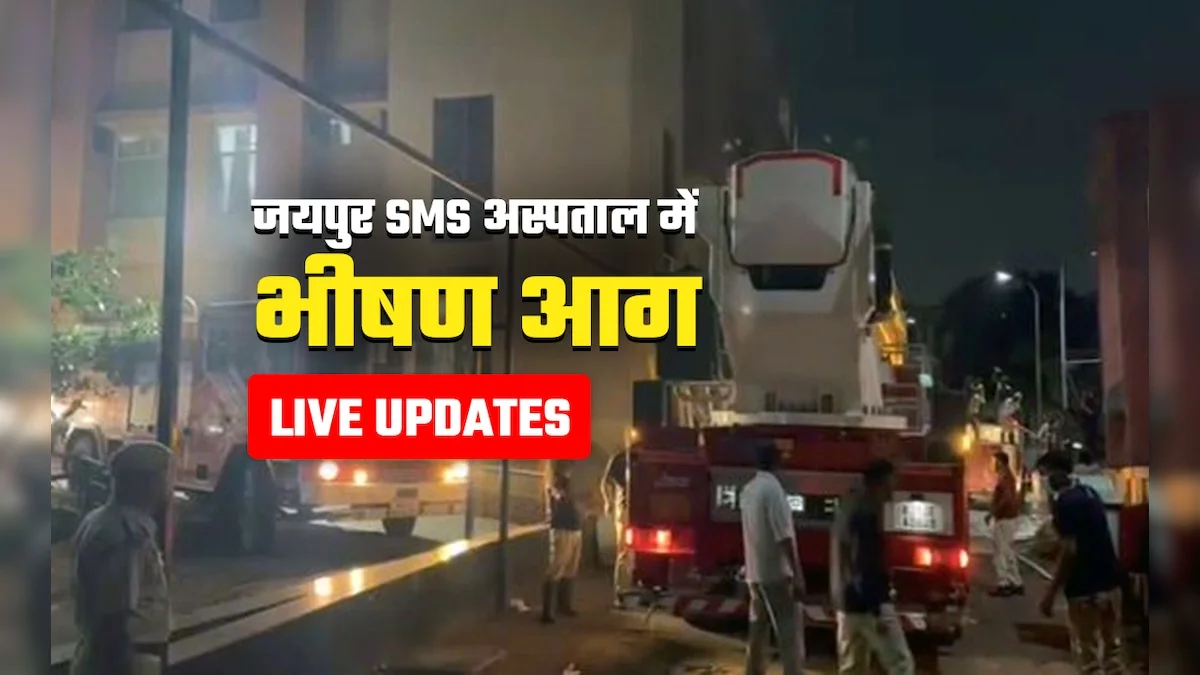
A massive fire broke out late Sunday night at the trauma center of Sawai Man Singh Hospital (SMS Hospital) in Jaipur. In the heart of Jaipur, where Sawai Man Singh Hospital (SMS Hospital) stands as one of Rajasthan’s most trusted public healthcare institutions, a horrifying tragedy unfolded late Sunday night. The trauma center — a facility meant to save lives — turned into a death trap when a massive fire broke out, leaving at least six patients dead and several others fighting for their lives.
The flames, thick smoke, and chaos that followed have not only shaken the pink city but have reignited a nationwide debate over hospital safety, administrative negligence, and the crumbling state of public health infrastructure in India. As families grieve and authorities scramble to explain what went wrong, the question haunting everyone is simple: How could this happen in one of Rajasthan’s premier government hospitals?
The Incident: How the Night Turned into a Nightmare
According to initial reports, the fire began around 11:45 PM on Sunday in the intensive care unit (ICU) located on the first floor of the trauma center. Many patients in this ward were unconscious, on life support, or in post-operative recovery — completely dependent on medical staff and equipment.
Witnesses say they first noticed smoke emerging from a corner of the ICU, followed by a short circuit spark that quickly escalated into a full-fledged blaze. Within minutes, the ward was filled with dense, toxic smoke that spread through the air-conditioning vents, engulfing nearby rooms and corridors.
Doctors and nurses rushed to evacuate patients, but visibility dropped to nearly zero. Panic ensued as attendants and relatives tried to locate their loved ones amid the chaos. Eyewitnesses reported scenes of desperate attempts — patients being wheeled out on stretchers, oxygen cylinders being carried manually, and even some hospital staff using bedsheets to filter air as they ran through smoke-filled halls.
By the time firefighters reached the scene, six lives had already been lost due to asphyxiation (suffocation), and several others had sustained severe burns or respiratory injuries.
The Firefighting and Rescue Operation
The fire department received an emergency call around 12:10 AM, and multiple fire tenders were dispatched from nearby stations. Given the hospital’s central location in Jaipur, response time was relatively quick — yet the intensity of the smoke posed significant challenges.
Firefighters broke open windows and used ladders to rescue patients stranded on upper floors. The operation lasted for nearly three hours, and by 3:00 AM, the blaze was brought under control.
Officials confirmed that the fire was mainly confined to the ICU area but caused extensive smoke damage across the trauma center. Around 70–80 patients were safely evacuated, many of whom were transferred to other wards and private hospitals for emergency care.
A senior firefighter stated that faulty electrical wiring or an overloaded circuit was the most likely cause of the fire, although a forensic investigation has been initiated to determine the exact source.
Victims and the Toll of Negligence
The six victims — all patients under critical treatment — reportedly died due to suffocation caused by smoke inhalation rather than burns. Most of them were dependent on ventilators, and when power was cut off to prevent further sparks, their oxygen supply was disrupted.
Relatives waiting outside the trauma center broke down as the news spread. Many complained that there were no immediate alarms, no sprinklers activated, and no visible evacuation protocol.
One distraught family member told reporters,
“We were told our father was stable in the ICU. Suddenly we saw smoke, and chaos broke out. We begged the staff to help, but no one knew what to do. We lost him not to illness, but to negligence.”
As authorities continue to identify the victims and notify families, the larger truth stands exposed — that hospitals meant to heal can themselves become hazards if safety systems are ignored.
SMS Hospital: Rajasthan’s Pride Under Scrutiny
Sawai Man Singh Hospital, popularly known as SMS Hospital, is not just another government hospital — it is Rajasthan’s largest and most reputed medical institution. With over 6,000 beds and a patient inflow from neighboring states like Haryana, Uttar Pradesh, and Madhya Pradesh, SMS Hospital is often referred to as the “AIIMS of Rajasthan.”
The trauma center, established to handle emergency cases ranging from road accidents to critical surgeries, was considered one of the best-equipped units in the state. Yet, Sunday night’s disaster has revealed alarming lapses in fire safety and infrastructure management.
Sources within the hospital confirmed that while fire extinguishers and hydrant systems exist on paper, many were either non-functional or not maintained properly. Some corridors lacked clear exit routes, and no fire safety mock drills had been conducted in the past year.

Government and Administrative Response
Within hours of the tragedy, Chief Minister Bhajan Lal Sharma and Health Minister Gajendra Singh Khimsar rushed to the hospital to take stock of the situation. The CM expressed deep grief over the loss of lives and announced an ex gratia of ₹5 lakh each to the families of the deceased and ₹50,000 for those injured.
A high-level inquiry committee has been formed to investigate the incident, led by senior IAS officer Akhil Arora. The committee has been instructed to submit a detailed report within 48 hours, covering aspects like:
- Cause of fire
- Safety compliance at the trauma center
- Evacuation and response efficiency
- Accountability of responsible officials
CM Bhajan Lal Sharma also ordered a statewide fire safety audit of all government hospitals to prevent future tragedies.
Opposition Slams Government Over Negligence
As expected, the political temperature rose sharply in the aftermath of the incident. The opposition Congress accused the BJP-led Rajasthan government of gross administrative failure and criminal negligence in maintaining hospital safety standards.
Former Chief Minister Ashok Gehlot expressed condolences but demanded accountability, saying:
“Such incidents expose the poor state of our health infrastructure. What were the fire safety inspections doing? Who is responsible for six innocent deaths? The government cannot wash its hands off by giving compensation.”
Several Congress leaders staged a symbolic protest outside SMS Hospital, demanding that the hospital superintendent and health department officials be suspended pending investigation.
Meanwhile, the Aam Aadmi Party (AAP) and other regional parties echoed similar sentiments, calling for a judicial probe rather than an internal committee review.
Eyewitness Accounts: A Night of Panic and Heroism
The accounts emerging from patients, relatives, and staff reveal a mix of chaos and courage.
A nurse who was on duty in the trauma center said:
“There was a sudden spark and then everything filled with smoke. We tried to remove oxygen cylinders first because they could explode. The fire spread very fast. Some doctors carried patients on their shoulders to the stairs. Everyone did what they could, but it was terrifying.”
Another hospital attendant recalled how some patients had to be carried out without stretchers because of blocked hallways. Mobile lights were used to navigate through the smoke when electricity failed.
Amid the horror, there were also stories of bravery — a junior doctor reportedly re-entered the ICU thrice to rescue immobile patients, risking his own life in the process. Firefighters, too, worked relentlessly to ensure the blaze didn’t spread to adjoining wards.
Systemic Lapses: A Pattern Across India
Unfortunately, this isn’t an isolated incident. India has witnessed several hospital fires over the past few years — from Ahmedabad’s Shrey Hospital (2020) to Maharashtra’s Nashik COVID ward (2021) and Bhubaneswar’s SUM Hospital (2016) — all with one thing in common: negligence and lack of preparedness.
In many of these cases, investigations revealed that hospitals either lacked fire NOCs (No-Objection Certificates) or had expired safety clearances that were never renewed.
The Jaipur fire seems to follow the same disturbing pattern. A preliminary report by fire officials suggested that the trauma center’s fire alarm and sprinkler systems failed to activate, pointing to maintenance neglect.
Experts have repeatedly warned that hospital fires are among the most dangerous because:
- Patients are immobile and cannot evacuate themselves.
- Oxygen cylinders can explode if exposed to heat.
- Intensive care units often use high-power equipment that increases electrical load.
Yet, despite these known risks, fire safety remains one of the most overlooked aspects of healthcare infrastructure in India.
Public Outrage and Demand for Justice
As visuals of charred equipment and panicked patients circulated on social media, anger spread rapidly. #JaipurHospitalFire began trending on X (formerly Twitter), with citizens and celebrities demanding accountability.
Public sentiment was clear — this was not an accident but a man-made disaster resulting from years of bureaucratic apathy.
Civil society groups and NGOs working in the healthcare sector have urged the government to enact strict fire safety compliance laws for hospitals, with regular third-party audits and criminal penalties for violations.
One online comment summarized the mood perfectly:
“We can’t keep losing lives to negligence. Every fire report ends with condolences and committees. But when will we see convictions?”
Voices from the Ground: Doctors Speak Out
Several doctors at SMS Hospital, speaking on condition of anonymity, admitted that fire safety concerns had been raised multiple times with the administration. However, complaints were either ignored or delayed due to “budget constraints.”
A senior surgeon stated:
“We have world-class doctors but outdated infrastructure. Even the wiring in some parts of the building is decades old. We keep warning authorities, but nothing changes until tragedy strikes.”
This statement highlights the deep-rooted bureaucratic inertia that often undermines the dedication of India’s medical professionals.
Human Stories Behind the Statistics
Behind every number is a life — a family shattered, a future lost.
Among the deceased was a 42-year-old man recovering from a road accident, a 65-year-old woman awaiting surgery, and a young student who had sustained multiple fractures. Their families had trusted the hospital for care, only to receive lifeless bodies instead.
One relative, sobbing outside the morgue, said:
“We were told our son was stable. We waited outside for hours and then were told he was gone. We don’t even know how he died — from fire or from lack of oxygen.”
These human stories underscore the emotional and moral dimensions of the tragedy, making it not just a failure of systems but a failure of humanity.
Lessons That Must Be Learned
Every disaster offers lessons, but only if those in power are willing to act. The Jaipur fire exposes urgent reforms India must undertake:
- Mandatory Fire Audits:
Annual third-party fire safety audits should be made compulsory for all hospitals — public and private. - Real-time Monitoring Systems:
Hospitals must install smart smoke detectors and IoT-based fire alarms linked to local fire stations. - Evacuation Training:
Periodic drills for doctors, nurses, and staff should be conducted to ensure preparedness during emergencies. - Infrastructure Upgrades:
Government funding should prioritize upgrading electrical and oxygen systems in old hospitals. - Legal Accountability:
Officials and administrators found guilty of neglect should face criminal prosecution, not just transfers.
Political Fallout and Media Reactions
As expected, the tragedy became the focal point of political debates. National news channels ran continuous coverage, with panel discussions questioning both state preparedness and federal healthcare priorities.
The Bharatiya Janata Party (BJP), which governs Rajasthan, is facing increasing criticism as this tragedy follows a series of smaller fire incidents in government buildings over the past year.
The Congress and INDIA bloc leaders accused the government of focusing more on political optics than on safety reforms. Several commentators also drew parallels between this fire and earlier tragedies in Gujarat and Maharashtra — both BJP-ruled states at the time — to highlight a broader governance issue.
Central Government’s Stand
Union Health Minister JP Nadda expressed deep sorrow and assured full support from the central government. The Centre has sought a detailed report from the Rajasthan government and offered technical assistance for the forensic probe.
Nadda tweeted:
“The incident at Jaipur’s SMS Hospital is deeply saddening. My thoughts are with the families who lost their loved ones. The Union Health Ministry stands with the Rajasthan government in ensuring accountability and safety reforms.”
There are also reports that the National Disaster Management Authority (NDMA) will review hospital safety protocols across India following this tragedy.
The Larger Question: Are Indian Hospitals Prepared for Emergencies?
The Jaipur fire has once again exposed the gaping holes in India’s hospital safety infrastructure. Despite being a nation that aspires to global health leadership, our hospitals often operate in buildings not designed for modern safety standards.
From inadequate exits and blocked staircases to untrained staff, the list of deficiencies is long.
If a premier government hospital in a capital city can fail so catastrophically, what hope remains for smaller district hospitals?
This tragedy is not just about Jaipur — it’s a wake-up call for the entire country.
Rebuilding Trust and Accountability
In the aftermath of such disasters, public trust in government institutions often takes a hit. Restoring that trust will require more than compensation and promises — it demands visible change and long-term commitment.
The government must ensure:
- Transparent investigations
- Time-bound implementation of safety recommendations
- Periodic public disclosures of hospital safety audits
Only when citizens see accountability being enforced will faith in public healthcare begin to heal again.
Conclusion: From Mourning to Meaningful Reform
The fire at Jaipur’s SMS Hospital trauma center is a grim reminder that negligence kills as surely as disease. Six innocent lives were lost not because of medical failure but because of systemic apathy.
As the city mourns, as families wait for justice, and as political blame games continue, the moral question remains: How many more tragedies will it take before India truly values human life over bureaucratic convenience?
This incident must not fade into another headline buried under the next news cycle. It should mark a turning point — a moment when governments, hospital administrations, and citizens collectively demand safety, accountability, and reform.
Read more latest news