

Massive Wildlife Smuggling Busted in Bihar: Railway Protection Force Rescues 311 Live Turtles from Kalka Howrah Mail
In a shocking revelation highlighting the dark underbelly of wildlife trafficking in India, the Railway Protection Force in Bihar has uncovered a major wildlife smuggling operation. A total of 311 live turtles were recovered from the general coach of the Kalka–Howrah Mail train during a routine inspection at Sasaram railway station. The turtles were found packed mercilessly into 11 sacks and abandoned, raising serious concerns about animal cruelty, organized smuggling networks, and the safety of wildlife transport through Indian railways.
This incident has once again brought the spotlight on how railway routes are increasingly being used by smugglers to illegally transport protected wildlife species across state borders. The timely action of the Railway Protection Force prevented what could have been a tragic loss of wildlife.
Discovery at Sasaram Railway Station
The operation unfolded when personnel of the Railway Protection Force were conducting a routine security check at Sasaram railway station in Rohtas district of Bihar. As the Kalka–Howrah Mail halted briefly at the station, officials noticed several unattended sacks lying suspiciously inside a general coach.
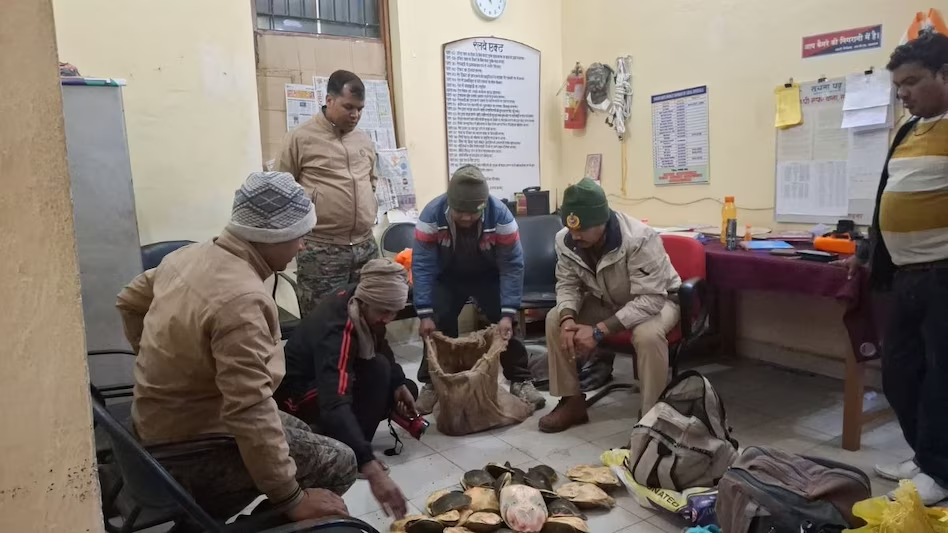
Upon inspection, the Railway Protection Force was stunned to find live turtles crammed into the sacks without food, water, or ventilation. Many of the turtles were weak due to suffocation and stress caused by overcrowding and lack of oxygen.
311 Live Turtles Found Abandoned
According to preliminary reports, all 311 turtles were alive at the time of recovery, though several were in critical condition. The RPF immediately alerted the forest department and senior railway officials to initiate emergency rescue and legal procedures.
The turtles are believed to be freshwater species, many of which are protected under the Wildlife Protection Act, 1972. Smuggling such species is a non-bailable offense, indicating the seriousness of the crime uncovered by the Railway Protection Force.
Wildlife Smuggling Through Railways A Growing Threat
This incident is not an isolated one. Over the past few years, Indian railways have emerged as a preferred mode of transport for wildlife smugglers due to the vast network, high passenger density, and relative anonymity in general coaches.
The RPF has repeatedly warned about the increasing use of trains for illegal wildlife transportation. Smugglers often abandon animals mid-journey to evade arrest, as seen in this case.
Condition of the Rescued Turtles
Veterinary experts who examined the turtles stated that prolonged confinement in sacks could have resulted in mass fatalities if the rescue had been delayed. Thanks to the swift action of the Railway Protection Force, the turtles were removed from the sacks and provided immediate care.
Temporary arrangements were made to keep the turtles hydrated and safe until forest department officials could take custody. The Railway Protection Force ensured that the animals were handled carefully to minimize further trauma.
Investigation Begins to Trace Smuggling Network
A detailed investigation has been launched to identify those responsible for this wildlife crime. CCTV footage from Sasaram railway station and nearby stations is being examined, and passenger data from the Kalka–Howrah Mail is under scrutiny.
Officials from the RPF believe that the turtles were loaded at an earlier station and were meant to be delivered to an illegal wildlife market, possibly in eastern India or across international borders.
Coordination with Forest Department
After the recovery, the Railway Protection Force coordinated closely with the Bihar Forest Department. Wildlife officials confirmed that the turtles would be rehabilitated and eventually released into their natural habitat after medical evaluation.
The joint operation underscores the importance of inter-departmental coordination in tackling wildlife crime, a point repeatedly emphasized by the Railway Protection Force in previous cases.

Legal Action Under Wildlife Protection Act
An official case has been registered under relevant sections of the Wildlife Protection Act, 1972. The Railway Protection Force has stated that anyone found involved in the smuggling attempt will face strict legal action, including imprisonment and heavy fines.
Wildlife crimes are treated as serious offenses because they threaten biodiversity and ecological balance. The role of the Railway Protection Force in enforcing these laws within railway premises is crucial.
Statement from Railway Protection Force Officials
Senior officials praised the alertness and dedication of the on-duty personnel. A spokesperson from the Railway Protection Force stated that constant vigilance and intelligence-based patrolling have significantly improved the detection of such crimes.
The official added that the Railway Protection Force is strengthening its monitoring mechanisms, especially on long-distance trains frequently used by smugglers.
Why Turtles Are Targeted by Smugglers
Turtles are often smuggled for illegal pet trade, traditional medicine, and meat consumption. Some species are also trafficked for religious rituals. The Railway Protection Force has noted a rise in turtle smuggling cases, particularly in eastern and northern India.
The illegal trade not only violates laws but also disrupts ecosystems, as turtles play a vital role in maintaining aquatic biodiversity.

Role of Passengers in Preventing Wildlife Crime
Officials have urged passengers to remain vigilant and report any suspicious activity. The Railway Protection Force encourages travelers to inform authorities if they notice abandoned luggage, unusual sacks, or animals being transported illegally.
Public cooperation, combined with the efforts of the Railway Protection Force, can significantly reduce such crimes.
Railways as a Frontline Against Wildlife Trafficking
Indian Railways, with its vast reach, has become both a challenge and an opportunity in the fight against wildlife trafficking. The Railway Protection Force serves as the frontline defense, monitoring millions of passengers and tons of luggage daily.
Cases like the Sasaram recovery highlight the critical responsibility shouldered by the Railway Protection Force in safeguarding not just passengers, but also India’s natural heritage.
Previous Wildlife Seizures by RPF in Bihar
Bihar has emerged as a sensitive corridor for wildlife trafficking. In recent years, the Railway Protection Force has seized birds, reptiles, and other protected species from trains passing through the state.
These consistent recoveries indicate both the scale of the problem and the growing efficiency of the Railway Protection Force in combating it.
Strengthening Surveillance and Intelligence
Following this incident, the Railway Protection Force has announced plans to enhance surveillance at major junctions. Increased use of sniffer dogs, random checks, and intelligence-sharing with wildlife agencies are part of the strategy.
Such measures aim to deter smugglers and ensure that railway networks are not misused for illegal activities.
Environmental Impact of Wildlife Smuggling
Wildlife experts warn that illegal trafficking poses a severe threat to biodiversity. The rescue of 311 turtles by the Railway Protection Force is a reminder of how many animals are silently exploited every year.
Each successful intervention by the Railway Protection Force helps preserve fragile ecosystems and protect endangered species from extinction.
Public Awareness and Media Role
Media coverage of such incidents plays a vital role in raising awareness. The Railway Protection Force believes that informed citizens are more likely to cooperate and report crimes.
By highlighting the Sasaram turtle rescue, the Railway Protection Force hopes to send a strong message to smugglers that railway routes are under constant watch.
Conclusion: A Timely Rescue and a Strong Warning
The recovery of 311 live turtles from the Kalka–Howrah Mail at Sasaram railway station stands as a major success for the Railway Protection Force. It underscores the importance of vigilance, coordination, and swift action in combating wildlife crime.
While the rescued turtles now have a chance to return to their natural habitat, the incident serves as a grim reminder of the ongoing threat posed by wildlife smuggling. The Railway Protection Force, through its continued efforts, has reaffirmed its commitment to protecting both national security and environmental heritage.
As investigations continue and surveillance is tightened, this case is expected to act as a strong deterrent against future attempts to exploit India’s railway network for illegal wildlife trade.
Read More Latest News

