

Akhilesh Yadav’s Sharp Jibe at Akash Anand: “BJP Needs Him More Than BSP” — A Political Message Beyond Words
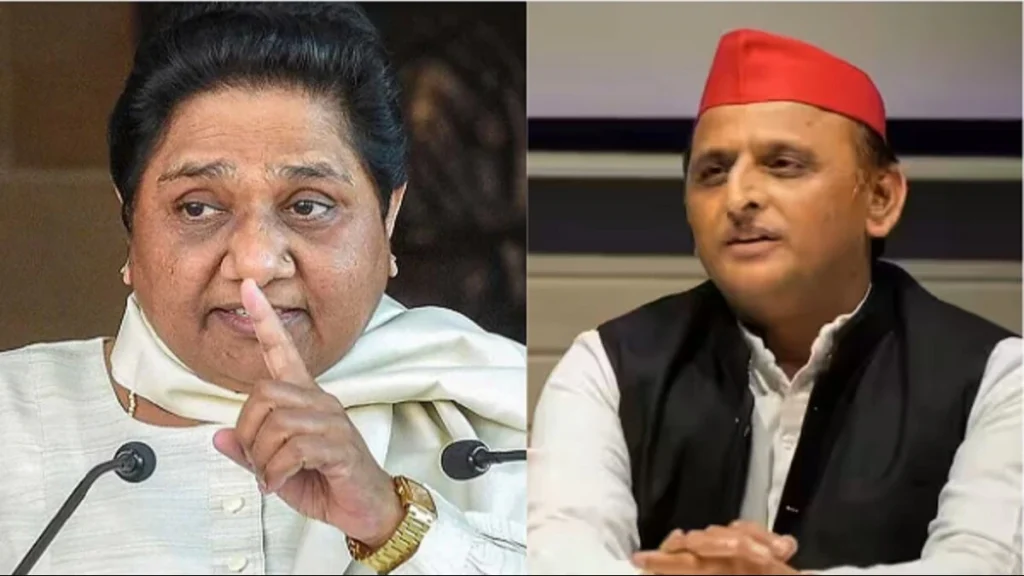
Samajwadi Party president Akhilesh Yadav took a dig at Mayawati’s nephew Akash Anand, saying, “The BJP needs Akash Anand more than the Bahujan Samaj Party (BSP).” In Uttar Pradesh, the state that defines the pulse of Indian politics, the war of words never truly ends. Every statement by a major political leader becomes a new flashpoint in the nation’s biggest political battleground. Recently, Samajwadi Party (SP) president Akhilesh Yadav stirred the pot again with a pointed remark aimed at Bahujan Samaj Party (BSP) supremo Mayawati’s nephew, Akash Anand. With a trademark smirk, Akhilesh said, “The BJP needs Akash Anand more than the BSP.”
At first glance, it sounds like a casual taunt. But behind this seemingly light jab lies a deep political strategy — a message about shifting alliances, BSP’s weakening ground, and the ever-evolving caste equations that define UP politics.
This statement has not only revived the debate on BSP’s internal leadership crisis but also exposed how opposition leaders are recalibrating their political narrative ahead of the upcoming 2026 Assembly elections and the 2029 Lok Sabha race.
The Context: Akash Anand’s Emergence in BSP Politics
To understand Akhilesh Yadav’s remark, one must first look at Akash Anand’s role in the BSP. The 28-year-old nephew of Mayawati has been increasingly active in party affairs over the past few years. He was publicly projected as the “future of BSP”, often accompanying Mayawati in rallies and being introduced as her political heir.
However, Akash Anand’s political style has been a mix of youthful aggression and inexperienced rhetoric. His fiery speeches, sometimes bordering on controversy, have often drawn attention — both positive and negative. BSP supporters see him as a modern leader who can connect with younger Dalit voters, while critics dismiss him as a political novice lacking the charisma or grassroots understanding that Mayawati once commanded.
It was during one such public discourse around Akash Anand’s increasing visibility that Akhilesh Yadav made his now-viral remark. By saying that “the BJP needs Akash Anand more than the BSP,” Akhilesh hinted at two things:
- That Akash Anand’s political inexperience might indirectly help the BJP by dividing the opposition vote; and
- That BSP’s ideological and strategic confusion is benefiting the ruling party.
Akhilesh’s Comment: A Political Calculation, Not Just Sarcasm
Akhilesh Yadav is known for his carefully crafted public statements. He rarely speaks offhand; even his jokes carry layered meanings. When he took a dig at Akash Anand, it was not merely to mock the young BSP leader — it was to politically position the Samajwadi Party as the only credible opposition in Uttar Pradesh.
For the SP chief, the BSP’s decline has been both a boon and a risk. On one hand, BSP’s weakening hold on Dalit voters gives SP a chance to expand beyond its traditional Yadav-Muslim base. On the other, if BSP continues to erode without transferring those votes to SP, the BJP might continue to dominate due to vote fragmentation.
Thus, Akhilesh’s line about “BJP needing Akash Anand” can be interpreted as:
“BSP’s confusion and internal crisis are helping the BJP stay in power.”
By mocking Akash Anand’s leadership, Akhilesh was signaling to the Dalit voters that the real battle against BJP cannot be led by an inexperienced dynast, but by someone with administrative experience and political maturity — implying himself.

BSP’s Decline and the Vacuum in Dalit Politics
To grasp why Akhilesh Yadav chose this specific target, one must examine the BSP’s downward trajectory over the past decade.
Under Mayawati, the BSP was once a formidable force that combined Dalit assertion with political pragmatism. In 2007, she famously formed the government with a majority by engineering a “social engineering” formula — Brahmin-Dalit unity under the slogan “Sarvajan Hitay, Sarvajan Sukhay.”
But since 2012, BSP’s graph has been in free fall. The party failed to adapt to the changing narrative of Hindutva politics, youth-centric social media campaigning, and the new caste dynamics emerging from regional identity movements.
- In 2014 Lok Sabha elections, BSP failed to win a single seat.
- In 2017 Assembly elections, it secured just 19 seats.
- In 2019 Lok Sabha elections, despite an alliance with SP, the BSP could only manage 10 seats, while BJP swept the state.
- And in 2022, BSP was reduced to near irrelevance with just one seat in the Assembly.
Amid this decline, Mayawati’s decision to bring Akash Anand into prominence seemed like an attempt to rejuvenate the party. However, for many observers, this move appeared to be too little, too late, and possibly miscalculated — focusing on dynastic continuity instead of grassroots revival.
Akhilesh Yadav, spotting this weakness, turned it into a rhetorical weapon.
The Symbolism Behind Akhilesh’s Remark
In Indian politics, sarcasm is often a tool to express serious political truths indirectly. Akhilesh Yadav’s statement was symbolic of several broader realities:
- Dalit Vote Fragmentation:
By saying the BJP “needs” Akash Anand, Akhilesh was highlighting how BSP’s continued existence — in its current weakened form — indirectly benefits the BJP by splitting the anti-BJP vote, especially among Dalits. - Questioning BSP’s Credibility:
Akhilesh sought to undermine BSP’s claim of being the true representative of Bahujan interests, subtly telling Dalit voters that the party’s leadership is now disconnected from ground realities. - Projecting SP as the New Inclusive Alternative:
Over the past few years, Akhilesh has tried to rebrand the SP as a broader, more inclusive party — not just a Yadav-Muslim front. His attack on BSP helps him project the SP as the natural home for disillusioned Dalit voters. - Preparing for the 2026 Assembly Elections:
Every word from Akhilesh is now strategically aimed at consolidating the opposition vote before 2026. The statement serves as an early warning shot in what promises to be a high-stakes election.
Akash Anand’s Silence — Strategy or Uncertainty?
Interestingly, Akash Anand has chosen not to respond to Akhilesh Yadav’s comment — at least not directly. Sources within the BSP suggest that the party does not want to get dragged into a war of words that could project Akash as politically immature.
Mayawati, known for her discipline and control, has reportedly instructed the party cadre to ignore personal attacks and focus on rebuilding the organization. However, political silence is not always a sign of strength — in this case, it might indicate a lack of confidence or preparedness.
Observers believe that the BSP’s biggest challenge is communication — while Akash Anand’s social media presence is strong among urban youth, his connect with rural Dalit voters remains limited. Moreover, in areas where BSP once held power — such as Ambedkar Nagar, Azamgarh, and Saharanpur — the Dalit vote has steadily shifted toward BJP, thanks to welfare schemes and the narrative of “Dalit empowerment” under Modi and Yogi governments.
BJP’s Role in This Triangle: Quietly Benefiting
Akhilesh’s jibe has a hidden acknowledgment — that the BJP is quietly benefiting from the disarray among opposition parties.
Since 2014, BJP’s strategy in Uttar Pradesh has been clear: divide the opposition vote while building a direct connection with marginalized communities through welfare programs, symbolism, and local leadership inclusion.
For example:
- The BJP has promoted Dalit leaders like Keshav Prasad Maurya and Baby Rani Maurya.
- It has also emphasized schemes like PM Awas Yojana, Ujjwala, and Jal Jeevan Mission, directly reaching beneficiaries in rural areas.
By weakening BSP’s hold over Dalit voters, BJP ensured that even if a section remains disillusioned, they don’t automatically swing toward SP or Congress. This fragmentation guarantees BJP’s dominance — even with a smaller consolidated vote share.
Thus, Akhilesh’s remark — “BJP needs Akash Anand more than BSP” — accurately captures this political arithmetic. The BJP doesn’t need BSP to win seats directly; it needs BSP to keep opposition unity from solidifying.
Mayawati’s Dilemma: Legacy vs. Leadership
For Mayawati, the problem is twofold — preserving her political legacy while preparing for the post-Mayawati era.
Akash Anand’s elevation was meant to show continuity, but instead, it has highlighted the generational and ideological gap within the party. Many senior BSP leaders privately express discomfort with the “family-centric” turn in a party that once prided itself on being movement-based, not personality-based.
In fact, Akhilesh’s remark also subtly invokes this internal rift. By calling out Akash Anand, he indirectly reminds BSP cadres that their party, once a vehicle for social revolution, is now trapped in dynastic politics — the very thing it used to criticize in SP and Congress.
The Battle for Dalit Votes: Akhilesh’s New Strategy
The Dalit vote, especially the non-Jatav Dalits, has become the new political battleground in Uttar Pradesh. While Mayawati’s core Jatav base remains loyal to an extent, other Dalit sub-castes like Pasis, Valmikis, and Dhobis have drifted toward BJP.
Akhilesh Yadav’s broader political project is to reclaim these votes by positioning SP as the “real” alternative — not just for Yadavs and Muslims, but for all backward and marginalized groups.
Recent SP campaigns have deliberately emphasized:
- Social justice beyond caste boundaries
- Issues of unemployment, inflation, and farmers’ distress
- Dalit-Yadav-Muslim unity under the slogan “PDA” (Pichhde, Dalit, Alpsankhyak)
Akhilesh’s comment about Akash Anand thus fits neatly into this framework. By mocking BSP’s leadership, he is inviting Dalit voters to join his PDA alliance, implying that the BSP can no longer deliver real change.
The Changing Nature of Uttar Pradesh Politics
Uttar Pradesh politics has entered a new era — one defined not by ideology alone, but by personality-driven narratives and social media influence. In this new environment:
- Akhilesh Yadav represents youthful pragmatism and digital-savvy opposition.
- Akash Anand represents dynastic revival within a fading organization.
- BJP, meanwhile, represents continuity, stability, and welfare-driven populism.
In this triangular contest, Akhilesh’s political instinct tells him that ridiculing Akash Anand will not only weaken BSP’s credibility but also shift the perception that SP and BSP are equal players. It reinforces SP as the main opposition pole against BJP.
Public and Media Reaction
Akhilesh’s remark immediately went viral on social media platforms like X (formerly Twitter) and Facebook. While SP supporters celebrated it as a witty political punch, BSP loyalists criticized it as disrespectful toward Dalit leadership.
Several political commentators offered nuanced takes:
- Rajdeep Sardesai called it “Akhilesh’s attempt to own the anti-BJP narrative before BSP revives.”
- Abhisar Sharma noted that “Akhilesh understands optics — mocking Akash Anand is his way of saying BSP is no longer a threat.”
- Prashant Tandon argued that “SP should focus on building unity, not sarcasm — because divided opposition only benefits the BJP.”
Interestingly, even within the BJP camp, there were smiles. Some BJP strategists privately admitted that as long as SP and BSP continue to fight among themselves, the party’s 2026 roadmap remains smooth.
Akhilesh’s Political Maturity on Display
In many ways, this episode shows how far Akhilesh Yadav has come from his early days as CM, when he was often accused of being impulsive or inexperienced. His remark about Akash Anand may sound spontaneous, but it reflects a deep understanding of UP’s political matrix.
He knows:
- BSP is not an immediate electoral threat, but it’s a potential spoiler.
- The BJP thrives on opposition division.
- The only way to counter BJP’s dominance is by consolidating anti-BJP votes under one credible leadership — preferably his own.
By attacking Akash Anand’s political relevance, Akhilesh is subtly positioning himself as that leader.
The Road Ahead: 2026 and Beyond
As Uttar Pradesh gears up for another crucial Assembly election in 2026, the state’s political stage is witnessing both old rivalries and new alliances. The key question is: Can the opposition unite against BJP, or will personal egos and legacy issues keep them apart?
- For Akhilesh Yadav, the goal is clear — emerge as the nucleus of opposition unity.
- For Mayawati, survival and legacy protection are paramount.
- For Akash Anand, the challenge is to prove he is not just a political heir but a leader in his own right.
- For BJP, the strategy is simple — sit back and let the opposition’s infighting continue.
In this complex chessboard, every statement, every taunt, and every silence matters.
Conclusion: A Battle Beyond Words
When Akhilesh Yadav said, “The BJP needs Akash Anand more than BSP,” it was more than a casual jibe — it was a strategic signal about the current political climate in Uttar Pradesh.
It exposed:
- BSP’s organizational weakness,
- The fragmentation of Dalit votes,
- The growing dominance of BJP through opposition disunity, and
- Akhilesh’s ambition to be the undisputed face of anti-BJP politics in UP.
In a state where caste loyalties, emotions, and symbols carry immense political weight, even a single sentence can echo through thousands of villages and towns. Akhilesh’s statement has done just that — sparking debates, memes, and analyses across platforms.
As UP inches closer to another high-stakes election, one thing is certain — the verbal duels between SP, BSP, and BJP are only going to intensify. And in this noisy political arena, Akhilesh Yadav’s voice is ensuring that the SP stays in the spotlight, reminding everyone that in UP politics, even sarcasm can be strategy.
Read more latest News

