
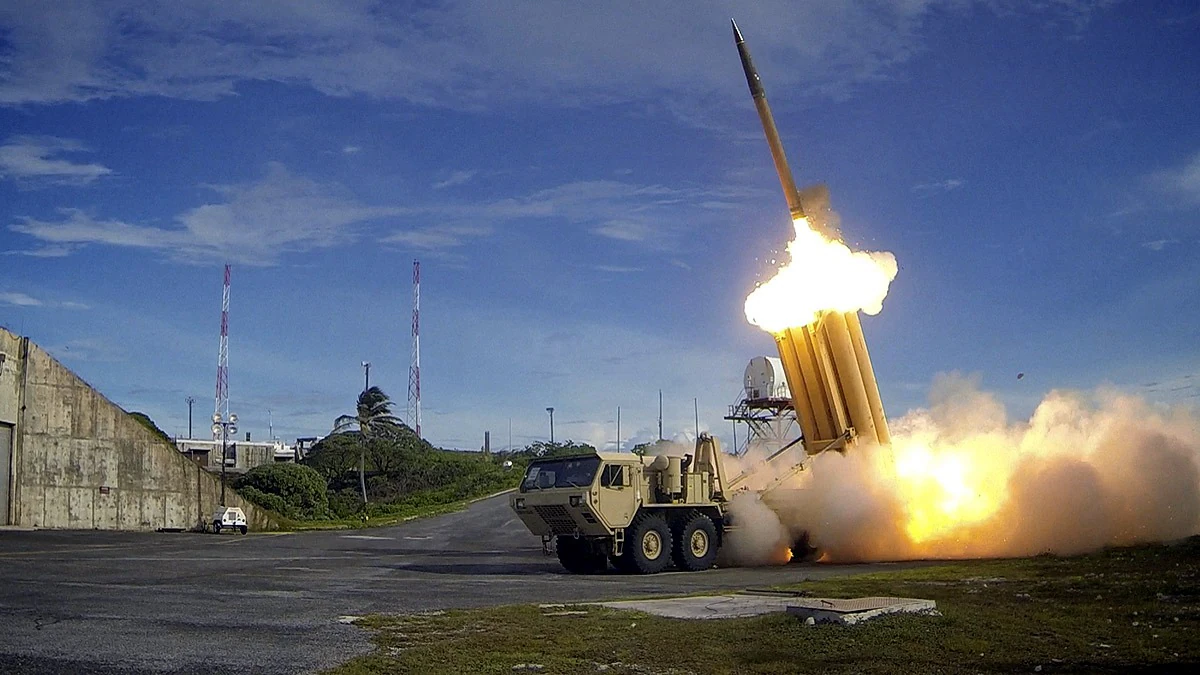
THAAD Missile Defense System: Why the US Deployed It in the Middle East Amid Rising Iran Tensions
THAAD Missile Defense System As geopolitical tensions continue to rise in the Middle East, global attention has once again turned toward military preparedness and strategic deterrence. One of the most significant recent developments is the United States’ decision to deploy the THAAD-Missile Defense System in the region. This move comes amid escalating concerns over Iran’s missile capabilities and its growing influence across West Asia.
The deployment of the THAAD Missile Defense System is not just a routine military exercise—it is a powerful signal of deterrence, reassurance to allies, and a critical component of modern missile defense strategy. But what exactly is this system, how does it work, and why is it considered so vital in today’s volatile security environment?
This blog takes a deep dive into the THAAD-Missile Defense System, its technology, strategic importance, and the broader geopolitical implications of its deployment in the Middle East.
What Is the THAAD Missile Defense System?
The THAAD Missile Defense System—short for Terminal High Altitude Area Defense—is one of the most advanced missile interception systems in the world. Developed by the United States, it is designed to detect, track, and destroy short-, medium-, and intermediate-range ballistic missiles during their final phase of flight.
Unlike traditional missile defense systems that rely on explosive warheads, the THAAD-Missile Defense System uses a hit-to-kill technology. This means it destroys incoming missiles purely through kinetic energy, striking them at extremely high speeds with pinpoint accuracy.
This advanced capability makes the THAAD Missile Defense System uniquely effective against modern missile threats, especially those involving weapons of mass destruction.
Why Did the US Deploy THAAD in the Middle East?
The Middle East has long been a flashpoint of regional and global conflict, but recent developments have significantly raised alarm levels. Iran’s expanding ballistic missile program, combined with rising tensions involving Israel, the Gulf states, and US military assets, has created a volatile security environment.
The deployment of the THAAD-Missile Defense System serves multiple purposes:
- Deterrence against missile attacks
- Protection of US troops and bases
- Reassurance to regional allies
- Strengthening integrated air and missile defense
By positioning the THAAD Missile Defense System in the Middle East, the US aims to neutralize potential missile threats before they can cause catastrophic damage.
How the THAAD Missile Defense System Works
Understanding how the THAAD Missile Defense System functions helps explain why it is so highly valued.
1. Advanced Radar Detection
The system is supported by the AN/TPY-2 radar, one of the most powerful tracking radars ever built. It can detect and track ballistic missiles from thousands of kilometers away.
2. Command and Control
Once a missile is detected, data is instantly transmitted to command centers. The THAAD-Missile Defense System calculates the missile’s trajectory and determines the optimal interception point.
3. Interceptor Launch
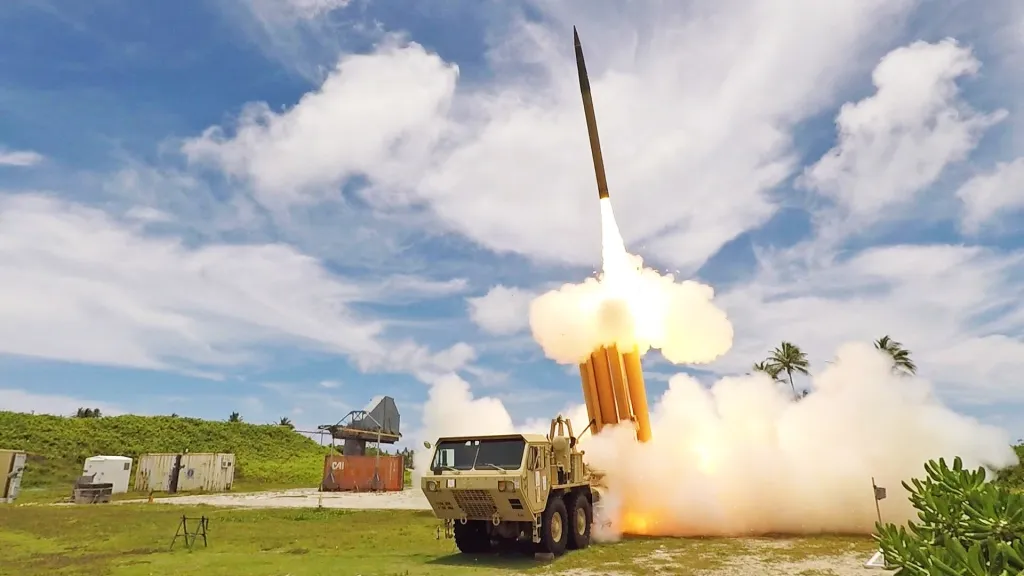
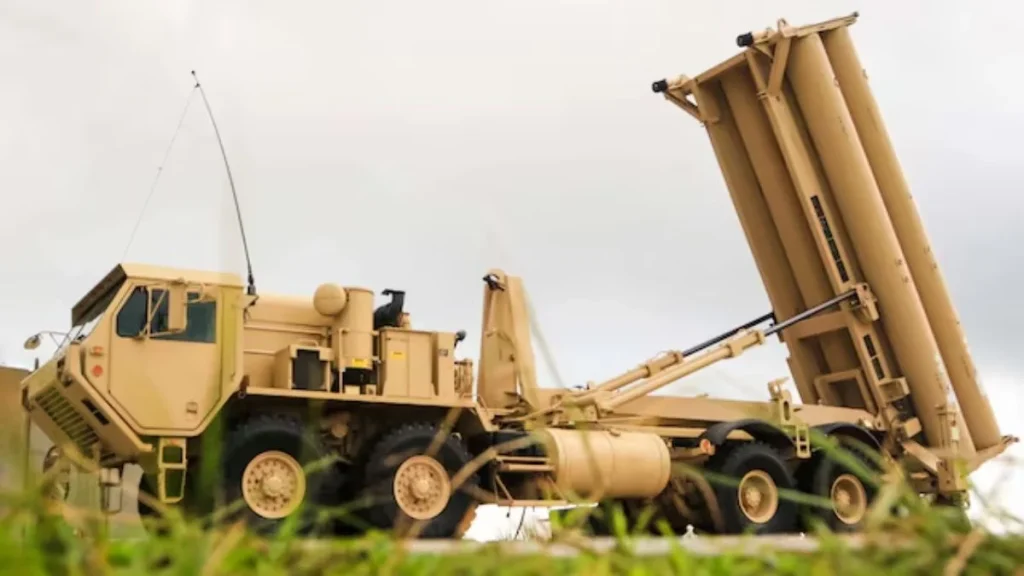
THAAD interceptors are launched from mobile platforms. These interceptors travel at hypersonic speeds toward the incoming threat.
4. Hit-to-Kill Interception
Instead of exploding, the interceptor collides directly with the target missile, destroying it mid-air through sheer kinetic force.
This layered, precision-based approach makes the THAAD-Missile Defense System one of the most reliable missile defense solutions available today.

Why THAAD Is Different from Other Missile Defense Systems
The THAAD Missile Defense System occupies a unique position within the US missile defense architecture.
- Patriot systems intercept missiles at lower altitudes
- Aegis systems operate mainly from naval platforms
- THAAD Missile Defense System covers the critical high-altitude terminal phase
This capability allows the THAAD Missile Defense System to intercept threats both inside and outside the Earth’s atmosphere, providing a wider protective shield.
Iran’s Missile Program and Regional Security Concerns
Iran possesses one of the largest ballistic missile arsenals in the Middle East. Its missiles are capable of striking targets across the region, including US bases and allied nations.
The deployment of the THAAD-Missile Defense System is widely seen as a direct response to these capabilities. While Iran claims its missile program is defensive, regional rivals and Western powers view it as a destabilizing force.
By introducing the THAAD Missile Defense System, the US significantly reduces the effectiveness of any potential missile strike, thereby strengthening deterrence.
Strategic Importance for US Allies
US allies in the Middle East—including Gulf nations and Israel—have welcomed the deployment of the THAAD Missile Defense System. For them, it represents not only physical protection but also a political commitment from Washington.
The presence of the THAAD-Missile Defense System enhances regional air defense integration and allows allied forces to share real-time threat data, improving response times and coordination.
Psychological and Political Impact
Beyond its military role, the THAAD-Missile Defense System carries immense symbolic weight. Its deployment sends a clear message to adversaries that missile aggression will not go unanswered.
For allies, the THAAD Missile Defense System boosts confidence and stability, reducing the likelihood of panic-driven escalation during crises.
Controversies and Criticism
Despite its strengths, the THAAD Missile Defense System is not without controversy.
- Some critics argue it can escalate arms races
- Others claim it undermines strategic balance
- Concerns have also been raised about its cost
However, US defense officials maintain that the THAAD Missile Defense System is purely defensive and essential in an era of rapidly evolving missile threats.
THAAD and the Future of Warfare
Modern warfare is increasingly shaped by missile technology, drones, and hypersonic weapons. In this context, the THAAD Missile Defense System represents the future of defensive military strategy.
As missile speeds increase and flight paths become more unpredictable, systems like the THAAD Missile Defense System will play a central role in safeguarding nations and preventing large-scale conflicts.
Global Reactions to THAAD Deployment
The deployment of the THAAD Missile Defense System in the Middle East has drawn global attention. While US allies largely support the move, countries like Russia and China have expressed concern, arguing that such systems could disrupt global strategic stability.
Nevertheless, Washington insists that the THAAD Missile Defense System is a necessary response to real and present threats.
Conclusion: Why THAAD Matters More Than Ever
The deployment of the THAAD Missile Defense System amid rising tensions with Iran highlights the evolving nature of global security challenges. In a world where missile threats can emerge with little warning, advanced defense systems are no longer optional—they are essential.
By combining cutting-edge technology, rapid response capability, and strategic deterrence, the THAAD Missile Defense System stands as a cornerstone of modern missile defense. Its presence in the Middle East not only protects lives and infrastructure but also helps maintain a fragile balance in one of the world’s most volatile regions.
As geopolitical tensions continue to shift, the THAAD Missile Defense System will remain a critical tool in preventing escalation and preserving regional and global stability.
Read More latest news

