

Bangladesh Stakes a Major Stake in the T20 World Cup Venue Dispute: What Next?
International cricket governance has once again come under the scanner after Bangladesh raised strong objections related to a T20 World Cup. What began as behind-the-scenes discussions has now escalated into a formal dispute reaching the Dispute Resolution Committee (DRC), signaling how high the stakes have become in global cricket administration. This development is not just about hosting rights; it is about power, influence, revenue, and the future roadmap of the sport.
This blog takes a deep dive into how Bangladesh built its claim, why the issue around the T20 World Cup venue matters so much, how the DRC became involved, and what possible outcomes could shape the future of international T20 cricket.
Understanding the Background of the Dispute
The origins of the controversy surrounding the World Cup venue can be traced back to allocation decisions made by the International Cricket Council (ICC). Bangladesh, having invested heavily in infrastructure, fan engagement, and domestic leagues, believes it was sidelined unfairly during the venue selection process.
Officials from the Bangladesh Cricket Board (BCB) argue that the country meets all technical, logistical, and commercial requirements expected of a modern World Cup venue. Stadium upgrades, security arrangements, broadcast facilities, and crowd capacity have all been showcased as proof of readiness.
Despite this, Bangladesh claims that political considerations and legacy preferences tilted decisions toward other nations.
Why the T20 World Cup Venue Matters So Much
A T20 World Cup venue is not just a stadium; it is an economic engine. Hosting matches brings in tourism, sponsorships, broadcasting revenue, and global visibility. For a cricket-loving nation like Bangladesh, securing a World Cup venue would mean international recognition and long-term financial growth.
Beyond economics, there is pride. Bangladesh has evolved from a struggling cricket nation into a competitive force. Being denied a World Cup venue, according to BCB officials, sends the wrong message to emerging cricket boards.
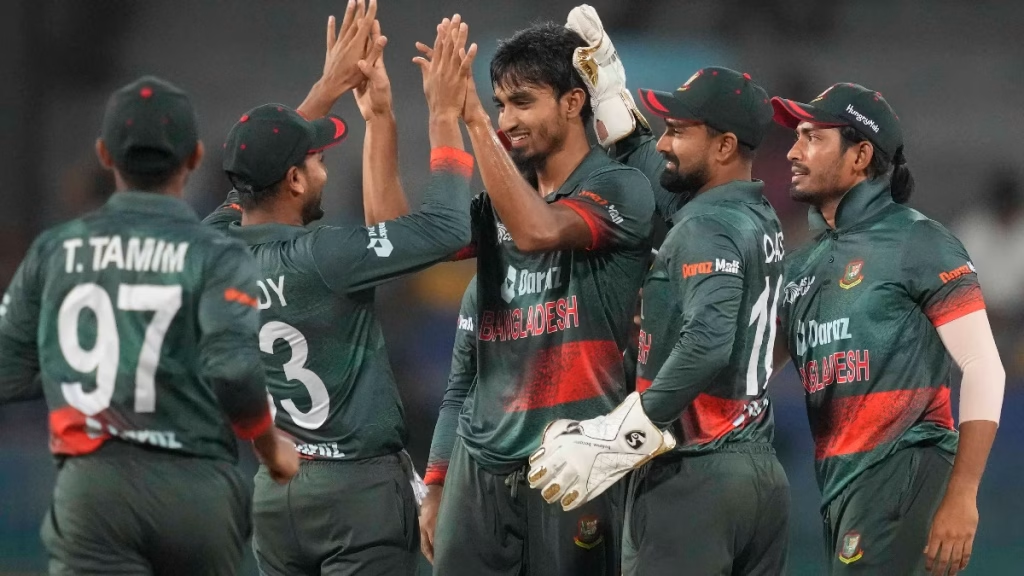
Bangladesh Investment and Growing Influence
Over the last decade, Bangladesh has poured resources into cricket development. New stadiums, grassroots programs, women’s cricket initiatives, and high-performance centers have transformed the cricketing landscape. The argument presented to the ICC highlights how these investments were made with the expectation of hosting a World Cup venue.
Bangladesh’s successful organization of ICC events and bilateral series strengthens its claim that it can efficiently manage a high-profile T20 World Cup venue without compromising player safety or broadcast quality.
Escalation to the Dispute Resolution Committee (DRC)
When negotiations failed, Bangladesh formally approached the ICC’s Dispute Resolution Committee. Taking the issue of the T20 World Cup venue to the DRC marks a significant escalation, indicating that informal diplomacy has broken down.
The DRC’s role is to assess whether ICC procedures were followed correctly and whether Bangladesh’s concerns regarding transparency and fairness in T20 World Cup venue allocation hold merit.
This move has set a precedent, as rarely do full-member boards push venue disputes to such formal legal mechanisms.
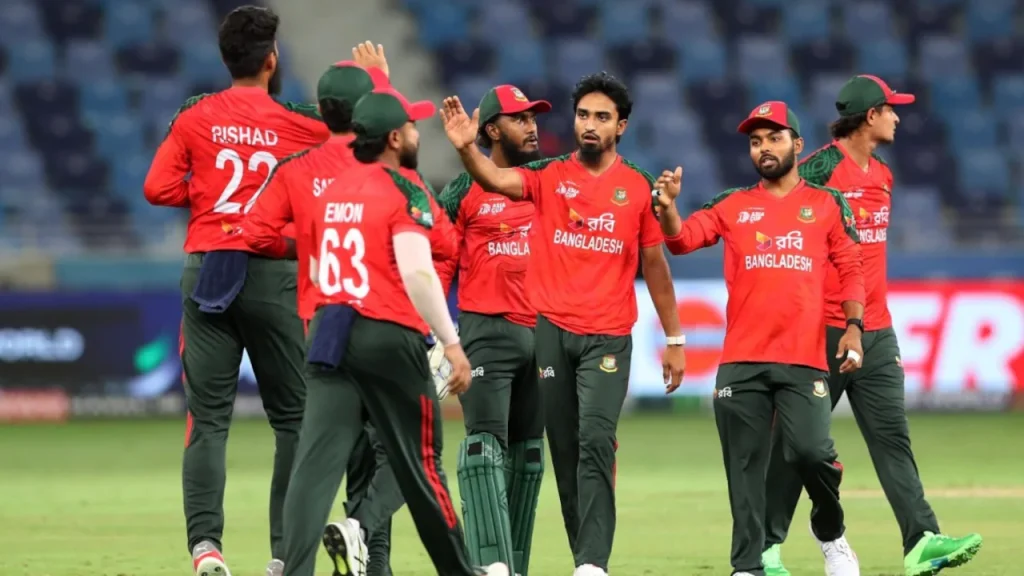
Key Legal and Administrative Questions
The DRC will focus on several core questions:
- Were the selection criteria for the T20 World Cup venue applied uniformly?
- Did Bangladesh receive equal opportunity to present its case?
- Were there conflicts of interest influencing the final decision on the T20 World Cup venue?
Answers to these questions could reshape how future ICC events are allocated.
Reaction from the ICC and Other Cricket Boards
The ICC has maintained that the T20 World Cup venue selection followed established protocols. However, the public nature of Bangladesh’s complaint has drawn mixed reactions from other boards.
Some smaller and mid-tier cricket nations have quietly supported Bangladesh, viewing the T20 World Cup venue dispute as a fight for equitable representation. Larger boards, meanwhile, remain cautious, wary of opening a Pandora’s box that could challenge traditional power structures.
Political and Geopolitical Undercurrents
Cricket governance does not exist in a vacuum. Regional alliances, voting blocs, and diplomatic relations often influence decisions like the T20 World Cup venue. Analysts suggest that Bangladesh’s frustration stems from being caught between dominant cricketing powers.
By taking the issue to the DRC, Bangladesh is signaling that future T20 World Cup venue decisions must be insulated from non-cricketing influences.

Commercial Implications and Broadcaster Concerns
Broadcasters and sponsors closely track uncertainty around any T20 World Cup venue. Prolonged disputes can disrupt planning, advertising commitments, and ticket sales.
If the DRC rules in favor of Bangladesh, it could lead to renegotiation of hosting contracts, affecting timelines and revenue projections linked to the T20 World Cup venue.
What Happens If Bangladesh Wins?
A favorable ruling would validate Bangladesh’s claim and could result in:
- Reallocation or sharing of the T20 World Cup venue
- Financial compensation
- Revised ICC guidelines for future T20 World Cup venue selections
Such an outcome would embolden other boards to challenge decisions they perceive as unfair.
What If Bangladesh Loses the Case?
If the DRC sides with the ICC, Bangladesh may still gain moral leverage. The debate around the T20 World Cup venue would highlight governance gaps and push for reforms.
Even in defeat, Bangladesh’s stand could influence future allocations, making the T20 World Cup venue process more transparent.
Long-Term Impact on Global Cricket
This dispute could mark a turning point. The T20 World Cup venue controversy underscores the growing assertiveness of emerging cricket nations demanding a seat at the decision-making table.
For fans, the hope is that cricket becomes more inclusive, where hosting a T20 World Cup venue reflects merit rather than legacy.
What Next? Possible Scenarios
As the DRC deliberates, several scenarios are possible:
- A negotiated settlement involving shared T20 World Cup venue responsibilities
- Structural reforms in ICC governance
- Clearer, data-driven criteria for every T20 World Cup venue
Whatever the outcome, the ripple effects will be felt across international cricket.
Conclusion
Bangladesh’s decision to challenge the allocation of a T20 World Cup venue is about more than hosting matches. It is a statement of ambition, fairness, and the evolving balance of power in world cricket. As the dispute reaches the DRC, all eyes are on how the ICC responds.
The resolution of this case will likely define how future T20 World Cup venue decisions are made, setting a benchmark for transparency and equity in the sport.
Cricket stands at a crossroads, and the outcome of this dispute could shape its global future for years to come.
Read More Sport news

