
SpaceX’s Starship Fails In Space After Launch, Disrupts Air Traffic; Elon Musk Reacts
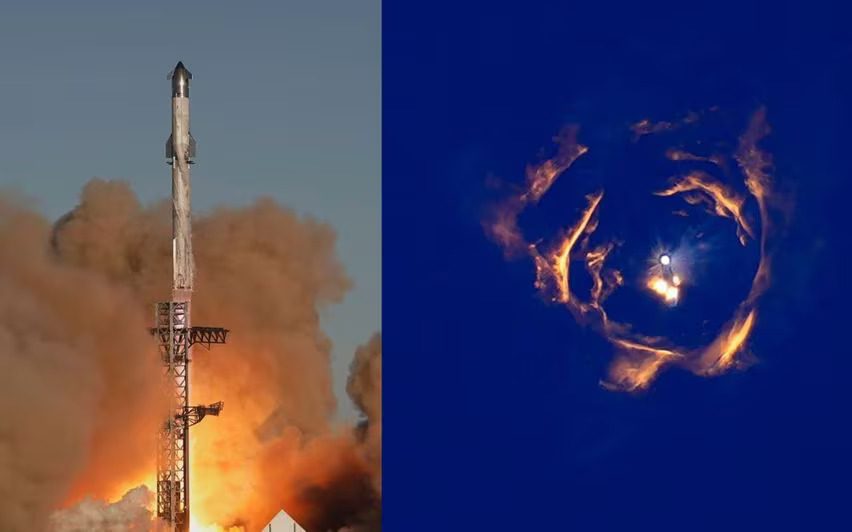
SpaceX’s Starship, the world’s largest and most powerful rocket, faced a significant setback after experiencing a failure in space shortly after launch. This incident has raised concerns about the future of the ambitious spacecraft, which is central to Elon Musk’s vision for space exploration and interplanetary travel. Moreover, the failure disrupted air traffic in multiple regions, drawing attention from regulatory authorities and industry stakeholders. Musk, the CEO of SpaceX, addressed the situation in a series of statements, providing insight into what went wrong and what lies ahead for Starship.
The Starship Mission: Context and Significance
The Starship spacecraft is a fully reusable vehicle designed for carrying humans and cargo to the Moon, Mars, and beyond. It is a critical component of NASA’s Artemis program, which aims to return humans to the Moon by the late 2020s. Starship’s capabilities also extend to launching satellites, deep-space exploration, and space tourism.
This particular mission, conducted from SpaceX’s Starbase facility in Boca Chica, Texas, was a test flight aimed at assessing various systems critical for future operational missions. Expectations were high, with Musk describing it as a key milestone for the program.
Launch Details and In-Flight Failure
The Starship rocket successfully lifted off, marking the second attempt at a fully integrated test following an earlier partial success. Initial stages of the flight, including the separation of the Super Heavy booster, were executed as planned. However, trouble arose during the spacecraft’s orbital insertion phase.
What Went Wrong
- Loss of Control:
Shortly after reaching the upper atmosphere, telemetry data indicated a failure in the navigation and control systems. This resulted in the spacecraft veering off its planned trajectory. - Engine Malfunction:
SpaceX later revealed that multiple Raptor engines failed to ignite during critical moments, leading to a cascade of issues that ultimately caused the spacecraft to lose stability. - Premature Termination:
Following the loss of control, SpaceX initiated the spacecraft’s automated termination sequence to ensure safety.
Impact on Air Traffic
The failure of the Starship mission had unintended consequences on air traffic. Debris from the spacecraft’s malfunction caused temporary airspace closures over several regions, including parts of the Gulf of Mexico and southern U.S. states. Airlines and passengers experienced delays, with some flights rerouted to avoid potential hazards.
FAA’s Response
The Federal Aviation Administration (FAA) issued a statement confirming it had initiated an investigation into the incident. The agency emphasized the importance of balancing innovation with safety, signaling potential changes to how launches are regulated in proximity to commercial air traffic routes.
Airline Reactions
Major airlines, including Delta and American Airlines, reported disruptions. Industry representatives called for clearer communication protocols between space agencies and aviation authorities to mitigate such risks in future missions.
Elon Musk’s Reaction
Musk, known for his candid approach, took to social media shortly after the incident.
- Acknowledgment of Failure:
Musk acknowledged the failure, stating:
“This is not the outcome we hoped for, but failure is a stepping stone to success in space exploration.” - Optimism for the Future:
Despite the setback, Musk remained optimistic, emphasizing the importance of iterative development:
“Every failure teaches us something new. We’re already working on improvements for the next launch.” - Commitment to Safety:
Responding to concerns about the impact on air traffic, Musk assured the public that SpaceX would collaborate with regulatory bodies to enhance safety measures:
“Safety is our top priority, and we’ll ensure better coordination to avoid disruptions in future.”
Implications for SpaceX
The failure of this Starship mission poses several challenges for SpaceX while also offering opportunities for improvement.
Challenges
- Delays in Starship’s Timeline:
The setback may delay SpaceX’s ambitious plans, including NASA’s Artemis missions and commercial contracts for satellite launches. - Regulatory Scrutiny:
Increased oversight from the FAA and other agencies could slow down the pace of future launches. - Public Perception:
Failures in high-profile missions can affect investor confidence and public support, although Musk’s track record may mitigate long-term impacts.
Opportunities for Growth
- Technical Learnings:
SpaceX will use data from the incident to refine Starship’s design and operations, paving the way for safer and more reliable missions. - Strengthening Safety Protocols:
Enhanced coordination with aviation authorities could set new standards for managing airspace during launches, benefiting the entire industry. - Increased Resilience:
Musk’s approach to iterative development ensures that failures contribute to stronger systems, a philosophy that has driven SpaceX’s success in the past.
Industry Reactions
The Starship failure has elicited a range of responses from space industry stakeholders, scientists, and policymakers.
- NASA’s Statement:
NASA, a major partner of SpaceX, expressed confidence in the company’s ability to overcome setbacks, highlighting the importance of innovation in space exploration. - Criticism from Rivals:
Competitors such as Blue Origin and Boeing emphasized the need for rigorous testing and risk mitigation, subtly pointing to their own approaches. - Support from Experts:
Space scientists and engineers defended SpaceX, noting that failures are integral to pushing the boundaries of technology.
Public Reactions and Social Media
The incident has sparked widespread discussion online, with hashtags like #StarshipFailure and #SpaceXTrending dominating social media platforms.
Mixed Reactions
- Supporters: Many lauded Musk’s transparency and the company’s willingness to take risks in pursuit of progress.
- Critics: Others questioned the impact of private companies on public safety and the environment.
Memes and Humor
As with most high-profile events, the failure has inspired a wave of memes, blending humor with commentary on the challenges of space exploration.
Looking Ahead: The Future of Starship
Despite this setback, SpaceX remains committed to advancing its Starship program. Musk has already outlined plans for the next test flight, which will incorporate lessons learned from this incident.
Key Priorities for SpaceX:
- Enhancing Engine Reliability: Improving the Raptor engines to ensure consistent performance.
- Refining Navigation Systems: Addressing the issues that led to the loss of control.
- Strengthening Safety Protocols: Collaborating with regulatory bodies to prevent disruptions.
Long-Term Vision
Starship’s ultimate goal remains unchanged: to enable humanity to become a multiplanetary species. This vision continues to inspire millions, despite the challenges along the way.
Conclusion
The failure of SpaceX’s Starship in space highlights the complexities and risks inherent in space exploration. While the incident has raised concerns about safety and regulatory oversight, it also underscores the importance of perseverance in achieving ambitious goals.
As Musk and his team work to address these challenges, the world watches with anticipation, knowing that every failure brings humanity one step closer to unlocking the mysteries of the cosmos.
Read more Latest News

