Skoda, Volkswagen, and Mercedes to Manufacture Electric Cars in India: A New Era of E-Mobility Begins
Skoda India’s automotive landscape is undergoing a monumental transformation. With climate change, rising fuel prices, and the global push toward sustainable mobility, the electric vehicle (EV) revolution is no longer a distant vision—it’s here and accelerating. The latest and most exciting chapter in this transition is the announcement by three major global automakers—Skoda, Volkswagen, and Mercedes-Benz—to manufacture electric cars within India.
This strategic shift by these automotive giants signals more than just product diversification. It underscores a deepening commitment to India’s growing electric mobility ecosystem and could change how millions of Indians drive in the coming decade.
🌍 Global to Local: Why India?
India has become a focal point for global EV manufacturers due to:
- A large and fast-growing middle class.
- Rising urbanization and pollution concerns.
- The Indian government’s FAME II policy (Faster Adoption and Manufacturing of Hybrid and Electric Vehicles).
- Reduction in GST on EVs from 12% to 5%.
- State subsidies for EV buyers.
- A push for local manufacturing under “Make in India” and “Atmanirbhar Bharat” initiatives.
With all these factors aligned, automakers are not only looking to sell but also to manufacture electric vehicles locally.
🏭 Skoda’s India Plan: Affordable EVs Made for Indians
📌 Company Overview:
Skoda Auto, a Czech automaker and part of the Volkswagen Group, has long been present in India through models like the Octavia, Rapid, and Kushaq.
🔋 Electric Vision for India:
Skoda is planning to assemble or fully manufacture EVs at its Chakan plant in Pune, Maharashtra.
✅ Key Details:
- First Electric Model in India: Skoda Enyaq iV (initially through CBU, later via CKD or local production).
- Long-Term Vision: Develop EVs specifically for India under the “Skoda 2.0” strategy.
- Localization: Expected to localize batteries and key components by 2026.
- Pricing Strategy: Targeting sub-₹25 lakh EVs to compete with Tata and Mahindra.
🔄 Recent Statement:
“We see India not just as a market but as a development hub for our future EVs. Localization is at the heart of our strategy.” — Klaus Zellmer, CEO of Skoda Auto.
🚘 Volkswagen: Localizing Global EV Excellence
📌 Company Overview:
Volkswagen, another key brand under the Volkswagen Group, has had a mixed history in India but has gained recent traction with models like the Taigun and Virtus.
🔋 Electrification Goals in India:
- India Entry EV: Volkswagen ID.4 will debut in India, first as an import.
- Local Assembly: Plans to start assembling the ID family in India by 2026.
- Shared Infrastructure with Skoda: VW and Skoda will jointly use the MEB platform for compact electric vehicles tailored for Indian consumers.
- Investment Commitment: Around €500 million (₹4,500 crore) toward R&D and production infrastructure.
⚡ Unique Selling Points:
- High-quality German engineering.
- Performance-focused EVs with long range and smart infotainment.
- Software-focused development, aligning with India’s growing tech ecosystem.
“India is not just an export base, but a central pillar in our global electrification roadmap,” says Thomas Schäfer, Global Head of Volkswagen Brand.

🚗 Mercedes-Benz: Luxury EVs, Now ‘Made in India’
📌 Company Overview:
Mercedes-Benz has always been a premium leader in India. With models like the S-Class, GLC, and GLS, the brand commands strong loyalty among India’s affluent buyers.
🔋 Electric Expansion:
Mercedes-Benz already sells models like the EQB, EQS 580, and EQE SUV in India. Now, it is stepping into local production of luxury EVs.
🏭 Chakan Plant to Go Electric:
Mercedes plans to assemble its EVs at the Chakan facility in Pune, where many of its ICE vehicles are already being built.
✅ Key Announcements:
- First Local EV: EQS 580 4MATIC is already being assembled in India.
- Next Models: EQE and other EQ series EVs to be locally built by 2026.
- Charging Infrastructure: Collaborating with Adani and Tata Power to build high-performance EV charging networks across Indian highways and metros.
🎙️ Statement from Mercedes India MD:
“We are proud to be the first luxury brand to locally assemble an electric car in India. Our goal is to electrify 25% of our portfolio in India by 2027.”
🧭 What’s Driving the Local Manufacturing Push?
1. 💸 Cost Efficiency
Importing EVs into India subjects companies to a 60–100% import duty. Local manufacturing slashes costs, making EVs more competitive against ICE vehicles.
2. ⚡ EV Ecosystem Support
With growing charging infrastructure, local component manufacturers, and advanced R&D centers, India is becoming self-sufficient in the EV supply chain.
3. 👥 Consumer Demand
More Indians, especially millennials, are actively choosing EVs due to:
- Lower running costs
- Government incentives
- Eco-consciousness
- Urban commute patterns
4. 🌱 Environmental Responsibility
All three companies are part of global carbon neutrality missions. Manufacturing locally reduces their carbon footprint due to lower logistics emissions.
🔧 Challenges That Lie Ahead
🛠️ Battery Supply and Localization
- EV batteries still rely heavily on imports.
- Localizing lithium-ion cell production remains a hurdle.
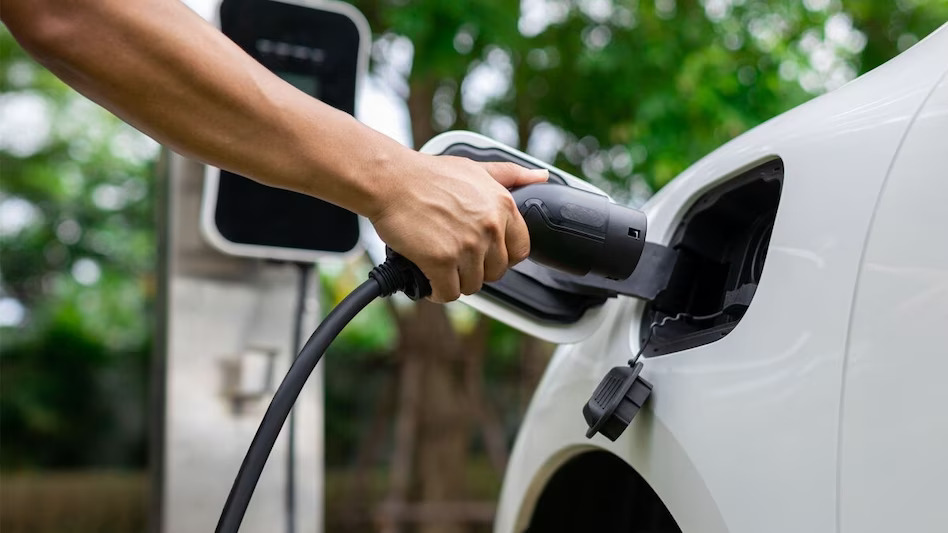
🔌 Charging Infrastructure
- While metro cities like Delhi, Mumbai, and Bengaluru are progressing, Tier 2 and 3 cities lack adequate charging stations.
👨🏭 Skilled Labor and R&D
- The transition to EV requires upskilling the workforce and building dedicated R&D hubs for EV technology.
📉 Pricing Sensitivity
- Most Indian consumers are price-sensitive. High-end EVs will need affordable variants for true mass adoption.
🇮🇳 Government’s Role in Paving the Road
The Indian government has become one of the strongest cheerleaders for the EV movement.
Key Policies Boosting Local EV Production:
- FAME II Scheme: ₹10,000 crore allocated for EV subsidies.
- PLI Scheme for Automobiles: ₹25,938 crore allocated to boost local manufacturing of advanced EV components.
- Battery PLI Scheme: Encourages domestic gigafactories.
- Customs Duty Exemption: On certain parts for EVs.
These policies are pivotal in enabling Skoda, Volkswagen, and Mercedes to manufacture within India.
🔮 The Future of EVs in India: What to Expect
By 2030, India is targeting:
- 70% electrification of commercial vehicles
- 30% electrification of private cars
- 80% electrification of two- and three-wheelers
With Skoda, Volkswagen, and Mercedes entering local EV manufacturing, India’s position as an EV powerhouse is more certain than ever.
Upcoming Milestones to Watch:
- Launch of the locally assembled ID.4 and Enyaq iV
- Next-gen EQ series SUVs built in India
- Joint R&D initiatives between VW-Skoda for India-specific EV platforms
- Mega investments in battery localization and fast charging grids
🔁 Summary
| Brand | Local Manufacturing Status | Key EV Models | Production Site |
|---|---|---|---|
| Skoda | Confirmed | Enyaq iV, India-specific EVs | Pune (Chakan) |
| Volkswagen | Confirmed | ID.4, ID.3, Compact EVs | Pune (Chakan) |
| Mercedes-Benz | Already Assembling EQS | EQS, EQB, EQE SUV | Pune (Chakan) |
📈 Market Implication
The local production of EVs by these international brands is expected to:
- Boost consumer confidence in electric vehicles.
- Force Indian automakers like Tata, Mahindra, and Maruti to accelerate their EV game.
- Encourage infrastructure development across states.
- Create thousands of new jobs in the EV sector.
🛒 What Does This Mean for Indian Consumers?
✅ More Affordable EVs
Prices will drop as import duties are bypassed and localization increases.
✅ Wider Choice in EV Segments
From affordable EVs (Skoda) to performance (VW) to luxury (Mercedes), every price bracket will have EV options.
✅ Improved After-Sales Support
Local production will also mean better spare parts availability, trained service personnel, and lower maintenance costs.
✅ Contribution to Clean Mobility
Every EV sold contributes to reduced urban air pollution and fossil fuel dependency.
📢 Conclusion: A Bold New Drive Toward the Future
India’s journey from being an importer of electric dreams to a manufacturer of electric mobility solutions is now gaining full throttle.
With Skoda, Volkswagen, and Mercedes-Benz betting big on local manufacturing, India isn’t just a stop on the EV highway—it’s the next big destination.
The road ahead may be long and winding, but one thing is clear: it’s electric.
read more technologies news