
🌸 Introduction
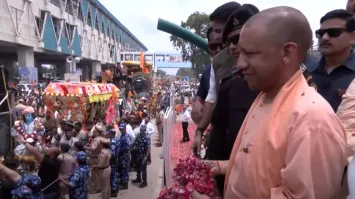
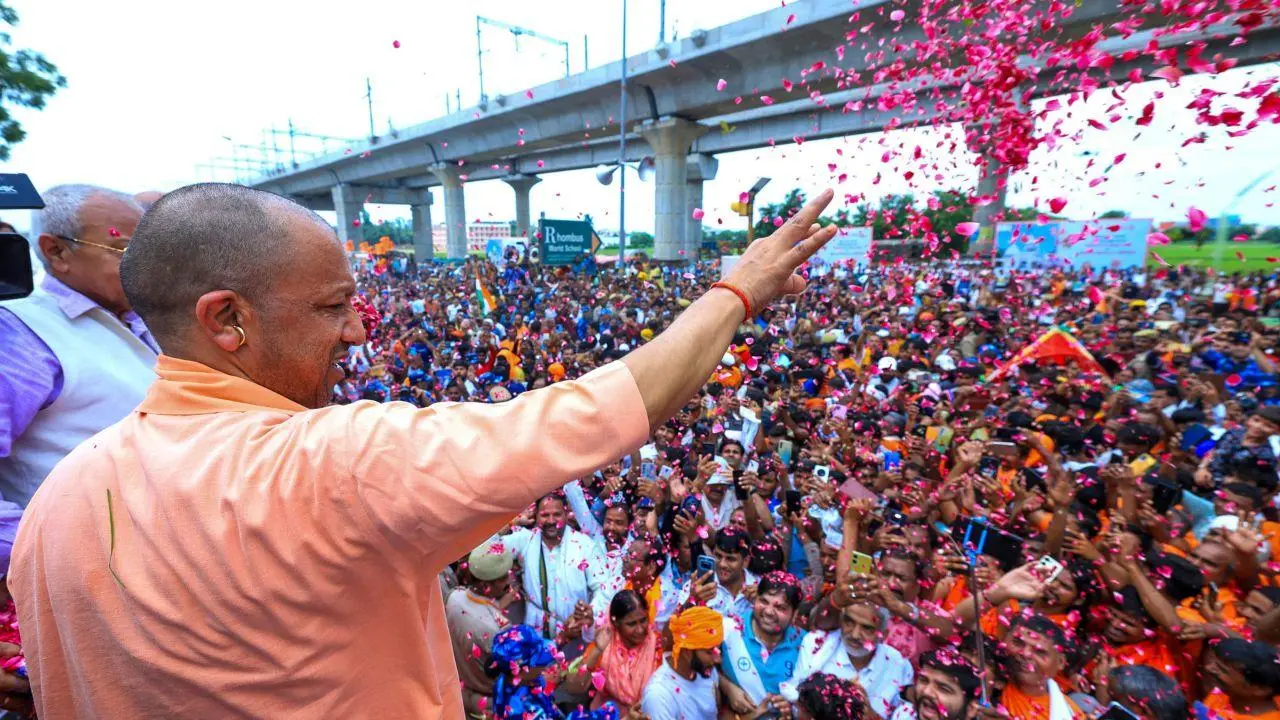
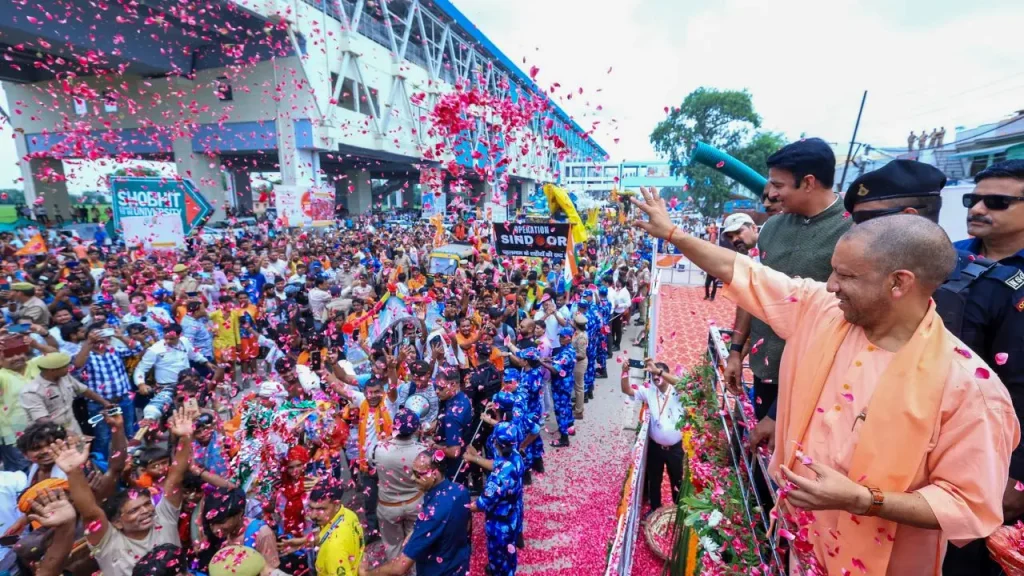
showered flowers on Kanwar pilgrims The Kanwar Yatra—an annual pilgrimage during the auspicious month of Shravan—sees millions of Kanwariyas (devotees of Lord Shiva) carrying holy Gangajal from Haridwar or Gaumukh to various Shiva temples across India. In 2025, Uttar Pradesh Chief Minister Yogi Adityanath, himself a devout follower of Shiva, marked the pilgrimage’s spiritual essence by showering flower petals on the pilgrims. A video capturing this moment went viral, stirring emotional, political, and social conversations across the nation.
This blog explores:
- The event and its viral video
- On-ground arrangements
- Political and administrative significance
- Broader cultural, social, and political implications
- Perspectives and controversies
- Historical context of state engagement with the Yatra
- Public and opposition responses
- Examined long-term impacts
- Final reflections
1. The Event & Viral Video
On July 20, 2025, CM Yogi Adityanath visited western Uttar Pradesh—flying from Hindon Airport in a helicopter—to inspect the Yatra’s arrangements and extend blessings to the pilgrims. He showered flower petals both from the helicopter as it soared above the Meerut–Muzaffarnagar stretch and later from a stage set up near Dulhera Chowki in Meerut’s Modipuram area.
2. On‑Ground Arrangements
The state government undertook meticulous efforts to ensure the pilgrimage’s safety and smooth progress:
- On the Meerut–Muzaffarnagar corridor and parts of NH‑58, around 11,000 CCTV cameras, drone surveillance, and AI-based crowd monitoring systems were put in place.
- Over 10,000 female police personnel were deployed, emphasizing both crowd management and women’s safety
- Traffic diversions, such as shifts along the Meerut–Agra highway, ensured pilgrims and commuters alike remained safe and unhindered.
- To assist fatigued pilgrims, services included medical tents, rest camps, drinking water points, clean toilets, plus compassionate help from police—Muzaffarnagar officers even gave foot and hand massages to pilgrims.
3. Political and Administrative Significance
Yogi’s symbolic gesture of showering petals served multiple strategic purposes:
- A reaffirmation of his religious identity and commitment to leveraging it in governance.
- A political message underscoring the government’s reverence, rather than restriction, for religious traditions—a contrast to previous regimes.
- A stance against the media narrative that labeled Kanwariyas as “rioters.” Yogi termed such depictions an “insult to India’s heritage,” promising legal action against troublemakers, supported by CCTV evidence.
- A “soft power” approach: instead of hard crackdown, the administration offered petals—projecting itself as guardian, not adversary.
4. Cultural and Social Implications
The Kanwar Yatra holds deep cultural resonance. Pilgrims walk, often barefoot, to bring sacred water to Shiva temples—symbolizing devotion, penance, and tradition.
Yogi’s gesture bolstered:
- Emotional confidence among pilgrims, reinforcing faith in their sanctity.
- A leadership approach rooted in humility and symbolism, challenging narratives of religious-political divides.
- A show of unity in diversity, as pilgrims from various states benefitted from a well-supported pilgrimage.
Yet, the Yatra brings social complexities—like road closures, traffic congestion, and occasional communal friction.
5. Perspectives & Criticisms
While many applauded the warm gesture, critics highlighted:
🎭 Political Optics
Some viewed it as a political ploy aimed at reinforcing Yogi’s Hindu strongman persona, especially with UP headed for the 2027 assembly elections.
🚧 Disruption for Others
Commuters and non-devotees sometimes faced inconvenience due to route diversions and event traffic, prompting calls for balanced public order management.
🕵️ Opposing Voices
Akhilesh Yadav of SP mocked calling officials to serve pilgrims, prompting debate on state priorities and official duties.
🧩 Elements of Coercion?
While Yogi denounced miscreants, independent reports—like riots or violence during Yatras—raise questions about adequate policing and safeguards.
6. Historical State Engagement
Since 2017, UP has actively supported the Kanwar Yatra:
- Post-2017, the Yatra faced fewer bureaucratic hurdles; Yogi’s administrations facilitated the pilgrimage with civic logistics.
- The integration of AI and drone surveillance in 2025 marks a digital era in pilgrimage management.
- Deployment of women police personnel reflects evolving sensitivity towards women pilgrims and public safety.
7. Public Reaction & Opposition
🌐 Praise
Devotees shared their appreciation:
- “The arrangements provided by the government are good. Every 1 km… excellent arrangements. No traffic.” — Dinesh, a Kanwariya.
- “We felt good, as the arrangements done by the government are good. Our pilgrimage is smooth.” — Sunil Sharma
📣 Political Riposte
- SP’s Akhilesh Yadav responded, recommending that senior admin officials physically serve pilgrims, asking: “CO, SDM should provide relief”.
8. Long‑Term Impacts & Future Implications
✅ Institutionalization of Religious Support
UP’s approach could be viewed as a blueprint for future festival management—an ongoing institutional integration of faith-based public service.
📊 Public Trust
Visible care and seamless logistics during religious events tend to boost public satisfaction and confidence in local governance.
⚖️ Civil Permission vs State Endorsement
Supports meant for pilgrims often blur into active backing of religious traditions, sparking ongoing debates on secularism vs. cultural identity.
🧭 Administrative Precedent
The technological, logistical, and safety mechanisms tested during the Yatra can later benefit other large-scale events or crisis responses.
9. Final Reflection
CM Yogi Adityanath’s act of showering flower petals on Kanwariyas near Meerut–Muzaffarnagar road was more than ceremonial. It symbolized a delicate blend of faith, governance, political strategy, and statecraft. Whether applauded or critiqued, this gesture underscores how deeply entwined religion and regional politics remain in India’s heartland.
📌 Key Takeaways:
- For pilgrims: A heartfelt blessing and eased pilgrimage.
- For the state: Confidence in its capacity to organize, protect, and facilitate.
- For critics: Questions about political symbolism vs. administrative substance.
- For the future: A model for faith-forward public engagement in India.
🔚 Conclusion
The flower-showering gesture by CM Yogi Adityanath became an emblem of UP’s approach to marrying devotion with development. Far more than a moment of ritual—it’s a carefully orchestrated message of support, protection, and religious identity.
What are your thoughts? Does this represent genuine reverence or smart political symbolism? I’d love to hear your perspective!

