
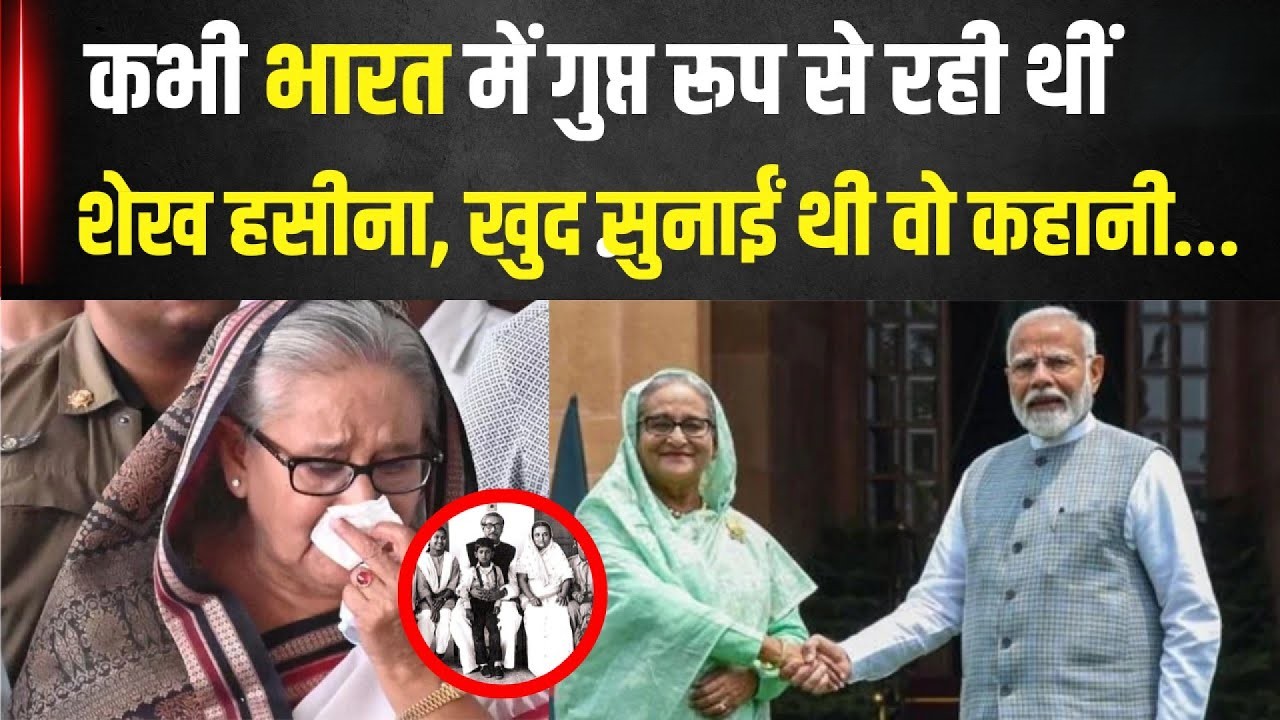
Did You Know? Bangladesh’s Former Prime Minister Sheikh Hasina Once Lived in Delhi’s Lajpat Nagar — The Untold Story of 1975
Introduction
History often hides extraordinary stories in the unlikeliest of places. One such story is that of Sheikh Hasina, the former Prime Minister of Bangladesh, who once lived quietly in Lajpat Nagar, Delhi, after one of the most tragic events in South Asian political history — the massacre of August 15, 1975, when her father, Bangladesh’s founding leader Bangabandhu Sheikh Mujibur Rahman, was assassinated along with most of his family.
Many people know Sheikh-Hasina as one of the longest-serving leaders in South Asia, but very few know about her intimate connection with India, the years she spent in exile, her struggle for survival, and the deep scars that shaped her political journey. This blog tells the entire story — from the night of the 1975 coup to her life in Delhi’s Lajpat Nagar, and how those years influenced the political future of Bangladesh.
This is the full journey of Sheikh Hasina, her emotional exile, and the historical events that changed the destiny of two nations.
The Tragic Night of 15 August 1975: The Event That Changed Everything
The life of Sheikh Hasina changed forever on 15 August 1975, a date etched in the memory of every Bangladeshi. On this tragic morning, a group of disgruntled army officers stormed the residence of Sheikh Mujibur Rahman and assassinated him along with almost his entire family.
Only two daughters survived — Sheikh-Hasina and her younger sister Sheikh Rehana — because they were abroad at that time.
This single event did not just kill their family; it uprooted their entire existence. With Bangladesh under military rule, returning home was impossible. Their passports were revoked, and they were left stateless, homeless, and vulnerable.
From this moment began the exile journey of Sheikh-Hasina, a journey that would eventually take her to Lajpat Nagar in Delhi.
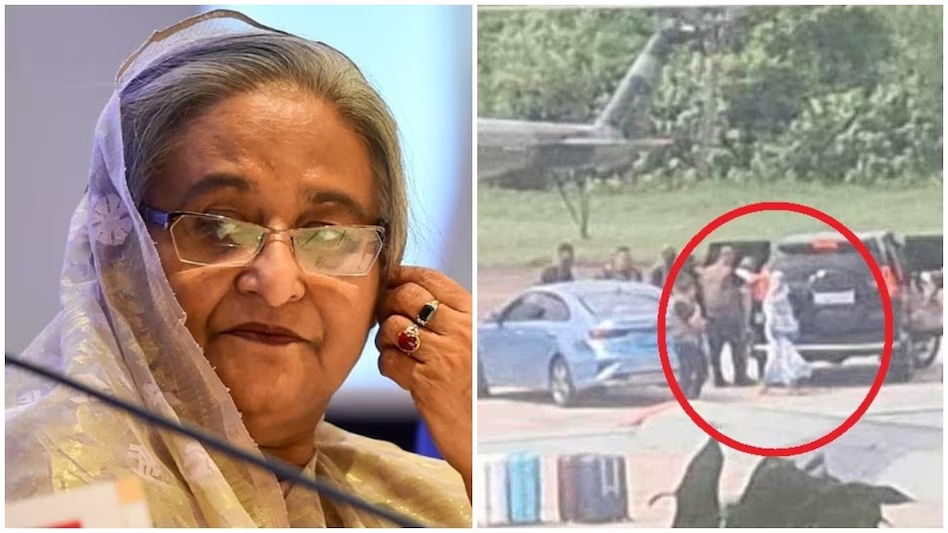
Sheikh Hasina in Germany: The First Years of Exile
When the assassination happened, Sheikh-Hasina was in West Germany with her husband, nuclear scientist Dr. Wazed Miah. Her world collapsed overnight. She was 28 years old, a mother of two, and suddenly had no country to return to.
India was among the first nations to reach out and offer help. But before arriving in India, Sheikh Hasina stayed for a short period in Germany, struggling with grief, uncertainty, and fear for her life.
It was India’s then-Prime Minister Indira Gandhi who decided to bring the two sisters to India and give them refuge.
This humanitarian gesture would play a huge role in shaping the political future of Sheikh-Hasina.
Arrival in India: A New Beginning Amid Pain
In late 1975, at the invitation of the Indian government, Sheikh Hasina and Sheikh Rehana secretly arrived in New Delhi. The government arranged full security, temporary accommodation, and personal assistance.
Delhi became a safe haven for Sheikh-Hasina, but it was far from an easy life. She was a refugee, grieving for her murdered family, and constantly aware that political assassins could still target her.
Her life in India during this period shows a different side of the political leader we see today — a woman of resilience, simplicity, and remarkable inner strength.
Why Lajpat Nagar? The Hidden Story of Her Delhi Home
Many people are surprised to learn that Sheikh Hasina lived in Lajpat Nagar, one of Delhi’s most vibrant middle-class neighborhoods. The Indian government provided this locality because it allowed security without attracting public attention.
Back in the 1970s and 80s, Lajpat Nagar was a quiet residential area; a perfect place for someone living under threat yet needing normalcy.
For several years, Sheikh-Hasina lived here like any Delhi resident — visiting local shops, managing her home, taking care of her children, and rarely stepping outside without strict security.
Those who lived in the area often recall that they had no idea an important foreign political figure lived among them.
A Life of Simplicity: How Sheikh Hasina Lived in Delhi
Despite her political legacy, the life of Sheikh-Hasina in Delhi was extremely simple. Her neighbors remember:
- She dressed like any ordinary Indian or Bangladeshi woman
- She cooked her own food
- She personally helped her children with their studies
- She spent most of her time reading, writing, and grieving
Her days were quiet, almost silent, except for occasional visitors from the Bangladesh Awami League living in exile.
Living anonymously in Lajpat Nagar, Sheikh Hasina developed a deep emotional bond with India — something she later acknowledged many times in her speeches.
Political Awakening: How Exile Shaped Sheikh Hasina
During her years in Delhi, Sheikh Hasina gradually emerged not just as a survivor but as a political icon. She began reconnecting with the Awami League, which was disorganized and suppressed back in Bangladesh.
From Lajpat Nagar:
- She rebuilt the party
- She communicated secretly with supporters
- She shaped a new political vision
- She kept alive the legacy of Sheikh Mujibur Rahman
For many analysts, this period was the political rebirth of Sheikh-Hasina.
Exile did not break her — it transformed her into a determined leader.
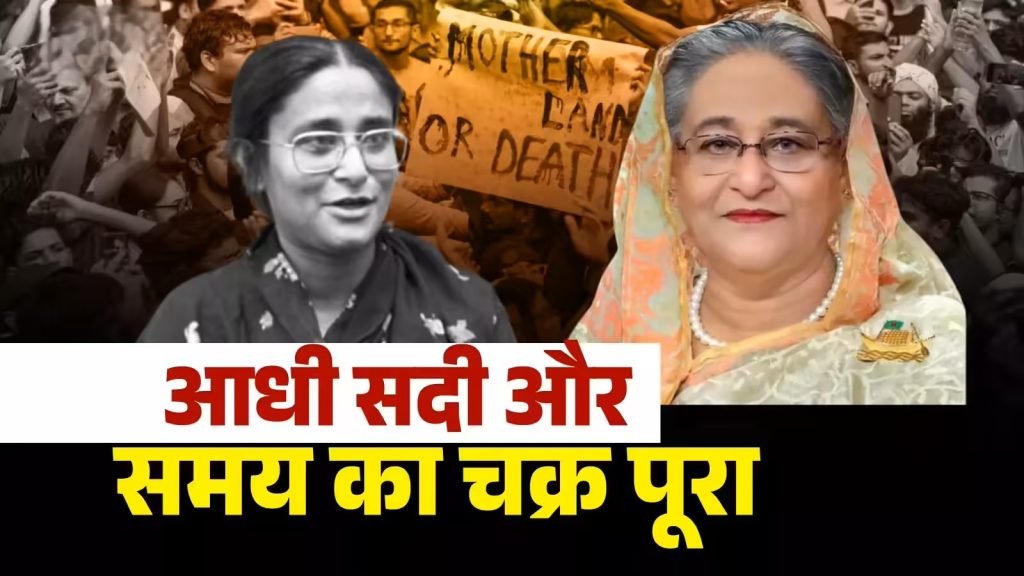
1981: The Turning Point — Sheikh Hasina Returns to Bangladesh
In 1981, after years of exile, the Awami League elected Sheikh-Hasina as its President, even though she was still in Delhi. She returned to Bangladesh later that year, where thousands greeted her at the Dhaka airport.
Her return marked the beginning of a new political era in Bangladesh.
The same woman who lived quietly in Lajpat Nagar was now leading millions.
The Lajpat Nagar House: A Symbol of Survival
Today, the Lajpat Nagar house where Sheikh Hasina once lived is more than just a building. It symbolizes:
- A home in exile
- India’s support during her darkest days
- A place where pain and courage coexisted
- The birthplace of her political resurrection
People still visit the area out of curiosity, searching for the spot where Sheikh-Hasina rebuilt herself and her future.
The house stands as a silent witness to the making of one of South Asia’s strongest political personalities.
The India–Bangladesh Emotional Bond
Sheikh Hasina has repeatedly expressed gratitude to India for sheltering her in 1975. This personal history played a major role in strengthening India-Bangladesh ties in later years.
During her tenure as Prime Minister, she worked closely with India on:
- Connectivity projects
- Border security
- Trade
- Energy cooperation
- Cultural ties
Many believe that her emotional connection to India — born in Lajpat Nagar — shaped the diplomatic warmth between the two nations.
How Lajpat Nagar Remembers Sheikh Hasina
Even today, elderly residents of Lajpat Nagar sometimes share memories of the time when security personnel quietly guarded a house nearby.
Some recall that they later realized the soft-spoken woman they saw occasionally was Sheikh-Hasina, the daughter of Sheikh Mujibur Rahman.
For the neighborhood, it remains a unique chapter — that their area once sheltered one of the most influential leaders of South Asia.
Contextual Summary Points
- Sheikh Hasina survived the 1975 massacre only because she was abroad.
- India invited Sheikh Hasina to take refuge when she had nowhere else to go.
- In Delhi, Sheikh Hasina lived quietly in Lajpat Nagar.
- The exile transformed Sheikh-Hasina into a strong political leader.
- The house in Lajpat Nagar became a symbol of Sheikh Hasina’s resilience.
- Indira Gandhi personally ensured security for Sheikh-Hasina.
- During exile, Sheikh Hasina maintained contact with the Awami League.
- The political rebirth of Sheikh Hasina happened in Delhi.
- In 1981, Sheikh Hasina became the President of Awami League.
- Lajpat Nagar residents later recognized that their neighbor was Sheikh-Hasina.
- The painful journey of Sheikh Hasina is linked deeply with India.
- The assassination of her family shaped Sheikh Hasina’s worldview.
- During her stay, Sheikh Hasina avoided public attention.
- Even today, many do not know Sheikh Hasina lived in Delhi.
- The emotional bond India shares with Bangladesh is tied to Sheikh Hasina’s exile.
- Delhi played a healing role in Sheikh Hasina’s life.
- Lajpat Nagar was the silent witness to Sheikh Hasina’s grief and recovery.
- Without India’s help, Sheikh Hasina’s future may have been very different.
- The story of Sheikh Hasina in Lajpat Nagar is still unknown to many.
- Today, Sheikh Hasina is a global figure, but her roots of resilience lie in Delhi.
Conclusion
The story of Sheikh Hasina living in Lajpat Nagar, Delhi, is one of the most remarkable yet lesser-known chapters in South Asian history. It shows how a tragedy that destroyed an entire family also gave birth to a powerful political leader.
Her exile years were not just about survival — they were about rebuilding identity, purpose, and determination.
From a grieving daughter in Delhi to a four-time Prime Minister of Bangladesh, the journey of Sheikh Hasina is extraordinary. And hidden within this journey is a unique India-Bangladesh connection that continues to influence the subcontinent.
Read more latest news

