

Shankaracharya on social media Chief Minister Yogi Adityanath has issued a fresh and significant statement regarding Swami Avimukteshwarananda, asserting that not everyone can become Shankaracharya. The remark has triggered widespread debate in political and religious circles alike. Meanwhile, Avimukteshwarananda himself has responded by stating that CM Yogi referred to him as Shankaracharya on social media in earlier posts, thereby adding a new layer of controversy to the discussion.
This unfolding episode has once again brought the centuries-old institution of Shankaracharya into national conversation, raising questions about religious authority, political engagement, legitimacy, and public perception in the digital age.
The title “Shankaracharya” traces its origins back to Adi Shankaracharya, the great Hindu philosopher and theologian who consolidated the doctrine of Advaita Vedanta. He established four major mathas (monastic centers) across India:
- Jyotir Math (North)
- Dwarka Sharada Peeth (West)
- Sringeri Sharada Peetham (South)
- Govardhan Math (East)
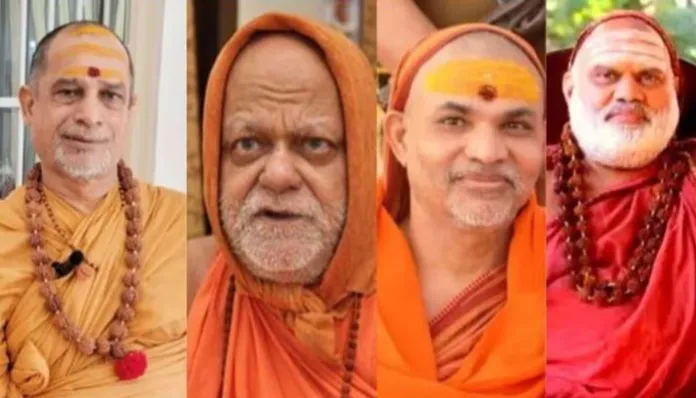
The head of each matha carries the title of Shankaracharya. Over centuries, the position has been revered as one of the highest spiritual authorities in Sanatan Dharma. It is not merely a title; it is a symbol of scholarship, renunciation, discipline, and spiritual leadership.
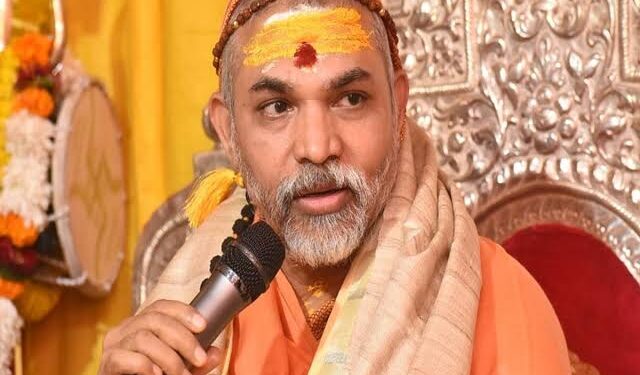
When CM Yogi stated that not everyone can become Shankaracharya, he appeared to emphasize the sanctity and strict tradition behind the appointment. However, the controversy deepened when Avimukteshwarananda pointed out that CM Yogi himself had referred to him as Shankaracharya on social media in previous instances.
The Chief Minister Statement
In his recent remarks, Yogi Adityanath underscored that becoming Shankaracharya requires rigorous adherence to tradition and recognition from established religious authorities. His statement was interpreted by many as a direct response to ongoing debates about religious titles and legitimacy.
Political observers believe that Yogi’s comment was meant to clarify the government’s stance: religious titles should not be casually assumed or politically manipulated. He stressed that spiritual authority is not conferred by popularity or public perception but by established religious systems.
However, Avimukteshwarananda’s counter-claim—that CM Yogi had referred to him as Shankaracharya on social media—complicates the narrative.
Avimukteshwarananda Response
Avimukteshwarananda reacted strongly, asserting that the Chief Minister himself had used the term Shankaracharya on social media while addressing or referring to him in earlier posts. According to him, this indicates recognition from the highest levels of state leadership.
He argued that if the Chief Minister previously acknowledged him as Shankaracharya on social media, then the current statement appears contradictory. This has led to intense scrutiny of past digital communications and social media posts.
Supporters of Avimukteshwarananda highlight screenshots and archived posts where he was addressed as Shankaracharya on social media, suggesting that the title was publicly used without objection at the time.
Politics and Religion A Complex Relationship
The controversy underscores the delicate relationship between politics and religion in India. Uttar Pradesh, being a politically significant and religiously sensitive state, often finds itself at the intersection of these debates.
Yogi Adityanath, himself a religious leader associated with the Gorakhnath Math, is no stranger to blending spiritual and political roles. Therefore, when he speaks about who can or cannot become Shankaracharya, his words carry both political and spiritual weight.
Avimukteshwarananda’s insistence that he was referred to as Shankaracharya on social media raises questions about how political leaders engage with religious titles in the digital era.
The Role of Social Media in Religious Legitimacy
In the past, religious legitimacy was determined within monastic institutions and traditional councils. Today, however, digital platforms play a powerful role in shaping public perception.
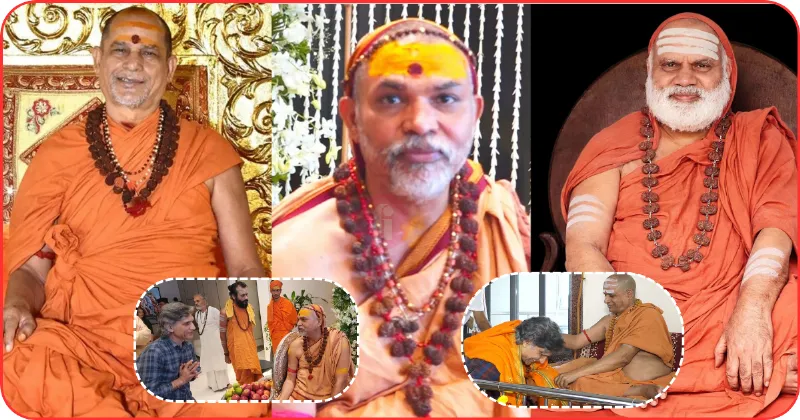
When a Chief Minister refers to someone as Shankaracharya on social media, it can be interpreted as official recognition. Social media posts often become public records that influence popular understanding.
Avimukteshwarananda’s statement that he was called Shankaracharya on social media has sparked debates not only about religious legitimacy but also about the accountability of political communication.
Repeated references to Shankaracharya on social media have now become central to the controversy, with both supporters and critics analyzing the context and intention behind those posts.
Public Reaction and Media Coverage
News channels and digital platforms have extensively covered the disagreement. Debates revolve around:
- Whether social media acknowledgment constitutes formal recognition
- The traditional process of appointing a Shankaracharya
- The political implications of religious titles
Some commentators argue that being called Shankaracharya on social media does not equate to canonical recognition within Hindu monastic traditions. Others believe that repeated references to Shankaracharya on social media reflect implicit acceptance.
The phrase Shankaracharya on social media has become a focal point in discussions, trending across platforms as people debate authenticity and protocol.
The Importance of Tradition
Becoming a Shankaracharya traditionally involves:
- Deep knowledge of scriptures
- Acceptance within the matha hierarchy
- Observance of ascetic discipline
- Formal ceremonial recognition
Yogi Adityanath’s comment reinforces that these standards cannot be bypassed. He suggests that the sacred lineage established by Adi Shankaracharya must be preserved without dilution.
However, Avimukteshwarananda maintains that if he was publicly addressed as Shankaracharya on social media, then questioning his status now seems inconsistent.
The repetition of Shankaracharya on social media in this debate illustrates how digital terminology can influence spiritual discourse.
Legal and Institutional Dimensions
In the past, disputes over religious titles have occasionally reached courts. Legal battles have emerged regarding succession and authority within various mathas.
If disagreements escalate, references to Shankaracharya on social media may even become part of documentary evidence. Archived posts labeling someone as Shankaracharya on social media could potentially influence public narratives.
However, legal experts caution that digital references do not replace formal religious processes.
Broader Political Implications
For Yogi Adityanath, maintaining clarity on religious matters is crucial to preserving his image as both a spiritual and political leader. His assertion that not everyone can become Shankaracharya may resonate with traditionalists.
At the same time, Avimukteshwarananda’s claim that he was addressed as Shankaracharya on social media challenges the consistency of the Chief Minister’s position.
Opposition parties may attempt to frame the issue as a contradiction between public statements and digital acknowledgments. Meanwhile, supporters argue that references to Shankaracharya on social media were honorary rather than institutional endorsements.
The Digital Age and Spiritual Authority
The repeated invocation of Shankaracharya on social media demonstrates how modern communication reshapes ancient traditions. Titles once confined to monastery walls now circulate globally within seconds.
In the age of viral posts, being called Shankaracharya on social media can significantly impact public perception—even if traditional authorities have not formally confirmed it.
The controversy serves as a reminder that digital communication must be precise, especially when referring to sacred titles.
Conclusion
The dispute between Chief Minister Yogi Adityanath and Avimukteshwarananda highlights the evolving dynamics of religion, politics, and technology in India. Yogi’s assertion that not everyone can become Shankaracharya emphasizes adherence to tradition. Meanwhile, Avimukteshwarananda’s claim that he was referred to as Shankaracharya on social media raises questions about digital acknowledgment and institutional legitimacy.
As debates continue, the phrase Shankaracharya on social media remains central to the controversy, symbolizing the intersection of ancient authority and modern communication.
Ultimately, the issue goes beyond one individual. It touches upon how India balances respect for sacred traditions with the realities of contemporary political and digital life. Whether resolved through dialogue, institutional clarification, or continued debate, this episode underscores the importance of clarity, consistency, and reverence when dealing with one of Hinduism’s most revered titles.
Read More latest news

