

AAP MP Sanjay Singh Targets BJP: “Controversial Issues Are Created to Suppress People’s Voices”
Introduction
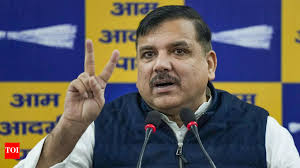
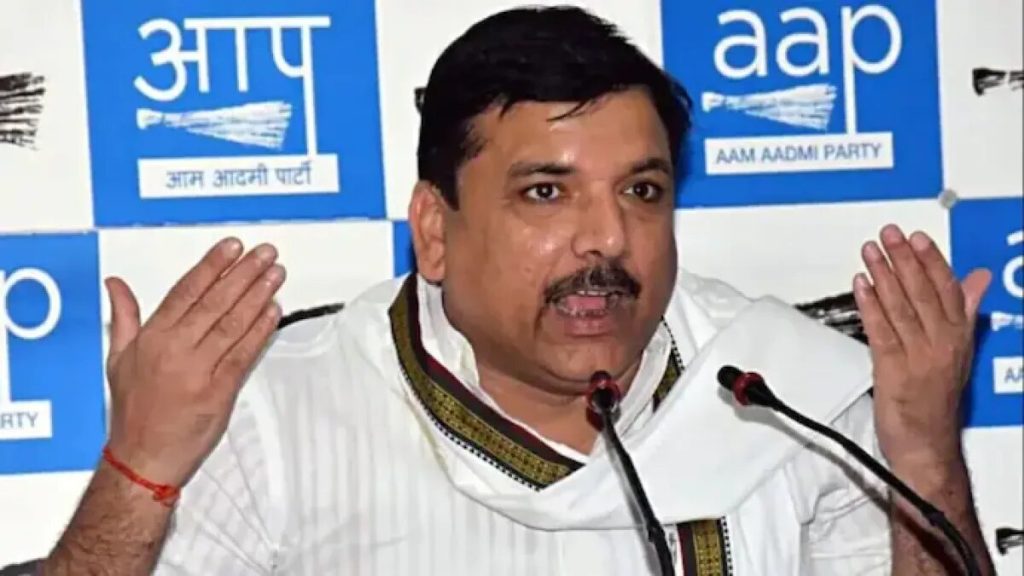
AAP MP Sanjay Singh targeted the BJP In India’s dynamic political landscape, debates and controversies often overshadow policy discussions and people-centric issues. AAP (Aam Aadmi Party) Rajya Sabha MP Sanjay Singh recently launched a scathing attack on the ruling Bharatiya Janata Party (BJP). He alleged that whenever citizens raise their voices on vital issues—such as unemployment, inflation, corruption, or social justice—the government deliberately diverts attention by creating or amplifying a controversial issue. This accusation has sparked heated debates in political circles, media, and public discourse.
This blog takes a deep dive into Sanjay Singh’s statement, the political context behind it, historical parallels, reactions from different political stakeholders, and what this means for Indian democracy going forward.
Who is Sanjay Singh?
Sanjay Singh is a prominent AAP leader, Rajya Sabha MP, and one of the strongest voices of the party in Parliament. Known for his fiery speeches, sharp criticism, and fearless stand against the central government, Singh has been vocal on issues such as:
- Price rise – particularly fuel, LPG, and essential commodities.
- Unemployment – calling it one of the biggest crises India faces.
- Farmers’ issues – Singh has consistently supported farmer protests and demanded MSP guarantees.
- ED/CBI misuse – alleging that investigative agencies are weaponized against opposition leaders.
Thus, his latest remarks targeting BJP align with his track record of raising uncomfortable questions in the Parliament and public forums.
The Statement in Detail
According to Singh, the ruling BJP employs a well-tested strategy:
- Whenever people question the government about unemployment, economic distress, inflation, or corruption…
- At that exact moment, a fresh controversy erupts—whether over religion, caste, celebrities, or cultural disputes.
- This shifts media coverage and public attention away from governance failures and onto divisive debates.
Sanjay Singh’s words resonate with many opposition leaders who believe that India’s democratic discourse is being deliberately derailed.
Historical Context: Is This New?
The claim that governments create distractions is not new. Political historians point out that ruling parties worldwide often shift focus when public anger rises.
- Indira Gandhi’s era: During the Emergency, media was censored, and dissenting voices silenced.
- UPA era: Opposition accused Congress of using tokenistic issues whenever scams like 2G or CWG surfaced.
- BJP era: The opposition claims debates around temples, film controversies, or communal disputes often dominate headlines, coinciding with negative economic reports.
Thus, Sanjay Singh’s remarks are a continuation of a long-standing critique of ruling regimes, but with today’s 24×7 media and social media amplification, distractions become far more effective.
The Issues Singh Highlights
Let’s break down the “important issues” that Singh suggests are being suppressed:
1. Unemployment
- India’s unemployment rate has been a persistent challenge.
- Despite government claims of job creation, surveys reveal millions of educated youth struggling for stable employment.
- Whenever this topic trends, Singh argues, another polarizing issue takes center stage.
2. Inflation
- Rising costs of LPG cylinders, petrol, diesel, and essential commodities directly affect the middle class and poor.
- Instead of sustained debates, the narrative often shifts to cultural or religious disputes.
3. Farmers’ Concerns
- The 2020–21 farmers’ protests showed how powerful people’s voices can be.
- Singh suggests that controversies are often stoked to divide rural and urban opinion whenever farmer issues gain traction.
4. Corruption and Governance
- AAP leaders frequently accuse BJP of double standards—claiming “zero tolerance for corruption” while being selective in action.
- According to Singh, focus gets diverted through debates on nationalism, movies, or identity politics.
Media’s Role in Amplification
A central point in Singh’s criticism is the role of mainstream media.
- Prime Time Coverage: Instead of discussing unemployment data or farmer distress, debates often focus on what an actor said, what a leader wore, or what happened at a temple or mosque.
- TRP-driven strategy: Controversies drive higher viewership, benefiting both media houses and political agendas.
- Selective silence: Certain stories on government accountability fade quickly, while divisive topics linger for weeks.
This, Singh argues, weakens democracy by depriving citizens of serious discourse.
BJP’s Possible Counterarguments
While BJP has not officially responded to Singh’s specific statement, the ruling party generally defends itself with these arguments:
- Opposition creates controversies: BJP often blames rival parties for politicizing sensitive matters.
- People’s Mandate: BJP claims its repeated electoral victories prove that people trust its governance.
- Focus on Development: Leaders cite schemes like PM Awas Yojana, Ujjwala Yojana, and infrastructure projects as proof of commitment to citizens.
- National Security: BJP emphasizes that some issues, especially on border security or terrorism, cannot be dismissed as “distractions.”
Thus, while Singh portrays BJP as diversionary, the ruling party projects itself as action-oriented and opposition as obstructive.
Opposition Unity: Common Ground
Singh’s statement also reflects the broader INDIA alliance narrative—that BJP is running away from accountability. Rahul Gandhi, Akhilesh Yadav, Tejashwi Yadav, and other leaders have made similar points.
This creates a common opposition plank:
- Focus on inflation, unemployment, and governance failures.
- Expose “distraction politics.”
- Present themselves as champions of people’s real issues.
Impact on Voters
The crucial question: Do voters see through distractions?
- Urban middle class: Often divided, some resonate with nationalist or religious narratives, while others demand jobs and price stability.
- Rural voters: Farmers and laborers remain more sensitive to economic hardships, making them responsive to Singh’s message.
- Youth voters: Employment is their top concern, making them potential supporters of Singh’s critique.
However, BJP’s organizational strength and communication machinery still dominate electoral narratives.
Social Media Reactions
Sanjay Singh’s remarks sparked lively debates online:
- Supporters praised him for speaking truth to power.
- Critics accused AAP of using the same tactic—creating controversies to stay relevant.
- Neutral voices agreed that both ruling and opposition parties often resort to distraction politics.
Memes, hashtags, and viral videos quickly circulated, amplifying his statement beyond Parliament.
Broader Implications for Democracy
If Singh’s allegation is true, the implications are serious:
- Weakening accountability: Citizens may never get sustained answers on jobs, inflation, or governance.
- Polarized discourse: Divisive issues take precedence, deepening communal and cultural rifts.
- Declining trust: People may lose faith in institutions if they believe manipulation dominates politics.
For democracy to thrive, public debate must prioritize real issues over manufactured distractions.
AAP’s Strategy Going Forward
By making such statements, AAP seeks to:
- Position itself as a party of common people’s issues.
- Differentiate from Congress, by being more aggressive in attacking BJP.
- Expand influence nationally, beyond Delhi and Punjab.
- Capture the youth vote, by focusing on education, jobs, and corruption.
Whether this strategy succeeds depends on how consistently AAP can sustain its narrative against BJP’s powerful communication machinery.
Conclusion
Sanjay Singh’s sharp attack on BJP reflects a larger struggle in Indian politics: the battle between issue-based governance and narrative-based distractions. His statement has reignited debates on whether India’s democracy is veering too much toward theatrics, sidelining real challenges.
For citizens, the key takeaway is clear: vigilance is essential. Whether or not governments create distractions, it is ultimately the people’s responsibility to demand accountability on issues that directly affect their lives.
In the coming elections, it will be evident whether Singh’s critique finds resonance with voters or whether the “politics of distraction” continues to dominate.
Read more latest news

