
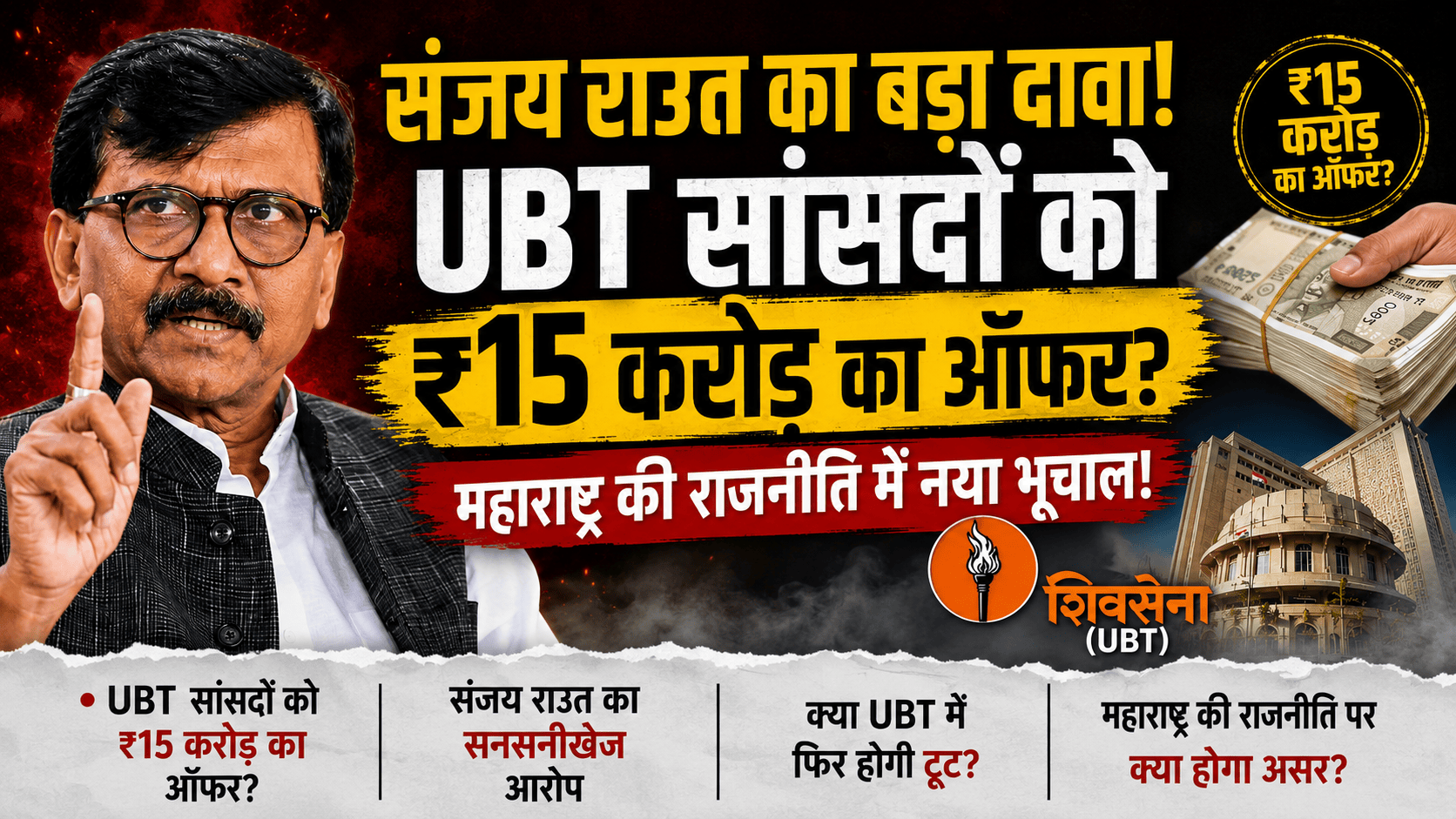
Sanjay Raut Leader of the UBT Alleges ₹15 Crore Offer to Shiv Sena (UBT) MPs Amid Split Speculation
Introduction
Maharashtra politics has once again entered a phase of intense political drama after Sanjay Raut leader of the UBT made a sensational allegation that Members of Parliament belonging to the Uddhav Thackeray-led Shiv Sena (UBT) are being offered ₹15 crore each to switch sides. The statement has sparked widespread debate across political circles and raised fresh questions about the stability of opposition parties in Maharashtra.
The allegation comes at a time when political observers are closely watching developments within the Shiv Sena (UBT), amid reports and speculation of possible defections and internal unrest. While no concrete evidence has yet been presented publicly regarding the alleged offers, the statement by Sanjay Raut leader of the UBT has brought the issue of political loyalty, party discipline, and alleged horse-trading back into the national spotlight.
As Maharashtra remains one of India’s most politically significant states, any movement within major political parties has implications that extend beyond state borders. The latest claims have triggered reactions from leaders across party lines and have become a major talking point in the political landscape.
The Allegation That Sparked a Political Storm
According to Sanjay Raut leader of the UBT, MPs from Shiv Sena (UBT) are being approached with financial incentives amounting to ₹15 crore each in an attempt to persuade them to leave the party. The allegation is particularly significant because it comes during a period when the party is already facing challenges related to maintaining organizational unity.
Speaking to the media, Sanjay Raut leader of the UBT suggested that efforts are being made to weaken the Uddhav Thackeray-led faction by encouraging elected representatives to switch allegiances. He argued that political opponents are attempting to destabilize the party through financial inducements rather than democratic political engagement.
The claim has reignited discussions about the use of money power in politics, an issue that has been debated repeatedly in Indian democracy. While accusations of horse-trading are not new, such allegations continue to attract attention because of their potential impact on democratic institutions and electoral mandates.
Background: The Shiv Sena Split
To understand the significance of the latest controversy, it is important to revisit the events that transformed Maharashtra politics over the last few years.
The Shiv Sena, founded by Bal Thackeray, was once a unified political force with a strong regional identity and influence. However, internal disagreements eventually led to a major split within the party.
The division became public when a large group of leaders led by Eknath Shinde rebelled against the leadership of Uddhav Thackeray. The rebellion ultimately resulted in the formation of a new government in Maharashtra and significantly altered the state’s political equation.
Since then, the Uddhav Thackeray-led faction has worked to rebuild its organization and maintain its support base. Against this backdrop, the allegation made by Sanjay Raut leader of the UBT carries particular significance because it touches on fears of further fragmentation within the party.

Why the Allegation Matters
The statement by Sanjay Raut leader of the UBT matters for several reasons.
First, it raises concerns about the integrity of the democratic process. If elected representatives are indeed being offered money to change political affiliations, it would undermine the trust voters place in their representatives.
Second, it highlights the ongoing struggle for political dominance in Maharashtra. The state remains a crucial battleground, and every major party is seeking to strengthen its position ahead of future electoral contests.
Third, the allegation reflects the challenges faced by opposition parties attempting to maintain unity in a highly competitive political environment.
For supporters of the Uddhav Thackeray-led Shiv Sena (UBT), the remarks by Sanjay Raut leader of the UBT are seen as a warning about attempts to weaken the party from within.
Political Reactions Begin to Pour In
The allegation quickly became a subject of discussion among political leaders.
Supporters of Shiv Sena (UBT) backed the claims and argued that similar tactics have been used in political battles across the country. They emphasized the need for elected representatives to remain loyal to the mandate given by voters.
Meanwhile, leaders from rival parties dismissed the accusation and challenged the UBT leadership to provide evidence supporting the claims. Critics argued that such allegations are often made without proof and are intended to create a political narrative.
Nevertheless, the remarks by Sanjay Raut leader of the UBT succeeded in shifting public attention toward questions surrounding party stability and political ethics.
The Role of Sanjay Raut in Shiv Sena (UBT)
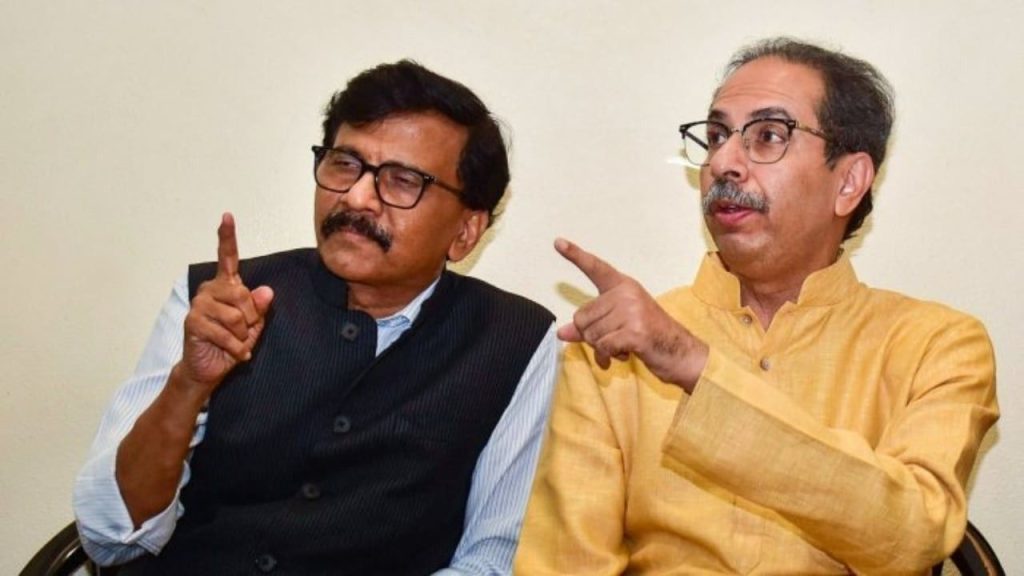
Over the years, Sanjay Raut leader of the UBT has emerged as one of the most vocal and influential faces of the Uddhav Thackeray camp.
Known for his outspoken style and regular media interactions, he has frequently defended the party during periods of political crisis. Whether addressing issues related to government formation, party splits, or electoral strategy, he has remained a central figure in shaping the party’s public messaging.
His latest statement reflects his continued role as a key spokesperson and strategist within the organization.
Because of his position and influence, allegations made by Sanjay Raut leader of the UBT often generate significant media attention and political discussion.

Speculation About Another Split
The latest controversy has intensified speculation regarding a possible split within the Uddhav Thackeray-led party.
Political analysts believe that any signs of dissatisfaction among MPs could create uncertainty about the party’s future direction. However, party leaders have repeatedly maintained that the organization remains united.
According to supporters, the allegations raised by Sanjay Raut leader of the UBT are intended to alert party workers and leaders about potential efforts to create divisions.
Whether these concerns are based on actual approaches made to MPs or broader political suspicions remains a matter of debate.
The Question of Political Loyalty
Political loyalty has become an increasingly important topic in Indian politics.
When elected representatives change parties after winning elections, voters often question whether their mandate has been respected. At the same time, politicians argue that shifting political circumstances sometimes justify realignment.
The allegations made by Sanjay Raut leader of the UBT have once again brought this issue into focus.
Supporters of party discipline argue that representatives should remain committed to the platform on which they were elected. Critics, however, contend that political leaders should have the freedom to make decisions based on changing circumstances.
This debate is likely to continue as political competition intensifies across the country.
Impact on Maharashtra Politics
Maharashtra remains one of India’s most politically influential states.
The state sends a large number of representatives to Parliament and plays a crucial role in national political calculations. As a result, developments involving major political parties often attract nationwide attention.
The allegations made by Sanjay Raut leader of the UBT could have several consequences.
They may strengthen efforts by the party leadership to ensure internal unity. They could also increase scrutiny of interactions between MPs and rival political groups.
Furthermore, the controversy may influence public perceptions ahead of future elections.
Opposition Unity and Future Challenges
The remarks by Sanjay Raut leader of the UBT come at a time when opposition parties are attempting to coordinate strategies against their political rivals.
Maintaining unity among coalition partners and party members remains one of the biggest challenges facing opposition politics.
Any suggestion of defections or internal instability can affect morale and organizational effectiveness.
For this reason, the allegations have significance beyond the Shiv Sena (UBT) itself. They also reflect broader concerns about the challenges of sustaining opposition alliances in a competitive political environment.
Media Coverage and Public Interest
News channels, newspapers, and digital platforms have extensively covered the statement made by Sanjay Raut leader of the UBT.
The allegation combines several elements that naturally attract public attention: money, political power, party loyalty, and the possibility of dramatic shifts in political alignment.
Social media discussions have also amplified the controversy, with supporters and critics debating the credibility of the claims.
As the story continues to develop, public interest is likely to remain high.
What Happens Next?
The future trajectory of this controversy depends on several factors.
If evidence supporting the allegations emerges, it could significantly alter the political conversation. Conversely, if no evidence is presented, critics may argue that the claims were politically motivated.
Either way, the remarks by Sanjay Raut leader of the UBT have already succeeded in drawing attention to the issue of political defections and party stability.
Political observers will closely monitor whether any MPs publicly respond to the allegations or whether further developments emerge in the coming weeks.
Conclusion
The allegation that Shiv Sena (UBT) MPs are being offered ₹15 crore each to switch sides has added a fresh chapter to Maharashtra’s ever-evolving political story. Made by Sanjay Raut leader of the UBT, the claim has generated intense discussion about political ethics, loyalty, and the future of the Uddhav Thackeray-led party.
While questions remain regarding the evidence behind the allegations, the controversy highlights the continuing importance of Maharashtra in India’s political landscape. It also underscores the challenges faced by political parties seeking to maintain unity amid fierce competition.
As reactions continue to emerge and speculation surrounding the party’s future persists, the statement by Sanjay Raut leader of the UBT is likely to remain a major topic of debate. Whether the allegation leads to concrete political consequences or becomes another episode in Maharashtra’s dynamic political history will depend on developments in the days ahead.
For now, one thing is certain: the remarks by Sanjay Raut leader of the UBT have once again placed Maharashtra politics at the center of national attention.
Read more latest news

