

China To Host Historic Half-Marathon For Robots And Humans
Robots In a groundbreaking event that underscores the rapid advancements in robotics and artificial intelligence, China is set to host the world’s first half-marathon featuring both human athletes and autonomous robots. This unique sporting event is a testament to the country’s commitment to innovation and its ability to blend cutting-edge technology with traditional sports. The historic race will take place in Shenzhen, a city known as China’s tech hub, and promises to draw global attention as robots and humans compete on the same track.
Event Overview: A Race to Redefine Boundaries
Scheduled for March 2025, the “TechRace Half-Marathon” will be held on a 21.1-kilometer track specially designed to accommodate both human runners and robot competitors. The event is organized by China’s Ministry of Science and Technology in collaboration with leading robotics companies and athletic organizations. It aims to showcase the latest achievements in robotics while promoting healthy competition and collaboration between humans and machines.
The marathon will feature two categories:
- Human Athletes: Comprising professional and amateur runners from around the globe.
- Autonomous Robots: Machines built by teams of engineers and researchers, capable of navigating the course without external intervention.
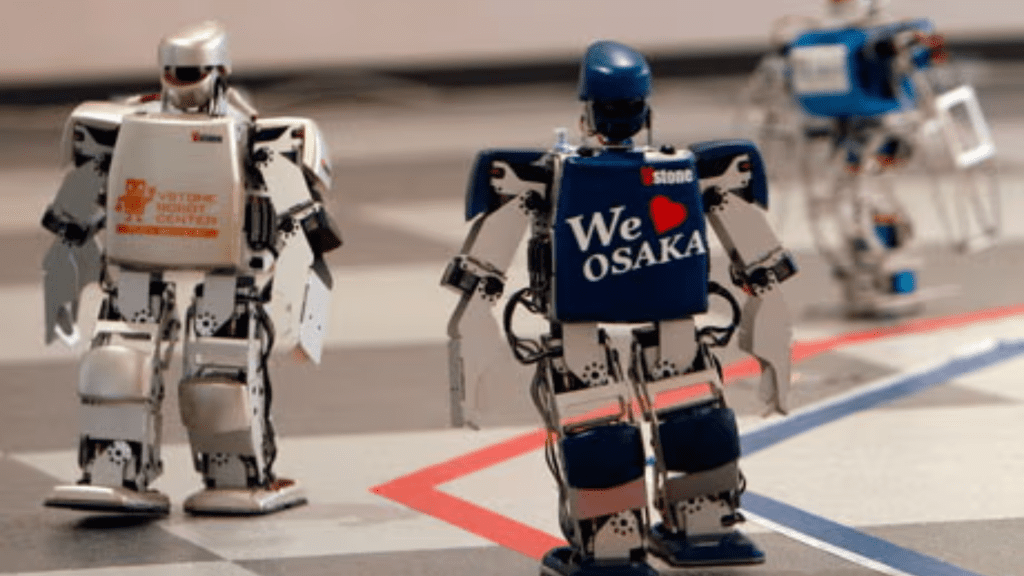
The robot category is expected to include a diverse array of participants, ranging from bipedal humanoid robots to advanced wheeled and quadrupedal machines. These robots will be equipped with sensors, cameras, and AI systems to navigate obstacles, maintain speed, and adapt to the terrain.
Objectives and Vision: More Than Just a Race
The half-marathon is more than a sporting event; it is a platform to explore the intersection of sports, robotics, and society. The primary objectives include:
- Advancing Robotics Technology: By testing robots in a real-world, high-pressure environment, engineers can gather data to refine AI algorithms, mobility systems, and decision-making processes.
- Promoting Human-Robot Collaboration: While the race is competitive, it also emphasizes coexistence and teamwork between humans and machines.
- Inspiring Innovation: The event aims to spark interest in robotics among young people and encourage them to pursue careers in science, technology, engineering, and mathematics (STEM).
- Sustainability and Urban Development: Using robots in city events showcases how technology can be integrated into urban planning and smart city initiatives.
Challenges for Robot Competitors
While humans rely on endurance, training, and strategy, robot participants face a unique set of challenges:
- Battery Life: Completing a 21.1-kilometer course requires substantial energy, making battery optimization a key focus.
- Terrain Adaptability: The course will include different surfaces such as asphalt, gravel, and inclines, testing the robots’ ability to adjust their movement.
- Obstacle Detection: Robots must navigate around humans, road signs, and other potential obstacles using advanced AI and sensor systems.
- Real-Time Decision-Making: Unlike controlled lab environments, the race involves unpredictable variables, requiring robots to make split-second adjustments.
Technological Innovations on Display
The half-marathon is expected to serve as a showcase for groundbreaking technologies in robotics and artificial intelligence:
- Advanced Mobility: Companies are developing robots with state-of-the-art locomotion systems, including dynamic stabilization for bipedal robots and energy-efficient wheeled designs.
- AI Navigation: Competitors will rely on machine learning algorithms to interpret real-time data from cameras and sensors, ensuring they stay on course and avoid collisions.
- Energy Management: Teams are incorporating innovative power solutions, such as lightweight batteries and regenerative braking systems, to maximize efficiency.
- Human-Robot Interaction: Some robots will include features to interact with spectators, such as voice responses or gesture recognition.
Human Participation: A Celebration of Athleticism
While the robots are the stars of the show, the human participants are no less important. The half-marathon will feature thousands of runners, including elite athletes, local enthusiasts, and international competitors. Their participation highlights the enduring appeal of human athleticism and endurance in a world increasingly influenced by technology.
Runners will be competing alongside robots, providing a fascinating juxtaposition of natural and artificial abilities. The race organizers have ensured that the course is designed to prevent interference between the two groups, with designated lanes and clear rules to maintain safety and fairness.
Key Players and Sponsors
The event has attracted participation from leading robotics firms, universities, and research institutions. Notable entrants include:
- Boston Dynamics: Known for its quadrupedal robot “Spot,” the company is expected to showcase a marathon-ready variant.
- UBTECH Robotics: A Chinese firm specializing in humanoid robots, likely to field advanced bipedal competitors.
- Huawei AI Labs: Contributing expertise in AI navigation and real-time data processing.
- Tsinghua University: Partnering with industry leaders to test experimental robotics platforms.
The race is sponsored by tech giants like Alibaba, Tencent, and Xiaomi, reflecting the event’s significance in the tech industry. Athletic brands such as Nike and Adidas are also involved, promoting smart wearable devices and other innovations.
Public Reaction and Global Interest
The announcement of the TechRace Half-Marathon has generated widespread excitement, with technology enthusiasts, sports fans, and researchers eagerly anticipating the event. Social media platforms are buzzing with discussions about which robots will dominate and how they will compare to human runners.
Critics, however, have raised concerns about the ethical implications of human-robot competition. Some argue that pitting humans against machines could diminish the value of human effort, while others worry about potential safety risks. Event organizers have addressed these concerns by emphasizing the collaborative nature of the race and implementing strict safety protocols.
Potential Implications for the Future
The TechRace Half-Marathon has far-reaching implications beyond the race itself:
- Advancing AI and Robotics: The data collected during the event will contribute to the development of more advanced robots capable of performing complex tasks in real-world environments.
- Revolutionizing Sports: The integration of robotics into sports could lead to new forms of entertainment and competition, attracting diverse audiences.
- Shaping Public Perception: By showcasing robots in a positive and accessible light, the event could help demystify AI and robotics for the general public.
- Urban Applications: The technologies demonstrated in the marathon could be applied to smart city initiatives, such as autonomous delivery systems and emergency response robots.
Conclusion: A Historic Milestone
The TechRace Half-Marathon is more than just a race; it is a celebration of innovation, endurance, and the evolving relationship between humans and machines. As China prepares to host this historic event, the world will be watching to see how robots perform alongside their human counterparts and what this means for the future of technology and society.
Whether you’re a tech enthusiast, a sports fan, or simply curious about the possibilities of human-robot interaction, the TechRace Half-Marathon promises to be an unforgettable spectacle that redefines the boundaries of what’s possible.
Read more latest news

