
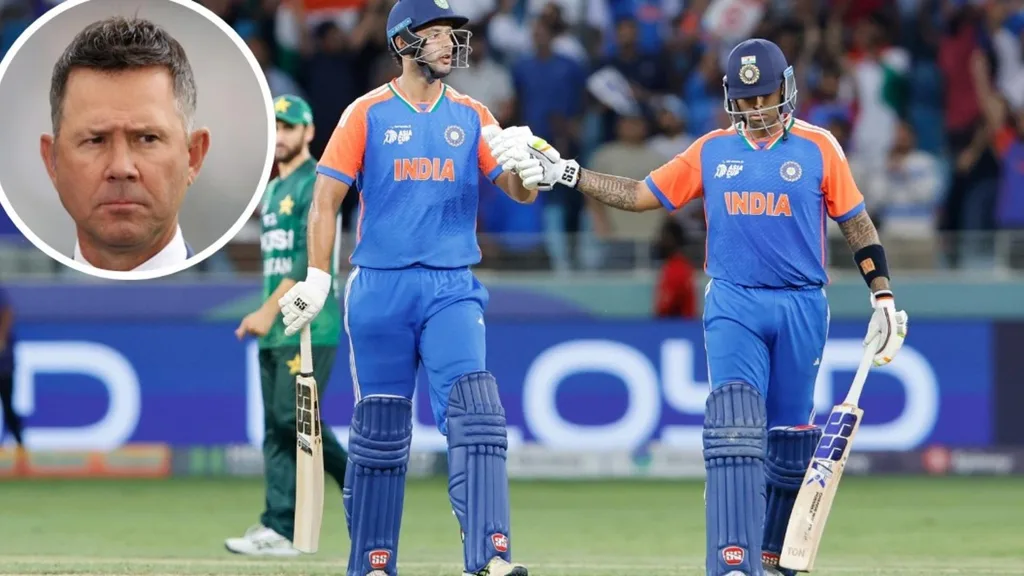
Ricky Ponting Clarifies After Pakistani Media Spreads Fake Statement on India vs Pakistan Asia Cup Clash
Introduction
Ricky Ponting regarding the India vs. Pakistan match Few rivalries in world sports match the intensity, passion, and drama of an India vs Pakistan cricket match. Beyond the boundaries and scoreboards, this clash often spills into politics, media narratives, and national pride. Every ball becomes a moment of collective emotion, every victory a matter of national celebration, and every defeat a wound that takes time to heal.
Recently, the rivalry witnessed a different kind of drama — not on the field but off it. Legendary Australian cricketer Ricky Ponting found himself at the center of a controversy after Pakistani media outlets circulated a false statement attributed to him regarding the Asia Cup 2025 clash between India and Pakistan. The misinformation spread rapidly, forcing Ponting to break his silence and issue a clarification.
This blog examines the full controversy in detail: how it began, why Ponting’s name was dragged into it, the reactions from cricket fans, the role of fake news in sports, and what this episode reveals about the India-Pakistan cricket rivalry.
The Spark: Fake Statement Attributed to Ricky Ponting
It all began with viral headlines circulating in sections of the Pakistani media and social media platforms. The alleged statement attributed to Ricky Ponting suggested that he believed Pakistan would dominate India in the Asia Cup and that the Indian team lacked the depth to challenge Pakistan’s bowling attack.
For a country where cricket is deeply tied to national identity, such a statement coming from a respected cricket legend like Ponting was bound to grab eyeballs. The supposed quote was shared widely across WhatsApp groups, Twitter, Facebook pages, and YouTube channels that cater to cricket fans.
The problem, however, was that Ricky Ponting never made such a statement.
Ricky Ponting Breaks His Silence
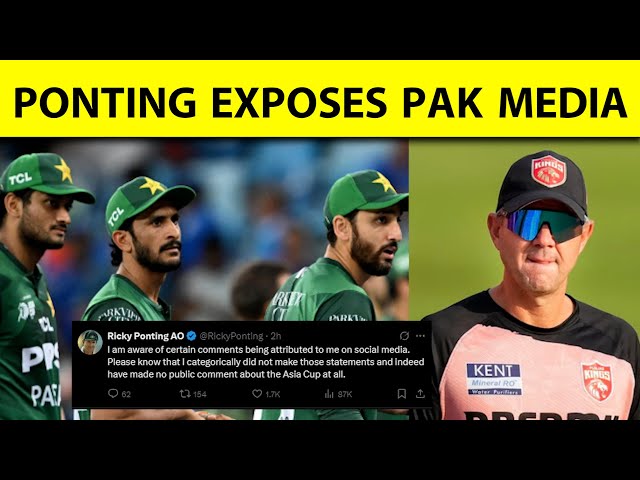
As the rumors gained traction, Ricky Ponting decided to issue a clarification. Known for his straightforward nature both on and off the field, Ponting stated that the viral statement was completely fabricated.
“I have not made any such comment about India or Pakistan. It is unfortunate that false quotes are being circulated in my name. I respect both teams and their players,” Ponting clarified in an official note shared through his media team.
He also reminded fans and journalists that cricket should be celebrated for the spirit of competition rather than becoming a tool for misinformation or political narratives.
Why Ricky Ponting?
The controversy raised an important question: why was Ricky Ponting targeted in the first place?
There are several possible reasons:
- Ponting’s Reputation as a Cricketing Legend
As a three-time World Cup-winning captain, Ponting’s words carry immense weight. Any statement attributed to him gains instant credibility. - Neutral Foreign Voice
In India-Pakistan clashes, opinions from neutral cricketing legends are often treated as unbiased and authoritative. Using Ponting’s name gave the fake news added legitimacy. - Media Sensationalism
Certain outlets in Pakistan likely saw an opportunity to create buzz before the high-voltage clash, knowing that even a false statement would trigger debates across borders.
Fan Reactions: Outrage, Memes, and Confusion
As expected, the circulation of Ponting’s alleged remarks sparked heated debates:
- In India, fans reacted with anger and disbelief. Many felt that a legend like Ponting could not underestimate Team India’s strength, especially given India’s recent dominance in ICC tournaments.
- In Pakistan, sections of fans celebrated the supposed endorsement, using it as a morale booster ahead of the Asia Cup clash.
- On Social Media, memes and trolling dominated the conversation, with some users mocking how quickly fake news spreads in cricket.
Once Ponting clarified, the reactions shifted. Indian fans expressed relief, while many Pakistani fans felt embarrassed at the misinformation.
The Role of Media in Escalating Rivalry
The incident highlights a troubling trend: the role of certain media outlets in stoking rivalry through sensationalism. India vs Pakistan matches are already loaded with emotions, and when false narratives are added, they risk inflaming tensions further.
Unlike other rivalries, the India-Pakistan clash is not just about cricket — it is also about politics, history, and national pride. Media houses on both sides often amplify controversies to attract viewership, sometimes at the cost of truth.
This latest episode with Ricky Ponting is just one example of how fake news can manipulate public sentiment.
Cricket Legends React
Following Ponting’s clarification, other cricketing figures and experts weighed in:
- Sunil Gavaskar remarked that media outlets need to exercise more responsibility and verify quotes before publishing.
- Waqar Younis, former Pakistan pacer, said it was embarrassing that false statements were circulated in Ponting’s name and urged fans to focus on the match itself.
- Michael Clarke, Ponting’s former teammate, defended him, calling him a man of integrity who would never indulge in cheap commentary.
These reactions underscored the global cricket community’s concern about misinformation damaging the game’s spirit.
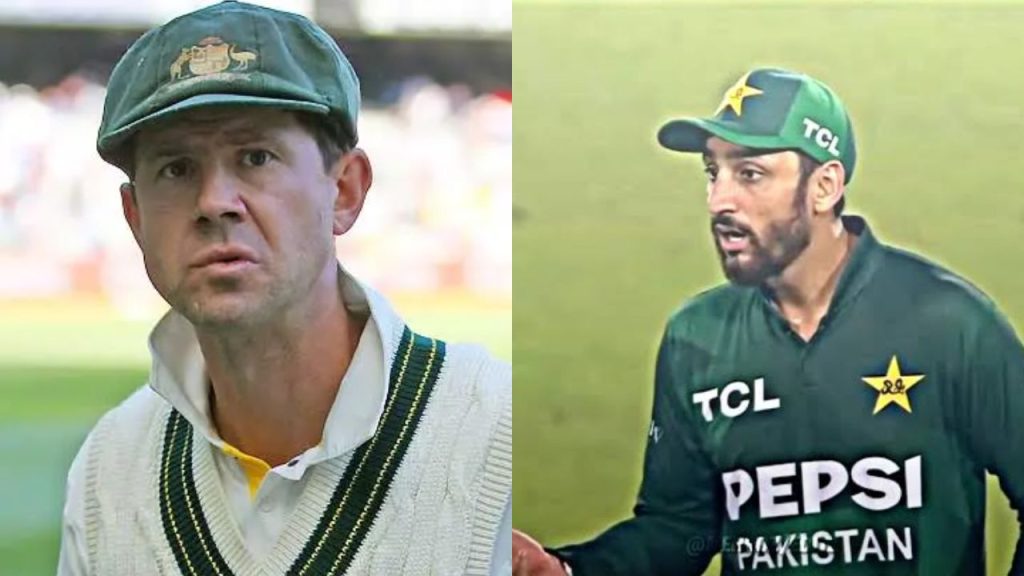
A Pattern of Fake News in Sports
This was not the first time fake statements have been attributed to cricketing legends:
- Before the 2019 World Cup, false quotes were circulated in the name of Brian Lara predicting India’s early exit.
- During the 2021 T20 World Cup, viral posts falsely claimed that Shane Warne had backed Pakistan as favorites against India.
- Sachin Tendulkar himself has often been misquoted on various cricket and political issues.
Such incidents show a recurring pattern where fake news is used to exploit the passions of cricket fans.
The Bigger Picture: Indo-Pak Rivalry Beyond Cricket
The Ricky Ponting controversy reveals the fragility of perception in Indo-Pak cricket rivalry.
For decades, cricket between the two nations has been more than just sport — it has been a proxy for political tensions, national pride, and even diplomacy. From Javed Miandad’s six in Sharjah to MS Dhoni’s calm leadership in World Cups, each match has become part of the two nations’ cultural and political memory.
In this context, even a false statement by a cricketing legend is enough to set off waves of reactions, because cricket here is not just about bat and ball — it is about identity.
Pakistani Media’s Defense
Interestingly, some Pakistani outlets defended themselves by suggesting they merely shared what was already viral on social media. They argued that fans demand spicy pre-match build-ups, and sometimes quotes circulate too quickly to be verified.
However, critics argued this was an irresponsible excuse. Journalistic integrity demands verification before publication, especially when dealing with high-profile figures like Ricky Ponting.
India’s Media Response
Indian media outlets used the incident to highlight the spread of misinformation in Pakistan. Several prime-time debates accused Pakistani media of deliberately manufacturing falsehoods to boost morale before the match.
While some of these criticisms were valid, others bordered on sensationalism themselves, showing that the problem of media exaggeration exists on both sides.
Cricket Fans Call for Responsibility
Amid all the noise, one thing was clear: genuine cricket fans from both India and Pakistan wanted the focus to return to the game.
Hashtags like #FocusOnCricket and #StopFakeNews trended for a while, with many fans urging media outlets to let players’ performances decide narratives rather than fabricated quotes.
This collective demand shows that despite political divides, cricket has the potential to unite fans in calling for fairness and truth.
Impact on Asia Cup Build-Up
Far from being a sideshow, the controversy actually added more spice to the Asia Cup clash. The match was already being billed as a “super encounter,” and the fake Ponting quote only added to the tension.
Broadcasters and commentators discussed the issue extensively, ensuring that it remained part of the pre-match atmosphere. In the end, even fake news ended up serving as free publicity for the tournament.
Lessons from the Controversy
- Verify Before Sharing
Media outlets must ensure that every quote attributed to a public figure is verified. Failure to do so damages credibility. - Legends Deserve Respect
Icons like Ricky Ponting have earned respect through decades of service to the sport. Misusing their names for cheap headlines is unacceptable. - Fans Should Stay Alert
Cricket fans must learn to differentiate between authentic news and fake forwards. Blindly sharing posts only worsens the problem. - Regulating Sports Journalism
Cricket boards and ICC may need to step in to penalize outlets that deliberately spread fake quotes during sensitive tournaments.
Conclusion
The Ricky Ponting controversy may have started as a piece of fake news, but it has exposed much larger issues in the world of sports journalism and the Indo-Pak cricket rivalry.
Ponting’s dignified clarification has once again reminded everyone of the importance of truth in sport. Cricket thrives on passion, but it must also uphold honesty and fairness.
As India and Pakistan continue to face off in the Asia Cup and beyond, fans and media alike must learn to respect the game for what it is — a battle of skill and spirit on the field, not a playground for misinformation.
In the end, cricket legends like Ricky Ponting symbolize what the game stands for: respect, competition, and unity beyond borders. Fake news may win headlines for a day, but the truth, like the game itself, always endures.
Read more latest sport news

