Retired Pakistani Police Officer Used Indian YouTubers as Spies: Exposing a New Age of Covert Influence
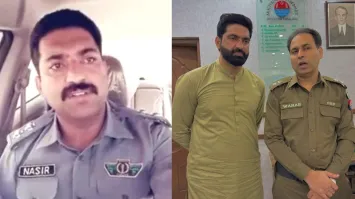
Recently, Indian authorities uncovered a shocking espionage network spearheaded by Nasir, a retired Pakistani sub‑inspector, who allegedly used his YouTube persona to recruit and direct Indian content creators for spying and propaganda spread on behalf of Pakistan’s ISI. This case underscores a new dimension in intelligence operations—leveraging social media influencers to subtly manipulate narratives and channel sensitive information across borders.
In this blog, we dissect the unfolding saga—from how Nasir operated to broader national-security repercussions and what it means for media responsibility and digital transparency.
1. Meet Nasir: Ex‑Cop Turned Espionage Handler
1.1 Background and Recruitment
Nasir formerly served as a sub‑inspector in Pakistan Police. After retiring, he didn’t fade into obscurity—rather, he rebranded himself as a YouTuber, presenting as a social-media influencer and entrepreneur. Indian intelligence uncovered that he had secretly been recruited by Pakistan’s Inter‑Services Intelligence (ISI) to steer Indian influencers toward espionage and propaganda roles.
1.2 His Modus Operandi
According to reports, Nasir used:
- A friendly, mentor-like approach to build rapport with Indian YouTubers.
- Invitations to Pakistan-based events hosted by ISI contacts.
- Guidance to produce pro‑Pakistan content, embed misinformation, or collect seemingly mundane but sensitive data (like images and videos of infrastructure).
His ability to balance charisma with covert ask made his operation particularly insidious
2. The YouTubers: Targets of Influence
2.1 Who Were Recruited
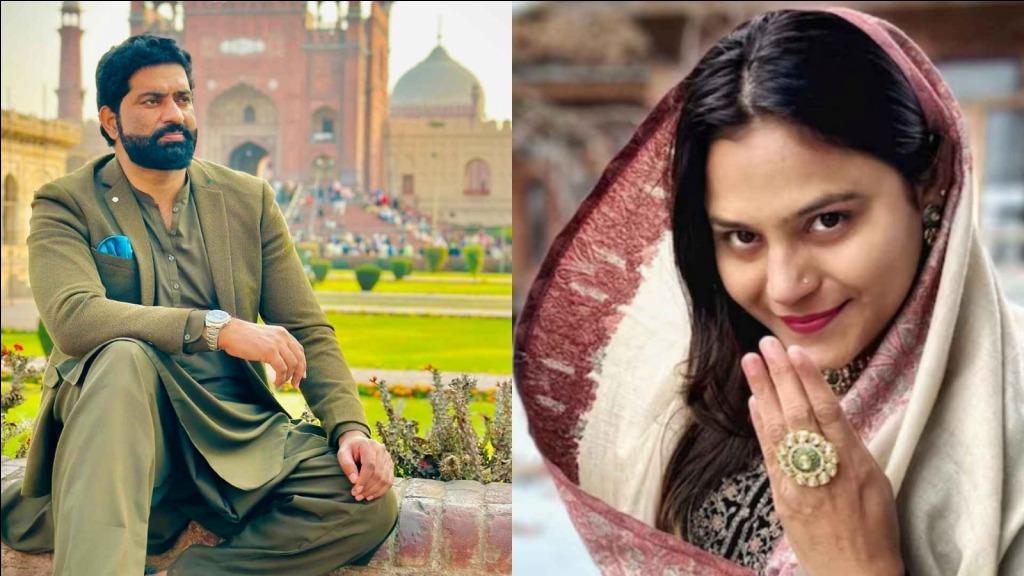
While not all details are public yet, one confirmed recruit is Jasbir Singh, arrested in Mohali. Authorities allege he had over 150 contacts with individuals tied to Pakistan’s ISI and Army, and was directed to craft pro‑Pakistan content and gather intelligence.
Others include Jyoti Malhotra and various travel vloggers seen attending Pakistan‑linked events—some lured by visa promises or sponsored invitations.
3. Caught in the Web: Arrests Commence
A chain reaction of arrests followed intensive probe:
- Jasbir Singh (Mohali YouTuber): Interrogated under espionage charges, suspected financial links to Pakistan and ISI‐linked event attendance.
- Second Punjabi YouTuber: Arrested days later, found associated with Jasbir—evidence shows visits to the Pakistan High Commission.
- Travel blogger Jyoti Malhotra: Arrested in Haryana under the Official Secrets Act; suspected of leaking sensitive information during “Operation Sindoor” period via WhatsApp, Telegram, and encrypted platforms.
These cases illustrate a coordinated network, not isolated lapses .
4. The ISI Playbook: Co-opt Through Content
Pakistan’s intelligence use of Indian content creators shows a shift in espionage—no longer limited to military assets:
- Soft recruitment via seemingly harmless content collaboration.
- Baits, like visa promises and event sponsorships.
- Content directives, shaping public opinion and undermining national cohesion.
- Data collection under the guise of casual travel footage—photos, drone shots, or geolocations.
- Cross-border coordination: Uses digital handlers, encrypted apps, even diplomat facilitators.
This layered tactic blurs espionage, persuasion, and propaganda.
5. Strategic Significance: Why It Matters
5.1 Espionage, Evolved
Unlike classical spying, this operation:
- Operates in public view—trusted influencers with seemingly genuine audience.
- Achieves mass impact—one YouTuber could influence millions.
- Leaves hard-to-prove evidence, often protected by creative façade.
5.2 National Vulnerabilities
With rising valorization of content creation, personality-based fame, and geopolitical inequalities, Nasir’s targeting of Indian youth shows how social media influence can be weaponized for strategic gains.
5.3 Tech & Intelligence Gaps
The case highlights shortcomings in:
- Social-media platform verification.
- Cross-border law enforcement cooperation.
- Electronic evidence gathering and encryption challenges.
6. Government and Police Operations
6.1 Coordinated Crackdown
Smart coordination between:
- Punjab Police’s Special Operations Cell,
- Delhi Police’s Special Cell,
- Central intelligence and crypto-forensics teams
led to busting multiple handlers and influencers across states.
6.2 Seized Evidence
Police recovered:
- Financial records linking influencers with Pakistani accounts.
- SIM cards, encrypted apps.
- Contact logs with ISI-linked contacts.
- Event invitations, visa slips, travel receipts.

7. Reactions Across the Board
7.1 Political & Policy Response
- Home Ministry and National Security Advisor convened meetings urging social media vigilance and vetting of influencers with foreign ties.
- Parliament discussions demand OSINT safeguards and stricter platform accountability.
7.2 Expert Perspectives
Counter-terrorism analyst:
“The mayday here is the infiltration of content channels—not just websites but personalities influencing youth.”
Digital policy expert:
“Major platforms must enhance vetting of sponsors from sanctioned countries.”
8. A Modern Danger: Espionage Normalized
8.1 Hybrid Warfare
This is hybrid conflict in action—cyber, info, psychological operations riding atop traditional espionage.
8.2 Audience Profiling & Recruitment
Young influencers from minority communities were targeted using visa incentives, event flaunting, even religious travel.
8.3 Data Pooling
Small life details—location check-ins, unreleased military spec commentary—could be aggregated for vulnerability mapping.
9. Learning Curve: What India Must Do
Social Media Accountability
- Mandate “foreign sponsorship” tabs on creators.
- Algorithms to flag sudden foreign payment influxes.
Strengthen Digital Forensics
- Train cyber cells in crypto-ledger tracking.
- Use AI to detect unusual communication chains.
Youth Sensitization
- Awareness programs in colleges and influencer circles on geopolitical spooks.
- Mandatory ethics modules in content-creator courses.
Collaborative Regulation
- India and platforms must co-create compliance frameworks to root out covert foreign interference.
10. The Bigger Picture: Information Warfare Trends
- This is not just India‑Pakistan dynamics; UNESCO warns governments globally of influencers being “identity proxies” for adversarial states.
- China, Russia, Iran also engage in same patterns—paying bloggers to shape global narratives.
- This represents the digital equivalent of “havana syndrome”—less violence, more honey-trap propaganda.
11. Ethical Dilemma: Innocents vs. Instigated
Some influencers may have unwittingly participated, others willingly. Police reports show a mix:
- Those fully aligned with propaganda.
- Those who crossed ideological lines for money or travel.
- Many who were unwittingly used and unaware of deeper implications.
Legal balance needed: Intent vs. inducement must be crucial in prosecution—a key challenge.
12. Future Watch: Ongoing Cases & Next Moves
- Nasir and key Hampers: Indian law enforcement is building a charge sheet under Official Secrets Act, IPC sections. Anticipate parades of digital evidence in trial .
- Additional arrests: Sources suggest more at large, including travel agents and handlers.
- Digital platform probes: Government is investigating whether Pakistani servers or local ambassadors masked as sponsors.
13. Comparative Insight: India’s Historic Spy Arrests
Historical parallels:
- Ravindra Kaushik (“Black Tiger”), a RAW agent in Pakistan armed forces.
- Kulbhushan Jadhav, accused by Pakistan—India’s stance contested .
- 1979 Samba spy scandal—army infiltration by Pakistan MI en.wikipedia.org.
The Nasir scandal, however, signals overt digital-age espionage—subtle, decentralized, and influencer-driven.
14. Public Messaging: Channels & Education
- Media literacy—TV debates and panel discussions educating creators and audiences.
- School modules—on identifying foreign sponsorship and influence operations.
- Platform IR policies—platforms should flag paid content from nations listed as hostile/non-friendly.
15. Conclusion: A Warning & A Wake-Up Call
The Nasir case is India’s alarm bell. It signifies a transformative threat: not bombs, but bloggers; not drones, but digital narratives. Lessons to carry forward:
- No innocence in content.
- Platforms can’t abdicate responsibility.
- Young influencers must be digitally vigilant.
- Legislation overhauls are overdue.
Ultimately, safeguarding national security now hinges on guarding the digital pen—not merely swords and rifles.
read more latest news