

When Intoxication Met Intimidation: A Deep Dive into the Threat Against Delhi CM Rekha Gupta
🌙 Late-Night Call Sparks Alarm
Delhi CM On the night of June 5, 2025, around 11 PM, the Ghaziabad police control room received a chilling call: a man, slurring his words, ominously stated that he would kill Delhi Chief Minister Rekha Gupta. The call lasted barely a minute, yet it triggered an immediate, high-alert response from law enforcement across Uttar Pradesh and Delhi.
Context & Immediate Reaction
- The threat was delivered via the 112 emergency helpline, emphasizing its seriousness.
- A joint task force was swiftly mobilized, with Ghaziabad and Delhi police springing into action based on the call’s technical tracing.
- The threat was deemed credible, prompting urgent citywide and inter-state cooperation.
👤 Behind the Threat: Who Is the Accused?
Delhi CM On June 7, 2025, a 30-year-old man named Shlok Tripathi, originally from Gorakhpur, was taken into custody in Ghaziabad. Key details about the accused emerged:
- Occupation: LLB student (third semester) and deed writer.
- Personal background: Single, living with his mother.
- Reason for breakdown: His wife reportedly left him due to alcohol dependency and domestic issues.
- State of mind: Intoxicated and emotionally unstable during the call.
- Documents: Two suspicious IDs bearing different names were found in his possession, undergoing verification.
Upon arrest, Tripathi confessed to making threats under the influence of alcohol and distress over personal circumstances.
🚨 Police Response & Investigation
The Chase and Arrest
- Initial response: Ghaziabad police alerted Delhi’s special units.
- Tracing the SIM: The call was geo-located to Panchvati Colony, Ghaziabad.
- Multi-jurisdictional coordination: A joint team from both cities tracked Tripathi within hours.
- Culprit in custody: Arrested in the same night, then handed over to Delhi Police for further interrogation .
Legal and Security Action
- Tripathi faces charges including criminal intimidation (IPC 506), anonymous threat issuance, presumably along with inquiries under the IT Act.
- His intoxicated state may influence legal deliberations on intent versus impaired judgment.
- The threat prompted a complete review of CM’s security, boosting personnel and surveillance both offline and online.
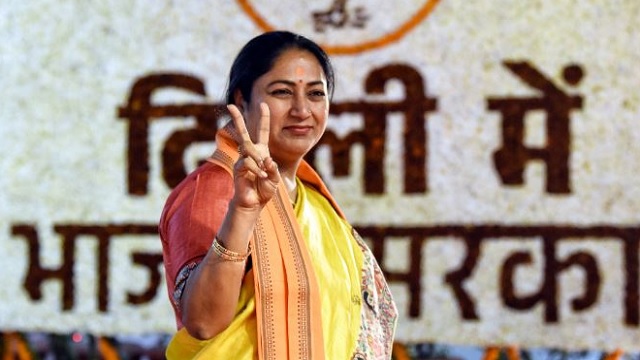
🛡️ Security Implications: Leadership Under Threat
Why It Matters
- Threats to a serving Chief Minister trigger both a political crisis and law-and-order alarm.
- Counterterrorism protocols and VIP security codes were activated post-incident.
Broader Context
- Similar intoxicated threats have been made against high-profile figures such as Arvind Kejriwal, PM Modi, and Manoj Tiwari—revealing a recurrent pattern in control room abuse.
- These repeating incidents highlight a worrying trend of vulnerable security systems being exploited via drunken antics.
🧠 Psychological Profile & Root Causes
Alcohol and Emotional Crisis
- Tripathi reportedly made the threatening call under intoxication, triggered by family disruption.
- Many such threats stem not from political motives, but from emotional instability and social despair.
Mental Health Considerations
- Police must conduct evaluations to determine if Tripathi’s actions were impulsive or part of a deeper psychological issue.
- Factors like marital breakdown, alcohol dependency, and identity confusion could serve as leading triggers.
⚖️ Legal Dimensions & Governance Safeguards
Procedural Response
- Immediate tracing and arrest exemplify efficient coordination between district and city police.
- Evidence collection—from SIM and phone to his statement—lays groundwork for a robust prosecution.
Judicial Path Forward
- Tripathi’s impaired state may factor into legal arguments under IPC 85.
- He is likely to face charges including criminal conspiracy (IPC 120B) and threat by anonymous communications (IPC 507).
- Courts will weigh the severity of threat against his mental and emotional status.
Policy Reforms
- Calls for regulated emergency helpline processes, including caller verification, are mounting.
- CM’s office may undergo complete security infrastructure audits: staff vetting, encrypted communications, and more.
🗣️ Public, Political & Media Reaction
Political Stance
- The BJP emphasized the gravity of the threat and lauded swift police action.
- Delhi’s other parties implicitly condemned the threats while urging balanced fair treatment.
Public Response
- The hashtag #StandWithRekhaGupta gained traction, demanding stricter safeguards and accountability.
- Many raised concerns: “If a CM is threatened, what about safety for ordinary citizens?“
Media Coverage
- Debates on mental health in crimes, abuse of emergency hotlines, and polarization risks were prominent.
- Comparison with prior incidents highlighted systemic gaps in security preparedness.
🧩 Lessons Learned & Next Steps
For Security Forces
- Review and modernization of CM-protection and state-level VIP protocols.
- Enhanced cyber surveillance of social media to detect threats proactively.
- Community-level training to identify potential threats originating from domestic distress.
For Legal Systems
- Balancing justice and compassion in case of intoxicated offenders.
- Preventive mechanisms e.g. call-back verification for anonymous threats.
- Should legislation adjust to completely block intoxicated threats?
For Society
- Greater awareness of the link between alcohol abuse, mental distress, and public safety.
- Community support and mental health assistance for individuals in distress.

✅ Final Takeaways
- Threat to democracy: Intoxicated calls targeting public officials undermine safety and social fabric.
- Swift police action: Arrest and coordination were prompt, but underlying systemic reforms are needed.
- Layered response needed: Legal, psychological, security, and technological solutions must intersect.
- Human aspect matters: The accused’s personal turmoil cannot excuse but contextualizes the act.
- Future outlook: Emergency systems must evolve—through encryption, verification, and partnership.
read more latest news

