
Air Force Relief Operations Continue in Jammu and Punjab Amid Heavy Rains and Floods: Five Mi-17 Helicopters and One Chinook Deployed, Defense Ministry Provides Update
Introduction
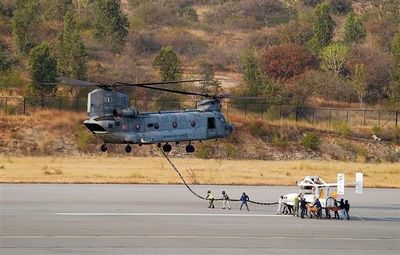
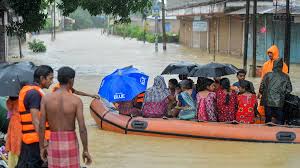
Air Force relief operations continue in Jammu In the last few weeks, Jammu and Punjab have been reeling under the devastating impact of heavy monsoon rains and flash floods. Rivers have overflowed, villages have been inundated, and thousands of people have been forced to flee their homes. In this hour of crisis, the Indian Air Force (IAF) has once again stepped up to demonstrate its commitment to humanitarian relief and national service. According to the Defense Ministry, five Mi-17 helicopters and one Chinook have been deployed to carry out large-scale relief and rescue operations.
The situation has not only highlighted the vulnerability of flood-prone regions in North India but has also underscored the importance of the armed forces, particularly the IAF, in providing timely and effective assistance during natural disasters. This blog takes a comprehensive look at the crisis, the Air Force’s response, and what it means for disaster management in India.
The Flood Situation in Jammu and Punjab
Torrential Rains and Overflowing Rivers
The monsoon this year has brought record rainfall in several parts of North India. Both Jammu and Punjab have witnessed incessant downpours, leading to swollen rivers such as the Ravi, Chenab, and Sutlej. With dams reaching critical levels and embankments collapsing at multiple places, villages, towns, and farmlands have been submerged.
Casualties and Displacement
According to preliminary figures shared by state officials:
- Over 40 people have reportedly lost their lives due to drowning, landslides, and house collapses.
- More than 1.5 lakh people have been directly affected, with thousands seeking shelter in relief camps.
- Agriculture has taken a major hit, as standing crops in Punjab’s fertile fields are submerged under several feet of water.
Infrastructure Damage
Floods have wreaked havoc on infrastructure:
- Roads have been washed away, cutting off dozens of villages.
- Railway tracks in certain sections have been submerged.
- Electricity supply has been disrupted in multiple districts.
- Schools and hospitals are under severe strain, forcing many to shut down temporarily.
Role of the Indian Air Force
When disasters strike, the IAF is often among the first responders. With its ability to quickly mobilize aircraft and helicopters, it becomes a lifeline for remote and inaccessible regions.
Deployment of Aircraft
The Defense Ministry confirmed that:
- Five Mi-17 helicopters are operating in various districts to airlift stranded people, supply essential goods, and conduct aerial surveys.
- One Chinook heavy-lift helicopter has been deployed to transport relief material, medical supplies, and disaster management teams to flood-affected zones.
The Mi-17, known for its versatility, is ideal for rescue missions and supply drops, while the Chinook, with its enormous cargo capacity, has been moving boats, medical equipment, and relief packages to areas cut off by road.
Rescue Missions
IAF pilots and ground teams are conducting:
- Air evacuations of stranded families, particularly from rooftops and isolated islands formed by floodwaters.
- Medical evacuations, shifting critically ill patients from remote areas to hospitals.
- Transport of disaster response teams, including NDRF and SDRF units, to operational sites.
Relief Material Distribution
Essential relief items are being distributed through aerial drops and helicopter landings where feasible. These include:
- Packaged food and water
- Medicines and first-aid kits
- Tarpaulins and tents
- Baby food and sanitary products
Statements from the Defense Ministry
The Ministry of Defense released an official statement appreciating the dedication of IAF personnel. It highlighted that:
- Relief operations will continue “till every stranded civilian is brought to safety.”
- Coordination with local administrations, NDRF, and Army units is ongoing to ensure maximum efficiency.
- Special focus is being given to remote hilly terrains of Jammu and low-lying villages of Punjab, which are hardest to reach.
Stories from the Ground
Human Suffering and Courage
Residents narrated harrowing tales of escaping rising waters at midnight. Many families climbed to rooftops, waving for help as helicopters hovered above. The airlifting of children, elderly, and pregnant women has become a priority.
Soldiers and Civilians Together
In several instances, IAF pilots risked flying in low-visibility conditions to save lives. Videos circulating online show helicopters landing in narrow spaces, with soldiers carrying stranded villagers on their shoulders.
One such account from Kathua district in Jammu tells of a pilot maneuvering a Mi-17 through dense fog to rescue a school bus full of children trapped by floodwaters.
Challenges Faced by the IAF
Conducting flood-relief operations is not without risks.
- Weather Conditions – Heavy rains and strong winds make flying dangerous.
- Visibility Issues – Low clouds and fog limit helicopter landings.
- Communication Gaps – In some cut-off villages, mobile networks have collapsed, making coordination difficult.
- Logistical Strain – Continuous flying puts immense stress on aircraft and crew.
Despite these challenges, the IAF continues to press forward, living up to its motto: Touch the Sky with Glory.
Importance of Air Force in Disaster Relief
India has a long history of relying on the Air Force for humanitarian relief operations:
- Uttarakhand floods (2013): IAF carried out one of the biggest rescue operations in history.
- Kerala floods (2018): Thousands were rescued by helicopters and boats deployed by the armed forces.
- COVID-19 pandemic (2020): The Air Force airlifted critical medical supplies across states.
The current operation in Jammu and Punjab reinforces the IAF’s position as not just a defense force, but also a humanitarian guardian.
Political and Administrative Response
Central Government
Prime Minister Narendra Modi has been briefed about the situation. The central government has assured all possible support to the affected states.
State Governments
- Punjab CM has appealed to farmers to remain patient, promising compensation for lost crops.
- Jammu and Kashmir administration has set up control rooms and relief camps in multiple districts.

Opposition Response
Opposition parties have also been vocal, demanding long-term flood management policies, arguing that yearly floods expose the lack of preparedness.
The Way Forward
Floods are not new to India, but the frequency and intensity are increasing due to climate change. The crisis in Jammu and Punjab is a reminder that:
- Better flood forecasting systems are needed.
- River embankments and dams require regular maintenance.
- Disaster management funds must be used proactively, not reactively.
- Stronger coordination between armed forces, NDRF, and local authorities is essential.
Conclusion
The floods in Jammu and Punjab have once again put thousands of lives at risk, but the rapid and heroic response of the Indian Air Force has been a silver lining in this tragedy. With Mi-17 helicopters and Chinook heavy-lift aircraft tirelessly rescuing people and delivering relief material, the IAF has reaffirmed its role as the nation’s guardian in both war and peace.
While immediate relief is underway, the larger question remains: how can India prepare itself better against recurring flood disasters? Until that is addressed, the country will continue to rely on the courage of its soldiers in uniform—especially those in the sky—every monsoon.
Read more latest news

