

Ravi Kishan Receives Threat: ‘Anti-Sanatan Forces Are Active,’ Says the BJP MP After Bihar Election Campaign
Introduction: The Shockwave of Threats Against a Popular MP
Ravi Kishan has received a threat
The political atmosphere in India has once again turned tense after Bharatiya Janata Party (BJP) MP and Bhojpuri superstar Ravi Kishan revealed that he has received a serious threat from unknown sources. The Gorakhpur MP, known for his strong pro-Hindu and nationalist stance, said in his official statement, “This threat clearly shows how active anti-Sanatan forces have become. We have lodged an FIR and the matter is under investigation.” His words have not only ignited a wave of concern among his supporters but also raised questions about the growing intolerance toward Sanatan Dharma and nationalist voices in Indian politics.
As the Bihar election campaign nears its conclusion, Ravi Kishan’s remarks have taken a political turn, especially as he suggested that the opposition has realized its weakness after witnessing the massive support the BJP has garnered in the state. This blog delves deep into the context of the threat, Ravi Kishan’s political journey, the rise of “anti-Sanatan” narratives, and the larger implications of such incidents on India’s sociopolitical environment.
Ravi Kishan’s Statement: The Voice of Defiance
Ravi Kishan, a cultural icon and MP from Gorakhpur, is not new to controversies or threats. His straightforward speech and fearless articulation of Hindu sentiments have made him both admired and targeted. After receiving the recent threat, he stated, “I have been in public life for long, and I know how some groups operate. But what’s shocking is the growing boldness of anti-Sanatan forces. This is not just about me — this is about India’s culture and identity.”
The actor-turned-politician added that he has complete faith in the law and order system of Uttar Pradesh, but the timing of the threat — immediately after the Bihar election campaign — seems suspicious. “It looks like someone is rattled by our campaign success. The BJP’s message of development and faith has reached the people, and that’s what worries them,” he said.
Who Are the “Anti-Sanatan Forces”? Ravi Kishan’s Message
When Ravi Kishan used the phrase “anti-Sanatan forces,” he referred to elements in society that, according to him, are attempting to distort or malign Hindu traditions under the guise of liberalism or secularism. These groups, he claims, want to weaken the cultural roots of India, which have been safeguarded by Sanatan Dharma for centuries.
The term “Sanatan” — meaning eternal — symbolizes the timeless spiritual essence of India. In Ravi Kishan’s view, attacking Sanatan Dharma is equivalent to attacking India’s identity. He believes that a new form of ideological battle has begun, where certain sections of media and intellectual circles are portraying traditional Hindu values as regressive. His statement resonates deeply with BJP’s ideological line, which emphasizes cultural nationalism and the revival of traditional Indian values.

Bihar Election Campaign and Political Underpinnings
The timing of the threat makes the incident even more politically charged. Ravi Kishan was actively campaigning for the BJP in the Bihar Assembly Elections, where the saffron party is aiming for a major comeback. During rallies, he delivered passionate speeches, appealing to voters on issues of development, employment, and cultural pride.
According to Ravi Kishan, “The opposition has realized that people have rejected their politics of appeasement. They tried dividing society, but the youth of Bihar now understands who truly works for the state’s progress.”
His fiery speeches often highlighted how the BJP represents the new face of Bharat — strong, spiritual, and self-reliant. Political analysts believe that this popularity among the masses might have triggered resentment among rival political groups or extremists who oppose his ideological leanings.
The FIR and Security Concerns
Following the threat, Ravi Kishan’s team filed an FIR at the Gorakhpur police station. Sources reveal that the threat was communicated through an anonymous message, warning him to “stay silent on religious issues.” The police have initiated an investigation, and additional security measures have been provided to the MP.
This is not the first time a BJP leader has faced such intimidation. Over the past few years, several politicians and public figures associated with Hindu organizations have reported receiving threats or being targeted online. These incidents raise an important question — is freedom of expression being selectively tolerated in India today?
Ravi Kishan’s supporters have taken to social media with hashtags like #ISupportRaviKishan and #StandWithSanatan, calling the threat an attack on India’s cultural values.
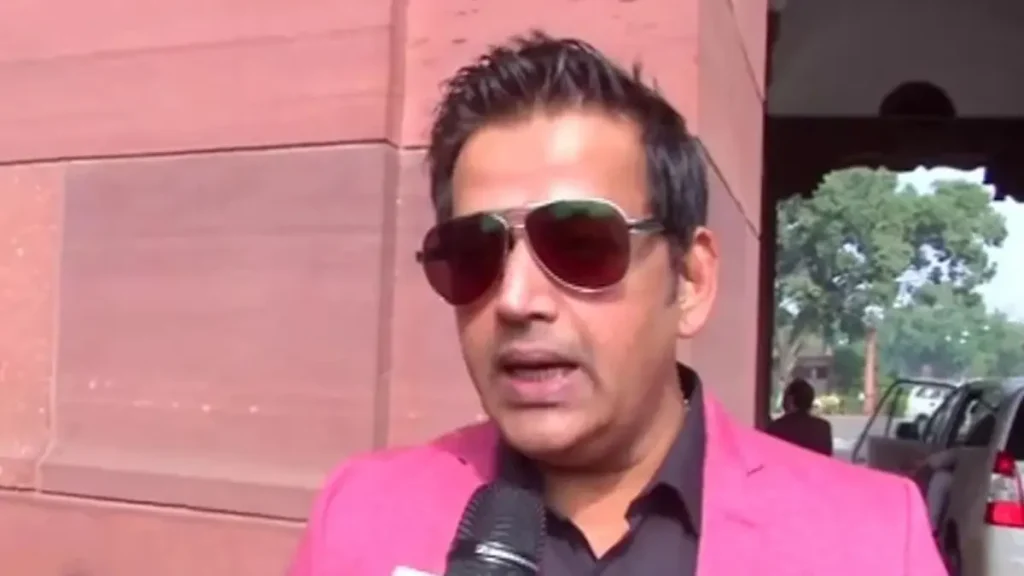
Ravi Kishan’s Journey: From Cinema to Parliament
Ravi Kishan’s journey from a Bhojpuri film superstar to a respected parliamentarian has been remarkable. His on-screen charisma and his off-screen devotion to Sanatan values have made him one of the most recognizable faces of the BJP’s cultural outreach.
Born in Jaunpur, Uttar Pradesh, Ravi Kishan made his Bollywood debut in the 1990s and went on to become a household name in Bhojpuri cinema. His roles often portrayed themes of righteousness, faith, and the triumph of good over evil — a reflection of his real-life beliefs.
After joining the BJP, he quickly emerged as a strong cultural voice. His speeches in the Lok Sabha often highlight the importance of Sanskrit, Vedas, and cultural pride. When asked why he speaks so openly about Hindu values, he once said, “If I don’t speak about Sanatan Dharma, then who will? It is not religion, it is civilization itself.”
The Broader Message: Freedom of Faith and Expression
Ravi Kishan’s case reignites a debate about the balance between freedom of expression and religious sensitivity. Supporters argue that calling out “anti-Sanatan” activities is not intolerance but a defense of cultural integrity. Critics, however, claim that such rhetoric may polarize communities.
Regardless of political views, the incident reflects an alarming trend: political leaders receiving threats for expressing their faith-based beliefs. Whether one supports BJP or not, such acts threaten democratic dialogue itself.
India’s democracy allows diversity of opinion — but threats, violence, and intimidation have no place in that diversity. The real test lies in ensuring that no voice — be it liberal or traditional — is silenced through fear.
Public Reaction: Social Media Storm
The news of Ravi Kishan’s threat has sparked massive reactions across social media. Thousands of users expressed their support, tagging the Ministry of Home Affairs and Uttar Pradesh Police to ensure swift action. Hashtags like #RaviKishanThreatCase, #AntiSanatanForces, and #ProtectSanatanVoice trended for hours on X (formerly Twitter).
Celebrities, Bhojpuri film artists, and fellow MPs also voiced concern. Actor Manoj Tiwari tweeted, “Ravi Bhai is not just a leader; he is a symbol of faith for crores. Any attempt to threaten him is a threat to our culture.”
Political observers believe that such solidarity sends a strong message that Sanatan values are deeply rooted in the Indian psyche, and attempts to intimidate their supporters will not succeed.
The Role of Opposition and Political Speculation
Ravi Kishan’s statement — “After the Bihar election campaign, the opposition has realized this” — is seen as a direct jab at opposition parties. Many interpret his words to mean that the opposition is panicking after sensing BJP’s growing strength in Bihar.
While opposition leaders have refrained from commenting directly on the threat, some have criticized the BJP for “politicizing” the issue. However, political experts note that the BJP’s narrative of cultural nationalism often resonates deeply with rural voters, especially in states like Uttar Pradesh and Bihar.
The emergence of religious identity as a political force is a defining feature of Indian politics today. And leaders like Ravi Kishan, who combine entertainment appeal with ideological conviction, are shaping that narrative powerfully.
Conclusion: The Road Ahead
Ravi Kishan’s courage in the face of threats is symbolic of a larger ideological struggle in India — the conflict between preserving traditional identity and adapting to modern pluralism. His statement on the rise of “anti-Sanatan forces” may sound political, but it also reflects genuine concern about the erosion of India’s cultural confidence.
At the same time, law enforcement must ensure that the matter is investigated thoroughly and that such threats are not normalized. Political differences are inevitable, but they must never lead to violence or intimidation.
In a democracy like India, faith and freedom can and must coexist. Ravi Kishan’s ordeal serves as a reminder that safeguarding both is essential to preserving the true spirit of Bharat.
Read more latest news

