
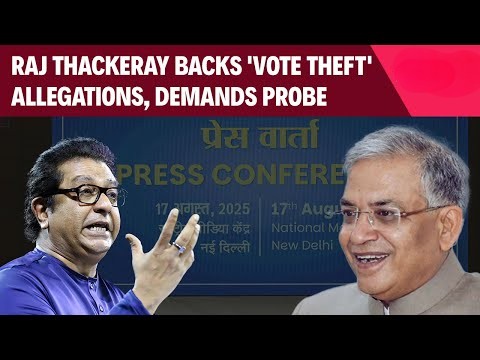
Now What Did Raj Thackeray Say About ‘Vote Theft’? – A Deep Dive into the MNS Chief’s Explosive Statement on Electoral Integrity.
Introduction
Raj Thackeray Say About ‘Vote Theft’? Indian politics is a battlefield of words, strategies, and perceptions. Every election season brings its share of allegations, counter-allegations, and fiery speeches that shape the narrative. Among the voices that stand out for their sharp, uncompromising, and often controversial statements is that of Maharashtra Navnirman Sena (MNS) chief Raj Thackeray. Known for his oratory skills and blunt opinions, Raj Thackeray has once again sparked a heated debate with his remarks about ‘vote theft’ in Indian elections.
His statement touches on one of the most sensitive issues in democracy – the credibility of elections. For decades, allegations of vote rigging, misuse of electoral machinery, and manipulation of voter lists have been raised in India. In recent years, the introduction of Electronic Voting Machines (EVMs) has further intensified the debate, with opposition leaders frequently questioning whether the sanctity of votes is being compromised.
Raj Thackeray’s comments are not just a routine political barb but a serious allegation that resonates with a long-standing concern about electoral fairness. In this blog, we will explore in detail what Raj Thackeray said about vote theft, the political context behind his remarks, the reactions it generated, historical parallels, and what it means for Indian democracy.
Raj Thackeray’s Explosive Remarks on ‘Vote Theft’
During a recent public address, Raj Thackeray took aim at the electoral process, raising serious questions about how votes are being cast, counted, and possibly manipulated. He emphasized that “votes are being stolen in broad daylight, but the system turns a blind eye”.
His statement implied that elections are not always fought fairly on the ground but are instead influenced by invisible forces that tamper with the mandate of the people. Raj Thackeray warned that democracy is weakened when voters lose trust in the fairness of the electoral system.
He is believed to have pointed out three critical concerns:
- Electronic Voting Machine (EVM) Manipulation – Raj Thackeray expressed skepticism about the reliability of EVMs, claiming that “votes cast for one candidate are being credited to another.”
- Bogus Voting and Voter List Issues – He highlighted irregularities in voter lists, alleging that ghost voters and deliberate deletions of opposition supporters’ names were part of a larger conspiracy.
- Institutional Bias – According to him, certain state institutions, which are supposed to remain neutral, are “deliberately favoring the ruling establishment,” creating an uneven playing field.
By framing his criticism in terms of vote theft, Raj Thackeray tapped into a growing unease that many opposition parties have voiced over the years.
Why This Statement Matters
Raj Thackeray is not just another politician making a casual remark. His words carry weight because:
- He belongs to Maharashtra, one of India’s most politically influential states.
- MNS has a history of shaping debates even without electoral dominance.
- His sharp criticism resonates with urban voters, particularly the youth, who often feel disillusioned with politics.
Moreover, his remarks on vote theft align with the concerns raised by other opposition leaders like Rahul Gandhi, Mamata Banerjee, and Arvind Kejriwal, who have also questioned EVMs and the electoral process. This creates a united opposition narrative that could prove significant in future elections.
Political Context Behind Raj Thackeray’s Statement
To understand why Raj Thackeray made such a strong statement, we need to look at the broader political landscape of Maharashtra and India.
- Upcoming Elections – With both state and national elections approaching, political leaders are positioning themselves as defenders of democracy. By raising the issue of vote theft, Raj Thackeray is appealing to voters who already harbor doubts about the fairness of elections.
- MNS’s Political Strategy – The MNS has been struggling to regain its lost ground in Maharashtra. By championing an issue as sensitive as electoral integrity, Raj Thackeray seeks to regain relevance and mobilize support.
- Growing Public Distrust – In recent years, news reports of malfunctioning EVMs, missing names on voter lists, and unusually high voting percentages in some constituencies have fueled suspicion. Raj Thackeray’s remarks tap into this widespread distrust.
- Targeting Rivals – His comments are also a subtle attack on both the ruling BJP and Shiv Sena factions, implying that their electoral victories are not purely a result of popular support but possibly aided by manipulation.
Historical Background of ‘Vote Theft’ in India
Allegations of vote theft are not new in Indian politics. Let’s briefly revisit the history:
- 1950s–70s: In the early decades after independence, allegations centered around booth capturing and voter intimidation. Muscle power often played a decisive role.
- 1980s–90s: As political competition intensified, bogus voting became a widespread issue. Cases of voter list manipulation were frequently reported.
- 2000s onwards: With the introduction of EVMs, the focus shifted from physical booth capturing to technological manipulation. Opposition parties began questioning whether machines could be hacked or tampered with.
Raj Thackeray’s comments are the latest chapter in this long saga, showing that despite decades of reforms, concerns about fair elections remain deeply rooted.
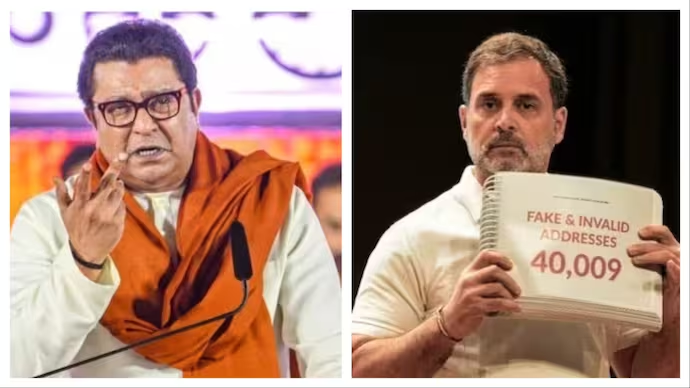
Reactions to Raj Thackeray’s Statement
Opposition Reactions
Several opposition leaders welcomed Raj Thackeray’s remarks, arguing that his words reflect the reality of Indian elections. Some even suggested that it is time for a return to ballot papers, echoing his concern over EVMs.
Ruling Party’s Response
The ruling parties dismissed his comments as “baseless and irresponsible.” They argued that EVMs have been proven secure, and allegations of vote theft are nothing but excuses made by losing parties.
Public Opinion
On social media, Raj Thackeray’s statement sparked widespread debate. While many expressed agreement and cited their personal experiences of missing names or suspicious voting patterns, others criticized him for eroding trust in institutions without evidence.
Electoral Commission and the Question of Neutrality
One of the key targets of Raj Thackeray’s criticism was the Election Commission of India (ECI). He accused the ECI of failing to act against malpractice and hinted at institutional bias.
The ECI, however, has consistently defended its integrity, claiming that EVMs are tamper-proof and that robust mechanisms exist to ensure fair elections. Still, the gap between the official narrative and the public perception seems to be widening, which is exactly what Raj Thackeray highlighted.
Implications of Raj Thackeray’s Allegations
Raj Thackeray’s statement could have far-reaching consequences:
- Political Mobilization – By championing the issue of vote theft, MNS may energize its voter base and appeal to disillusioned citizens.
- Electoral Reforms Debate – His remarks could reignite discussions on returning to ballot papers, introducing blockchain technology, or making VVPAT (Voter Verified Paper Audit Trail) mandatory for all votes.
- Pressure on Election Commission – As more leaders raise concerns, the ECI may face pressure to introduce more transparency measures.
- Polarization of Debate – Supporters and opponents of EVMs may become sharply divided, making electoral integrity a major election issue in 2026 and beyond.
Comparative Analysis: Global Concerns on Election Integrity
Raj Thackeray’s concerns are not unique to India. Across the world, allegations of vote theft and electoral manipulation have shaken democracies:
- United States (2020): Former President Donald Trump claimed the election was stolen, sparking nationwide protests.
- Pakistan: Elections are often marred by allegations of rigging and institutional bias.
- Africa: In countries like Kenya and Zimbabwe, disputes over election results have led to violence.
This global trend shows that election credibility is a universal issue, and Raj Thackeray is tapping into a wider narrative.
Raj Thackeray’s Strategy – Populism or Genuine Concern?
Critics argue that Raj Thackeray’s remarks are merely political theater designed to stay relevant. However, supporters insist that his bluntness represents a genuine concern for democracy.
His strategy seems twofold:
- Position MNS as the voice of electoral fairness.
- Target rivals by casting doubt on their victories.
Whether this strategy succeeds will depend on how strongly the public resonates with his message.
Possible Solutions to the ‘Vote Theft’ Debate
If Raj Thackeray’s concerns are to be addressed seriously, some measures could include:
- 100% VVPAT Verification – Every vote cast should be verified through a paper trail.
- Biometric Voter Authentication – Prevent bogus voting by linking biometrics with voter ID.
- Greater Transparency in EVM Testing – Allow independent observers and tech experts to audit machines.
- Public Awareness Campaigns – Build trust by educating voters about safeguards.
Conclusion
Raj Thackeray’s explosive statement on ‘vote theft’ is more than just political rhetoric. It has reopened a debate that lies at the heart of Indian democracy – can citizens truly trust that their vote counts?
Whether one agrees with him or not, his words resonate with millions of voters who feel disenfranchised or suspicious of the system. The coming months will reveal whether his statement was a political gamble to regain relevance or the start of a larger movement demanding electoral reforms.
One thing is certain – by raising the issue of vote theft, Raj Thackeray has ensured that election integrity will be a central talking point in Indian politics for years to come.
Read more latest news

