

Rahul Gandhi‘s Outburst Over Manmohan Singh’s Cremation: A Reflection on Governance and Legacy
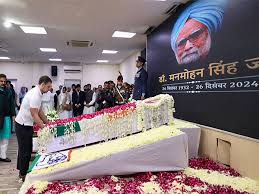
Rahul Gandhi, a prominent leader of the Indian National Congress, has often been vocal about his criticisms of the ruling government. However, his recent statement regarding the treatment of former Prime Minister Dr. Manmohan Singh’s cremation has struck a particularly emotional chord. Calling the proceedings a “total insult” by the current government, Gandhi has reignited a debate on how political differences should be set aside when it comes to respecting national leaders.
This blog delves into Rahul Gandhi’s accusations, the larger political context surrounding the issue, and the legacy of Dr. Manmohan Singh—one of India’s most respected statesmen.
Rahul Gandhi’s Statement: An Emotional Outburst or a Political Charge?
At a recent public gathering, Rahul Gandhi expressed his displeasure over what he described as the “disrespectful treatment” of Dr. Singh by the present administration during his cremation. Gandhi remarked,
“Dr. Manmohan Singh dedicated his life to the nation. His contributions to India’s economic reforms are unparalleled. Yet, his cremation was conducted without the dignity and honor he deserved. This is not just an insult to a former Prime Minister but to the very democratic values we hold dear.”
Key Issues Highlighted by Gandhi:
- Lack of State Funeral Honors: Rahul Gandhi criticized the government for allegedly not according Dr. Singh the ceremonial state funeral usually reserved for leaders of his stature.
- Absence of High-Level Representation: He pointed out the absence of senior members of the ruling party at the funeral, calling it a deliberate political slight.
- Partisan Politics: Gandhi accused the government of letting political differences overshadow the respect owed to a leader who served as India’s Prime Minister for a decade.
The Political Context
Dr. Manmohan Singh’s Tenure and Contributions
Dr. Manmohan Singh served as India’s Prime Minister from 2004 to 2014, leading two consecutive United Progressive Alliance (UPA) governments. Known for his soft-spoken demeanor and scholarly acumen, Singh played a pivotal role in shaping modern India’s economy.
- Economic Reforms: As Finance Minister in 1991, Singh spearheaded India’s liberalization, opening the economy to global markets.
- Social Welfare Programs: Under his Prime Ministership, landmark initiatives like the Mahatma Gandhi National Rural Employment Guarantee Act (MGNREGA) and the Right to Education Act were implemented.
Ruling Government’s Stance
While the current administration under Prime Minister Narendra Modi has often acknowledged Dr. Singh’s contributions, their political rivalry with the Congress party has sometimes overshadowed these gestures.
- Perceived Marginalization: Critics argue that Dr. Singh was sidelined in discussions about his legacy due to his association with the Congress.
- Political Polarization: The BJP and Congress have frequently clashed over historical narratives and the contributions of their respective leaders, creating an environment where bipartisan respect is often lacking.
Ceremonial Protocols: What Should Have Been Done?
A state funeral for a former Prime Minister typically includes:
- Full Military Honors: Gun salutes, the draping of the national flag over the coffin, and ceremonial processions.
- Representation from All Parties: Senior leaders from across the political spectrum are expected to attend as a mark of respect.
- Public Mourning: A day of mourning is declared, and the national flag is flown at half-mast.
Allegations of Shortcomings
Rahul Gandhi’s criticism centers on the belief that these protocols were either inadequately followed or deliberately downplayed.
Public Reaction
The Indian public has expressed mixed reactions to Rahul Gandhi’s statement:
- Supporters of Gandhi: Many Congress supporters echoed his sentiments, emphasizing the need for bipartisan respect.
- Critics of Gandhi: Some dismissed his remarks as politically motivated, arguing that Dr. Singh’s legacy should not be politicized.
- Neutral Observers: A section of the public expressed disappointment in the political establishment as a whole for failing to rise above partisan divides.
The Legacy of Dr. Manmohan Singh: Beyond Politics
Dr. Manmohan Singh’s contributions to India go far beyond his political affiliations:
- Architect of Economic Reforms: His role in transforming India from a closed economy to a global powerhouse is widely acknowledged.
- Ethical Leadership: Despite criticisms of being a “silent Prime Minister,” Singh was respected for his integrity and commitment to governance.
- Global Recognition: Leaders across the world have lauded his vision and intellect, with figures like Barack Obama and Joe Biden recalling their admiration for his leadership.
Why Honoring Leaders Matters
The treatment of national leaders, especially those who have served in the highest offices, sets a precedent for political decorum and national unity.
- Symbol of National Respect: Acknowledging their contributions transcends party lines and reinforces democratic values.
- Building Historical Narratives: The way leaders are remembered shapes future generations’ understanding of the nation’s journey.
Bipartisan Respect: The Need of the Hour
Rahul Gandhi’s statement underscores a larger issue in Indian politics—the increasing inability of parties to show respect across the aisle.
- Learning from Global Democracies: In the United States, former presidents are often honored irrespective of their party affiliations, reflecting the maturity of its political culture.
- Calls for Reform: There is a growing demand for institutionalizing protocols to honor leaders, ensuring consistency irrespective of the ruling party.
Conclusion
Rahul Gandhi’s criticism of the government’s handling of Dr. Manmohan Singh’s cremation brings to light an important debate about how India honors its leaders. While the specifics of his allegations remain contentious, the broader message is clear: political rivalries should never undermine the respect owed to those who have dedicated their lives to serving the nation.
Dr. Manmohan Singh’s legacy is a testament to the power of humility, intellect, and perseverance in leadership. As India reflects on his contributions, it must also strive to uphold the dignity of its democratic traditions, ensuring that leaders are remembered not for their affiliations but for their service to the nation.
Read more Latest News

