
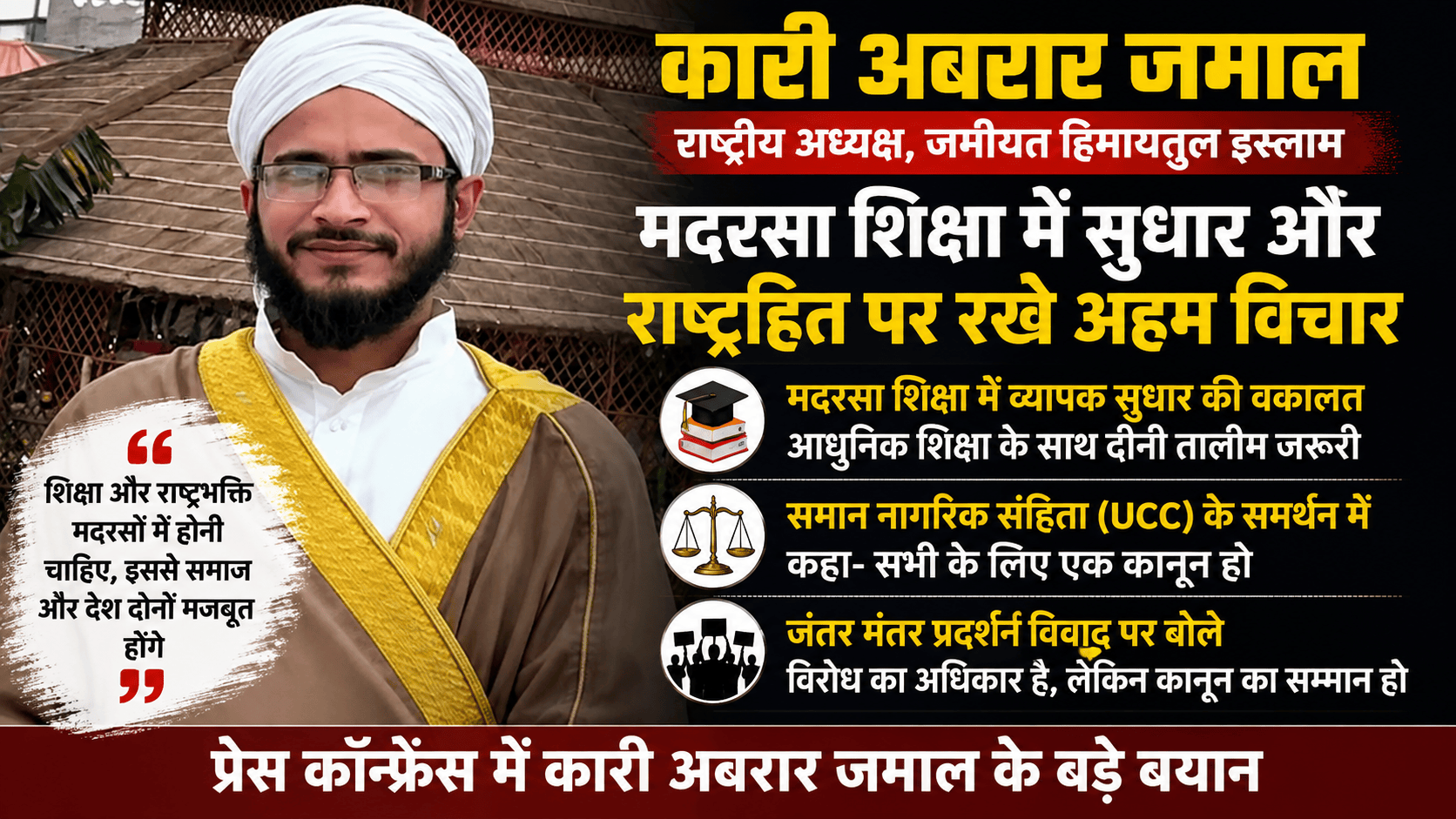
Qari Abrar Jamal National President Calls for Madrasa Education Reforms, Supports Nationwide UCC Implementation
Qari Abrar Jamal National President Addresses Key National Issues
Qari Abrar Jamal National President of Jamiat Himayatul Islam addressed a press conference where he shared his views on several important national issues, including comprehensive reforms in Madrasa education, the implementation of the Uniform Civil Code (UCC) across India, and the controversy surrounding the Jantar Mantar protest. During the interaction with the media, he emphasized that modern education, national values, and social harmony should become integral parts of the country’s Madrasa education system.
The remarks made by Qari Abrar Jamal National President have generated discussions among education experts, religious scholars, and political observers. His statements reflect an approach that seeks to combine religious education with contemporary learning and civic responsibility while encouraging dialogue on national issues.
Focus on Comprehensive Madrasa Education Reforms
A major highlight of the press conference was the emphasis placed by Qari Abrar Jamal National President on reforming Madrasa education. He stated that Madrasas have historically contributed to religious education but must also evolve to meet the demands of the modern era.
According to him, students studying in Madrasas should receive quality education in science, mathematics, technology, languages, and social sciences alongside Islamic studies. He argued that such reforms would enable students to compete successfully in higher education and professional careers.
He further said that education should prepare students not only for religious responsibilities but also for active participation in the country’s development. In his view, balanced education would strengthen both individual growth and national progress.
Nationalist Outlook Should Be Encouraged
During the press conference, Qari Abrar Jamal National President stressed that every educational institution should promote a sense of patriotism and constitutional values. He said that Madrasas should encourage students to understand India’s democratic system, constitutional principles, and responsibilities as citizens.
According to him, developing a nationalist outlook does not conflict with religious education. Instead, he maintained that both can complement each other by encouraging responsible citizenship, unity, and respect for the country’s diversity.
He added that education should help students contribute positively to society while maintaining their religious identity and moral values.
Support for Uniform Civil Code
One of the most notable statements made by Qari Abrar Jamal National President was his support for the implementation of the Uniform Civil Code throughout the country.
He stated that if the UCC is implemented fairly and equally for every citizen while respecting constitutional safeguards, it could contribute to legal uniformity and equal treatment. He emphasized that discussions on such an important issue should remain peaceful, democratic, and based on constitutional principles.
His comments are significant because debates surrounding the Uniform Civil Code continue to generate differing opinions among political parties, religious organizations, legal experts, and civil society groups.

Appeal for Dialogue and Constitutional Process
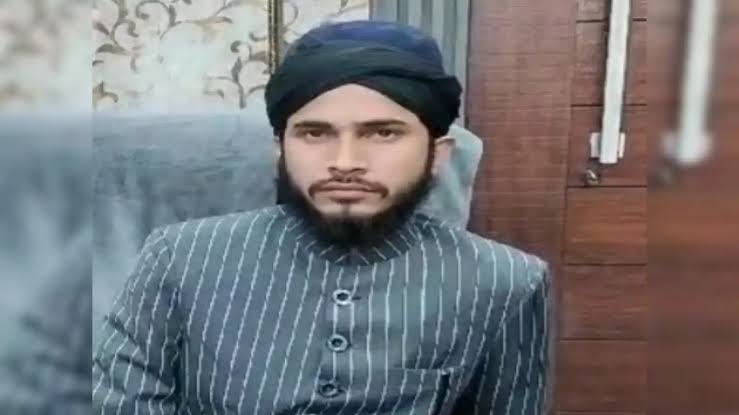
While expressing support for the Uniform Civil Code, Qari Abrar Jamal National President also appealed for dialogue among all stakeholders. He said that any major legal reform should involve consultation with religious scholars, constitutional experts, community representatives, and policymakers.
He suggested that transparent discussions would help address concerns and build greater public confidence in any proposed legal changes.
According to him, constructive dialogue remains essential for maintaining social harmony and democratic values.
Remarks on the Jantar Mantar Protest Controversy
During the press conference, Qari Abrar Jamal National President also commented on the controversy surrounding the Jantar Mantar protest.
He stated that every citizen has the constitutional right to express opinions peacefully, but protests should remain within the framework of the law. He emphasized that maintaining public order and respecting democratic institutions are equally important.
He appealed to all groups to avoid actions or statements that could increase social tensions and instead promote peaceful communication and mutual understanding.
Education as the Foundation of National Development
According to Qari Abrar Jamal National President, education remains one of the strongest tools for nation-building. He argued that modern educational reforms can help students become skilled professionals, responsible citizens, and informed members of society.
He encouraged educational institutions to adopt updated teaching methods, improve infrastructure, introduce digital learning opportunities, and provide career guidance for students pursuing higher education.
He also highlighted the importance of teacher training and curriculum development to ensure quality education across institutions.
Reactions to the Statements
The press conference has drawn attention from different sections of society. Supporters believe that the emphasis on educational reforms and skill development could help students access broader career opportunities.
Meanwhile, discussions regarding the Uniform Civil Code continue among legal experts, political leaders, and various community organizations. As with previous debates on the issue, differing viewpoints are expected to shape future public discourse.
Observers note that proposals related to education reforms often receive wider acceptance when they focus on improving academic quality and expanding employment opportunities.
Importance of Modernizing Religious Education
Education experts have long argued that combining traditional religious instruction with modern academic subjects can help students adapt to changing economic and technological environments.
The views expressed by Qari Abrar Jamal National President align with broader conversations about updating educational institutions while preserving cultural and religious traditions.
Many educationists believe that integrating digital literacy, vocational skills, and competitive examination preparation can increase opportunities for Madrasa students without compromising their religious education.

Constitutional Values and Social Harmony
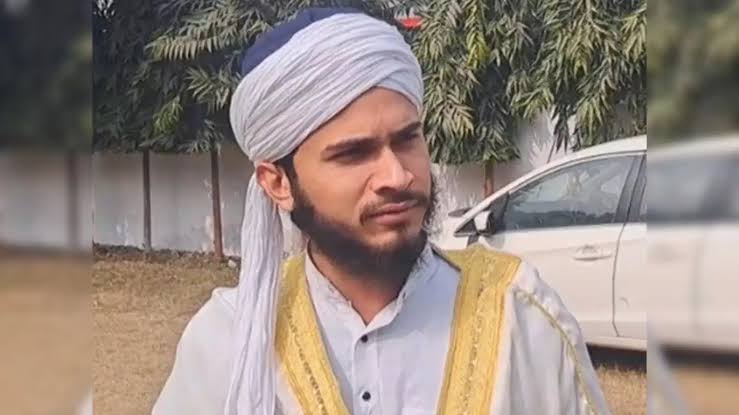
Throughout the press conference, Qari Abrar Jamal National President repeatedly emphasized the importance of constitutional values, peaceful coexistence, and national unity.
He said that educational institutions should teach students respect for the Constitution, democratic processes, and the rule of law. According to him, these values can strengthen social harmony while encouraging responsible citizenship.
He also appealed to citizens to engage in discussions on sensitive national issues through peaceful and democratic means.
Conclusion
The press conference by Qari Abrar Jamal National President focused on three major themes: comprehensive reforms in Madrasa education, support for nationwide implementation of the Uniform Civil Code, and comments regarding the Jantar Mantar protest controversy.
His emphasis on combining religious education with modern academic learning, promoting constitutional values, and encouraging dialogue on national issues has contributed to ongoing public discussions. While opinions on the Uniform Civil Code and educational reforms continue to differ across society, the debate highlights the importance of consultation, legal processes, and constructive engagement.
As conversations surrounding education reform and legal policy continue, stakeholders from government, educational institutions, religious organizations, and civil society are expected to remain actively involved in shaping future developments.
Read more latest news

