
Three Reasons Why Punjab Removed Farmers From Protest Sites After Over A Year
In the early months of 2020, a movement that shook India and attracted global attention began to form at the borders of the capital, Delhi. Farmers, primarily from Punjab, Haryana, and Uttar Pradesh, gathered to protest against three contentious farm laws that they feared would undermine their livelihoods and the agricultural system as a whole. The protests, which turned into a battle for the future of India’s farming community, saw the involvement of millions of farmers, with Punjab emerging as the epicenter of this widespread mobilization.
For over a year, the farmers camped at the borders of Delhi, facing immense challenges – both physical and emotional. The protest sites became symbols of resilience, as farmers persisted despite the harsh winter, summer heat, and the COVID-19 pandemic. However, in early 2022, the situation changed when the Punjab state government, led by Chief Minister Bhagwant Mann, decided to remove the farmers from the protest sites. This decision was met with mixed reactions, sparking debates about the motivations behind it. In this blog, we will examine three primary reasons why Punjab’s government decided to clear these protest sites after more than a year of intense activism.
1. Political Shift and Change in Government Leadership
One of the most significant factors behind the removal of farmers from the protest sites was the shift in Punjab’s political landscape. In March 2022, the Aam Aadmi Party (AAP) emerged victorious in the Punjab Assembly elections, bringing Bhagwant Mann to power as the Chief Minister. This marked a significant change from the previous Congress government, which had a more nuanced stance on the farm laws and had somewhat aligned itself with the farmers’ cause.
The AAP’s rise in Punjab was largely built on promises of improving governance, reducing corruption, and addressing issues like unemployment and farming distress. While the AAP had been supportive of the farmers’ protests during the run-up to the elections, the party faced the challenge of balancing its stance as a political party in power and its commitments to the people.
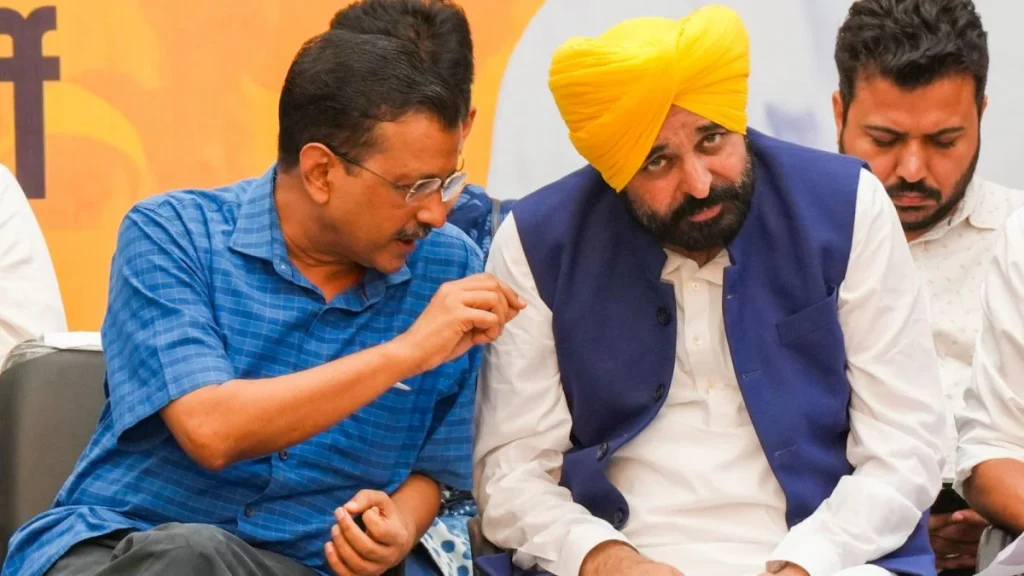
After taking charge, the AAP government quickly shifted its focus from merely supporting the farmers’ protests to managing the practical aspects of governance. One of the key issues was the growing economic and social strain that the protests were causing in the state. The presence of thousands of farmers on protest sites had led to disruptions in transport, business, and daily life. These disruptions were not only affecting the economy but also creating significant pressure on local governance, particularly in urban areas.
Bhagwant Mann’s government, which had promised to improve infrastructure and ease the lives of ordinary Punjabis, found itself in a delicate position. The prolonged protests, although popular with a significant section of the population, were beginning to interfere with the functioning of state services. As a result, the new government decided that the best course of action was to remove the farmers from the protest sites in order to restore normalcy and ensure that the state could function smoothly.
The shift in the political dynamics also meant that the farmers’ demands were no longer the central issue for the Punjab government. The AAP had to prioritize the administrative and economic challenges of managing the state, which, in their view, required clearing the protest sites.
2. The Resolution of the Farm Laws Issue
The central issue behind the protests, the three controversial farm laws, was officially resolved by the Indian government in late 2021. On November 19, 2021, Prime Minister Narendra Modi announced the decision to repeal the three farm laws that had sparked the protests. This move came after intense pressure from farmers, widespread support from various political parties, and the growing cost of maintaining the protest on the national level. While the repeal of the laws was a significant victory for the farmers, the process did not immediately lead to the end of the protests, especially in Punjab.
Farmers from Punjab, Haryana, and Uttar Pradesh had been calling for the repeal of these laws, which they believed would lead to the corporatization of agriculture and diminish the MSP (Minimum Support Price) system that guaranteed a safety net for their produce. The government’s announcement of the repeal of these laws marked a major political and social victory, but it did not instantly end the protests.
The farmers in Punjab, who had been leading the charge against the laws, were determined not to vacate the protest sites until they had guarantees about the future of their agricultural rights. The central government’s repeal of the laws was seen as an essential first step, but many farmers wanted further assurances on the MSP system, market reforms, and legal protections for their livelihoods.
By early 2022, the national conversation on the farm laws had largely shifted. The farmers had made their point, the government had repealed the laws, and the issue was no longer seen as a central political battleground. The Punjab government, which had initially been supportive of the protests, now found itself facing pressure to move beyond the issue and to deal with the local realities of governance.
The removal of the protest sites after the repeal of the laws was thus seen as the natural conclusion to a protest that had already achieved its most significant goal. The farmers, having succeeded in their primary demand, had little to gain by continuing their presence at the borders of Delhi. For the Punjab government, this was an opportunity to reassert control over the situation, restore normalcy, and move forward with its development agenda.
3. Social and Economic Strain on Punjab
The continued presence of farmers at the protest sites began to have significant social and economic consequences for Punjab. As time passed, the protests not only involved large numbers of farmers but also their families, making the protest sites sprawling temporary settlements. The farmers and their supporters had set up langars (community kitchens), makeshift shelters, and various support systems. The protests were an immense logistical effort, and maintaining them was becoming increasingly difficult as the months dragged on.
For Punjab, this meant significant economic and infrastructural challenges. The protests were centered around critical highways and arterial roads that connected Delhi to various parts of the country. This created severe disruptions in transportation and logistics, affecting trade, agriculture, and daily commuting. Many businesses in the region, particularly those dependent on the free flow of goods, were hit hard by the constant blockages and disruptions caused by the farmers’ presence.
Punjab is a state where agriculture is the backbone of the economy, and the state government was under growing pressure to ensure that businesses, markets, and essential services could operate smoothly. The protests had already disrupted trade with neighboring states, slowed down industrial production, and delayed the transportation of perishable goods like vegetables and dairy.
Moreover, the longer the protests continued, the more difficult it became for the Punjab government to maintain law and order and provide essential services to the people. The state had to allocate resources to managing the protests, which were taking place on a massive scale. The prolonged occupation of key highways and roads also led to severe traffic congestion, impacting daily life in cities like Amritsar and Ludhiana.
For the people of Punjab, the economic strain was becoming evident. There was a growing sense of frustration, as many believed that the protests were no longer serving their original purpose and were now becoming an obstacle to the state’s recovery and growth. As the government of Punjab tried to restore stability, it faced calls from both local businesses and citizens to remove the farmers from the protest sites.
As a result, the Punjab government’s decision to clear the protest sites was seen as a necessary step to restore normal life, economic activity, and governance. The social and economic strain on the state’s infrastructure, businesses, and agricultural operations was no longer sustainable, and removing the protesters was seen as a way to alleviate these challenges.
Conclusion
The decision by the Punjab government to remove farmers from protest sites after more than a year of intense activism was influenced by multiple factors, including a political shift in the state, the resolution of the farm laws issue, and the growing social and economic strain caused by the protests. While the farmers had succeeded in achieving their primary objective – the repeal of the farm laws – the prolonged protests had begun to take a toll on the state and its people.
For the farmers, the removal from the protest sites marked the end of a long and arduous battle that had tested their patience, resilience, and unity. For the Punjab government, it was a decision that balanced the need for political stability, economic recovery, and social peace in a state that had long been a key player in India’s agricultural landscape.
As the dust settled, the focus shifted toward addressing the lingering concerns of the farmers and the challenges facing Punjab’s agricultural future. While the protests may have ended, the larger issue of agricultural reform, fair pricing, and farmer welfare remains a topic of critical importance for both the state and the country as a whole.
read more latest news