
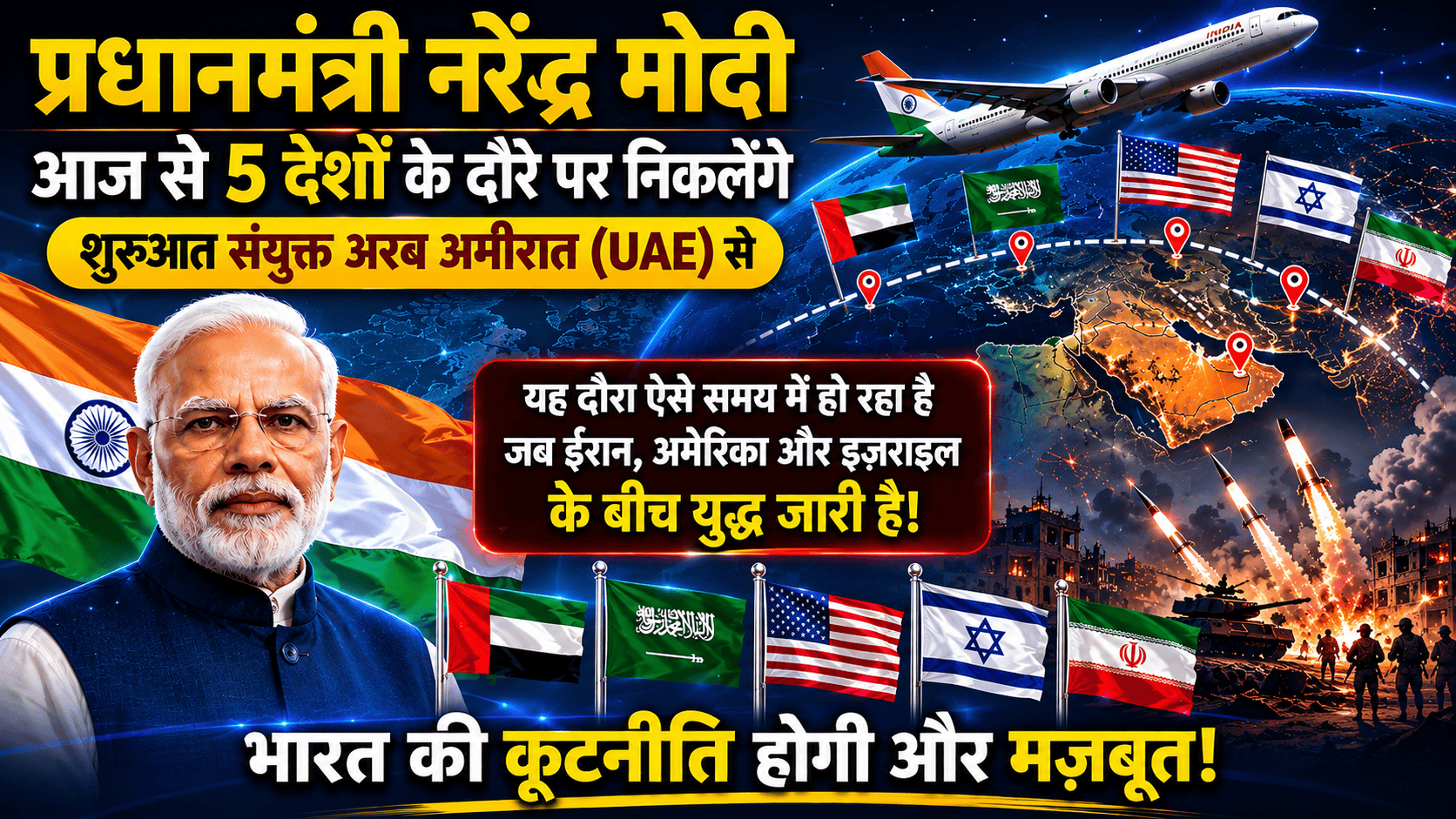
PM Narendra Modi Start a Tour: Strategic Five-Nation Visit Begins Amid Global Tensions
PM Narendra Modi start a tour covering five important nations, beginning with the United Arab Emirates (UAE), while the Middle East faces rising tensions involving Iran, the United States, and Israel. Indian Prime Minister Narendra Modi has begun a major diplomatic journey at a time when global politics is witnessing one of its most sensitive phases in recent years.
This international outreach is being viewed as a critical diplomatic mission aimed at strengthening India’s strategic interests, securing energy cooperation, boosting trade relations, and reinforcing India’s position on the global stage. The five-nation tour includes visits to the UAE, the Netherlands, Sweden, Norway, and Italy.
The phrase PM Narendra Modi start a tour has become one of the most discussed topics in global political and economic circles because the visit comes during a period of geopolitical uncertainty and economic pressure caused by rising oil prices and instability in West Asia.
Why PM Narendra Modi Start a Tour at This Critical Time?
The timing of this diplomatic mission is extremely important. Global energy markets are under pressure due to the ongoing conflict involving Iran, Israel, and the United States. Oil prices have surged, creating economic concerns for countries heavily dependent on imported energy, including India.
India imports a major portion of its crude oil requirements, and any instability in the Middle East directly impacts the Indian economy. Because of this, PM Narendra Modi start a tour focused heavily on energy security, economic cooperation, and diplomatic balance.
Experts believe the Prime Minister’s visit aims to achieve multiple goals:
- Secure stable oil and gas supplies
- Strengthen India’s strategic partnerships
- Expand trade and investment opportunities
- Deepen defense cooperation
- Promote technology and innovation partnerships
- Maintain diplomatic balance amid global conflicts

UAE: The First Destination of the Tour
The United Arab Emirates is the first and perhaps most significant stop of the visit. India and the UAE share a strong economic and strategic partnership. The UAE is among India’s top energy suppliers and one of its biggest trading partners.
During the visit, Narendra Modi is expected to meet UAE President Sheikh Mohamed bin Zayed Al Nahyan to discuss energy cooperation, trade expansion, regional security, and investment opportunities.
Analysts say PM Narendra Modi start a tour with the UAE because the Gulf nation plays a crucial role in India’s energy security strategy. Reports indicate that India and the UAE may sign agreements related to LPG supplies and strategic petroleum reserves.
The visit is also important because the UAE has emerged as a major geopolitical player in West Asia. India’s relationship with the UAE has grown significantly over the last decade, covering trade, defense, fintech, renewable energy, and infrastructure.
Energy Security Becomes the Core Focus
One of the biggest reasons PM Narendra Modi start a tour is India’s concern over rising oil prices. The Middle East crisis has increased fears of supply disruptions, causing volatility in international energy markets.
India, being the world’s third-largest oil importer, faces serious economic risks if crude prices continue to rise. Higher oil prices can increase inflation, weaken the rupee, and impact economic growth.
Sources suggest that India is looking to secure long-term crude oil and LNG supply agreements with the UAE. The country is also expanding its strategic petroleum reserves to protect itself against future disruptions.
This explains why PM Narendra Modi start a tour with a strong emphasis on energy diplomacy.
Balancing Relations Between Iran Israel and the United States
India shares important relations with all three major players involved in the ongoing regional conflict — Iran, Israel, and the United States.
Iran has historically been an important energy partner for India. Israel is one of India’s strongest defense and technology allies, while the United States remains India’s most significant strategic and economic partner.

Because of this delicate situation, PM Narendra Modi start a tour that many experts describe as a “diplomatic balancing mission.”
India has carefully avoided taking extreme positions in the conflict and continues to call for peace and stability. The government’s primary concern is protecting India’s economic interests and ensuring regional stability.
According to reports, India wants to avoid disruptions in shipping routes, oil supplies, and global trade corridors.
Netherlands Visit: Strengthening European Trade Relations
After the UAE, the Prime Minister will travel to the Netherlands. The European leg of the journey is expected to focus heavily on trade, technology, semiconductors, green energy, and investment partnerships.
The Netherlands is one of India’s important economic partners in Europe. Dutch companies have significant investments in India across sectors including agriculture, water management, renewable energy, and logistics.
The fact that PM Narendra Modi start a tour including key European countries reflects India’s larger strategy of strengthening ties with Europe following recent trade developments between India and the European Union.
Discussions are also expected around supply chain resilience and sustainable infrastructure development.
Sweden and Innovation Partnerships
Sweden is globally recognized for innovation, clean technology, AI, and sustainable industrial development. During the Sweden visit, the Prime Minister is expected to discuss cooperation in:
- Artificial Intelligence
- Green technology
- Smart manufacturing
- Electric mobility
- Defense innovation
- Digital infrastructure
The India-Sweden relationship has grown steadily in recent years, especially in innovation-driven sectors.
Observers note that PM Narendra Modi start a tour with a strong technology agenda because India aims to position itself as a global manufacturing and innovation hub.
The visit may also include meetings with major European business leaders and technology firms.
Norway and the India-Nordic Summit
Norway will host an important India-Nordic Summit during the Prime Minister’s tour. Nordic nations are known for their expertise in sustainability, renewable energy, shipping, climate technology, and advanced research.
At the summit, India is expected to discuss:
- Climate cooperation
- Arctic research
- Renewable energy partnerships
- Maritime technology
- Sustainable urban development
The India-Nordic relationship has become increasingly important in recent years, especially as India pushes for green growth and clean energy transition.
This is another major reason why PM Narendra Modi start a tour focused not only on diplomacy but also on long-term economic transformation.
Italy Visit and Strategic Cooperation
Italy is the final destination of the five-nation tour. Relations between India and Italy have improved significantly in recent years after a period of diplomatic challenges.
The two nations now cooperate closely in:
- Defense manufacturing
- Infrastructure
- Aerospace
- Fashion and luxury industries
- Renewable energy
- Trade and investment
During the Italy visit, the Prime Minister is likely to meet Italian Prime Minister Giorgia Meloni to discuss bilateral partnerships and European cooperation.
The inclusion of Italy in the journey highlights how PM Narendra Modi start a tour designed to strengthen India’s influence across both West Asia and Europe.
Impact of the Tour on India’s Economy
Economists believe this international outreach could have major benefits for India.
Possible outcomes include:
1. Stable Energy Supplies
Long-term oil and gas agreements can protect India from global market shocks.
2. Increased Foreign Investment
European nations may expand investments in India’s infrastructure, technology, and manufacturing sectors.
3. Enhanced Trade Opportunities
The visit could accelerate trade agreements and economic partnerships.
4. Technology Collaboration
Partnerships in AI, semiconductors, renewable energy, and green technology may boost India’s innovation ecosystem.
5. Strategic Stability
India can strengthen its diplomatic position amid growing global polarization.
This is why the statement PM Narendra Modi start a tour has attracted worldwide attention from political analysts and investors alike.
India’s Diplomatic Strategy Under Modi
Since becoming Prime Minister, Narendra Modi has emphasized active global diplomacy. India has expanded its engagement with major powers, Gulf nations, Europe, Africa, and Indo-Pacific countries.
This latest journey further demonstrates India’s ambition to emerge as a major global power capable of maintaining relationships with competing geopolitical blocs.
The current tour reflects three major pillars of India’s foreign policy:
- Strategic autonomy
- Economic diplomacy
- Multi-alignment partnerships
As PM Narendra Modi start a tour, India seeks to strengthen relationships without becoming dependent on any single geopolitical alliance.
Global Attention on India’s Growing Influence
The international community is closely watching India’s role during the ongoing Middle East crisis. Many countries view India as an important stabilizing power with strong relations across different regions.
India’s balanced diplomatic approach allows it to maintain constructive ties with Western nations, Gulf countries, Russia, and Israel simultaneously.
This unique positioning has made the phrase PM Narendra Modi start a tour globally significant because the trip could influence economic and diplomatic conversations across multiple regions.
Challenges Facing the Tour
Despite the strategic importance of the journey, challenges remain.
Rising Oil Prices
Continued instability in West Asia could create inflationary pressure in India.
Global Economic Uncertainty
Slowing global growth may affect trade and investment outcomes.
Geopolitical Risks
Balancing ties between conflicting nations requires careful diplomacy.
Domestic Criticism
Some critics question the timing of international travel during economic pressure at home. Public discussions on social media and forums show mixed reactions regarding austerity measures and foreign visits. (Reddit)
However, supporters argue that international engagement is essential for protecting India’s economic and strategic interests.
Strategic Importance of UAE for India
Among all the countries on the itinerary, the UAE remains one of the most strategically important partners for India.
India and the UAE share cooperation in:
- Oil and gas
- Infrastructure
- Banking and finance
- Defense
- Technology
- Renewable energy
- Food security
Millions of Indians also live and work in the UAE, contributing significantly to both economies.
Because of this, PM Narendra Modi start a tour from the UAE sends a strong message about the importance of India-Gulf relations.
India’s Vision for the Future
This five-nation journey reflects India’s broader global ambitions.
India aims to become:
- A leading global economy
- A major manufacturing hub
- A technology and innovation leader
- A key geopolitical balancing power
- A trusted diplomatic partner
The fact that PM Narendra Modi start a tour during a highly sensitive geopolitical period shows India’s determination to remain actively engaged in shaping international developments.
Conclusion
The five-nation diplomatic mission led by Narendra Modi comes at a defining moment for global politics and economic stability. From securing energy supplies to strengthening strategic partnerships and enhancing trade relations, every stop on the journey carries major significance.
As PM Narendra Modi start a tour, the world is watching how India navigates rising tensions in the Middle East while simultaneously expanding its influence across Europe and West Asia.
The visit highlights India’s growing role in global diplomacy, energy security, and international trade. Whether discussing oil supplies in the UAE, technology partnerships in Sweden, or economic cooperation in Italy, the mission reflects India’s ambition to emerge as one of the most influential powers of the 21st century.
In the coming days, the outcomes of this tour could shape India’s economic and geopolitical future for years to come.
Read more latest news

