
New Plan to Tackle Pollution in Delhi: Smog Guns to be Installed on All Buildings Above 6 Floors.
Introduction
New plan to tackle pollution in Delhi, the national capital of India, has long been synonymous with smog-filled winters, hazardous air quality, and the struggle of millions of citizens against respiratory diseases and environmental degradation. Despite numerous interventions over the years—from bans on firecrackers to restrictions on construction activities, odd-even vehicle policies, and large-scale afforestation programs—the problem of air pollution remains stubbornly persistent.
Now, in a landmark move, authorities have announced a new plan to tackle pollution in Delhi: all buildings above six floors will be required to install smog guns. This ambitious plan, which combines innovation, compulsion, and sustainability, marks a new chapter in Delhi’s fight against air pollution.
This blog will provide an in-depth look at this decision, its background, the science of smog guns, the potential impact on Delhi’s environment, the challenges of implementation, and the broader implications for India’s climate policies.
Understanding Delhi’s Pollution Crisis
Why Delhi is the Epicenter of India’s Air Pollution
Delhi frequently ranks among the most polluted cities in the world, especially during winters when smog envelopes the city. Several factors contribute to this crisis:
- Vehicular Emissions – Delhi has more than 1.2 crore registered vehicles, releasing massive amounts of carbon monoxide, nitrogen oxides, and particulate matter (PM2.5 and PM10).
- Industrial Activities – Factories, power plants, and small-scale industries emit pollutants continuously.
- Stubble Burning in Neighboring States – Seasonal crop residue burning in Punjab, Haryana, and western Uttar Pradesh adds deadly pollutants to Delhi’s already stressed air.
- Construction Dust – Ongoing construction in residential, commercial, and infrastructure projects is a major contributor to PM10 levels.
- Weather and Geography – Delhi’s landlocked geography and winter temperature inversions trap pollutants close to the ground.
The Health Emergency
According to medical reports, prolonged exposure to Delhi’s air is equivalent to smoking several cigarettes a day. Air pollution leads to:
- Increased cases of asthma, bronchitis, and COPD (Chronic Obstructive Pulmonary Disease).
- Rising incidents of lung cancer even among non-smokers.
- Cardiovascular diseases aggravated by toxic particulate matter.
- Developmental impacts on children, including reduced lung function.
The World Health Organization (WHO) has repeatedly flagged Delhi as an area of concern. Doctors often advise patients to relocate during peak pollution months. In short, Delhi’s pollution is not just an environmental crisis but also a public health emergency.
The New Plan: Smog Guns on Buildings
What are Smog Guns?
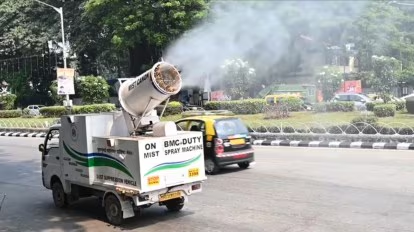
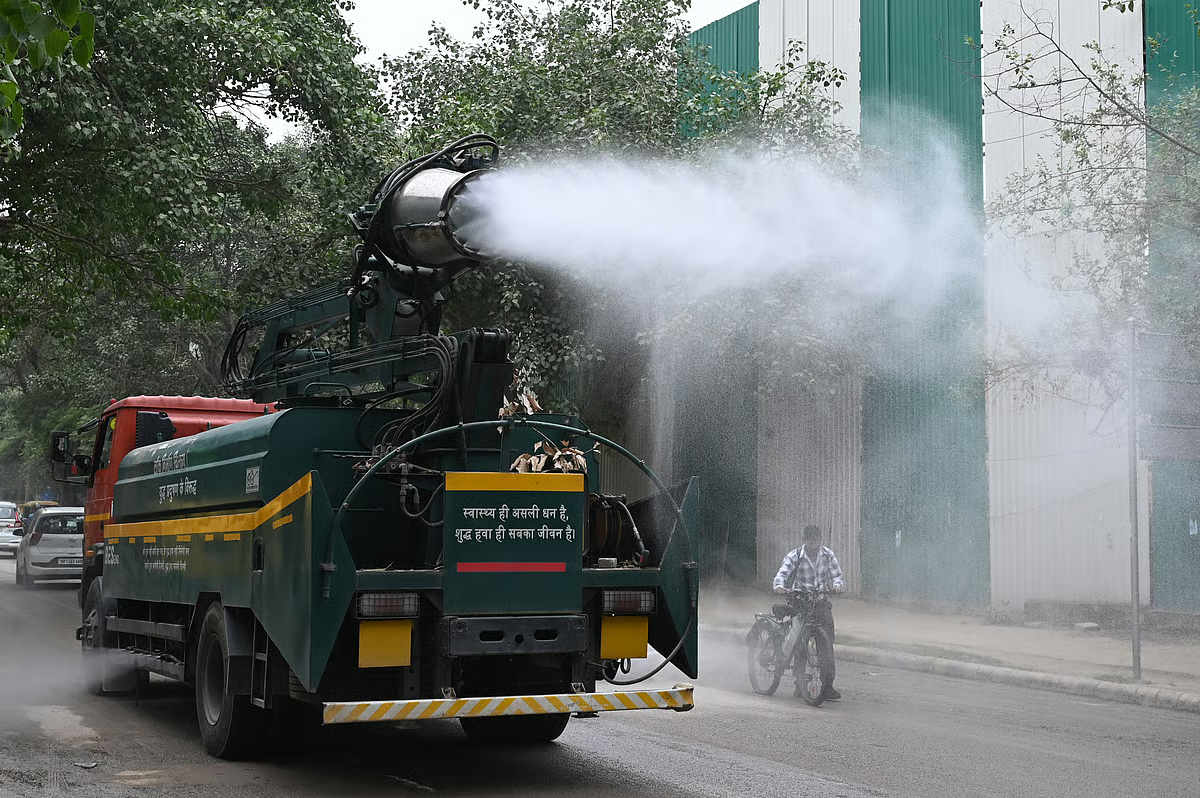
Smog guns, also known as anti-smog cannons, are devices designed to spray fine water mist into the air. These water droplets bind with dust and particulate matter, making them heavy enough to fall to the ground, thus reducing the concentration of harmful particles in the air.
Originally used in mining and construction sites to suppress dust, smog guns are now being adapted for urban air pollution control.
The Government’s New Mandate
The latest plan is revolutionary in scale:
- All buildings above six floors must install smog guns.
- Smog guns will be activated during peak pollution hours, especially in the morning and evening.
- Builders and property owners will bear the installation and maintenance costs.
- Fines and penalties will be imposed for non-compliance.
This is the first time such a city-wide, building-level mandate has been announced anywhere in the world.
Why Smog Guns on Buildings?
A Shift from Temporary Measures
Earlier, smog guns were used sporadically at construction sites and government events. The new approach makes smog guns a permanent feature of Delhi’s skyline.
Creating a Protective Shield
The idea is to create multiple points of mist release across the city, forming a protective shield over urban clusters. By bringing down the dust and smog particles, local air quality can improve significantly.
Decentralized Pollution Control
Unlike centralized air purifiers (which are costly and limited in reach), building-mounted smog guns decentralize the fight against pollution. Every high-rise contributes to cleaner air in its immediate neighborhood.
Potential Benefits
1. Reduction in PM2.5 and PM10 Levels
Smog guns directly tackle particulate matter, the deadliest component of Delhi’s air. Studies show they can reduce PM levels in their immediate vicinity by 40–60%.
2. Improvement in Local Air Quality
Even if the entire city doesn’t clear up instantly, people living near buildings with smog guns will experience locally cleaner air.
3. Innovation-Driven Image for Delhi
Delhi could become a global model city for tackling pollution innovatively, inspiring other polluted cities like Beijing, Karachi, and Dhaka.
4. Protection for Sensitive Areas
Schools, hospitals, and government offices located near tall buildings would benefit most, safeguarding children, patients, and vulnerable populations.
5. Psychological Relief
When citizens see visible efforts (like mist being sprayed into the air), it increases confidence in governance and reduces feelings of helplessness.
Challenges of Implementation
1. Cost Burden on Builders and Residents
Installing and maintaining smog guns could cost lakhs per building. Builders may pass this burden on to buyers and tenants.
2. Limited Reach
Smog guns are effective only in a limited radius (30–50 meters). This raises the question: Will thousands of smog guns be enough to cover Delhi’s vast sprawl?
3. Water Usage Concerns
Delhi already faces severe water shortages. Using water for smog guns could create a conflict between air and water needs. Authorities may have to mandate the use of treated wastewater instead of potable water.
4. Maintenance and Monitoring
Ensuring that all smog guns work properly and are not just installed for show will require strict monitoring.
5. Seasonal Effectiveness
Smog guns may be more effective during winters when particulate levels are high, but less impactful during summer dust storms.

Reactions from Experts
Environmentalists
Some environmentalists support the plan as a bold experiment, while others criticize it as a band-aid solution. They argue that smog guns only suppress pollution temporarily rather than eliminating its sources.
Medical Community
Doctors welcome any step that reduces PM levels but caution that this cannot replace long-term structural reforms in transport, industry, and agriculture.
Real Estate Sector
Builders express concerns about costs but also see potential in green branding—high-rises with smog guns could market themselves as healthier places to live.
Citizens
Public opinion is mixed. While many welcome the move, some question whether it will make a real difference or simply become another headline policy.
Comparative Global Perspective
Other cities have tried various methods:
- Beijing used large smog towers and cloud seeding.
- London invested in public transport electrification.
- Mexico City painted air-purifying murals on walls.
- Tokyo enforced strict industrial regulations.
Delhi’s building-mounted smog guns are unique and could set a new precedent if successful.
The Way Forward
Beyond Smog Guns
While smog guns are a promising step, they must be combined with deeper reforms:
- Transition to Clean Energy – Phasing out coal plants and diesel generators.
- Electric Mobility – Expanding EV infrastructure and public transport.
- Stubble Management Solutions – Providing alternatives to burning crop residue.
- Green Infrastructure – Planting urban forests, rooftop gardens, and vertical greenery.
- Strict Enforcement – Cracking down on construction dust and illegal industries.
A Hybrid Approach
The ultimate solution lies in combining immediate relief measures (like smog guns) with long-term pollution control strategies.
Conclusion
Delhi’s decision to mandate smog guns on all buildings above six floors is an unprecedented experiment in urban pollution management. It symbolizes both the urgency of the crisis and the willingness of policymakers to innovate.
While challenges of cost, water use, and limited effectiveness remain, this plan could mark the beginning of a new era of localized air-cleaning solutions. If integrated with broader reforms, Delhi may finally move from being the world’s smog capital to becoming a model of sustainable urban living.
The world will be watching closely. If successful, the Delhi model could inspire cities across Asia and beyond to adopt building-level air-cleaning technologies.
Read more latest news

