
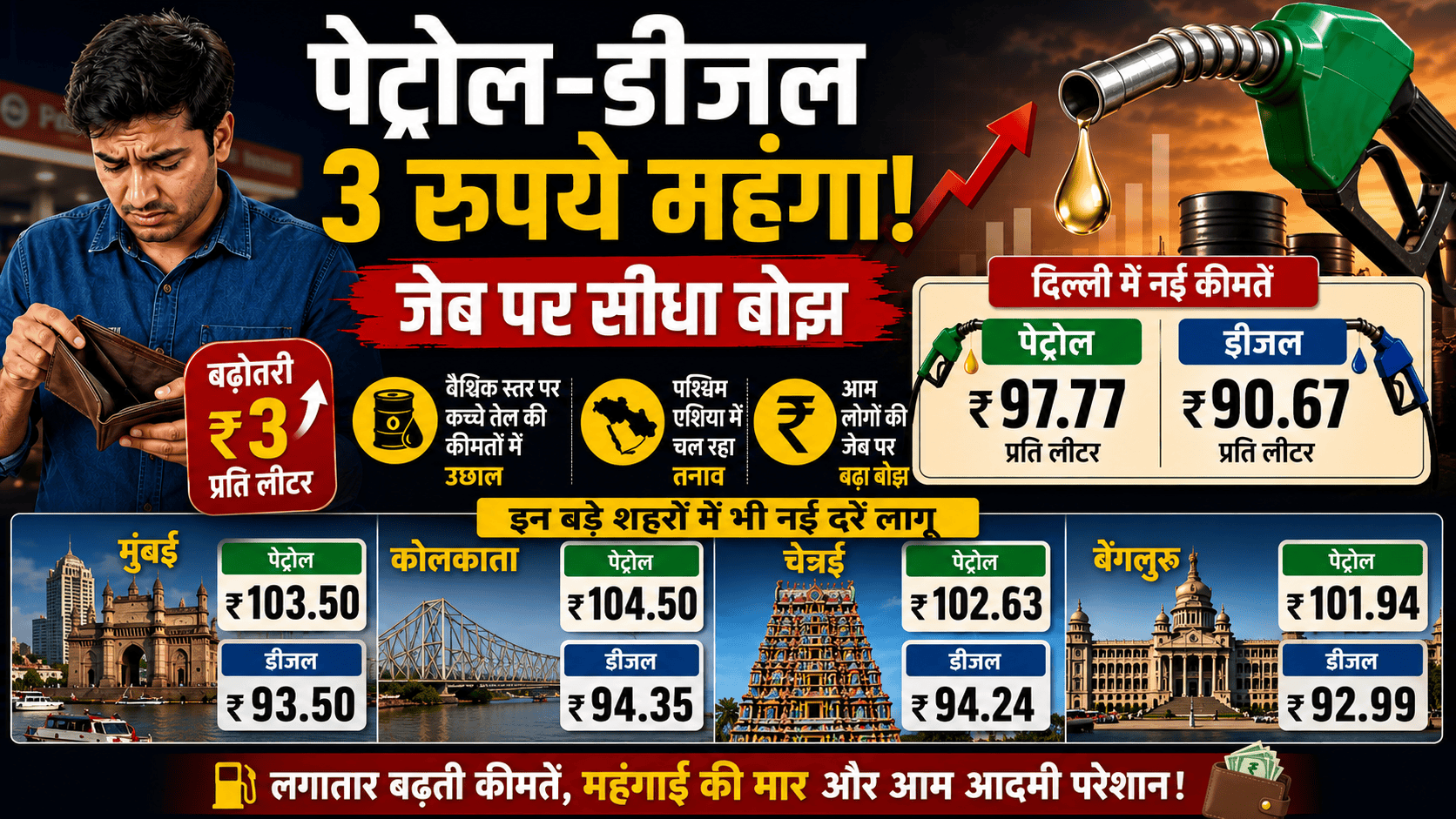
Petrol and Diesel Prices in India Rise by ₹3 Per Liter, Increasing Burden on Common People
The latest increase in fuel rates has once again become a major topic of discussion across the country. Petrol and diesel prices in India have recently been increased by ₹3 per liter, creating additional financial pressure on millions of households. The rise in fuel prices comes at a time when inflation and living expenses are already affecting the daily lives of ordinary citizens.
According to the latest updates, the price of petrol in Delhi has now reached ₹97.77 per liter, while diesel is being sold at ₹90.67 per liter. Experts believe that the primary reason behind this sudden hike is the increase in global crude oil prices and ongoing geopolitical tensions in West Asia.
The sharp increase in fuel costs is expected to impact transportation, agriculture, logistics, and household budgets across the nation. Petrol and diesel prices in India directly influence the prices of essential commodities because transportation costs play a crucial role in the supply chain.
Citizens in multiple states have expressed concern over the continued rise in fuel prices, especially middle-class families, daily wage workers, transport operators, and small businesses. Many economists warn that if crude oil prices continue to rise globally, fuel prices could increase even further in the coming months.
Why Petrol and Diesel Prices in India Have Increased
One of the biggest reasons why Petrol and diesel prices in India have increased is the surge in global crude oil prices. Crude oil is the raw material used to produce petrol and diesel, and India imports a significant portion of its oil requirements from foreign countries.
International crude oil markets have witnessed strong volatility due to ongoing tensions in West Asia. Political instability, military conflicts, and disruptions in oil supply routes have pushed prices upward globally.
As global crude oil prices rise, oil marketing companies in India are forced to adjust retail fuel prices accordingly. Since India relies heavily on imports, fluctuations in international markets directly affect domestic fuel rates.
Experts say that geopolitical tensions in oil-producing regions often create uncertainty in global supply chains. This uncertainty increases market speculation and pushes crude oil prices even higher.
Because Petrol and diesel prices in India are closely linked to global crude oil trends, any international crisis immediately impacts Indian consumers.
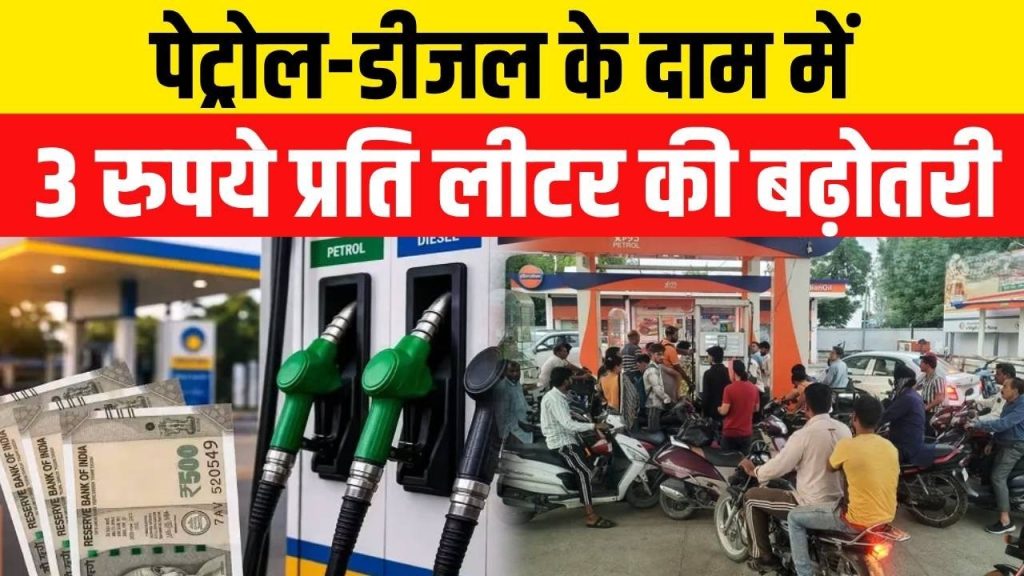
Impact on Common People
The increase in fuel rates is expected to directly affect the financial condition of ordinary citizens. Petrol and diesel prices in India play a major role in determining transportation and commodity costs.
For people who use personal vehicles daily, the monthly fuel budget will rise significantly after this ₹3 per liter hike. Families already struggling with inflation may now need to reduce other household expenses.
Public transportation services may also increase fares in response to rising fuel prices. Bus operators, taxi drivers, and auto-rickshaw drivers are likely to pass the additional burden onto passengers.
The agricultural sector may also suffer because diesel is heavily used in tractors, irrigation pumps, and transportation of crops. Higher diesel costs can increase farming expenses, ultimately affecting food prices in markets.
Small businesses dependent on transportation and logistics could also face reduced profit margins. Petrol and diesel prices in India influence almost every sector of the economy either directly or indirectly.
Delhi Fuel Prices Reach New Levels
The latest revision has pushed fuel rates in the national capital to higher levels. Petrol in Delhi is now priced at ₹97.77 per liter, while diesel has reached ₹90.67 per liter.
Residents of Delhi have expressed concern over the continuous rise in fuel prices over the years. Many office-goers and commuters are now considering alternative travel options to reduce expenses.
Fuel price differences between states are mainly due to varying local taxes and VAT imposed by state governments. However, Petrol and diesel prices in India continue to remain sensitive issues nationwide regardless of regional variations.
Consumers in metro cities are particularly affected because of longer travel distances, traffic congestion, and higher daily fuel consumption.
Global Crude Oil Prices Behind the Increase
International crude oil markets have become highly unstable in recent months. Ongoing tensions in West Asia have created fears of supply disruptions, leading to a surge in crude oil prices worldwide.
Oil-producing regions in the Middle East are extremely important for global energy markets. Even minor geopolitical instability in these areas can trigger sharp increases in crude prices.
Analysts believe that shipping disruptions, sanctions, and fears of military escalation have contributed significantly to the current price surge.
Since Petrol and diesel prices in India depend heavily on imported crude oil, Indian consumers are directly impacted whenever international markets become unstable.
Energy experts also warn that if tensions continue to rise in West Asia, global oil prices could remain elevated for an extended period.
Transportation Costs Likely to Rise
One of the immediate consequences of rising fuel prices is the increase in transportation costs. Petrol and diesel prices in India are directly connected to logistics and supply chain expenses.
Truck operators transporting goods across states may increase freight charges due to higher diesel costs. This could eventually raise the prices of vegetables, fruits, groceries, medicines, and other daily-use products.
Ride-sharing services and taxi operators may also revise fares upward. Delivery companies involved in e-commerce and food delivery could introduce additional service charges to compensate for fuel expenses.
Public transport systems may also face financial pressure if fuel prices continue to rise. State transport corporations often struggle to absorb higher operational costs without increasing ticket prices.
Inflation Concerns Grow
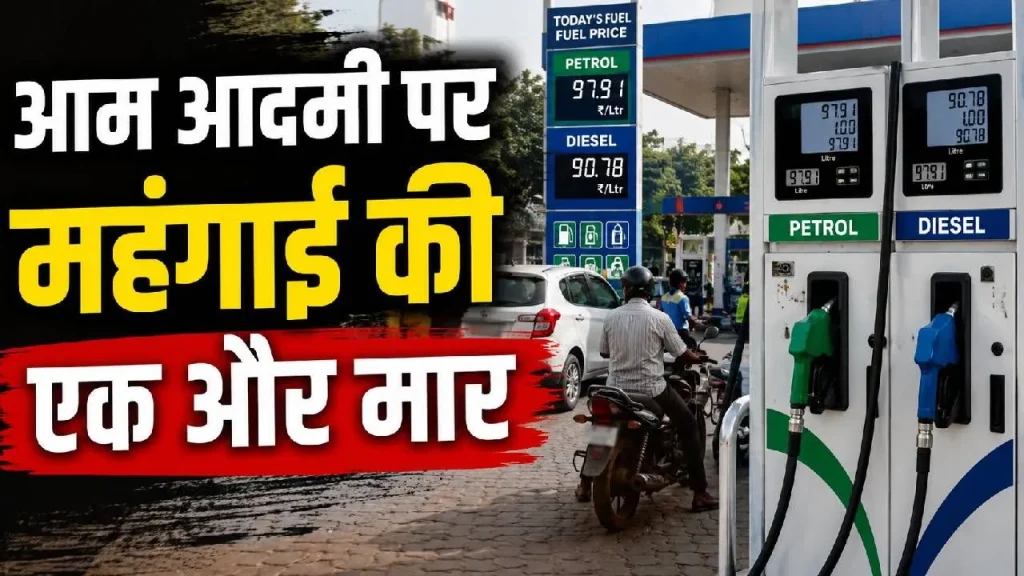
Economists believe that rising fuel prices can increase inflation across the economy. Petrol and diesel prices in India influence production costs, transportation costs, and retail pricing.
When transportation becomes more expensive, businesses usually transfer the additional burden to consumers. This leads to price increases in multiple sectors, including food, manufacturing, and retail.
Higher inflation affects purchasing power, particularly for middle-class and lower-income families. Rising fuel and commodity prices can reduce savings and increase financial stress.
Economic experts warn that controlling inflation may become more difficult if global crude oil prices remain high.
Government Under Pressure
The increase in fuel rates has also increased pressure on the government. Opposition parties have criticized the latest hike and demanded measures to provide relief to consumers.
Many political leaders argue that Petrol and diesel prices in India are already too high and that additional increases will hurt ordinary citizens.
Some experts have suggested reducing excise duty and taxes on fuel to control retail prices. However, governments often rely heavily on fuel taxes as an important source of revenue.
Balancing revenue generation with public relief remains a difficult challenge for policymakers.
How Fuel Prices Affect Daily Life
The effect of rising fuel prices extends far beyond vehicle owners. Petrol and diesel prices in India affect almost every aspect of daily life.
Vegetable vendors, grocery suppliers, milk distributors, and delivery services all depend on fuel for transportation. As fuel becomes more expensive, the cost of supplying goods also rises.
Students traveling long distances, employees commuting daily, and businesses operating transport fleets all face higher expenses.
Families may need to reconsider monthly budgets due to rising fuel-related costs. Many households already managing school fees, rent, and grocery expenses may now feel additional financial pressure.
Experts Suggest Alternative Energy Solutions
The latest fuel price increase has once again highlighted the importance of alternative energy solutions. Experts believe India should accelerate investments in electric vehicles, renewable energy, and public transport infrastructure.
Reducing dependence on imported crude oil could help stabilize Petrol and diesel prices in India in the long run.
Electric vehicles are gaining popularity in several cities, but affordability and charging infrastructure remain major challenges.
Energy experts say that promoting clean energy and domestic energy production can reduce vulnerability to global oil market fluctuations.
Automobile Industry Reactions
The automobile industry is also closely monitoring the fuel price situation. Rising Petrol and diesel prices in India could influence consumer buying patterns.
Many consumers may prefer fuel-efficient vehicles or electric cars to reduce long-term expenses. Automobile manufacturers are increasingly focusing on hybrid and electric vehicle technology.
Two-wheeler users, who form a large section of Indian commuters, are especially sensitive to fuel price changes because even small increases significantly affect monthly budgets.
Industry experts believe sustained high fuel prices could accelerate the shift toward electric mobility in India.
Public Reactions on Social Media

Social media platforms have been flooded with reactions after the latest fuel price increase. Many users expressed frustration over rising living costs and questioned why fuel prices continue to climb despite economic challenges.
Memes, debates, and political arguments related to Petrol and diesel prices in India quickly started trending online.
Some citizens demanded government intervention to reduce taxes, while others blamed international crude oil markets for the increase.
Fuel prices remain one of the most emotionally charged public issues because they affect citizens across all income groups.
Challenges for Businesses
Businesses dependent on transportation and logistics are expected to face operational challenges. Petrol and diesel prices in India directly impact freight, supply chains, and product distribution.
Retailers may eventually increase prices to offset higher transportation costs. Manufacturing companies could also experience rising production expenses.
Small businesses operating on thin profit margins are particularly vulnerable during periods of fuel price inflation.
Experts warn that if fuel costs continue rising, economic growth in certain sectors may slow down.
Future Outlook for Fuel Prices
The future direction of fuel prices will largely depend on global crude oil trends and geopolitical developments in West Asia.
If tensions escalate further, international oil prices could rise even more, leading to additional increases in Petrol and diesel prices in India.
However, if diplomatic efforts reduce geopolitical uncertainty and global oil supply stabilizes, prices may gradually moderate.
Energy analysts believe the next few months will be crucial for global oil markets.
Citizens Search for Cost-Cutting Measures
As fuel becomes more expensive, many citizens are looking for ways to reduce transportation expenses.
People are increasingly using public transportation, carpooling, bicycles, and fuel-efficient vehicles to manage costs. Some companies are also encouraging work-from-home arrangements to reduce commuting expenses.
The increase in Petrol and diesel prices in India is encouraging consumers to become more conscious about fuel usage and travel planning.
Conclusion
The recent ₹3 per liter increase in fuel rates has once again highlighted the economic challenges faced by ordinary citizens. Petrol and diesel prices in India remain deeply connected to global crude oil markets, geopolitical tensions, and domestic taxation policies.
With petrol in Delhi now priced at ₹97.77 per liter and diesel at ₹90.67 per liter, households, businesses, and transport sectors are expected to feel the financial impact immediately.
The rise in fuel prices could also contribute to inflation, higher transportation costs, and increased prices of essential commodities. As global crude oil markets remain unstable due to tensions in West Asia, uncertainty regarding future fuel prices continues.
For millions of Indians, Petrol and diesel prices in India are not just economic figures—they directly affect daily life, monthly budgets, and overall financial stability.
Read more latest news

