
Pakistan 9 terrorist hideouts destroyed
Pakistan 9 terrorist hideouts In a powerful display of strategic depth and military capability, the Indian Army, in coordination with the Indian Air Force, reportedly conducted a bold cross-border operation, penetrating 100 kilometers inside Pakistan and eliminating nine terrorist hideouts in a swift and precise airstrike. The operation, which has become the focus of national and international headlines, is being hailed as one of the most significant counter-terrorism offensives carried out by India in recent years.
This 3000-word blog takes an in-depth look at the events that unfolded, the background to the operation, its strategic execution, national and global reactions, and what it means for the regional security dynamics in South Asia.
The Background: Rising Tensions Along the Border
The Indo-Pak border has long been a volatile region, especially in the areas along the Line of Control (LoC) and the International Border (IB). In recent months, there had been a noticeable increase in infiltration attempts and intelligence inputs suggesting the buildup of terrorist launch pads across the border.
According to intelligence sources, these hideouts were being used to harbor militants from groups like Jaish-e-Mohammed, Lashkar-e-Taiba, and Hizbul Mujahideen who were planning coordinated attacks in Jammu & Kashmir and other parts of India.
Repeated ceasefire violations and targeted attacks on Indian security personnel had escalated the urgency to respond with calibrated force.

Planning the Operation: Strategic Secrecy and Precision
Operation planning involved top-tier military leadership and intelligence coordination between:
- Indian Army
- Research and Analysis Wing (RAW)
- Indian Air Force (IAF)
- National Security Council (NSC)
A combination of human intelligence (HUMINT) and satellite imagery confirmed the location of multiple terrorist hideouts in Pakistan’s Punjab and Khyber Pakhtunkhwa regions.
Key highlights of the operational planning:
- Zero civilian casualty mandate
- Pinpoint targeting of terror safe houses
- Rapid in-and-out strategy to avoid escalation
- Air superiority ensured by IAF fighter squadrons
Execution: India’s Cross-Border Airstrike
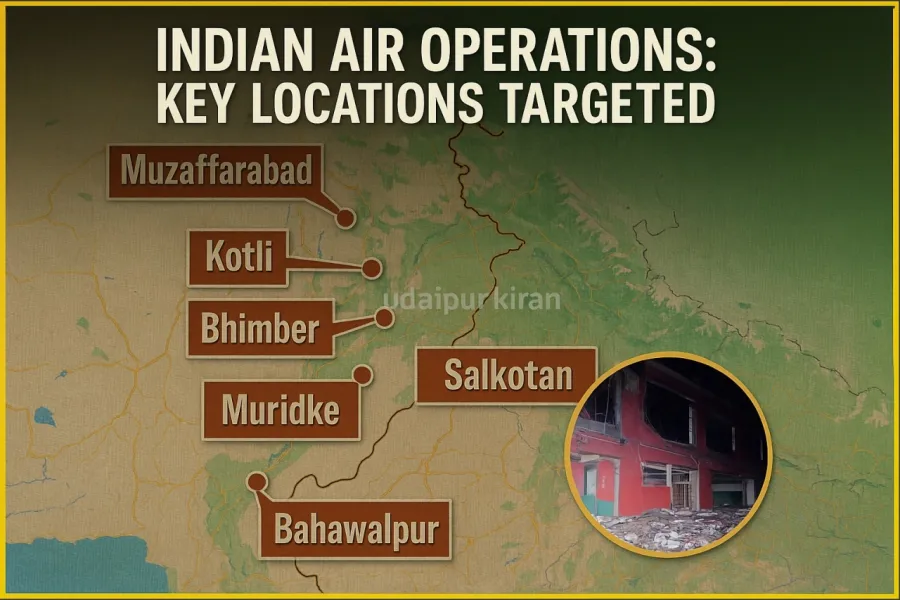
On the night of the operation, squadrons of Mirage 2000 and Sukhoi Su-30MKI aircraft took off from airbases in Punjab and Rajasthan under complete radio silence. With precision-guided munitions (PGMs), they targeted and destroyed nine key terror camps located deep within Pakistani territory.
The operation lasted less than 30 minutes and was executed with clockwork precision.
- Target area: 100 km beyond LoC, in the heart of terror infrastructure
- Number of hideouts destroyed: 9
- Time of strike: Early hours (3:00–3:30 AM)
- Indian casualties: None
- Civilian casualties: None reported
Drone footage and satellite confirmation confirmed the complete obliteration of structures used to house, train, and arm terrorists.
National Reaction: Unity and Support
The Indian public, still reeling from recent terror attacks on soldiers and civilians in Jammu & Kashmir, responded with overwhelming support and pride.
Hashtags like #IndiaStrikesBack, #SurgicalStrike2.0, #IAFRevenge, and #TerrorFreeIndia trended across social media platforms. Citizens took to the streets in celebration, holding vigils and waving the tricolor.
Statements from national leaders:
- Prime Minister Narendra Modi: “India will not tolerate terror. Our brave soldiers have shown that the country is in safe hands.”
- Defense Minister Rajnath Singh: “The Indian military has full freedom to neutralize any threat. This was a necessary response.”
- Opposition leaders: Supported the action, emphasizing national unity.
Global Reaction: Measured but Watchful
The international community responded with caution but recognized India’s right to self-defense:
- United States: “India has a legitimate right to counter terror threats emanating from across its border.”
- France and Israel: Voiced strong support for India’s anti-terror operations.
- China: Urged restraint from both nations.
- UN: Called for calm and dialogue while acknowledging the serious threat posed by terrorism.
Pakistan’s Denial and Contradictions
As expected, Pakistan’s government denied that any such strike had taken place or that terrorist camps were targeted. However, multiple reports from local Pakistani media suggested mysterious explosions and sudden troop movement in the targeted regions.
Pakistani military spokespersons claimed:
“There was no breach of airspace. All such claims are Indian propaganda.”
Yet, social media posts and amateur videos from Pakistani residents near the strike areas indicated otherwise, with visible signs of destruction and smoke rising from secluded locations.
Implications for Indo-Pak Relations
This operation, while tactically successful, has deep strategic implications:
- Diplomatic fallout: Pakistan has lodged protests with the UN and OIC.
- Military posture: Indian forces along the LoC are on high alert, with reinforcements in sensitive sectors.
- Escalation risk: While India emphasized that the strike was anti-terror and not anti-state, tensions remain high.
India, however, has made it clear that it reserves the right to defend its people and territory from cross-border terrorism.
Expert Opinions and Analysis
Top defense analysts have weighed in:
- Lt. Gen. Syed Ata Hasnain (Retd.): “This operation signals a new threshold. India will respond, not react, and that too on its own terms.”
- Dr. Brahma Chellaney: “The strike was not just tactical—it’s part of a long-term strategic doctrine against proxy terror.”
- Gaurav Arya (Defense Expert): “This was needed. We struck at the roots, not the branches.”
What This Means for India’s Security Doctrine
India’s evolving “Doctrine of Pre-Emptive Strike” now has more credibility and bite. Unlike past operations limited to retaliatory responses, this action represents:
- Expanded strike range: Deep inside enemy territory
- Enhanced coordination: Between Army, IAF, and intelligence
- Greater political will: Backed by decisive leadership
- New rules of engagement: Focused on deniability, precision, and surprise
Voices from the Ground: What Citizens are Saying
From border towns to metro cities, Indian citizens voiced solidarity with the armed forces.
- “Every Indian feels proud today. Our soldiers showed bravery and restraint.”
- “This should be a message to all terror groups — India will hit back.”
- “Enough of talks. This action shows that we mean business.”
Social media was flooded with visuals, poems, and messages of support for the soldiers and their families.
Conclusion: A Message Delivered Loud and Clear
The destruction of nine terrorist hideouts 100 kilometers inside Pakistan marks a turning point in India’s counter-terror operations. It sends a strong, unequivocal message — that India will not hesitate to strike across borders to defend its citizens.
This operation not only showcased military might and technological precision but also underscored India’s evolving doctrine of proactive defense.
While the world watches closely, India’s actions have raised the cost of exporting terror. Whether Pakistan chooses escalation or introspection remains to be seen.
Until then, the skies that echoed with the thunder of Indian jets on that fateful night carry a resounding message: “No safe haven for terror.”
read more latest news


https://shorturl.fm/9fnIC
https://shorturl.fm/TbTre
https://shorturl.fm/5JO3e
https://shorturl.fm/6539m