

Operation Sindoor: NSA Doval’s Challenge to Foreign Media
Introduction: A Strike Beyond the Battlefield
Operation Sindoor On May 7, 2025, India executed a strategic counter-terror operation deep inside Pakistan-occupied territory. Codenamed Operation Sindoor, this precision strike was a direct response to the horrific terror attack in Pahalgam, Jammu and Kashmir, where 26 civilians lost their lives.
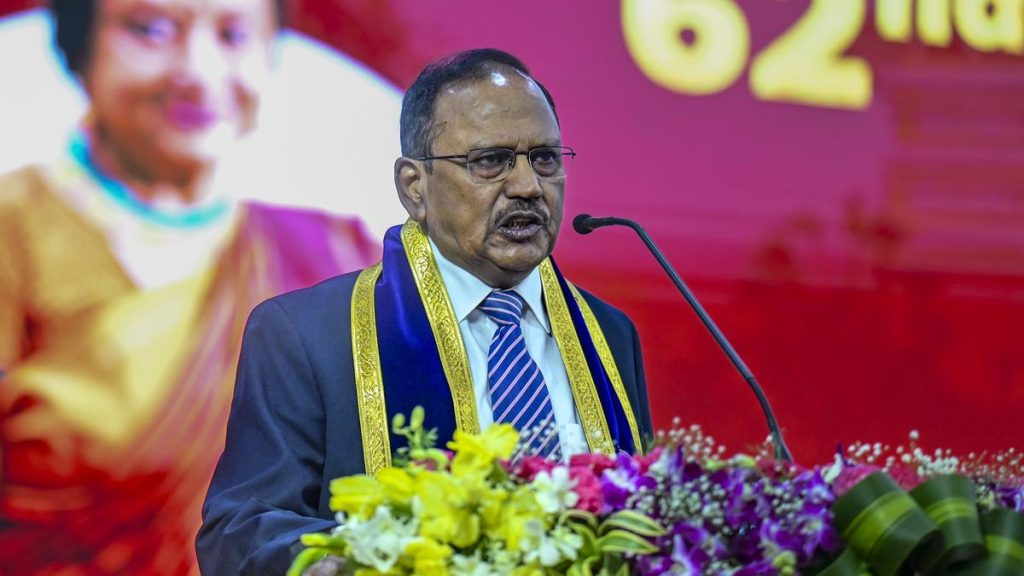
But this operation wasn’t just about bombs and targets. It was also about narrative control. In July 2025, India’s National Security Advisor (NSA) Ajit Doval openly challenged the foreign media that questioned India’s claims and amplified Pakistani propaganda. Speaking at IIT Madras, Doval said:
“Show me one photo… even a glass pane broken in India. Not one was.”
That sentence marked a turning point—not just in India’s security doctrine but in its information warfare strategy.
1. The Pahalgam Attack: Why Operation Sindoor Was Inevitable
On April 22, 2025, a coordinated terror assault in Pahalgam targeted unarmed civilians during a religious gathering. Investigations revealed that the The Resistance Front (TRF)—a Lashkar-e-Taiba proxy—had orchestrated the attack with assistance from across the border.
This was not an isolated incident but part of a resurging wave of cross-border terrorism. Public outrage, intelligence reports, and strategic calculations culminated in the need for an immediate yet measured military response. That answer came in the form of Operation Sindoor.
2. Planning & Execution: Precision in 23 Minutes
The operation began at 1:00 AM on May 7 and concluded by 1:23 AM. It was swift, focused, and conducted entirely using India’s own intelligence and indigenous technology.
Key Details:
- Targets: 9 terrorist camps and launch pads in Pakistan-occupied Kashmir (PoK)
- Weapons Used: BrahMos, SCALP cruise missiles, loitering munitions (drones), and AASM precision-guided bombs
- Services Involved: Indian Air Force (Rafales), Army Intelligence Corps, Navy surveillance aircraft, and RAW satellites
NSA Doval later revealed:
“We hit nine. We missed none. There was no collateral. There was no damage to us.”
India’s Integrated Air Command and Control System (IACCS) coordinated the strikes, minimizing risk and ensuring precision.
3. NSA Doval’s Strategic Message: India’s Coming of Age
Ajit Doval has long been seen as India’s most formidable security mind. His role in planning cross-border operations—from the 2016 Surgical Strikes to the 2019 Balakot air raids—is well documented.
But his post-strike messaging in 2025 was unprecedented. At IIT Madras, speaking not just to the media but to the global strategic community, Doval laid down a challenge:
“Let international media show a single image of Indian damage—there is none.”
This was a public relations counter-strike. Doval emphasized:
- The truthfulness of Indian claims
- The absence of Indian casualties
- The need to combat false foreign narratives
4. Pakistan’s Response and Disinformation Attempts
After India’s precise strike, Pakistan retaliated with artillery shelling and drone flyovers along the Line of Control. However, Indian forces neutralized incoming threats effectively.
Pakistan also launched a media offensive, claiming that it had damaged Indian military assets. Some international outlets echoed this narrative.
But Doval’s response was stark:
- There was no military damage in India.
- No civilian injuries.
- No verified media proof of Pakistani claims.
He framed this misinformation as part of a “perception war”, and warned that narrative manipulation is the new front in modern warfare.
5. Information Warfare: India’s Shift in Doctrine
In the 21st century, winning a war is as much about perception as it is about precision.
India’s New Posture:
- Transparency after operations (naming targets, timing, and technology)
- Public speeches by top officials (NSA, CDS, Army Chief)
- Digital briefings and fact-checks from MEA and PIB
- Engaging youth and civil society to counter fake news
Doval’s speech at IIT Madras reflected this strategy. He didn’t just talk to policymakers—he spoke to engineers, coders, and scientists, framing national security as a tech-driven, youth-powered mission.
6. Indigenous Technology: India’s Defense Renaissance
One of the most impressive features of Operation Sindoor was its entirely indigenous tech stack.
Key Technologies:
- BrahMos Supersonic Missiles: Designed with Russian collaboration, now mostly Indian-made
- Rafale Jets: Modified with Indian-made sensors and targeting systems
- SkyStriker Loitering Munitions: Small drones equipped with explosive payloads
- IACCS: India’s military-wide real-time combat management network
Doval proudly stated:
“China took 12 years and $300 billion to develop 5G. India did it in 2.5 years.”
He implied that similar technological speed and autonomy had been brought to the defense sector, making such operations possible without foreign dependence.
7. International Diplomacy and Global Reaction
United States
The U.S. urged both nations to show restraint but privately acknowledged India’s right to self-defense. NSA Jake Sullivan coordinated with Doval to prevent further escalation.
Russia and France
Both nations, long-time defense partners of India, backed the operation diplomatically by avoiding criticism and emphasizing “counter-terror rights.”
United Nations
No resolution or condemnation was passed—seen as a silent nod to India’s credibility.
Middle East
UAE and Saudi Arabia, now close allies of India, called for “de-escalation” but appreciated India’s targeted response.
8. Political Reactions in India
Ruling Government
The BJP hailed the strike as a model of decisive leadership. PM Modi praised India’s defense forces and reiterated:
“India will not tolerate terror. India will not remain silent.”
Opposition
While parties like Congress and AAP supported the armed forces, some raised concerns about transparency and international fallout.
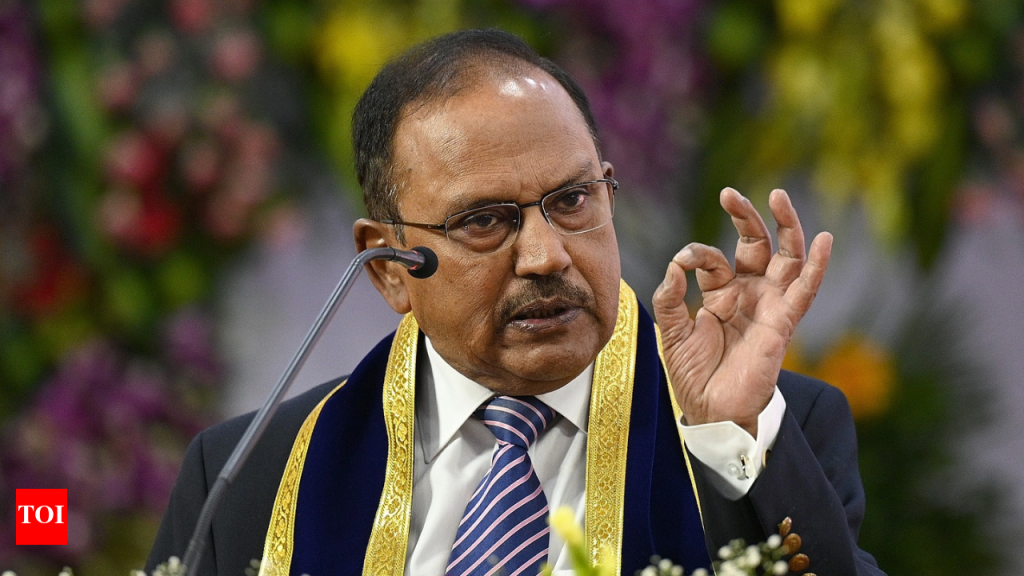
But Doval’s challenge to the foreign media united much of the Indian political spectrum—rare consensus during a national security crisis.
9. Challenges Ahead: Perception, Propaganda & Preparation
A. Managing Narrative
Even with precision strikes, India faces challenges in countering real-time propaganda, especially on platforms like X (formerly Twitter), Telegram, and Instagram.
B. Securing Borders
Retaliatory threats, drone infiltration, and sleeper cell activity remain risks. The BSF and local intelligence units have heightened surveillance in Punjab and J&K.
C. Media Strategy
India’s success with Operation Sindoor must be replicated in:
- Swift factual briefings
- Proactive foreign press engagement
- Transparent information flow without risking security leaks
10. The Larger Message: India’s Strategic Confidence
Operation Sindoor wasn’t just about punishing terrorism—it was about restoring deterrence.
NSA Doval’s challenge wasn’t mere bravado. It was rooted in:
- Operational success
- Technological maturity
- Narrative control
- Diplomatic strength
This is a new India—one that hits hard, speaks clearly, and refuses to be gaslit by manipulated narratives.
Conclusion: A Doctrine Forged in Precision
In a world where wars are waged both on the ground and online, Operation Sindoor stands out as a masterclass in military and strategic communication.
With 9 targets neutralized in 23 minutes, zero casualties, and total operational secrecy—India demonstrated its military evolution.
With one bold challenge to foreign media, NSA Doval demonstrated India’s strategic evolution.
In Doval’s words:
“This is not just about defense. This is about truth, dignity, and our duty to the people of India.”
The message is clear: India will strike when needed, and it will speak for itself—clearly, calmly, and convincingly.
Read more latest news

