

Spiritual Fervor on Somvati Amavasya: Thousands of Devotees Take Holy Dip in Prayagraj and Haridwar
Somvati Amavasya India, a land of spirituality, tradition, and sacred rituals, witnessed an extraordinary spiritual gathering as thousands of devotees thronged the holy ghats of Prayagraj and Haridwar on the auspicious occasion of Somvati Amavasya. The tranquil banks of the Ganga and Yamuna rivers were transformed into vibrant centers of devotion as people from across the country came together to participate in age-old rituals, seeking blessings, liberation from sins, and spiritual peace.
This year’s Somvati Amavasya held special significance, not only because of its occurrence on a Monday — a day dedicated to Lord Shiva — but also due to the sheer scale of devotion seen at major pilgrimage centers like Prayagraj’s Triveni Sangam and Haridwar’s Har Ki Pauri. Both cities, steeped in religious history, bore witness to one of the largest spiritual congregations outside of the Kumbh Mela.
What is Somvati Amavasya?
Somvati Amavasya is a sacred day in the Hindu calendar that occurs when Amavasya (new moon day) falls on a Monday (Somvar). The amalgamation of these two significant time points gives the day its spiritual importance. While Amavasya is generally considered a time for ancestral worship, charity, and introspection, the fact that it falls on a Monday — a day devoted to Lord Shiva — enhances its religious potency.
Somvati Amavasya In Hindu beliefs, taking a holy dip in sacred rivers on this day is said to absolve sins, free the soul from the cycle of rebirth, and bring peace to ancestors. The day also holds immense importance in Pitru Tarpan, a ritual performed to honor and appease one’s forefathers.
Massive Turnout in Prayagraj
Somvati Amavasya Prayagraj, home to the iconic Triveni Sangam — the confluence of Ganga, Yamuna, and the mythical Saraswati — saw lakhs of devotees descending upon its ghats from the early hours of the morning. The administration, fully prepared for the turnout, had set up more than 30 ghats, over 200 changing rooms, and deployed thousands of security personnel to manage the crowd.
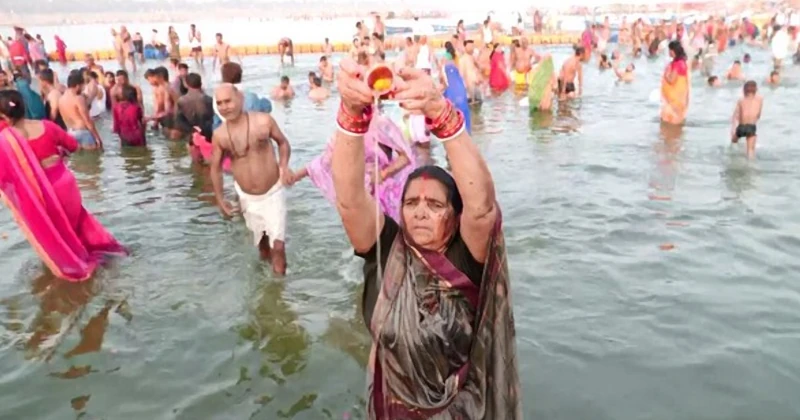
Somvati Amavasya From sunrise till noon, the banks of the Sangam echoed with Vedic chants, conch shell sounds, and the collective prayers of devotees as they entered the river with folded hands and faith-filled hearts. People carried offerings of flowers, incense, milk, and sesame seeds. The atmosphere was both serene and electrifying — a convergence of spiritual silence and devotional intensity.
Religious leaders, saints, and sadhus from across India had also gathered at the site, guiding devotees on the significance of the day and leading community prayers and bhajans.
Haridwar: Devotion at the Gateway to the Gods
Somvati Amavasya In Haridwar, often referred to as the “Gateway to the Gods”, Har Ki Pauri became the epicenter of religious activity. The ghat, believed to be touched by Lord Vishnu’s footprint, attracted thousands of pilgrims who braved the early morning chill to take a dip in the icy waters of the Ganga.
As dawn broke, the sight was nothing short of celestial — saffron-robed saints meditating on the steps, groups of women performing rituals for their departed ancestors, and long lines of devotees waiting patiently for their turn to enter the water. The Ganga Aarti, performed at sunrise and again at sunset, elevated the divine energy of the place to an unmatched crescendo.
Temples like Mansa Devi, Chandi Devi, and Daksh Prajapati Mandir saw a huge influx of worshippers offering prayers and lighting lamps for blessings and the wellbeing of their families.
The Rituals and Their Significance
On Somvati Amavasya, a series of rituals are traditionally followed:
- Snan (Holy Bath): The most important ritual, believed to cleanse the body and soul of sins.
- Tarpan and Pind Daan: Rituals for appeasing ancestors, offering food, water, and sesame to departed souls.
- Shiv Puja: As Monday is dedicated to Lord Shiva, devotees also visit Shiva temples to offer milk, bilva leaves, and water.
- Charity (Daan): Donating food, clothes, and money to Brahmins or the poor is considered highly auspicious.
- Fasting: Some devotees observe a fast throughout the day for spiritual merit and family wellbeing.
Women, particularly, observe Somvati Vrat, praying for the longevity and prosperity of their husbands. They perform circumambulations (parikrama) around peepal trees, tie sacred threads, and offer milk and flowers to the tree, which is regarded as sacred and associated with multiple deities.
Pilgrims Speak: Faith and Devotion in Their Words
The banks of the Ganga and Yamuna echoed not just with chants but also with stories — of faith, gratitude, and prayer.
Rekha Devi, a 56-year-old pilgrim from Bihar, said, “I have been coming to Prayagraj for this occasion for the last 12 years. The dip in Sangam gives me peace like nothing else. It feels like all my burdens are lifted.”
Ankit Sharma, a young devotee from Delhi, who had travelled to Haridwar with his parents, said, “We do this every year as a family. It brings us closer together and connects us to our roots.”
Swami Adityanand, a monk from Uttarakhand, reflected on the spiritual meaning: “Somvati Amavasya is a divine intersection of cosmic energies. A bath today not only cleanses the body but resets one’s spiritual path.”

Arrangements and Crowd Management
Given the expected surge in pilgrims, the administrations of Prayagraj and Haridwar took extensive measures to ensure a smooth and safe experience for all.
In Prayagraj:
- Over 5,000 security personnel were deployed.
- CCTV surveillance and drone monitoring ensured crowd control.
- Medical tents and ambulances were placed strategically around major ghats.
- Special arrangements for women, elderly, and differently-abled pilgrims were made, including battery-operated carts and assistance booths.
- Clean drinking water, temporary toilets, and first aid centers were set up across the city.
In Haridwar:
- Entry to Har Ki Pauri was regulated through timed slots.
- NDRF teams were stationed for emergency water rescues.
- River police patrolled on boats to maintain safety.
- Volunteers from NGOs and religious organizations distributed food and offered help to lost pilgrims.
Despite the massive turnout, both cities reported a largely incident-free event, a testament to the joint efforts of civil administration, police, and local volunteers.
The Eco-Spiritual Angle: A Clean Ganga
One notable feature this year was the focus on eco-consciousness. With growing awareness about river pollution and environmental degradation, many groups took the initiative to promote “Green Pilgrimage.”
In Prayagraj, over 50 youth volunteers patrolled the ghats, encouraging devotees not to throw plastic into the river. Similarly, in Haridwar, signage urged people to use biodegradable offerings and avoid chemical-based incense or colors.
As part of the Namami Gange campaign, both cities also organized post-event clean-up drives to ensure the ghats remained clean. This initiative aligns with PM Modi’s vision of restoring and preserving India’s rivers, especially the Ganga, as a symbol of both ecological and spiritual vitality.
Digital Outreach and Global Devotion
With India’s diaspora and global devotees unable to physically attend due to travel or health constraints, digital platforms came to their rescue. Both the Prayagraj and Haridwar administrations offered live-streaming of the Snan rituals, Ganga Aarti, and temple ceremonies.
Tens of thousands from countries like the US, UK, Canada, and Australia joined in virtually, performing their own prayers at home while watching the events live.
Several prominent temples and religious institutions also held online discourses on the importance of Somvati Amavasya, making it a global spiritual event in many ways.
Religious Leaders and Spiritual Gurus Weigh In
Spiritual leaders from across India used the occasion to deliver sermons on the importance of living a righteous, compassionate life. Many emphasized that the holy dip, while symbolically powerful, must be accompanied by inner cleansing, ethical living, and selfless service to truly bear fruit.
Sri Sri Ravi Shankar, head of the Art of Living Foundation, tweeted: “Somvati Amavasya is a time for deep reflection and gratitude. Let us purify not just with water, but with thought, word, and deed.”
Yogi Adityanath, Chief Minister of Uttar Pradesh, congratulated the pilgrims and administrative staff for a peaceful and successful observance. He also encouraged devotees to maintain cleanliness and promote the spiritual and cultural ethos of India.
Looking Ahead: Faith in the Time of Change
In a world rapidly changing due to technology, climate shifts, and modern lifestyles, these ancient festivals and rituals serve as anchors of identity and continuity. They remind us of the timeless values of faith, humility, and gratitude.
As India continues to modernize, the massive turnout at events like Somvati Amavasya shows that the soul of Bharat — its connection to the divine, to rivers, to ancestors — remains strong.
It is not just about taking a dip in water. It is about immersing oneself in the deeper current of tradition, where every drop carries stories, blessings, and hope.
Conclusion: A Holy Day Etched in the Soul
Somvati Amavasya 2025 will be remembered for more than its celestial alignment. It will be remembered for the millions who walked barefoot to the river, for the chants that pierced the dawn, and for the faith that carried people across states, generations, and circumstances.
As the sun set over the sacred waters of the Ganga and Yamuna, and lamps floated down the river carrying silent prayers, one could feel the presence of something eternal — the spirit of India, flowing, forgiving, and forever sacred.


https://shorturl.fm/6539m
https://shorturl.fm/5JO3e
https://shorturl.fm/a0B2m
https://shorturl.fm/bODKa
https://shorturl.fm/68Y8V