
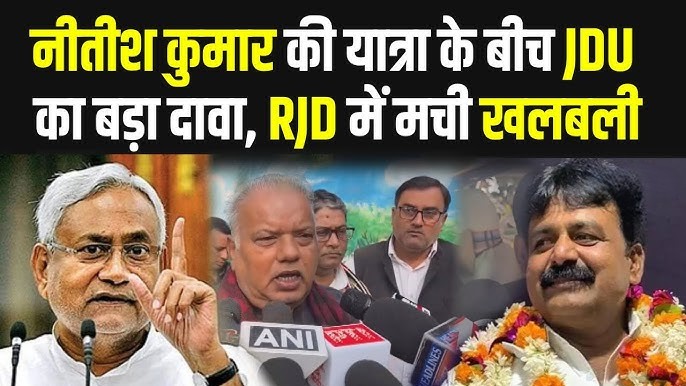
Nitish Kumar’s Bihar Tour Before Delhi: Damage Control or a Show of Strength?
Nitish Bihar tour before Delhi In the complex and ever-evolving landscape of Indian politics, timing often carries as much significance as the actions themselves. Bihar Chief Minister Nitish Kumar has once again become the center of political discussion as he prepares for a crucial phase in national politics. Before heading to Delhi for important parliamentary engagements, including matters linked to the Rajya Sabha, the veteran leader has launched a statewide outreach program. The Nitish Bihar tour before Delhi has particularly focused on the politically sensitive Seemanchal and Kosi regions.
The tour, officially titled the “Prosperity and Progress” tour, has sparked intense debate among political observers, opposition leaders, and voters alike. Is the Nitish Bihar-tour before Delhi a move aimed at damage control following political challenges, or is it a calculated show of strength designed to consolidate power before entering national political discussions?
This question has become the focal point of Bihar’s political discourse.
Understanding the Context Behind the Tour
Before analyzing the implications, it is important to understand the political environment in which the Nitish Bihar tour before Delhi is taking place.
Bihar politics has historically been shaped by alliances, caste equations, development debates, and regional disparities. Chief Minister Nitish Kumar, known for his administrative experience and shifting alliances over the years, has repeatedly demonstrated his ability to reinvent his political strategy.
The timing of the Nitish Bihar-tour before Delhi is significant. With national political developments unfolding and Bihar preparing for future electoral contests, every move by the chief minister is being scrutinized.
The Seemanchal and Kosi regions, where the tour is concentrated, hold major electoral importance. These areas are often considered politically volatile due to socio-economic challenges such as floods, poverty, migration, and infrastructure gaps.
Political analysts believe that choosing these regions for the Nitish Bihar tour before Delhi is far from accidental.
The Prosperity and Progress Narrative
The government has branded the initiative as a “Prosperity and Progress” tour, highlighting development achievements and future plans.
During the Nitish Bihar-tour before Delhi, the chief minister has been interacting with local communities, reviewing development projects, inspecting infrastructure work, and holding public meetings.
The key themes promoted during the Nitish Bihar tour before Delhi include:
- Rural infrastructure development
- Flood management in the Kosi belt
- Education and healthcare expansion
- Employment initiatives
- Agricultural support programs

Government officials claim the Nitish Bihar-tour before Delhi is simply part of a routine governance exercise aimed at monitoring progress and addressing public grievances.
However, the political timing has ensured that the tour carries much deeper implications.
Political Significance of Seemanchal and Kosi
The choice of Seemanchal and Kosi regions is particularly strategic.
These areas have historically faced developmental challenges and often feel politically neglected. Flooding caused by the Kosi river has earned it the nickname “Sorrow of Bihar.” Infrastructure and employment issues continue to dominate public concerns.
By focusing the Nitish Bihar-tour before Delhi on these regions, the chief minister appears to be sending multiple political signals.
First, it allows him to highlight government initiatives that address long-standing regional problems.
Second, it helps reconnect with grassroots voters ahead of future electoral contests.
Third, the Nitish Bihar tour before Delhi provides an opportunity to demonstrate that the administration remains actively engaged with local issues.
Political observers argue that the visibility of leadership in these regions can significantly influence public perception.
Opposition Questions the Timing
While the government describes the tour as development-focused, opposition parties are interpreting it differently.
Leaders from the Rashtriya Janata Dal and the Bharatiya Janata Party have raised questions about the purpose behind the Nitish Bihar tour before Delhi.
Opposition leaders claim the tour is an attempt to regain political ground amid shifting alliances and growing criticism.
Some critics argue that the Nitish Bihar tour before Delhi resembles a campaign-style exercise rather than a routine administrative visit.
They point to the scale of public meetings, the messaging around development achievements, and the extensive media coverage accompanying the tour.
According to these critics, the Nitish Bihar tour before Delhi may be aimed at rebuilding the chief minister’s political narrative.
Damage Control Theory
One interpretation gaining traction is that the Nitish Bihar tour before Delhi represents a form of political damage control.
In recent months, Bihar politics has witnessed debates around governance performance, unemployment, law and order, and coalition stability.
Political analysts suggest the Nitish Bihar tour before Delhi may be designed to counter criticism by directly engaging with citizens.
Through public meetings and inspections, the chief minister can demonstrate responsiveness and commitment to development.
The Nitish Bihar tour before Delhi also allows the government to highlight ongoing welfare schemes, infrastructure investments, and social programs.
For supporters of this theory, the tour reflects a classic political strategy: reconnect with the grassroots before entering high-stakes national discussions.
Show of Strength Theory
Another interpretation suggests the Nitish Bihar tour before Delhi is actually a demonstration of political strength.
As one of the most experienced leaders in Indian politics, Nitish Kumar has often balanced state-level governance with national political influence.
Supporters argue the Nitish Bihar tour before Delhi is meant to signal that the chief minister continues to command strong grassroots support.
Large public gatherings during the Nitish Bihar tour before Delhi reinforce the perception that he remains a major political force in Bihar.
This could strengthen his bargaining power in national political conversations that may take place in Delhi.
In this view, the Nitish Bihar tour before Delhi is less about damage control and more about reinforcing political authority.
Development Projects Highlighted During the Tour
Several development initiatives have been showcased during the Nitish Bihar tour before Delhi.
These include:
Infrastructure Projects
Road construction and bridge development remain key priorities in flood-prone districts.
Flood Control Measures
The government has emphasized embankment strengthening and disaster preparedness programs in the Kosi region.
Education Initiatives
Schools, scholarships, and digital education programs have been highlighted during the Nitish Bihar tour before Delhi.
Healthcare Expansion
The state government has also promoted new hospital projects and health services in rural areas.
Each of these initiatives has been presented as part of the broader development vision accompanying the Nitish Bihar tour before Delhi.
Public Response to the Tour
Public reactions to the Nitish Bihar tour before Delhi have been mixed.
In many locations, large crowds have attended the chief minister’s events. Supporters see the tour as evidence that the government remains committed to development.
Local residents have used the Nitish Bihar tour before Delhi as an opportunity to raise concerns about roads, employment, healthcare facilities, and flood protection.
However, some citizens have expressed skepticism, arguing that many promises made during earlier visits have yet to be fully realized.
Despite these concerns, the Nitish Bihar tour before Delhi has undeniably placed the chief minister back at the center of Bihar’s political conversation.
National Political Implications
The significance of the Nitish Bihar tour before Delhi extends beyond state politics.
As national political alignments continue to evolve, experienced regional leaders often play critical roles in shaping broader alliances.
By conducting the Nitish Bihar tour before Delhi, the chief minister may be reinforcing his political relevance both within Bihar and at the national level.
Strong public engagement during the tour could strengthen his position in discussions taking place in Delhi.

This possibility has made the Nitish Bihar tour before Delhi particularly intriguing for political observers across India.
Media Attention and Narrative Building
Media coverage has played a major role in amplifying the significance of the Nitish Bihar tour before Delhi.
Television channels, newspapers, and digital platforms have closely tracked the chief minister’s visits, speeches, and interactions with the public.
Through this coverage, the Nitish Bihar tour before Delhi has evolved from a regional administrative program into a national political story.
The narrative now revolves around the broader question: is this strategic damage control, or a calculated show of strength?
Historical Patterns in Nitish Kumar’s Politics
Understanding the Nitish Bihar tour before Delhi also requires examining the chief minister’s political style.
Throughout his career, Nitish Kumar has often relied on grassroots outreach programs to reconnect with voters.
These tours have historically served multiple purposes:
- Reviewing development work
- Engaging with local communities
- Reinforcing political presence
- Rebuilding narratives during challenging times
Seen in this context, the Nitish Bihar tour before Delhi fits into a long-standing pattern of political strategy.
The Road Ahead
As the Nitish Bihar tour before Delhi continues, its political impact will become clearer.
Several factors will determine how the tour is ultimately perceived:
- The scale of public participation
- Concrete announcements or policy initiatives
- Opposition responses
- Media framing
- Future political developments in Delhi
Whether viewed as damage control or a show of strength, the Nitish Bihar tour before Delhi has successfully captured political attention.
Conclusion
The Nitish Bihar tour before Delhi represents a significant moment in Bihar’s political timeline. By choosing to visit the Seemanchal and Kosi regions before heading to Delhi, Chief Minister Nitish Kumar has created a political narrative that extends beyond routine governance.
For some observers, the Nitish Bihar tour before Delhi reflects an effort to address criticism and reconnect with voters. For others, it represents a powerful demonstration of grassroots support and political authority.
In reality, the tour may serve both purposes simultaneously.
Indian politics often operates through layered strategies where governance, political messaging, and public engagement intersect.
The Nitish Bihar tour before Delhi embodies exactly that dynamic.
As the chief minister eventually moves toward national political engagements in Delhi, the outcomes of this tour may influence not only Bihar’s political climate but also broader national conversations.
One thing is certain: the Nitish Bihar tour before Delhi has ensured that Nitish Kumar remains firmly at the center of India’s political stage.
Read More latest news

