

Nepal: Passports of Former PM KP Sharma Oli and 5 Other Officials Seized, Barred from Leaving Kathmandu
Introduction
In a stunning turn of events, Nepal has once again found itself at the center of political turbulence. The nation, which has been grappling with constant shifts in leadership, constitutional controversies, and allegations of corruption, witnessed another dramatic chapter when the passports of former Prime Minister KP Sharma Oli and five other high-ranking officials were seized.
This unprecedented move has effectively barred them from leaving Kathmandu until further notice. While officials claim this step was necessary for the sake of investigation and national interest, Oli and his supporters have denounced it as an act of political vendetta.
The development has not only stirred Nepal’s domestic politics but has also attracted regional and global attention, especially given Nepal’s geostrategic importance between India and China.
This blog explores the background of KP Sharma Oli, the reasons behind the government’s latest decision, its implications on Nepal’s political landscape, and what lies ahead for the Himalayan nation.
KP Sharma Oli: A Brief Profile
Early Life and Political Journey
Khadga Prasad Sharma Oli, commonly known as KP Sharma Oli, is one of the most influential and controversial figures in Nepalese politics. Rising from humble beginnings in eastern Nepal, Oli joined communist politics at a young age. He was imprisoned during the Panchayat era and spent over a decade behind bars, which later became a badge of honor in his political career.
Rise to Power
Oli’s rise to the post of Prime Minister came after years of political struggle, infighting, and coalition negotiations. He served three terms as Nepal’s Prime Minister (2006, 2015–2016, and 2018–2021). During his tenure, he was known for his fiery speeches, strong nationalist stance, and bold decisions.
Nationalist Positioning
Oli gained popularity for standing up to India during the 2015 border blockade crisis and for strengthening ties with China through infrastructure projects and trade agreements. His critics, however, accused him of compromising Nepal’s sovereignty by leaning too heavily toward Beijing.
The Current Controversy: Passports Seized
Government’s Decision
On September 30, 2025, Nepal’s Department of Immigration, acting on orders from higher authorities, seized the passports of KP Sharma Oli and five other top officials from his administration. This move effectively prevents them from traveling abroad until investigations conclude.
The Other Officials
The other five individuals whose passports were confiscated reportedly include:
- A former Finance Minister.
- A senior bureaucrat from the Ministry of Infrastructure.
- Two former advisors to the Prime Minister’s Office.
- A high-ranking official from the Ministry of Foreign Affairs.
Though names are yet to be officially confirmed, sources claim they were directly linked to major policy decisions under Oli’s leadership.
Official Reasoning
Authorities stated that the decision was necessary to ensure that the individuals remain available for questioning in relation to financial irregularities, misuse of power, and possible corruption during Oli’s tenure. There are also whispers about foreign policy decisions and resource deals that are under the scanner.
Political Reactions
Oli’s Response
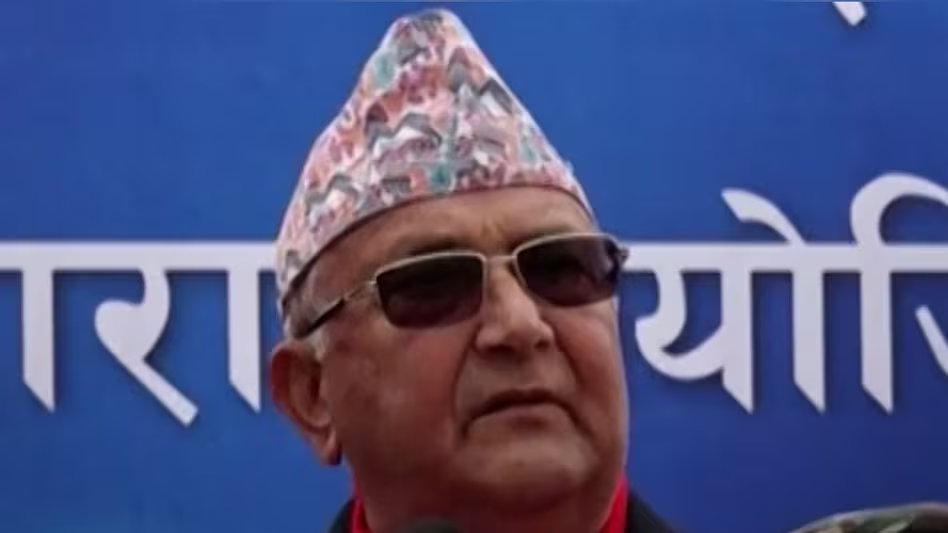
Oli wasted no time in hitting back. Speaking at a press conference in Kathmandu, he declared:
“This is nothing but a witch-hunt. I have dedicated my life to Nepal, and now they are trying to tarnish my image with baseless allegations. The truth will prevail.”
He accused the ruling coalition of using state institutions as tools of revenge, adding that barring a former Prime Minister from traveling abroad is a direct insult to democracy.
Supporters Rally Behind Him
The Communist Party of Nepal–Unified Marxist Leninist (CPN-UML), led by Oli, organized protests across Kathmandu. Party workers shouted slogans against the government and demanded that his passport be returned.
For many of his loyal supporters, Oli remains a nationalist icon who stood firm against external pressure. They believe this is an attempt to silence him politically ahead of the next elections.
Opposition Divided
Interestingly, the opposition camp is divided. While some leaders from rival parties welcomed the move as a step toward accountability, others warned that it sets a dangerous precedent where political opponents can be restricted under the guise of investigations.
Historical Context: Leaders and Travel Restrictions
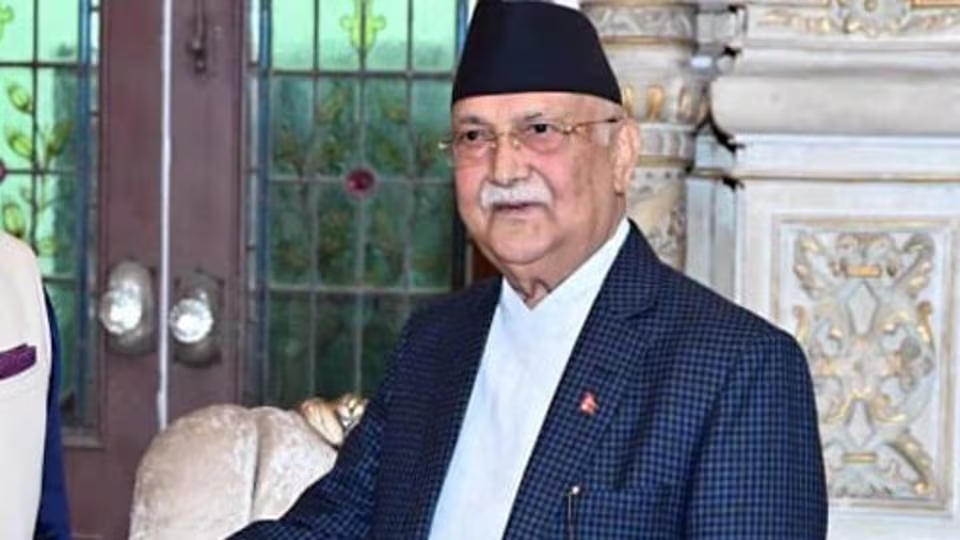
This is not the first time Nepal has seen travel restrictions imposed on political figures. In the past:
- During the monarchy era, leaders of communist and democratic parties were routinely restricted from leaving Nepal.
- After the 2006 democratic movement, some royal family members were also barred from traveling abroad.
- However, this is the first time a former democratically elected Prime Minister has faced such a measure in recent history.
Allegations Against Oli and His Team
Though the government has not made a detailed statement, several allegations have been circulating in media and political circles:
1. Corruption in Infrastructure Deals
Oli’s administration signed several large infrastructure contracts, including road, hydropower, and rail projects. Some of these projects, allegedly linked to Chinese companies, are now being investigated for irregularities.
2. Foreign Policy Concerns
Oli’s pivot toward China, especially the signing of the Transport and Transit Agreement and Belt and Road Initiative (BRI) projects, raised eyebrows. Critics argue that some deals may have undermined Nepal’s economic sovereignty.
3. Land and Resource Allocation
There are allegations that land deals involving mining and energy resources were manipulated for private gains during Oli’s tenure.
4. Financial Mismanagement During COVID-19
The government’s handling of funds during the COVID-19 pandemic is under scrutiny. There were accusations of inflated procurement contracts for medical supplies.
Public Sentiment in Nepal
Mixed Reactions
The Nepali public appears divided. While some citizens believe Oli must face investigation like any ordinary citizen, others argue that this is a deliberate attempt to discredit him politically.
Social Media Buzz
Social media platforms in Nepal have exploded with hashtags such as #StandWithOli and #JusticeForNepal. Memes, videos, and heated debates dominate the online space, reflecting how polarized the public is on this issue.
Implications for Nepal’s Politics
Impact on Oli’s Career
This travel restriction could significantly damage Oli’s political clout. International appearances, party networking, and his role in foreign diplomacy are now curtailed.
However, in a country where playing the victim card often boosts popularity, Oli might also turn this restriction into an advantage, portraying himself as a target of political oppression.
Stability of the Ruling Coalition
The ruling coalition, which is already fragile due to internal disagreements, may face backlash if the move is perceived as politically motivated.
Upcoming Elections
With elections on the horizon, this controversy could shape voter sentiment. Oli’s narrative of being a wronged nationalist leader might resonate with rural voters, while urban voters may demand accountability.
Regional and International Reactions
India’s Perspective
India has always kept a close watch on Nepal’s political developments. Given Oli’s strained relations with New Delhi during his tenure, Indian observers see this as a potential shift in Kathmandu’s political power balance.
China’s Concerns
China, which invested heavily in projects during Oli’s rule, may view the investigation and travel ban with suspicion. If Oli is sidelined, Beijing could lose a key ally in Nepali politics.
International Community
Western nations and organizations have urged Nepal to ensure that legal processes are transparent, fair, and not politically motivated.
Kathmandu at the Center of Attention
With the passports seized, all six individuals are now confined to Kathmandu, making the capital the focal point of unfolding political drama. Media crews, party rallies, and diplomatic chatter dominate the city’s atmosphere.
Hotels, tea shops, and public squares buzz with heated discussions about what this means for Nepal’s future.
A Nation at a Crossroads
Nepal, a small Himalayan country, has often found itself at crossroads — torn between political instability, foreign influence, and the aspirations of its people. This latest controversy underscores the fragile state of Nepal’s democracy.
While it is important to hold leaders accountable, the manner and timing of such actions can determine whether it strengthens democratic institutions or weakens them further.
Conclusion
The seizure of former Prime Minister KP Sharma Oli’s passport, along with those of five other officials, is more than just a legal move — it is a political earthquake that could reshape Nepal’s immediate future.
As the investigations proceed, the coming weeks will reveal whether this is a genuine attempt at accountability or simply a strategic maneuver to weaken a powerful political rival.
For now, Kathmandu remains the stage where this high-stakes drama is unfolding, with millions of Nepalis and international observers watching closely.
One thing is certain — Nepal’s political journey continues to be as unpredictable and dramatic as its Himalayan landscape.
Read More latest news

