
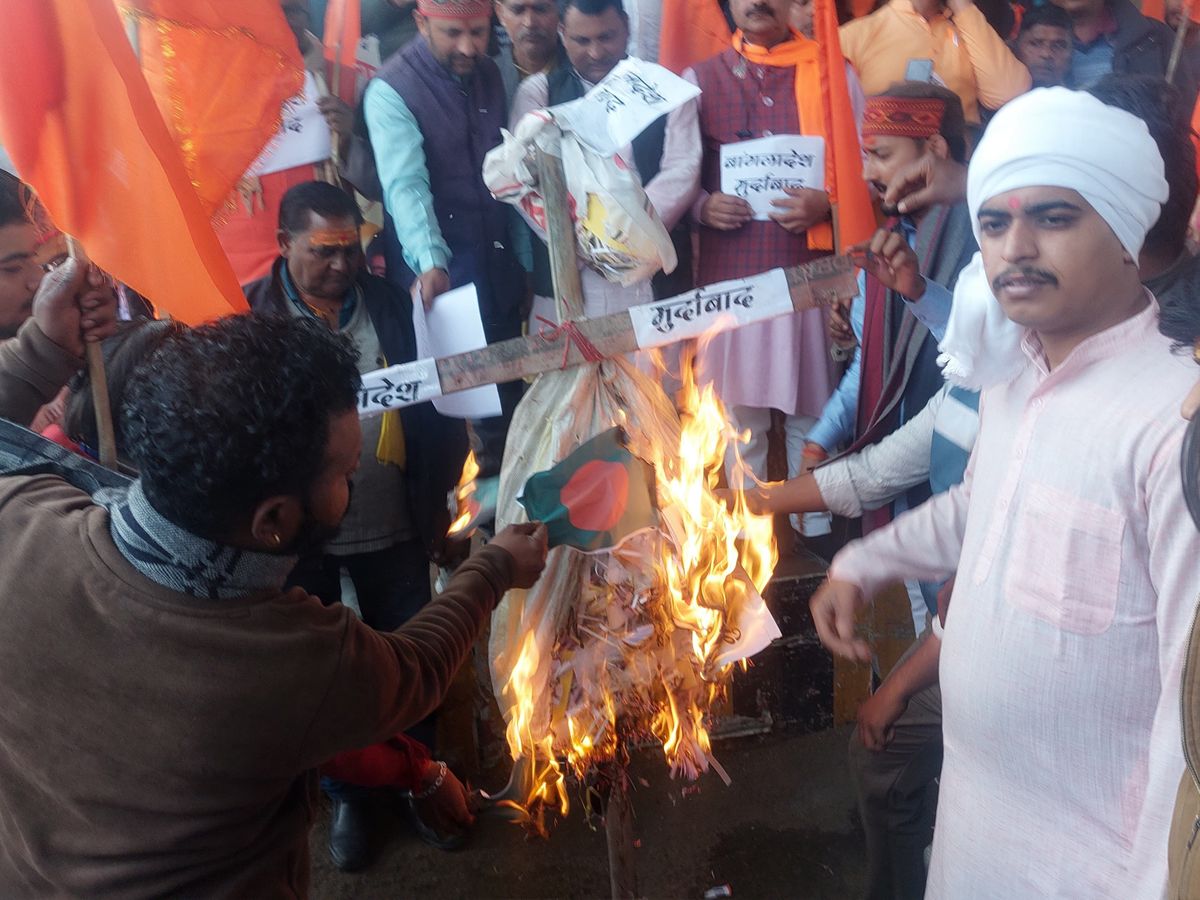
Strong Protest in Varanasi Over the Brutal Killing of Hindu Deepu Chandra Das in Bangladesh
A strong protest was held in Varanasi against the brutal murder of Hindu Deepu Chandra Das, an incident that has shaken not only the Hindu community but also all those who believe in human rights, religious freedom, and justice. The protest reflected deep anger and grief over the killing, which many protesters described as part of a larger pattern of violence against minorities in Bangladesh. The demonstrators gathered in large numbers, raising slogans, holding placards, and demanding accountability for what they see as repeated failures to protect vulnerable communities.
Background of the Incident
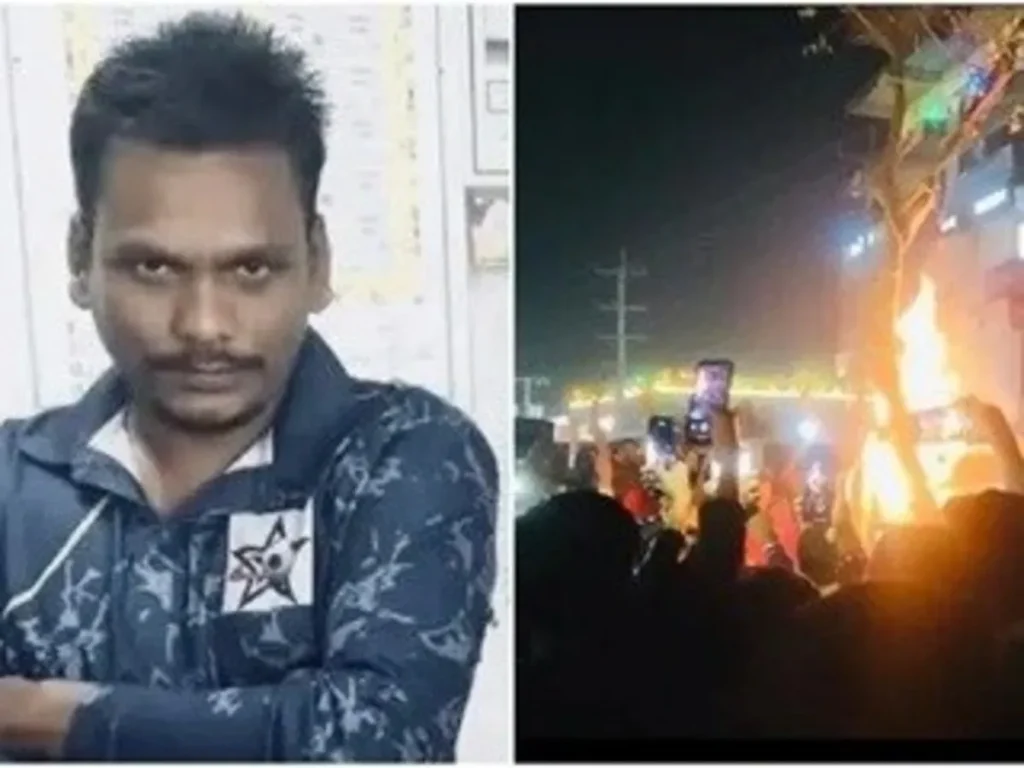
The murder of Deepu Chandra Das in Bangladesh has triggered widespread outrage. According to reports and community accounts, the killing was brutal and targeted, raising serious concerns about the safety of religious minorities. For many protesters in Varanasi, this was not an isolated incident but another example of what they believe is systematic violence against Hindus. The name Deepu Chandra Das has since become a symbol of this growing fear and frustration.
Rising Concerns Over Minority Safety
The killing of Deepu Chandra Das has once again brought the issue of minority rights in Bangladesh into the spotlight. Activists and community leaders argue that such incidents have been increasing in frequency, with little or no effective intervention from authorities. They allege that administrative inaction has emboldened extremist elements, creating an atmosphere of fear among Hindu families.
Varanasi Protest: Anger on the Streets
In Varanasi, protesters took to the streets to express their anger over the killing of Deepu Chandra Das. Chanting slogans demanding justice, they accused the Bangladeshi administration of failing to protect its minority citizens. The protestors said that silence and delay in action only worsen the situation and send a dangerous message to perpetrators.
Burning of the Effigy

One of the most striking moments of the protest was the burning of an effigy of Bangladesh Prime Minister Mohammad Yunus. Protesters said this act symbolized their anger over what they described as administrative negligence in cases like that of Deepu Chandra Das. They demanded immediate and strict action to prevent further attacks on Hindus.
Allegations of Administrative Inaction
The protesters strongly criticized what they called repeated administrative failures. According to them, the murder of Deepu Chandra Das could have been prevented if authorities had taken earlier warnings seriously. They argued that in several past incidents, complaints were ignored or investigations were delayed, leading to a lack of justice and accountability.
Voices from the Hindu Community
Members of the Hindu community in Varanasi expressed deep sorrow and anger over the death of Deepu Chandra Das. Many said they see his killing as a reminder of their own vulnerability. Religious leaders spoke about the emotional impact of such violence, emphasizing that fear should not become a permanent reality for any community.
Political Reactions in India
Indian political leaders and activists have also reacted strongly to the killing of Deepu Chandra Das. Some leaders urged the Indian government to take up the issue diplomatically with Bangladesh. They stressed that protecting minorities is not just a domestic issue but a matter of international human rights.
Media Coverage and Public Opinion
The murder of Deepu Chandra Das has received significant attention on social media and news platforms. Many users expressed outrage and demanded justice, while others called for calm and a thorough investigation. Hashtags related to Deepu Chandra Das trended online, reflecting widespread concern and solidarity.
Historical Context of Violence
Activists pointed out that the killing of Deepu Chandra Das fits into a broader historical context of attacks on minorities. They cited previous incidents to argue that unless strong measures are taken, such violence may continue unchecked. The protest in Varanasi aimed to highlight this long-standing issue and push for meaningful change.
Demand for Justice
Justice for Deepu Chandra Das was the central demand of the protest. Protesters called for the arrest and prosecution of those responsible and urged international organizations to monitor the situation. They emphasized that justice delayed is justice denied, and warned that continued silence could lead to more tragedies.
Role of Civil Society
Civil society groups have played a crucial role in amplifying the case of Deepu Chandra Das. Human rights organizations, religious groups, and activists have come together to demand transparency and accountability. They believe sustained pressure is necessary to ensure that such cases are not forgotten.
Diplomatic Implications
The killing of Deepu Chandra Das has the potential to affect India-Bangladesh relations. Protesters in Varanasi urged Indian authorities to raise the issue at diplomatic forums. They stressed that friendly relations should not come at the cost of ignoring human rights violations.
Emotional Impact on Families
Behind every headline is a grieving family. The family of Deepu Chandra Das is reportedly devastated by the loss. Protesters expressed solidarity with the family, saying that their pain represents the suffering of many minority families living in fear.
Call for International Attention
Several speakers at the protest urged international bodies to take note of the killing of Deepu Chandra Das. They argued that global attention can help pressure authorities to act responsibly and ensure justice. Without such scrutiny, they fear the cycle of violence will continue.
Religious Freedom and Human Rights
The murder of Deepu Chandra Das has reignited debates on religious freedom in South Asia. Protesters emphasized that every individual, regardless of faith, has the right to live without fear. They called on governments to uphold constitutional and international commitments to protect minorities.
Youth Participation in the Protest
A large number of young people participated in the Varanasi protest. For them, the killing of Deepu Chandra Das represented a failure of governance and justice. They voiced concerns about the future, saying that unchecked violence threatens peace and stability in the region.
Messages of Unity
Despite the anger, some protesters also spoke about unity and peace. They said that while the murder of Deepu Chandra Das was deeply painful, hatred should not be answered with hatred. Instead, they called for justice through lawful and peaceful means.
Social Media as a Tool
Social media played a key role in spreading awareness about Deepu Chandra Das. Videos and images from the Varanasi protest circulated widely, drawing attention from across India and beyond. Activists believe this digital visibility is crucial for keeping the issue alive.
What Protesters Want Next
The protesters outlined clear demands following the killing of Deepu Chandra Das. These included swift investigation, punishment for the guilty, protection for minorities, and international monitoring. They warned that protests would continue if these demands were ignored.
Conclusion: A Symbol of a Larger Struggle
The brutal killing of Deepu Chandra Das has become more than a single tragic incident; it is now a symbol of a larger struggle for justice, safety, and religious freedom. The strong protest in Varanasi reflects deep concern over continuous attacks on Hindus and perceived administrative inaction. Whether these voices will lead to concrete action remains to be seen, but one thing is clear: the name Deepu Chandra Das will continue to echo in calls for justice until accountability is achieved.
Read More latest news

