
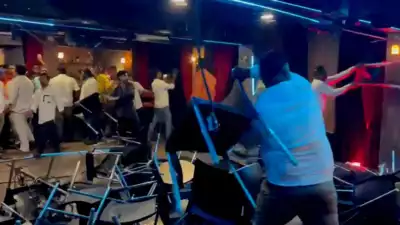
Mumbai Habitat Studio After Vandalism By Sena Workers Over Kunal
Introduction
Mumbai, the financial capital of India, has always been a city that thrives on creativity, culture, and the free exchange of ideas. Its vibrant arts scene, from theaters to galleries to independent spaces, forms the beating heart of its cosmopolitan identity. Among these cultural hubs is Habitat Studio, a venue known for hosting experimental performances, art exhibitions, and thought-provoking discussions. However, this space, once a sanctuary for free expression, found itself at the center of controversy and violent unrest following the Kunal Kamra incident in 2020.
In this blog, we delve into the shocking incident of vandalism that occurred at Habitat Studio, the reasons behind the attack, the aftermath, and what this means for the broader landscape of free speech and cultural spaces in India. Through a deep dive into the political context surrounding the incident and its implications, we aim to understand why such an event took place and its lasting impact on the artistic community in Mumbai and beyond.
The Rise of Kunal Kamra and the Incident That Sparked the Controversy
Before delving into the events that unfolded at Habitat Studio, it’s essential to understand the root cause of the tension that led to the vandalism. Kunal Kamra, a comedian known for his sharp political satire, was already a controversial figure in India long before the Habitat Studio attack. Kamra’s stand-up comedy often targeted political leaders, and his provocative content didn’t sit well with many, particularly those aligned with the ruling Bharatiya Janata Party (BJP) and its allies.
In January 2020, Kamra found himself embroiled in a national controversy when he was involved in a verbal altercation with Arnab Goswami, the editor-in-chief of Republic TV, during a flight. Kamra, known for his sharp wit and criticism of the media, filmed the incident and later shared it on social media, which led to widespread debate about freedom of speech, media bias, and the conduct of public figures. The altercation went viral, and Kamra became a lightning rod for both support and condemnation, with many lauding his courage to speak out against what they saw as biased media practices, while others criticized him for disrespecting an individual.
However, it wasn’t just Kamra’s altercation with Goswami that ignited the flames of the controversy; it was the political implications of his comedy that triggered the violence. Kamra’s videos and jokes often took aim at the Shiv Sena party, which controls the Maharashtra government. His humor, although not always directed at the Sena specifically, was seen by some as an affront to the political ideologies of the party.
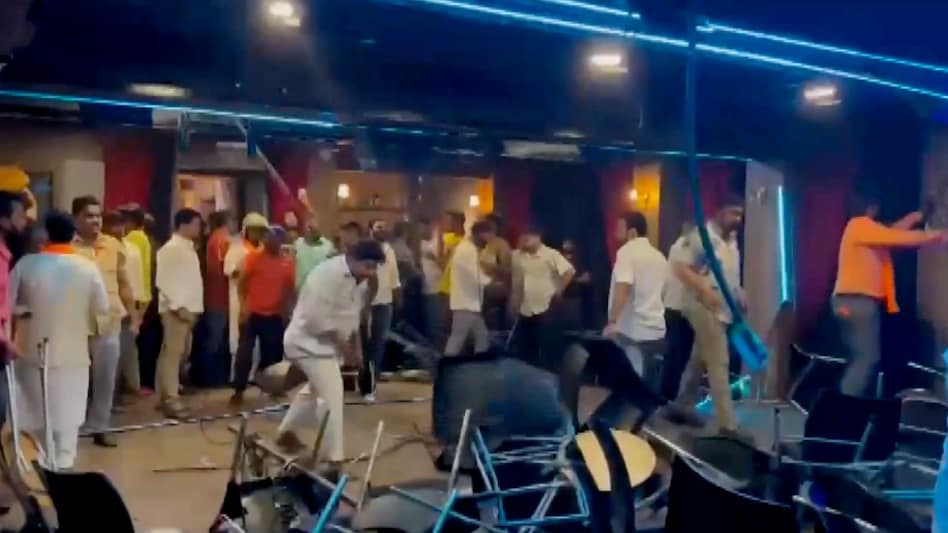
The Vandalism at Habitat Studio: What Happened?
On the evening of February 2020, Habitat Studio, located in the heart of Mumbai, was targeted by a group of Shiv Sena workers, leading to extensive vandalism at the venue. The incident occurred against the backdrop of growing tensions surrounding Kamra’s controversial remarks and the political atmosphere in Maharashtra. The attack came shortly after the Shiv Sena publicly condemned Kamra’s comments and, more importantly, his choice to engage in confrontational actions against figures closely aligned with the party’s ideology.
Reports suggest that a group of Sena workers stormed the venue during an event and damaged property, including furniture, glass windows, and lighting equipment. The workers, reportedly angry over the perceived insults to the party and its leadership, allegedly shouted slogans calling for the closure of the venue and the banning of Kamra’s events. The violence was not just physical but symbolic, as the attackers were making a direct statement against freedom of expression in a space that, for years, had championed the arts and independent thought.
This act of aggression came as a stark reminder of how political forces were increasingly attempting to curb free speech, especially when it came to artists, comedians, and journalists who dared to challenge the status quo. Habitat Studio, which had long been a refuge for free expression, was now under siege.
The Repercussions: A Shutting Down of Creative Spaces?
The immediate aftermath of the vandalism at Habitat Studio was one of shock and disbelief. The studio, which had been an important cultural hub for artists, musicians, and performers, announced that it would remain shut “till further notice” in response to the attack. The statement, posted on social media, expressed the management’s deep disappointment at the violence and affirmed their commitment to upholding the values of free speech and artistic freedom. It also highlighted the precarious position of cultural spaces in India, particularly those that sought to engage with contemporary political and social issues.
For many artists, activists, and cultural enthusiasts in Mumbai, the closure of Habitat Studio symbolized a dark moment in the city’s history—a sign that the space for critical, independent thought was shrinking. It was not just the physical damage to the venue that caused concern but the chilling effect it would have on future performances, events, and exhibitions that might be deemed politically controversial.
Habitat Studio’s decision to shut down indefinitely was met with widespread condemnation of the Shiv Sena’s actions, both from within the artistic community and from larger civil society. The attack at Habitat Studio came on the heels of similar incidents of violence and harassment aimed at cultural and intellectual figures across India. Artists, writers, and filmmakers who had dared to challenge dominant political narratives were increasingly facing threats, cancellations, and even physical harm.
The Role of Political Parties in Shaping Cultural Spaces
The incident at Habitat Studio is not an isolated one but is part of a larger trend in India’s political landscape. Over the past few years, there has been a marked rise in the intimidation of artists and intellectuals, particularly those who engage with politically sensitive topics or critique the ruling party’s policies. The Shiv Sena’s involvement in the attack is an example of how political parties, in power or in opposition, are increasingly using their influence to shape or restrict cultural expression.
In Maharashtra, the Shiv Sena has long maintained a dominant role in both the state’s politics and its cultural identity. While the party has a history of promoting regional pride and championing the cause of Marathi identity, its stance on free speech has become more rigid in recent years. The attack on Habitat Studio can be seen as an extension of the party’s increasingly authoritarian approach to dissent and criticism. The ruling coalition’s embrace of populist nationalism and the growing intolerance towards opposing viewpoints have created an environment where cultural spaces are under constant threat.
This political climate is compounded by the rise of online trolling, media vilification, and the general climate of fear that many cultural figures now find themselves navigating. The broader question here is whether India’s democratic institutions, especially its cultural spaces, can withstand such pressures or whether they will continue to buckle under the weight of political interference.
The Fight for Artistic Freedom in India
In the wake of the Habitat Studio attack, many cultural activists, filmmakers, and artists have come forward to express their support for the venue and condemn the act of vandalism. The assault on Habitat Studio is not just an attack on a building but an assault on freedom of expression, which is a cornerstone of any democratic society. In India, where debates around nationalism, identity, and religion often dominate public discourse, artistic freedom has become a battleground for larger ideological struggles.
Many see Habitat Studio’s closing as a symbolic act of resistance against the increasing polarization of India’s cultural and intellectual life. Yet, there is also a sense of uncertainty about the future of such spaces. If artists and venues that promote free expression can be targeted with impunity, it raises the question of whether India’s cultural spaces will continue to exist in their current form or whether they will be forced into submission by the political powers that be.

However, the closure of Habitat Studio also sparked widespread solidarity within the artistic community, with many pledging to support the venue once it reopened. Artists and performers from various backgrounds rallied together, emphasizing that cultural spaces like Habitat Studio were essential for nurturing independent thought and fostering a creative, democratic society.
The Path Forward: Rebuilding and Resilience
As the weeks passed following the attack, Habitat Studio began to receive support from across the city and beyond. In the face of adversity, the management and staff of the venue expressed their determination to rebuild, both physically and ideologically. The studio’s decision to stay closed “till further notice” may have been a temporary measure, but the message it sent was clear: the fight for free expression and creative autonomy was far from over.
In the larger context, the incident at Habitat Studio serves as a wake-up call for other cultural spaces in India. While the political climate may have grown more hostile towards independent expression, the resilience of cultural institutions and their ability to bounce back from adversity will ultimately determine the future of artistic freedom in the country.
In conclusion, the vandalism at Habitat Studio is a reflection of the challenges faced by the Indian arts community today. It highlights the dangers of political interference in cultural spaces, the growing climate of intolerance, and the need for solidarity and resilience in the face of adversity. As Habitat Studio eventually reopens its doors, it will undoubtedly be a symbol of both defiance and hope for the continued struggle for artistic freedom in India.
Conclusion
The vandalism of Habitat Studio serves as a reminder that the fight for freedom of expression is far from over in India. As we move forward, the role of political parties in shaping the cultural landscape of the country will continue to be a source of tension. However, the collective resilience of artists, intellectuals, and activists will be crucial in ensuring that spaces like Habitat Studio can continue to flourish, offering a platform for voices that challenge the status quo and push the boundaries of artistic and political expression.
read more latest news

