
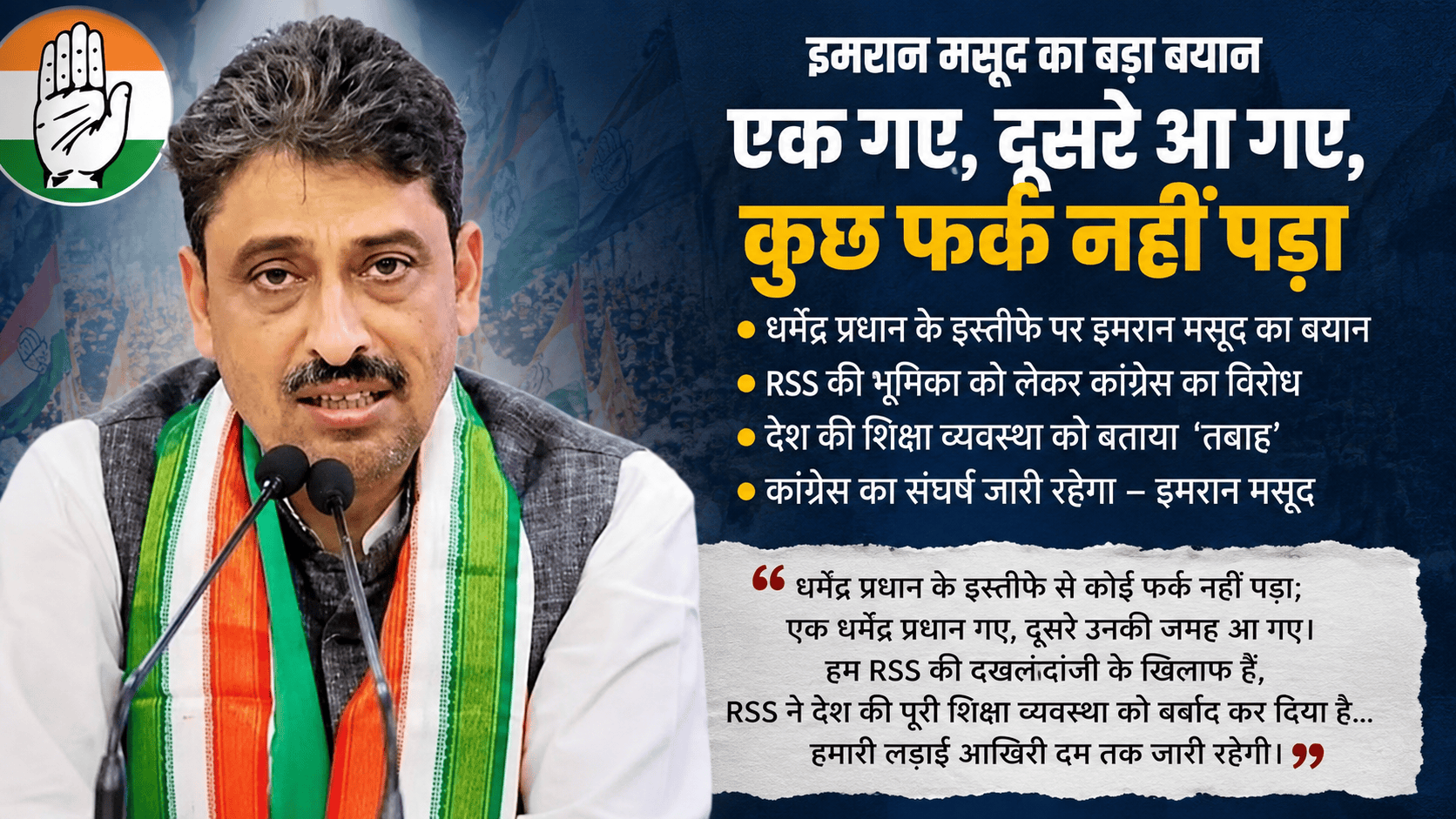
Imran Masood Commented on Dharmendra Pradhan’s Resignation, Says Congress Will Continue Fight Against RSS’s Role in Education
Imran Masood commented on the development, stating that merely changing the minister would not address the deeper concerns raised by the Congress party. Speaking to the media, the Congress MP argued that the government’s education policies require structural reforms rather than a simple change in leadership.The political debate over India’s education system has intensified following the resignation of Union Education Minister Dharmendra Pradhan.
According to the Congress leader, “Dharmendra Pradhan’s resignation made no difference; one Dharmendra Pradhan left, and another took his place. We are opposed to the RSS’s involvement, as the RSS has destroyed the country’s entire education system… our fight will continue until the very end.”
The statement has sparked fresh political reactions, with both the ruling party and the opposition presenting contrasting views on the future of India’s education policy.
Imran Masood Commented on the Minister’s Resignation
Imran Masood commented that the resignation of Dharmendra Pradhan should not be viewed as a complete solution to the issues surrounding India’s education sector. According to him, replacing one minister with another would not automatically resolve concerns related to examination reforms, educational policies, or institutional functioning.
He emphasized that the Congress believes the education system requires policy-level changes rather than administrative reshuffling.
Political Debate Intensifies
Imran Masood commented at a time when education has become one of the country’s most discussed political issues. Questions regarding competitive examinations, educational reforms, recruitment transparency, and institutional autonomy have dominated national political discourse over the past several weeks.
Both the ruling alliance and the opposition continue to present different approaches regarding how educational reforms should be implemented.
Congress Raises Questions Over RSS Role
During his remarks, Imran Masood commented that the Congress remains opposed to what it describes as the growing involvement of the RSS in the country’s education system.
The Congress MP alleged that educational institutions should remain independent and free from ideological influence. According to him, the opposition will continue raising these concerns inside and outside Parliament.
The BJP and RSS have consistently defended their educational approach, maintaining that their policies aim to strengthen India’s education system while promoting national values.
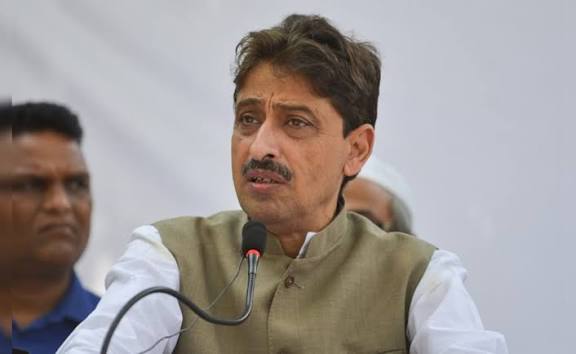

Education Emerges as National Political Issue
Imran Masood commented as education continues to dominate political discussions nationwide. In recent months, debates over examination integrity, paper leak incidents, student welfare, and educational reforms have gained significant public attention.
Millions of students preparing for government recruitment examinations and higher education entrance tests have closely followed these developments.
Political parties recognize that education directly impacts the aspirations of India’s youth and therefore remains a major electoral issue.
Dharmendra Pradhan’s Resignation
The resignation of Union Education Minister Dharmendra Pradhan has generated extensive political debate.
Imran Masood commented that the resignation alone cannot address the concerns raised by the opposition regarding educational reforms.
Meanwhile, the central government has maintained that educational reforms will continue and that the ministry remains committed to strengthening transparency and improving examination systems.
Government officials have emphasized continuity in policy implementation despite the change in ministerial leadership.
Opposition Demands Structural Reforms
Imran Masood commented that the Congress is demanding comprehensive reforms rather than symbolic political decisions.
According to opposition leaders, issues concerning examination management, recruitment processes, institutional accountability, and educational governance require long-term policy changes.
They argue that reforms should focus on ensuring equal opportunities for students across the country.
Government’s Perspective
While Imran Masood commented critically about the resignation, the government has reiterated that educational reforms remain among its highest priorities.
The Centre has recently proposed stronger legal measures against examination fraud, including amendments related to preventing unfair means in public examinations.
Government representatives argue that these initiatives demonstrate their commitment to protecting the interests of students and maintaining the credibility of public examinations.
Education and Student Aspirations
Imran Masood commented during a period when millions of students are demanding greater transparency in recruitment examinations.
Competitive examinations serve as gateways to higher education and government employment. Any disruption caused by paper leaks or examination irregularities directly affects the careers of deserving candidates.
Political leaders across party lines acknowledge that restoring public confidence remains an essential objective.
Parliamentary Debate Expected
Imran Masood commented ahead of important parliamentary discussions on education-related legislation.
The issue is expected to witness extensive debate in both Houses of Parliament, with opposition parties likely to question the government’s policies while the ruling alliance defends its reform initiatives.
Education may remain one of the central issues during the ongoing parliamentary session.
Congress Says Fight Will Continue
One of the strongest aspects of the Congress MP’s statement was his declaration that the opposition’s struggle would continue.
Imran Masood commented that the Congress would continue opposing what it considers ideological interference in educational institutions.
According to him, the party intends to keep raising these issues through democratic and parliamentary means.
This statement signals that education will remain an important political issue in the coming months.
Reactions Across Political Spectrum
Following the remarks, Imran Masood commented in a manner that immediately attracted reactions from leaders across the political spectrum.
Supporters of the Congress argued that education requires broader institutional reforms, while BJP leaders defended the government’s policies and highlighted recent initiatives aimed at improving examination security and educational governance.
Political analysts believe such exchanges will continue as education becomes a larger electoral issue.
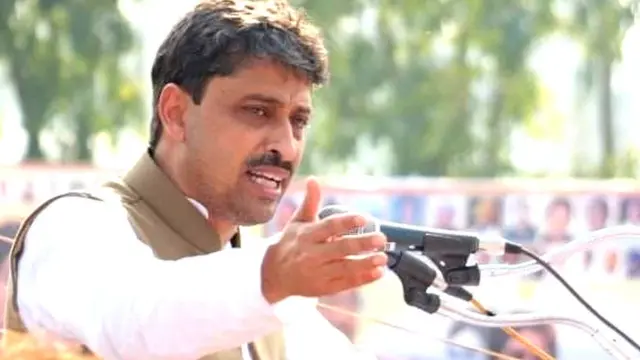
Students Remain the Primary Stakeholders
Although political disagreements continue, students remain the primary stakeholders.
Imran Masood commented that education policy should prioritize students’ interests above political considerations.
Experts similarly believe that examination transparency, institutional efficiency, and merit-based opportunities should remain central objectives regardless of political differences.
A stable and trustworthy education system benefits students, educational institutions, employers, and the nation as a whole.
Future of Education Policy
Imran Masood commented during an important phase in India’s education policy landscape.
Several reforms are currently under discussion, including stronger anti-paper leak laws, digital examination security, improved recruitment transparency, and institutional accountability.
Whether these reforms satisfy students and political stakeholders will depend largely on effective implementation and continued public confidence.
Conclusion
Imran Masood commented that the resignation of Union Education Minister Dharmendra Pradhan has not addressed the Congress party’s concerns regarding India’s education system. He reiterated the party’s opposition to the RSS’s alleged role in education and asserted that the Congress would continue its political struggle on the issue.
As Parliament debates education reforms and the government advances new legislative measures, education is expected to remain at the center of national political discussions. While political parties differ sharply in their perspectives, there is broad agreement that India’s education system must ensure fairness, transparency, and equal opportunities for every student.
read more latest news

