

PM Narendra Modi Arrives in London: A Grand Welcome by the Indian Diaspora
🛬 Introduction
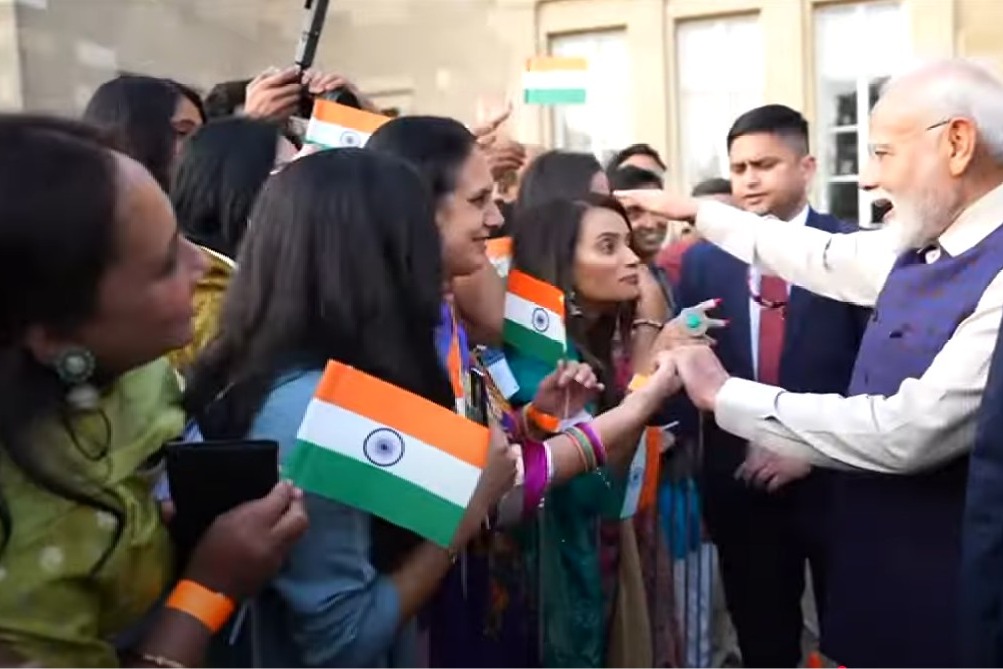
Prime Minister Narendra Modi arrived in London, receiving a rousing and emotional welcome from thousands of members of the Indian expatriate community in the UK. From Heathrow Airport to Central London, chants of “Modi! Modi!”, waving tricolours, and enthusiastic crowds marked his arrival in what turned into a symbolic reunion between India’s global face and its overseas citizens.
This visit holds enormous diplomatic, strategic, and cultural significance. It not only strengthens India–UK bilateral ties but also reflects the enduring emotional connect between the Indian diaspora and the political leadership of their homeland.
This blog explores the visit in depth — from the reception Modi received to the key agendas of his trip, the reactions of the global Indian community, and what this means for India–UK relations going forward.
🇮🇳 A Hero’s Welcome: London Turns Tricolour
As Prime Minister Modi stepped out of the aircraft at Heathrow, he was greeted by a large group of Indian-origin supporters, cultural performers, and volunteers who had assembled since early morning hours.
Key Highlights of the Welcome:
- Traditional dhol and folk music
- Children waving Indian and British flags
- Posters with slogans like “Welcome Modi Ji” and “Pride of Bharat”
- Chanting of slogans in Hindi, Gujarati, and Punjabi
- Cultural performances representing multiple Indian states
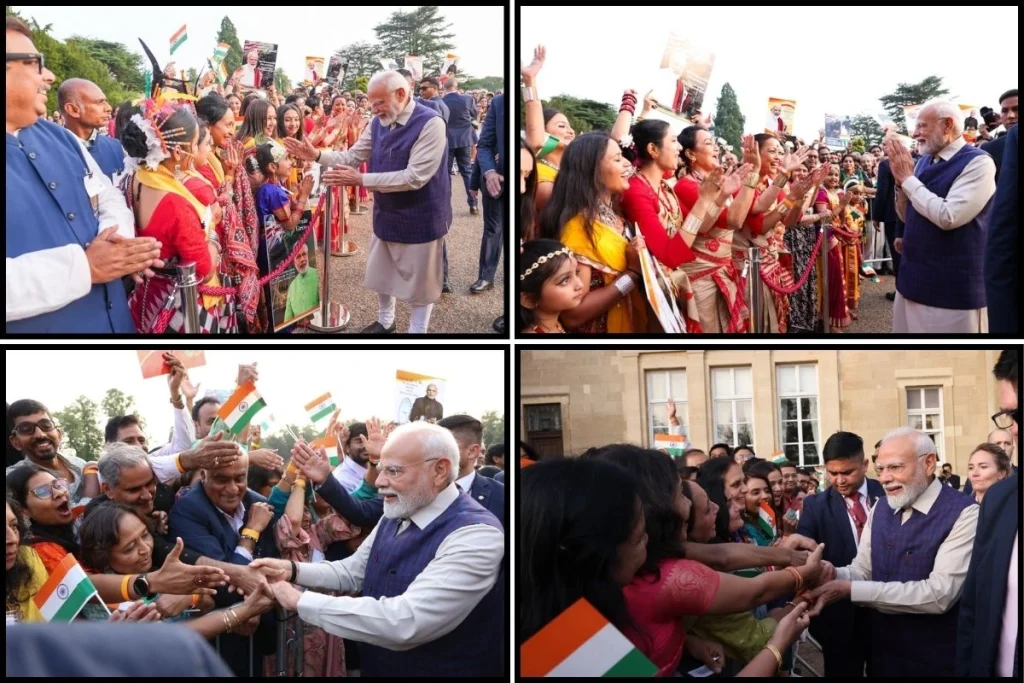
The atmosphere was electric, festive, and emotional. Elderly NRIs broke into tears; young professionals took selfies with cut-outs of Modi; women sang patriotic songs. It was clear — Modi was not just being welcomed as a leader, but as an icon of India’s global rise.
✈️ Modi’s Travel Itinerary and Agenda in London
PM Modi’s trip to London is part of a larger Europe and North America outreach, aimed at cementing trade, defense, technology, and diaspora partnerships.
Key Engagements in London Include:
- Meeting with UK Prime Minister at 10 Downing Street
Issues on the table:- India–UK Free Trade Agreement (FTA)
- Visa and mobility for Indian professionals
- Climate change cooperation
- Defence collaboration, especially naval strategy in Indo-Pacific
- Interaction with Indian Diaspora at Wembley Arena
A mega community reception is scheduled with over 25,000 attendees, making it one of the largest gatherings for an Indian leader in the UK. - Address to UK Parliament (tentative)
Modi is expected to address British MPs on India’s democratic evolution, economy, and global vision. - Meetings with CEOs of major UK-based companies
Focus: Investments in India under ‘Make in India’, green energy, and digital transformation. - Cultural Diplomacy
Visit to the Neasden Temple, Mahatma Gandhi Statue in Parliament Square, and a special exhibition on India–UK heritage at the Victoria & Albert Museum.
🗣️ Indian Community’s Reaction: “This Is Not Just a Visit, It’s an Emotion”
For the Indian diaspora, especially in cities like London, Leicester, Birmingham, and Manchester, PM Modi’s visit is seen as more than just a diplomatic formality — it’s an emotional homecoming.
Why the Diaspora Admires Modi:
- He represents aspiration and strength – Many NRIs see in Modi the symbol of a resurgent India.
- He communicates with the global Indian – Through programs like Pravasi Bharatiya Divas, OCI reforms, and direct diaspora interactions.
- He has enhanced India’s global image – From the G20 to COP summits, Modi has been a consistent and strong voice.
“We’ve never felt so proud of our identity as Indians abroad. Modi ji has made India a respected global power,” said Anjali Mehta, a tech entrepreneur from London.
“My 8-year-old son knows who India’s Prime Minister is, and that’s because Modi connects with the youth,” said Ramesh Patel, a school teacher in Birmingham.
📜 Historical Context: India–UK Relations
India and the United Kingdom share a complex but deep-rooted relationship that has evolved from colonial history to a robust strategic partnership.
Post-Independence Relations:
- India joined the Commonwealth of Nations post-1947
- UK became home to one of the largest Indian diaspora populations
- Trade, education, and healthcare formed early pillars of cooperation
Modern Era:
Under PM Modi, ties with the UK have grown rapidly:
- 2015: Modi addressed a packed Wembley Stadium
- 2018: Modi met then PM Theresa May to discuss trade and counter-terrorism
- 2021: India and UK signed the Enhanced Trade Partnership
- 2022–24: Multiple rounds of FTA negotiations began
This visit is aimed at resolving the last-mile issues in the FTA and setting a forward-looking tone for India–UK collaboration.
🧳 Key Themes of the Visit
1. Free Trade Agreement (FTA)
The India–UK FTA is expected to be a game-changer. With Brexit behind them, the UK is actively seeking non-EU partners. India, with its massive market and skilled workforce, is ideal.
Modi’s presence is likely to add political push to overcome sticking points like:
- Tariff reductions on automobiles, whisky, and pharma
- Visa relaxations for Indian professionals
- Intellectual Property Rights (IPR) frameworks
2. Defence and Strategic Dialogue
With China’s growing assertiveness in the Indo-Pacific, India and the UK are aligning closer on maritime security. Talks may include:
- Joint naval exercises
- Cybersecurity and AI warfare cooperation
- Intelligence sharing and anti-terror strategy
3. Technology and Green Energy
India’s digital transformation is drawing the attention of British tech giants. Modi is scheduled to meet CEOs of:
- Vodafone UK
- BP (British Petroleum)
- Rolls-Royce (for defense-tech collaborations)
- UK fintech startups exploring UPI integration
🎤 Wembley Event: A Show of Unity
The mega diaspora event at Wembley Arena is the emotional centerpiece of the visit.
What to Expect:
- Performance by top UK-based Indian artists
- Speeches by prominent Indian-origin MPs like Rishi Sunak, Suella Braverman, and Priti Patel
- An inspirational address by Modi, focusing on:
- India’s growth story
- Role of the diaspora in nation-building
- Vision for India@2047
The event will be televised globally, with millions watching from around the world.
🌍 Why This Visit Matters Internationally
For the UK:
- Shows post-Brexit economic alignment with Asia
- Promotes multicultural image by hosting Modi warmly
- Deepens ties with a rapidly growing economy
For India:
- Demonstrates international confidence in Indian leadership
- Builds narrative of a ‘Global India’ under Modi
- Empowers diaspora to become cultural ambassadors
🧠 What the Critics Say
No major visit is without criticism.
Concerns Raised:
- Human rights groups protested outside Parliament, citing press freedom and minority concerns in India
- Opposition leaders in the UK questioned the handling of India–UK visa denials
- Some academics opposed government’s push for NEP alignment with UK standards
However, Modi’s office has maintained that dialogue and diplomacy are the way forward, and such issues would be addressed through bilateral platforms.
📷 Visual Highlights of the Visit
- Modi waving from his car as diaspora chants slogans
- Indian tricolours flying alongside the Union Jack
- British Indian schoolchildren performing Bharatnatyam
- Emotional moments as elderly Indians touch Modi’s feet
- Modi gifting traditional Pashmina shawls to British dignitaries
📈 Impact on Domestic Politics
While the visit is global in scope, it also has domestic political significance.
Key Implications:
- BJP’s NRI outreach strategy gets a boost
- Brand Modi continues to dominate headlines in India
- Opposition struggles to match the scale of diaspora admiration
- Sets the stage for BJP’s global outreach ahead of 2029 elections
💬 Voices from the UK Diaspora
“Modi is the first Indian PM who has made us feel heard and seen,” – Dr. Ramesh Narayan, NHS Consultant
“My children finally see India as a tech superpower. Modi’s leadership is behind that shift,” – Priya Menon, Fintech analyst
“I disagree with some policies, but can’t deny his connect with global Indians,” – Sanjeev Desai, University of Oxford student
🧩 What’s Next?
After London, PM Modi is expected to travel to:
- Paris – For talks with President Macron on defence & education
- New York – To attend UNGA and meet global CEOs
- Toronto – For another diaspora event and Indo-Canada tech dialogue
This visit is part of the Modi 3.0 foreign policy blueprint, aiming to solidify India’s role as Vishwaguru — a global leader, not just in politics but in culture, tech, and thought.
🧭 Conclusion
Prime Minister Narendra Modi’s arrival in London and the grand welcome by the Indian expatriate community underline one key truth: India is no longer a distant homeland for NRIs — it’s a source of pride, power, and identity.
Whether one agrees with his politics or not, Modi’s ability to mobilize diaspora emotion and global attention is undeniable.
This visit is not just about trade agreements or photo-ops — it’s about redefining India’s place in the world, and the diaspora’s place in India’s journey.
As chants of “Modi! Modi!” echoed across London, one thing became clear: the story of India in the 21st century will not be written alone — it will be co-authored by global Indians and their leader who calls them “India’s unofficial ambassadors.”
read more latest news

